
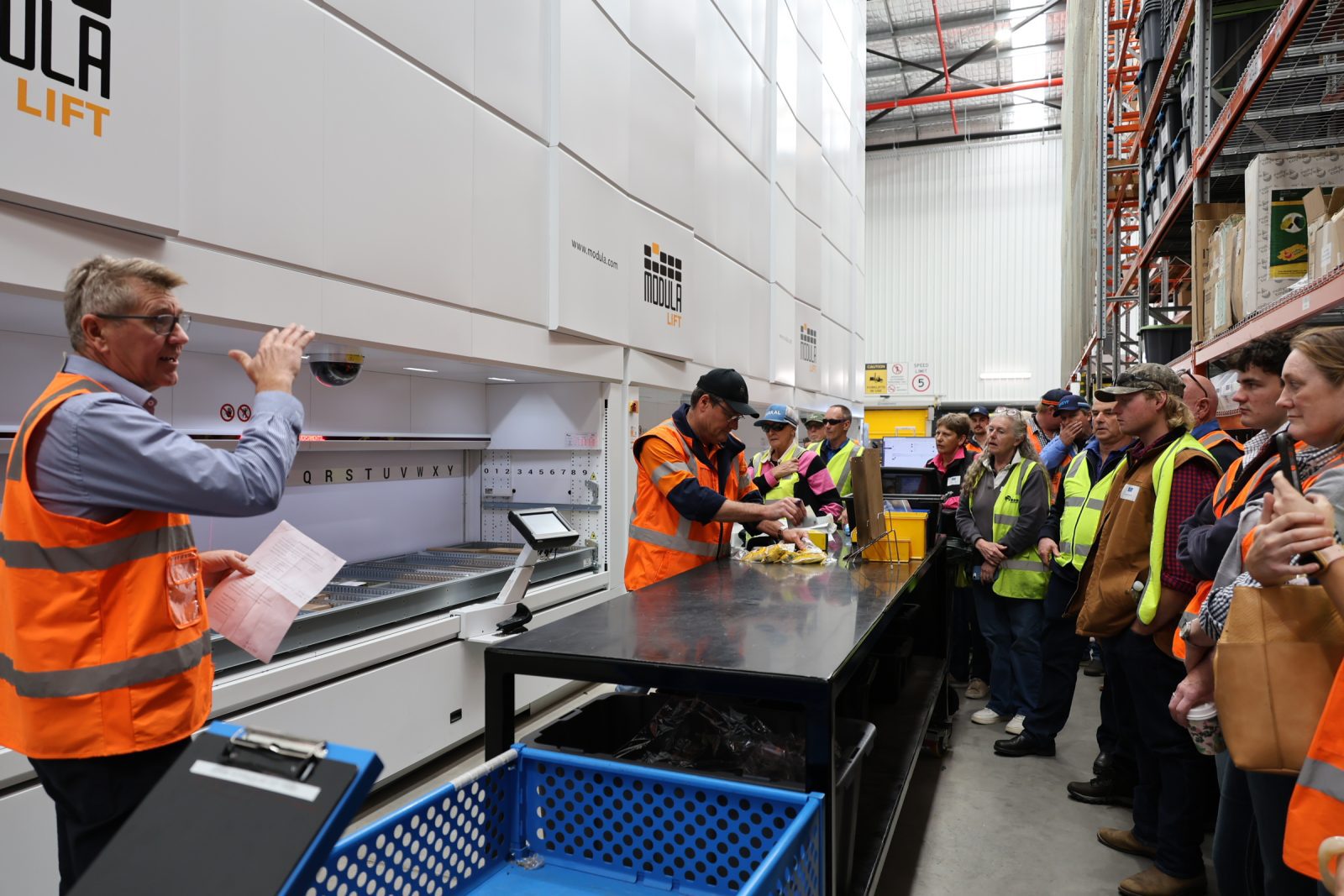
RDO development manager for digital Andrew Speed takes the Cotton Collective tour through the wonders of RDO’s spare parts warehouse, where three Modula lifts maximise space and efficiency through an automated system.
FOUR Toowoomba businesses opened their doors to the Cotton Collective yesterday to give growers and stakeholders a behind-the-scenes look a their sites which all have a strong connection to the cotton industry.
Cotton Collective is a Cotton Australia initiative, and is held biennially to alternate with the Australian Cotton Conference.
First stop on yesterday’s tour was machinery manufacturer Excel Agriculture, followed by Bayer’s hub where national insect resistance to Bollgard3 cotton is monitored, RDO Equipment, and SwarmFarm.
Bayer Research Centre
Bollgard3 is the only commercial variety of cotton grown in Australia, and the Bayer Research Centre in Toowoomba monitors the national level of resistance present in two helicoverpa species to its patented proteins.
Eggs and larvae from regions as far afield as WA’s Ord and the southern Riverina of NSW are collected and sent to the Bayer Toowoomba team so they can be grown out and crossed in the assessment process.
The Cotton Collective group got a rundown on the facility’s operations from entomologist and centre head Kristen Knight and her team, and a heads up on what is in the pipeline, including ThryvOn.
“It’s a different trait to Bollgard; it’s commercial in the US for thrips and mirids,” Dr Knight said.
ThryvOn’s mode of action is to cause a behaviour response that sees targeted insects lay fewer eggs on cotton containing the trait.
Bayer has applied to the Federal Government’s Office of the Gene Technology Regulator to commercially release ThryvOn in Bollgard3.
“It’s pretty exciting; we’ll hopefully be launching that in 2028-29.”
Ahead of Bollgard’s 30th birthday next year, Bollgard4, which promises a greater level of protection against lepidopteran cotton pests, is also in the pipeline.
Excel Agriculture
Excel Agriculture’s stable includes Gyral, which opened the chapter globally on air seeders more than 60 years ago.
It was invented by Albert Fuss, whose family continued to manufacture Gyral machinery until they sold in 2014 to Excel’s parent Great Western Manufacturing, headed by Chris Thornton.
While Excel currently has contracts to fabricate for third parties, including in the transport industry, 80pc of its business is agricultural.
“The percentage of ag is growing; we’ve made that decision to commit to Excel and Gyral,” Excel sales executive Brian Moran told the Cotton Collective group.
Excel also makes cultivators, row-crop planters, and fertiliser spreaders as used by irrigators as well as dryland farmers.
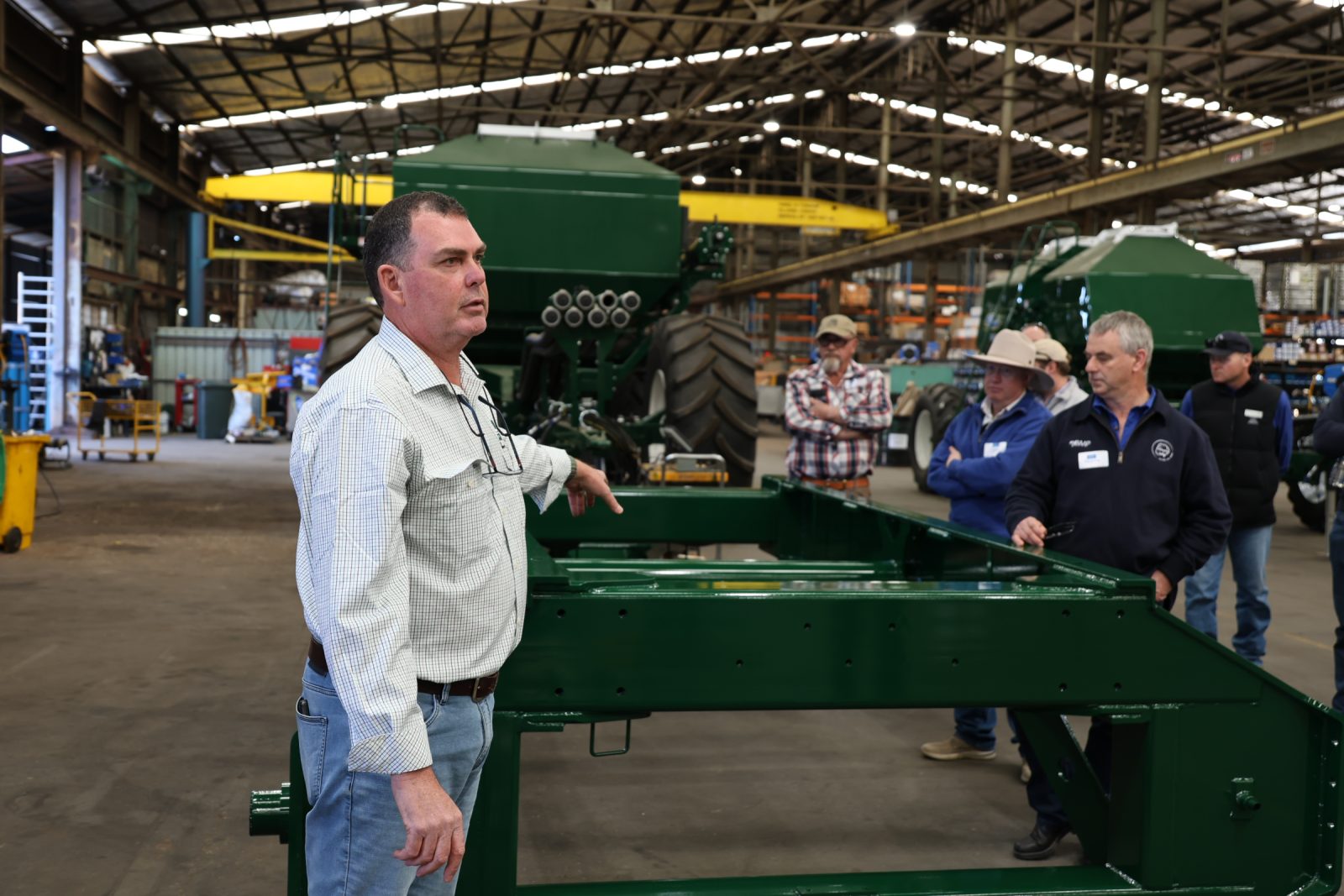
Excel Agriculture sales and marketing manager Stewart Kings addresses the Cotton Collective group in front of Gyral largest air seeder, the 28,000 with capacity to hold 21t of wheat, and ideal for use with an 18m or 24m bar.
Insights were also shared by Excel’s sales and marketing manager Stewart Kings, who said Excel was seeing its customer base expand north as cropping regions develop in the tropics.
“There are new customers we are selling to, and there are our customers from other valleys farming there too.”
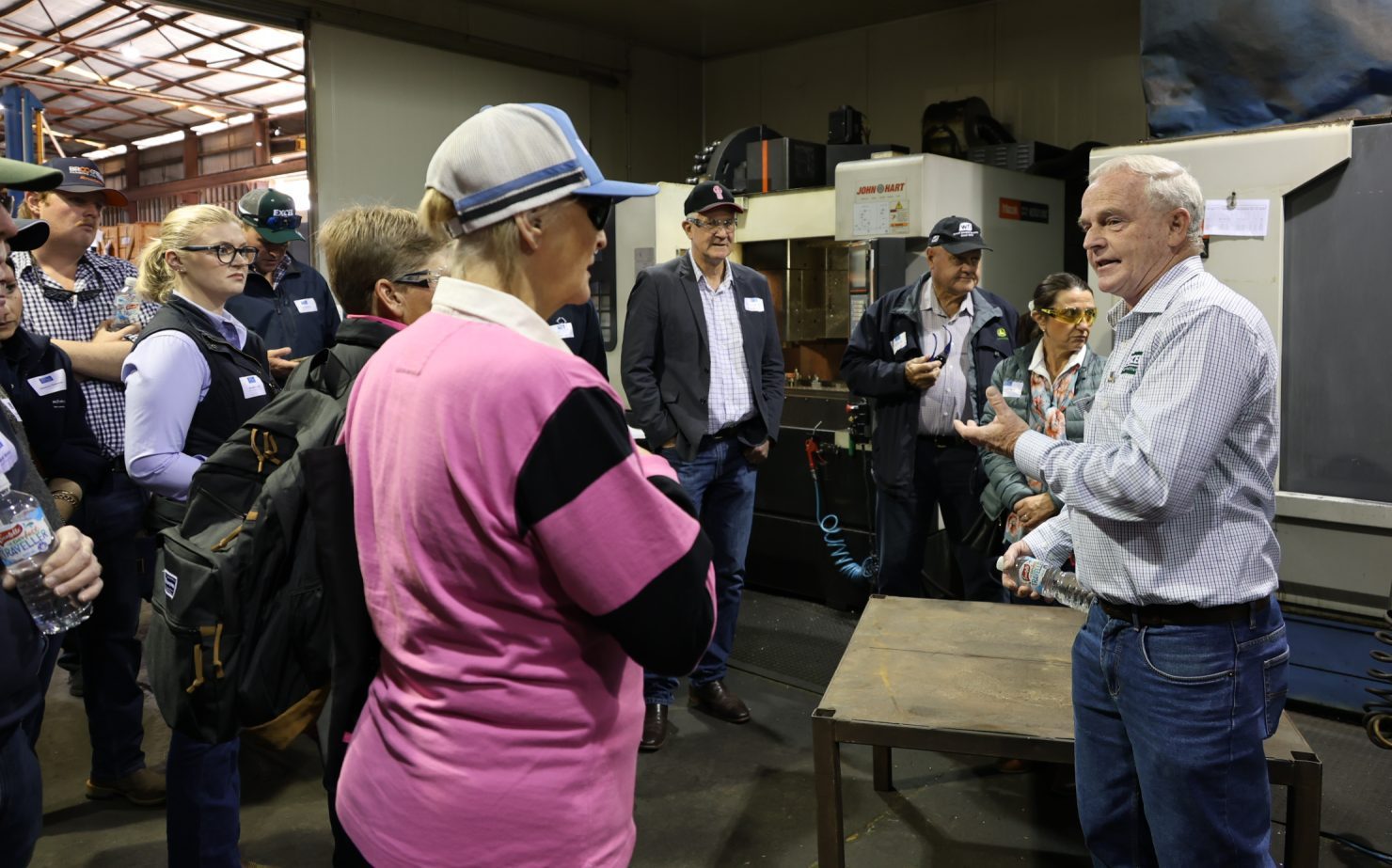
Excel Agriculture employs plenty of high-tech cutting and machining equipment, and sales executive Brian Moran answers a question from Narrabri grower Deb Lehmann.
Excel employs 69 staff, including 11 apprentices, in Toowoomba, and has customers in every mainland state, including WA “top and bottom”.
Mr Kings said customers drive Excel’s product development, and seeding at greater depth for crops like chickpeas, as well as banding of nutrients, means Excel has to be on top of the increased engineering requirement.
“With our parallelogram tyned unit…if it’s dry, people will chase moisture,” Mr Moran said.
That points to a requirement for 800lb rather than 650lb breakout pressure on springs, longer shanks to get further into the profile, and possibly a more powerful tractor.
While growers are investing in new machinery, Mr Kings said on-farm storage which has potential to double as a machinery shed, seemed to be the spend of the moment.
“Everywhere I was two weeks ago, people were putting up sheds for urea,” Mr Kings said, as growers looked to stock up when it was available at $600 per tonne, rather than $1000/t or more in peak demand periods.
RDO Equipment
John Deere rules the roost on cotton pickers in Australia, and RDO Equipment’s site which opened last year supplies most of them.
The 7.2ha site has 9300sqm under roof, and employs 165 people, to make it what is believed to be the largest John Deere dealership in the Southern Hemisphere.
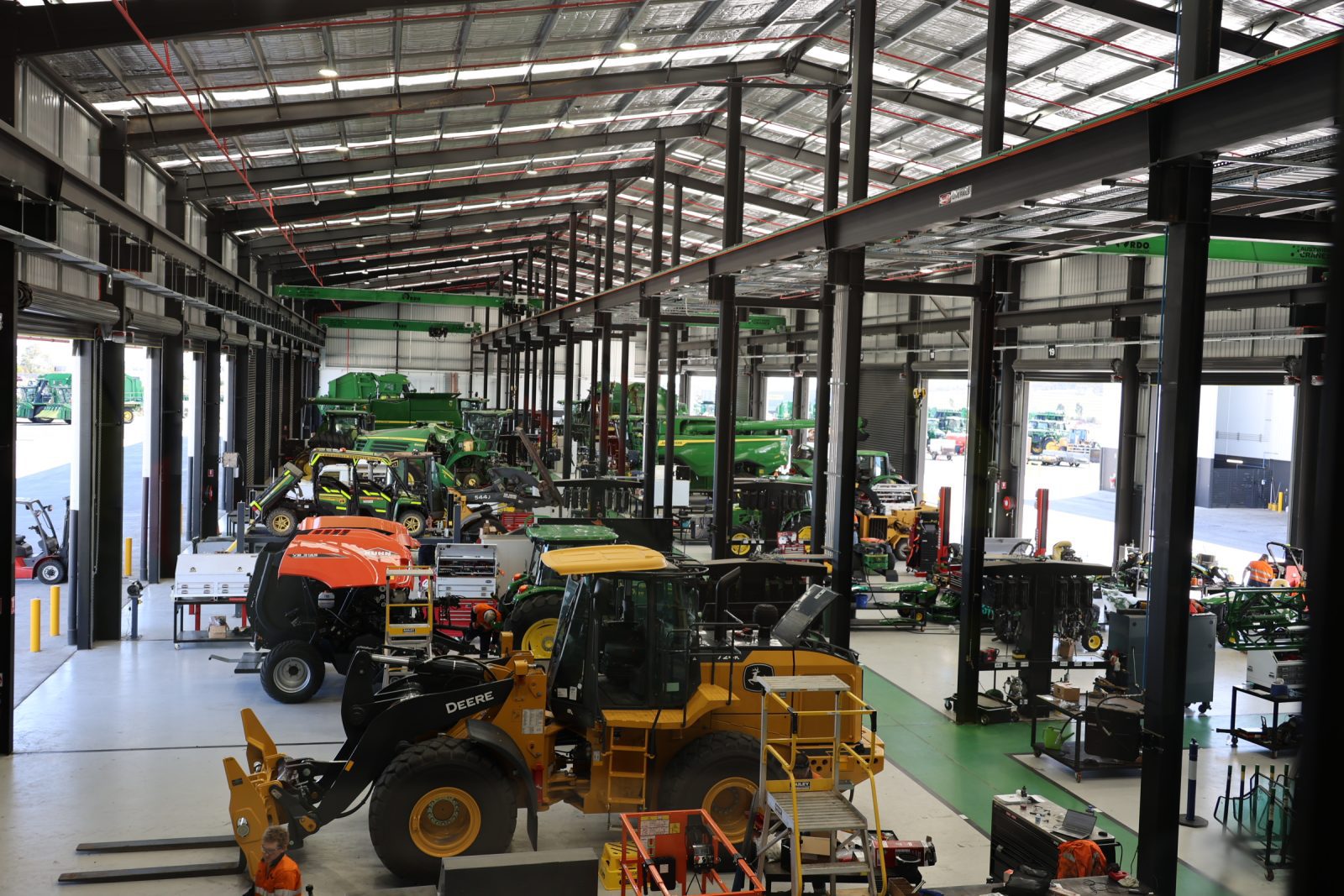
RDO’s workshop services, repairs and upgrades machinery, and also assembles imported equipment.
It services customers as far afield as the Hunter Valley in New South Wales, and Kununurra in WA.
“The cotton industry is a big part of our business, and particularly this branch,” RDO Equipment Australia executive general manager Jeff Lawson said in welcoming the Cotton Collective group.
John Deere pickers are made in the US, and RDO Equipment development manager for digital Andrew Speed said they require at least 250 hours of assembly ahead of delivery to customer.
Spare parts is also a focus of RDO Equipment Toowoomba, which can fly or road-freight components to farmers, contractors, or dealers in need from the 19,000 line items in stock.
“We have $8 million worth of stock in here at the moment.”
Its current “fill rate” is 83 percent, meaning that out of 100 requests, 83 can be met with stock on site, and it can also work with customers to implement contingencies at places like Tipperary Station in the Northern Territory.
“At picking, we get a container of parts that starts at Cubbie and then goes to Tipperary.”
Cotton Collective visitors also got an insight into what John Deere has coming in planting technology from ExactShot, which will be available with ExactEmerge planters.
It includes FurrowVision, which RDO Equipment planter specialist Steve Frahm said was “a couple of years away”.
“It has a live camera that sits in the furrow or seed trench,” Mr Frahm said.
“That’s the future; we’re all looking for that autonomy piece.”
SwarmFarm
SwarmFarm officially opened its manufacturing facility at Wellcamp, just west of Toowoomba, in February.
Farmers who grow summer crops, including cotton, as well as winter crops, were among SwarmFarm’s foundation customers as they sought to keep on top of weeds with an autonomous unit in their busy cropping schedule.
SwarmFarm now has roughly 200 robots in the field, including the 80 and counting that have been made to date at Wellcamp.
SwarmFarm sales executive Sam Finlayson told the group some clients now have two robots, several have three, and one is about to buy their fourth.
While SwarmFarm robots can operate without data connectivity, they cannot be controlled or monitored remotely, and Mr Finlayson said customers were increasingly choosing to deploy their units with satellite-based signal in place.
“There’s a lot of roll-out now with Starlink,” he said.
SwarmFarm has a team of three in software support based at Wellcamp, and one in Narrabri.
“As we grow, we’ll try and find service technicians in those areas.”
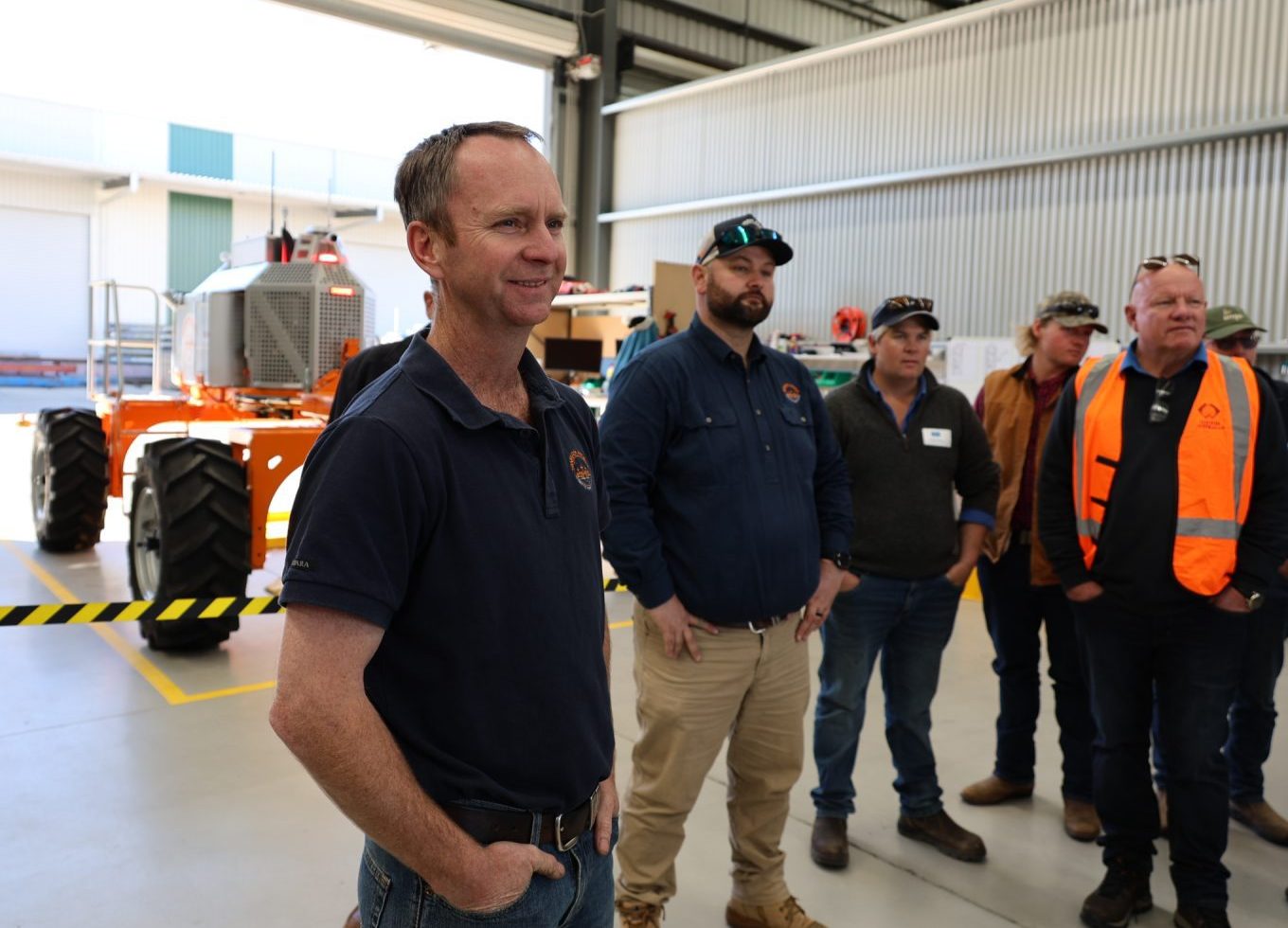
SwarmFarm head of manufacturing Jeremy Phillips fields question from the Cotton Collective tour at SwarmFarm’s facility at Wellcamp.
SwarmFarm robots are powered by an 84hp engine, and have a maximum operating speed of 10kmh.
“The whole robot has been designed with the right to repair in mind; the whole machine is very simplistic,” SwarmFarm head of manufacturing Jeremy Phillips said.
SwarmFarm started selling commercially in 2016, and some units are now being sold second-hand with 10,000 hours on them as an alternative to buying a new robot for around $350,000.
Grain Central: Get our free news straight to your inbox – Click here
HAVE YOUR SAY