
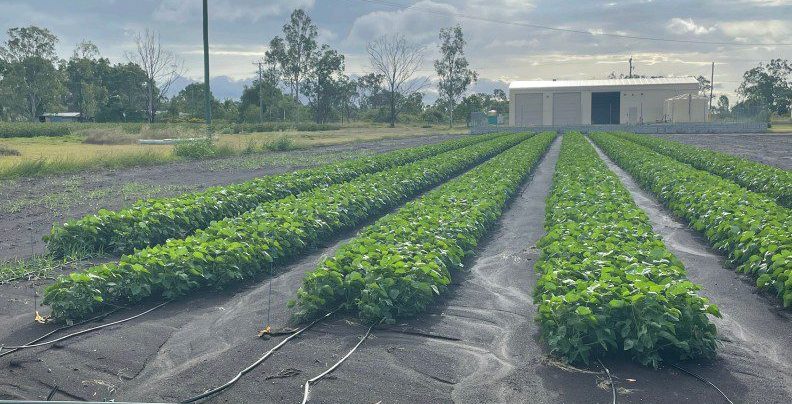
Trials of the yet-to-be-released Green Devil mungbean variety at Rockhampton in CQ. Photo: Andrew McDonald
WITH cropping expanding into northern Australia, seed company AgriVentis is developing varieties and trialling novel crops tailored to withstand harsher growing conditions in regions from Central Queensland and beyond.
It’s a niche the Sydney-based, Turkish-majority-owned company has carved out, which includes a portfolio of crops including, mungbeans, chickpeas, mustard, sesame, soybeans and native rice.
Most of AgriVentis’s work is centred in Rockhampton, where the company often works alongside Central Queensland University researchers.
AgriVentis technical operations manager Andrew McDonald said the environment at Rockhampton provided the perfect environmental conditions to test varieties.
“The Rockhampton climate, if you’re going to see what can perform, it’s a very harsh climate,” Mr McDonald said.
“We tend to see a lot more in our farming systems…a tough finish that affect yields.
“Where some varieties seem to perform better in those conditions that’s really what we’re trying to target.”
The push into new crops comes as more growers from southern Queensland and New South Wales try their hand at turning northern parcels into broadacre country.
Mr McDonald said the opportunity of cheaper country with high quality soil was too good to pass up for some growers, but the newer cropping regions required different techniques and systems to southern regions.
The company’s staple pulse variety, the Green Taipan mungbean, released two years ago, had become a favourite for growers in the northern areas.
“It’s got really good agronomic attributes to lend itself to still performing in a tough season.”
Sesame potential
Alongside pulse crops, Mr McDonald said the company was working to expand plantings of sesame in northern Queensland.
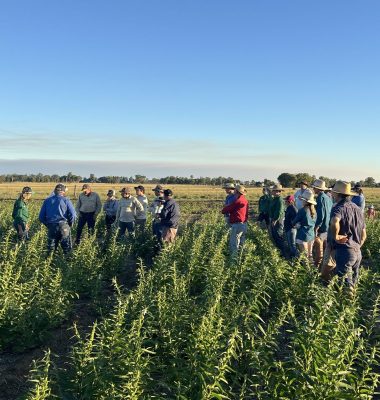
A crop of sesame growing at Jandowae last season. Photo: Andrew McDonald
He said AgriVentis was eyeing commercially-grown sesame this season alongside some trial work.
“We’re looking at sesame as a possible opportunity for that north-west region because it is very much a drought-tolerant crop.
“It’s grown in countries such as Ethiopia and Sudan which probably have a very similar climate to what we sort of have in that north-west Queensland region.”
Mr McDonald said the sesame industry had a long history in Australia, but the shattering varieties grown in the 1980s hadn’t proven successful.
“These new varieties that come from…Equinom in Israel and Sesaco out of the US are non-shattering sesame varieties, so they lend themselves to being direct harvested, no different to harvesting mungbeans.”
He said there was already a ready-made domestic market of about 10,000 tonnes which was currently being filled by imports.
“Where we’re going is that we’re looking to be self-sufficient.
“We’re thinking that, potentially, we could supply the domestic market with Australian sesame.”
New mungbean, chickpea varieties
On the back of recent innovations, Mr McDonald said AgriVentis was preparing to release new varieties of mungbean and chickpea for the 2026-27 season.
He said at recent trials, the desi chickpea variety had demonstrated its ability to thrive under reduced rainfall and would be suited to the drier zones in central and western Queensland.
“We’re not necessarily always looking at the highest-yielding variety and the best season; we’re looking at the variety that will perform as an all-rounder.
“What we’ve seen of it in the first year of the national variety trials was…on the high-yielding sites where everything went right, it was in the top five, but where it really performed well were the low-rainfall sites where everything else fell behind.
“It’s a good tool for a farmer to plant and…we’re…looking at what’s a good variety that’s going to perform in the good and the tough years.”
AgriVentis are also targeting 2026-27 for the release of a new mungbean variety, Green Devil, more suited to high rainfall sites.
Mr McDonald said it was an “exciting variety” that had similarities to Green Taipan, but also performed well under irrigation.
Grain Central: Get our free news straight to your inbox – Click here
HAVE YOUR SAY