
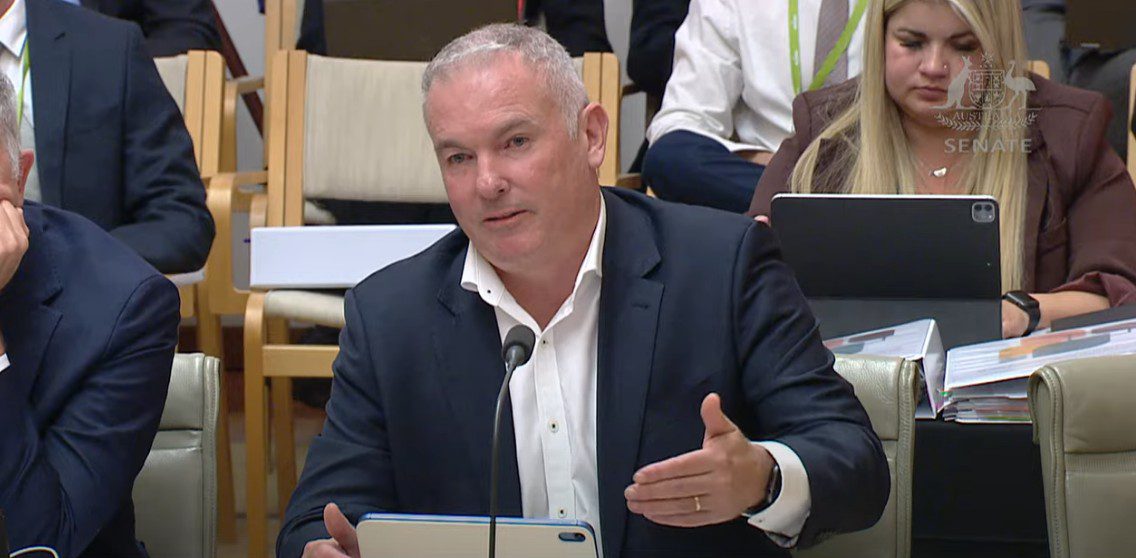
APVMA chief executive officer Scott Hansen appeared at Senate Estimates on Wednesday.
THE AUSTRALIAN Pesticides and Veterinary Medicines Authority is on track for a final decision on paraquat and diquat by December.
This aligns with the regulator’s earlier advice that a decision was expected in the final quarter of this year.
However, the timing represents a delay of nearly 12 months from the initial target date of January 2025, with public consultation on the proposal closing on October 29 last year.
APVMA chief executive officer Scott Hansen answered questions about the process during the Federal Parliament’s Rural and Regional Affairs and Transport Committee senate estimates sitting on Wednesday.
Mr Hansen said “at this point in time” the decision was due in December.
He acknowledged the timeframes had been extended, but said the delay was necessary to ensure the decision was thorough and not rushed.
“We are always really conscious about time pressures,” Mr Hansen said.
“We are conscious about them because it leaves everyone in limbo about what the outcomes are going to be and second guessing what they look like.
“But, at the same time, we make sure we take the time to make the decision right, even if it does mean we take extra time.”
Mr Hansen said the review was also more complicated than others, with 168 submissions received in response to the public consultation.
“Of the 168, 61 of them contained new information that required us to undertake new assessments, and to rework some of the assumptions that we had built into our calculations previously.”
In total, he said 29 submissions related to the health impacts of the chemicals, while 139 “were from farmer or industry groups with regards to the negative impact it would have on their sector”.
Overseas vs Australia data
Nationals Senator for Queensland Susan McDonald questioned whether this new information or data came from local or overseas studies.
She also queried if and how overseas data and decisions impacted the views of the APVMA.
Ms McDonald pointed out that paraquat and diquat had “recently been reapproved for use in the US”.
“All of the submissions that included additional data relevant to the use patterns was Australian data,” Mr Hansen said.
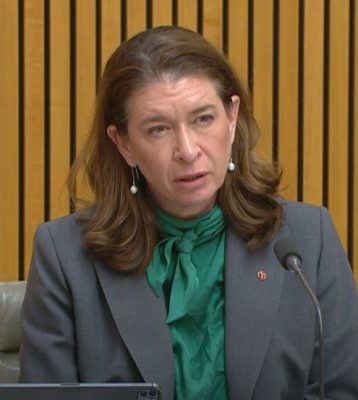
Nationals Senator for Queensland Susan McDonald
“We did receive some additional data for assessment with regards to health linkages that came from international studies.”
Mr Hansen noted that there had been “an overturn of previous bans” in some overseas jurisdictions.
“We pay attention to the risk assessments that are done and the conclusions that they reach in so far as we use them to piggyback off with regards to our own assessments.
“But, as you’d be aware, our use patterns, the crop stages in-which it is used, how it’s used, the restrictions we have on it are very different to a number of the other jurisdictions that have looked at these chemicals.”
Paraquat and diquat are used widely in broadacre cropping, and uses include paraquat as an alternative to glyphosate to kill weeds in fallow, and for spot-spraying, while diquat is used as a desiccant in pulse crops.
Grain-grower and farming groups have highlighted the crucial role the chemicals play in modern, sustainable crop production.
Some medical and advocacy bodies, such as Parkinson’s Australia, have called for the chemicals to be banned due to what they claim to be an unacceptable risk to human health.
APVMA performance slippage
Mr Hansen also addressed a drop in the APVMA’s timeframe performance seen in recently published data.
Timeframe performance refers to the proportion of applications processed within the statutory period set out in the regulations.
“We set a target of 90 [percent], we came in at 87.1[pc] largely pulled back by delays in the ag-chem space in terms of the new products coming through.”
He said staffing gaps and a rise in complex, time-intensive chemical reviews were key factors behind the result.
“In the last 12 months, we have done five final regulatory decisions on chemical reviews; that’s more than what’s been done…in the previous couple of years combined.
“The people who did the environmental assessments and the health assessments on those are the same ones that we ask to do the health assessments and the environmental assessments on our pre-market applications.
“We naturally have a bit of a logjam in terms of the work flows in that space.”
Mr Hansen said the APVMA had recently introduced dedicated resources for both the pre-market and post-market spaces.
“We are going to rely heavily on using external scientific experts to help buffer the workload across the two.”
Mr Hansen said delays were also caused by the quality of some applications received and the need to seek additional information from applicants.
He said the agency did “a lot of handholding to help people”.
“We receive a lot of applications where we could be a lot more efficient in our timeframes if we just said: ‘your application doesn’t meet our statutory criteria; we’re failing you’.
“We send out a lot of requests for additional information to help bolster their applications to try to work out what they’re seeing that we are not and that takes time.”
Mr Hansen said these issues will be the focus of “the next 12 months to try and bring that timeframe performance back into check”.
Grain Central: Get our free news straight to your inbox – Click here
HAVE YOUR SAY