
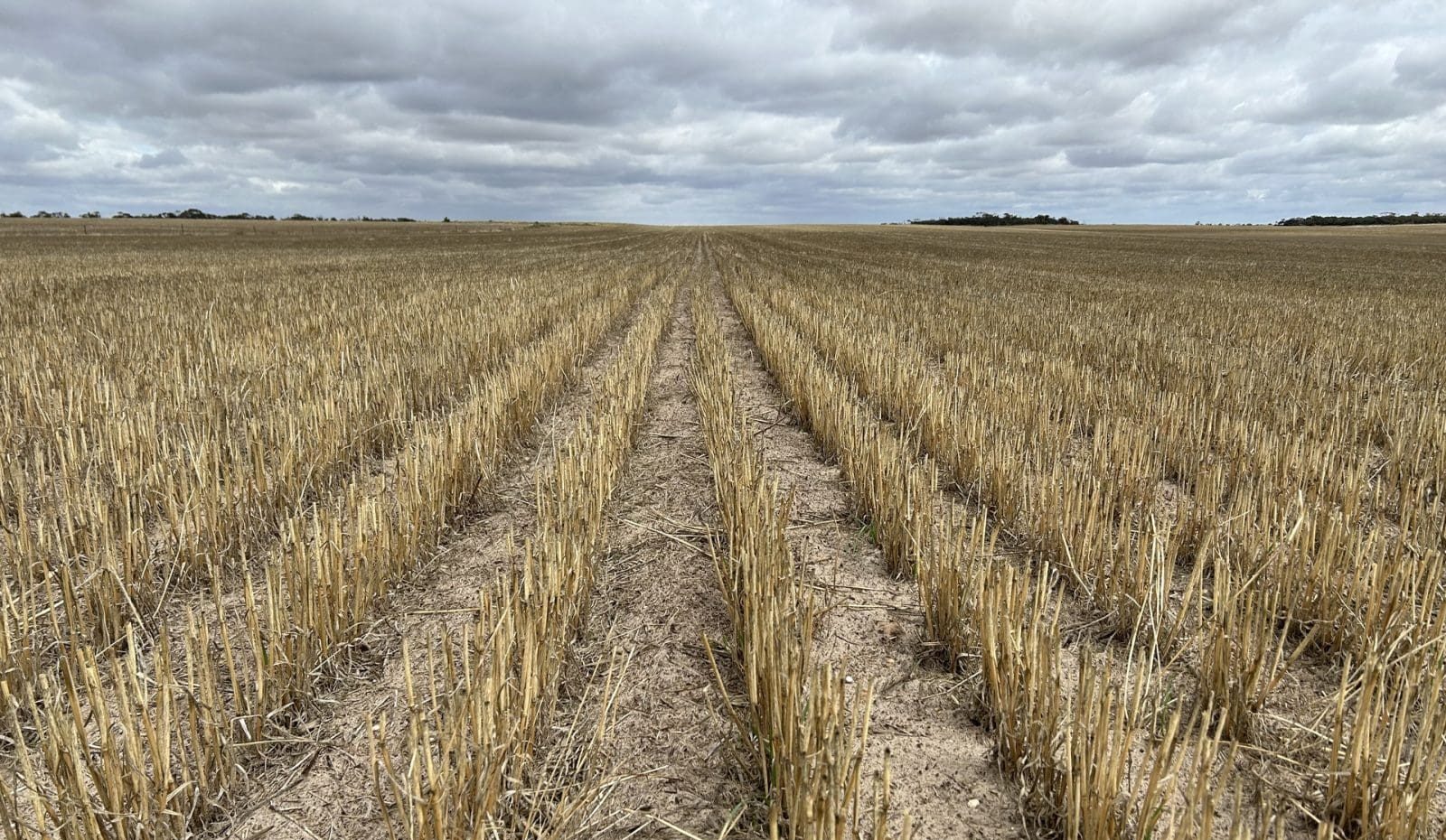
Crop stubble and residues have been touted as a key feedstock to produce biomethane.
THE NSW Government has launched its Renewable Fuel Strategy to accelerate the production and use of renewable fuels to drive down emissions and underpin industrial activity in the state.
The strategy outlines 20 actions to scale up the state’s renewable fuel industry with up to $170 million in funding for renewable fuel and biomethane production.
The strategy has the potential to create additional value for NSW grain growers, with the strategy targeting growth in biomethane manufacturing, a biogas produced using organic material such as crop residues, manure, and food and municipal waste.
The plan also pledges $1M to fund crop research and development trials to to test and demonstrate biomass production opportunities in partnership with primary producers.
These include the development and commercialisation of break crops, novel crops and short-rotation woody crops on marginal land.
NSW Minister for Climate Change and Energy Penny Sharpe said a strong renewable fuels industry will help NSW meet its emissions-reduction targets, decarbonise hard-to-abate sectors, drive economic development and jobs in regional NSW, and improve domestic fuel supply.
“This is a win-win-win opportunity: a win for jobs, a win for fuel security, and a win for the planet,” Ms Sharpe said.
“The Minns Labor Government is boosting local production of renewable fuels to diversify the economy and deliver new jobs, growth and enhanced energy security for our state.”
Bioenergy Australia chief executive officer Shahana McKenzie said the strategy provides the type of policy direction needed to unlock new projects and commercial momentum.
“This is the kind of policy that builds capability at scale,” Ms McKenzie said.
“It will stimulate new biomethane and biofuel production, activate agricultural residues and waste streams, and boost local manufacturing, transport and logistics activity across regional NSW.”
Biomethane drive
Unlike other states, NSW has a long history of producing large quantities of ethanol and biodiesel.
Operating since 1991, Manildra Group’s ethanol plant at Bomaderry can produce 300 million litres a year from waste wheat starches, while the Bloomfield Group’s Biodiesel Industries Australia in Maitland can produce up to 20Ml of biodiesel a year from used cooking oils.
The state’s fledgling biomethane industry is currently centred around energy industry company, Jemena, which started up the Malabar Biomethane Injection Plant in 2023.
It currently produces 95 terajoules (TJ) of biomethane per year.
Jemena also operates a small green-hydrogen plant, Western Sydney Green Hydrogen Hub, built in 2021.
The company has signed several memorandums of understanding with proponents, including Optimal Renewable Energy, Valorify, Sojitz and Gwydir Circular Economy, who are looking to produce biomethane across regional NSW.
The Valorify projects – Ararat Bioenergy and Riverina Bioenergy – are targeting crop stubble and low-grade or excess straw as feedstocks to produce biomethane.
The NSW strategy features several demand and supply-side measures aimed at growing biomethane production.
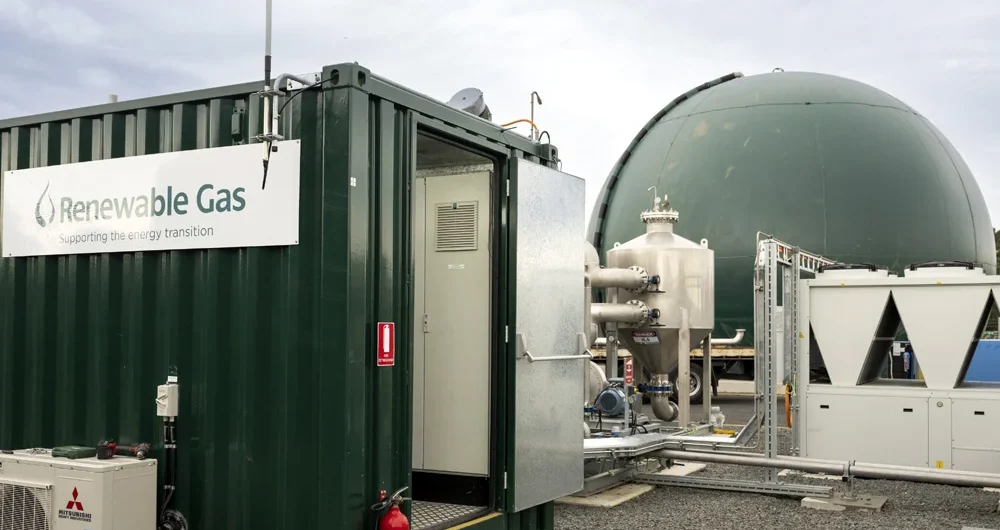
Jemena’s biomethane production facility, the Malabar Biomethane Injection Plant, located at Malabar in Western Sydney. Photo: Jemena
Demand-side levers
A key action will be to expand the Renewable Fuel Scheme, established in 2021, to include biomethane.
Currently set up to support green-hydrogen manufacturing, the scheme sets an annual production target, with producers creating certificates for every gigajoule produced.
Liable parties, such as large users and natural-gas retailers, are compelled to purchase renewable energy under the scheme or risk paying certain penalties.
The scheme is designed to drive demand by reducing the sale price of renewable fuels, and further support producers to scale up their business.
The recently released strategy commits the NSW Government to introduce legislation to expand the scheme to support biomethane from 2028.
This will include establishing a biomethane and green-hydrogen target that grows to 8 PJ by 2038, with a $10.50 penalty rate.
Jemena’s managing director David Gillespie said the strategy and expansion of the scheme gives certainty to industry that biomethane is a fuel that is here to stay.
“A thriving biomethane sector will enable our industrial customers to reduce their emissions while at the same time continuing to provide jobs and produce everyday products Australians need like medicines, glass, fertilizer and steel,” Mr Gillespie said.
“The New South Wales’ Renewable Fuels Strategy and the government’s recognition of biomethane are two key building blocks which are enabling the development of Australia’s burgeoning biomethane sector.”
Supply-side supports
The strategy also featured funding and research measures to back efficient and economical manufacturing of biomethane and other renewable fuels.
It included plans to develop an NSW Government-owned biohub demonstrator project designed to take on some early-mover risk and providing a knowledge-sharing opportunity.
The project will demonstrate the methodology of collecting onsite organic waste and combining this with feedstock streams from the surrounding region to deliver greater scale.
Alongside this project, the government has committed up to $40M in funding to support the development of biomethane production facilities, as a stream under the existing Industrial Decarbonisation Initiative.
This action will provide co-funding for biomethane producers and prioritise projects that can most effectively deliver biomethane production in the near term, supporting our hard-to-abate sectors and NSW’s fuel security.
Grain Central: Get our free news straight to your inbox – Click here
HAVE YOUR SAY