
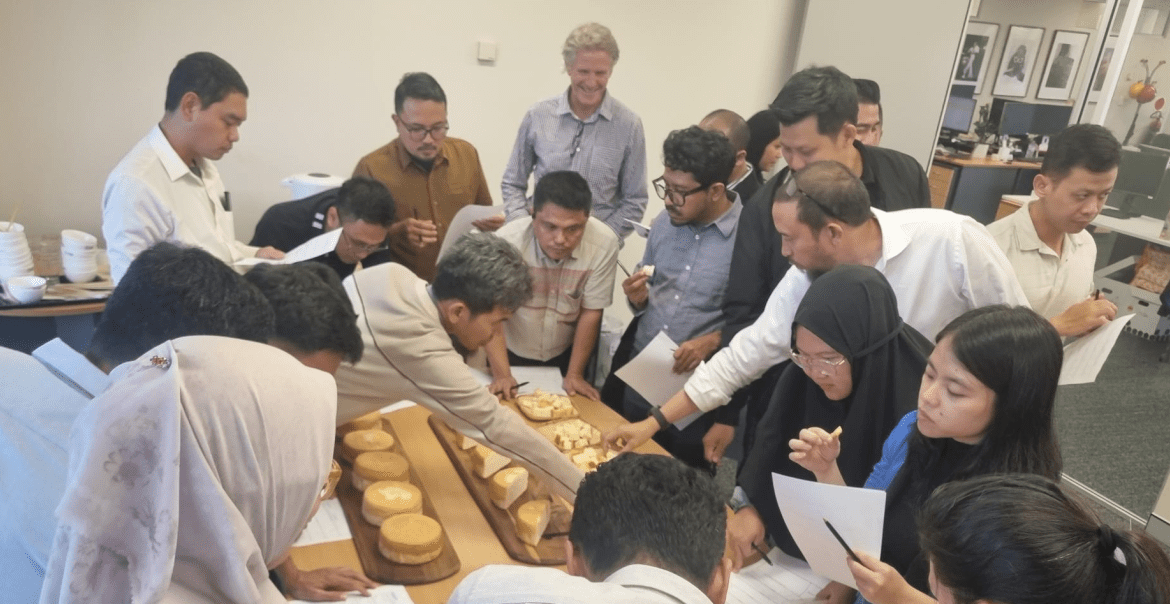
Australia has a long and close relationship with Indonesia flour millers and bakers, and a delegation of future leaders visits Australia annually through the IA-CEPA ECP Katalis program. Photo: Australian Export Grains Innovation Centre/Grains Australia
GRAIN Producers Australia warns a new arrangement between Indonesia and the United States could be the first sign of governments redirecting grain trade through political deals, potentially squeezing Australian wheat out of key export markets.
GPA believes this evolving issue, which has come about to manage trade relations, is a growing risk to Australian grain producers if
GPA chair and Western Australian grower Barry Large said the concern for Australian producers was not simply the volume of wheat involved, but the precedent the arrangement could set.
“Australian grain producers compete extremely well in global markets when trade is open and decisions are driven by price, quality and reliability,” Mr Large said.
“What worries producers is the idea that wheat demand starts being carved up through political agreements between governments.
“If this becomes a trend internationally, markets that have traditionally been open to competition could quickly start shrinking.”
From the parties
On February 20, the US Embassy and Consulates in Indonesia announced the signing of the US-Indonesia Agreement on Reciprocal Trade.
“Today, the Trump Administration finalized a landmark trade agreement with Indonesia that will provide Americans with unprecedented market access and unlock major breakthroughs for America’s manufacturing, agriculture, and digital sectors,” the website states.
On the same day, the Indonesian Government made a similarly enthusiastic announcement, quoting Coordinating Minister for Economic Affairs Airlangga Hartarto.
As part of the reciprocal agreement, Indonesia is committed to providing zero tariffs for several key products from the US, particularly agricultural commodities including wheat and soybeans.
“Indonesians pay zero percent for goods produced from soybeans or wheat, in this case, noodles, or tofu and tempeh, so our people are not burdened with additional costs for raw materials imported from the United States,” Minister Airlannga said.
Minister Airlangga said this step ensures that the public is not burdened with additional costs for products made from imported raw materials.
Top buyer for Australia
Indonesia is one of the world’s largest wheat importers and for many years has been Australia’s biggest export wheat market.
It imports around 10-11 million tonnes (Mt) of wheat annually and Australia regularly supplies 4-5Mt in strong production seasons.
Recent reports that Indonesia has agreed to increase preferential wheat purchases from the US to around 2Mt per year effectively reserves a portion of the market outside normal commercial competition.
Australian producers have secured strong market share in Indonesia over many years through the quality and reliability of Australian wheat.
Close proximity to Indonesian flour mills has also reinforced Australia’s competitiveness in the market.
Mr Large said the development echoes trade dynamics seen during previous global tariff disputes, where agricultural purchases became part of broader geopolitical negotiations.
“The bigger issue is what this signals for global grain trade and how it impacts us as producers.”
“If countries begin directing agricultural purchases to manage relationships with major economies, the rules of global trade start to change.
“Australian producers depend on transparent and competitive export markets, and it’s important those markets remain open.
“Through Grains Australia, significant work has gone into the relationship between our export market countries, and in particular Indonesia, and we hope Grains Australia, our government and the Indonesian Government continue to work together to further this relationship.”
Australia exports around 70 percent of the wheat it produces each year, making reliable access to international markets essential for producers.
Mr Large said Indonesia remains a critical partner for Australian wheat, but the situation highlights the importance of protecting fair and competitive trade conditions globally.
“Australian producers don’t ask for special treatment, but we do expect markets to remain open and governed by fair competition rather than political negotiation.”
Source: GPA, Indonesian Government, US Government
HAVE YOUR SAY