
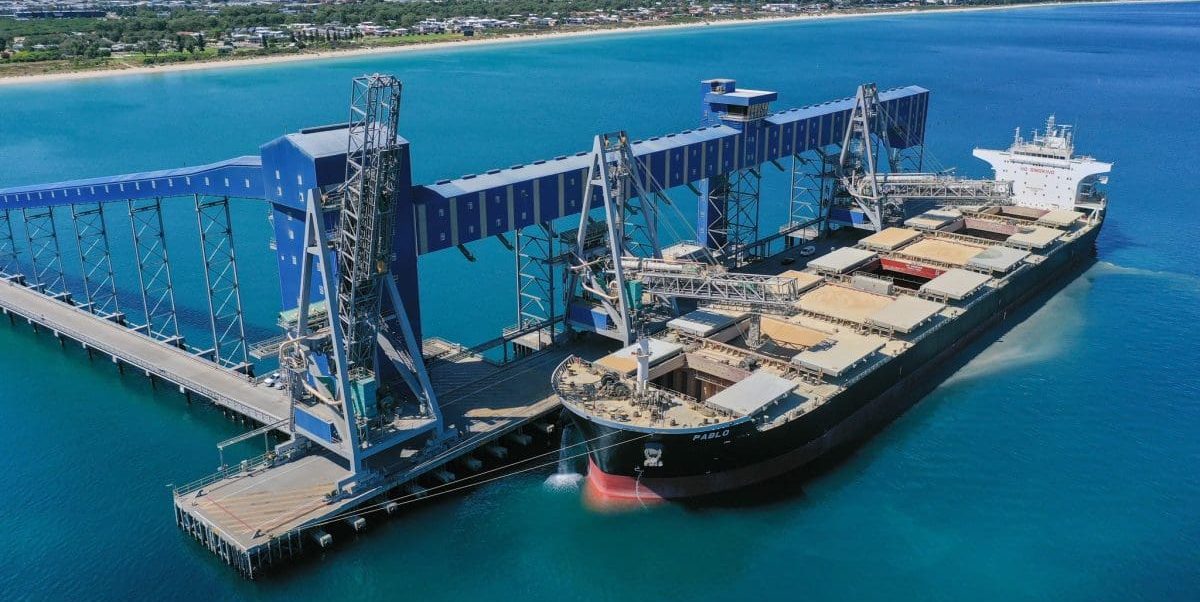
A cargo of wheat loads at CBH’s Kwinana terminal. Photo: CBH Group
GRAIN Trade Australia has called for a new approach to export governance and regulation which gives industry more power and oversight of Department of Agriculture, Fisheries and Forestry functions under a new “joint decision making” system.
In a submission to the Federal Government’s proposed export cost recovery program, the peak body claimed the plan lacked adequate consultation and transparency around DAFF costs, and risked becoming a tool to “raise revenue”.
The Federal Government has legislated that where demand for a government activity is created, the non-government sector may be charged for some or all of the efficient costs of that activity.
DAFF therefore imposes fees and levy-based charges on the grain and plant-products export industry to recover the cost to the department for performing regulatory activities.
DAFF estimates the total cost of performing these activities and translates these into fees and charges for specific grains export-related tasks, presented in the Cost Recovery Implementation Statements (CRIS).
DAFF has released CRIS for key agricultural export commodities which will come into effect from July 1.
The statement outlines new cost-recovery arrangements and the progression to full cost recovery by 2029-30.
DAFF estimated that it cost-recovered $17.2 million from industry in 2024-25.
This was more than the total cost of grain and plant-export activities estimated at $16.4M.
Unlike other commodities, the grains industry has typically over-recovered its costs, with the sector paying in excess of $6.32M more than its budgeted figure over the past five years.
In the new CRIS, DAFF has updated its fees and charges to accommodate this full-recovery arrangement, including adding new activities to the scheme.
Overall, five new activities will be added; of those, three are relevant to the grains sector:
- Manual of Importing Country Requirement sustainment;
- Fit-and-proper-person assessment; and,
- Non-compliance investigation and triage.
In addition, DAFF has proposed to introduce “a new and ongoing regulatory efficiency program into the cost recovery arrangement” which will be an additional activity.
The government has predicted that revenue recovered from the industry will decrease initially by 0.13 percent in 2026-27 and then increase by 5.54pc in 2027-28, 6.51pc in 2028-29, and 5.66pc in 2029-30.
Overall, the CRIS will increase revenue recovered from the industry by 18.63pc from $16.24M in 2026-27 to $19.29M in 2029-30.
These figures are based on “stable export volumes and export activity” and could fluctuate depending on the size of the grain crop and domestic consumption.
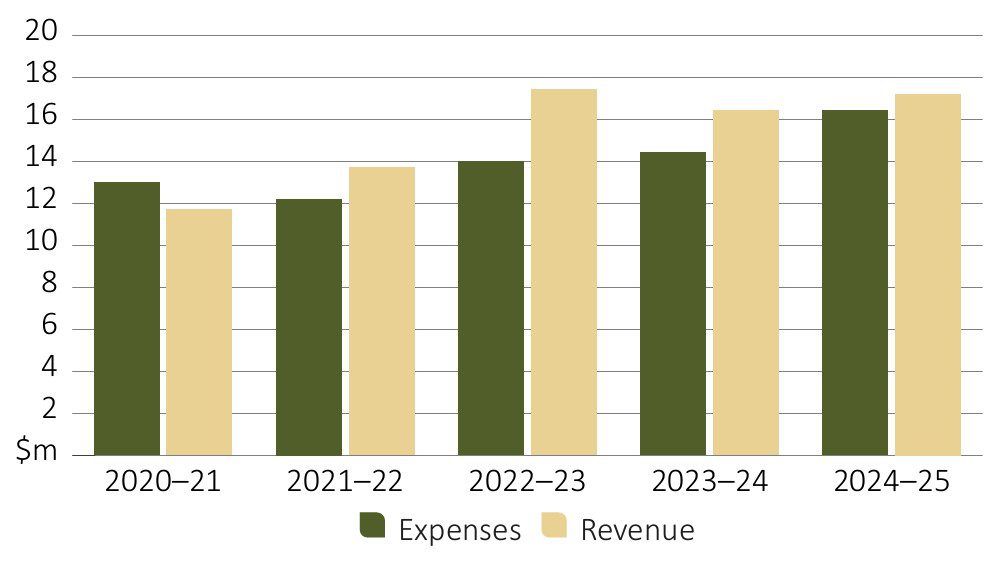
Grain and plant products cost recovery arrangement. Note: Based on point-in-time data from 2024–25 end of year interim actuals and may be subject to adjustments.
GTA submission
In a submission sent to DAFF and signed by GTA chief executive officer Pat O’Shannassy, the organisation called out the scheme for failing to provide “transformative initiatives” for the grains sector while simultaneously over-recovering revenue from its members.
“Despite the over recovery…restrictive and inflexible DAFF funding arrangements hampered grain sector efficiency with cost restrictions applied to transformative grain industry projects (for example the ePhyto, delays to the registered establishment audit program, travel necessary to advancing technical market access in certain export markets),” the submission said.
The document also said it appeared through GTA’s prior contact with DAFF that it “has focused predominantly on revenue measures, with insufficient examination of DAFF’s cost base, delivery costs, and operational efficiency”.
GTA also expressed concern that it was not consulted about the expansion of activities into the CRIS arrangement, claiming that it “came as a surprise to GTA and the grain industry”.
“There has been:
- a) No meaningful consultation,
- b) No detailed explanation, and
- c) No genuine engagement with industry.”
Govt accountability to industry
GTA went further in its submission, calling for long-term, transformative changes to the export regulatory framework if full cost recovery was to be achieved.
The peak body said it proposed “structural reform of Australia’s export regulatory architecture” which moved “beyond consultation toward structured co-design”.
“GTA requests DAFF adopt a collaborative approach to government efficiency and reform.
“This may be best served through a governance mechanism between senior departmental leadership and peak exporter bodies to identify and prioritise efficiency opportunities and to steward these through to implementation.”
GTA said the issue was especially evident in the “new and ongoing ECR fee” described as the regulatory efficiency program.
“[I]f industry is now being asked to fund efficiency targeting department initiatives governance arrangements must be agreed.
“Based on the failure of previous government projects (e.g.: Busting Congestion) GTA cannot support this initiative without joint decision-making capabilities.”
The submission said this partnership must be in the form of a “formal governance mechanism between senior departmental leadership and peak exporter bodies”.
“Without shared decision-making and measurable outcomes, additional “efficiency” levies risk being viewed as revenue measures rather than productivity initiatives.”
The deadline for feedback on the draft export CRIS 2026-27 is March 20.
Grain Central: Get our free news straight to your inbox – Click here
HAVE YOUR SAY