
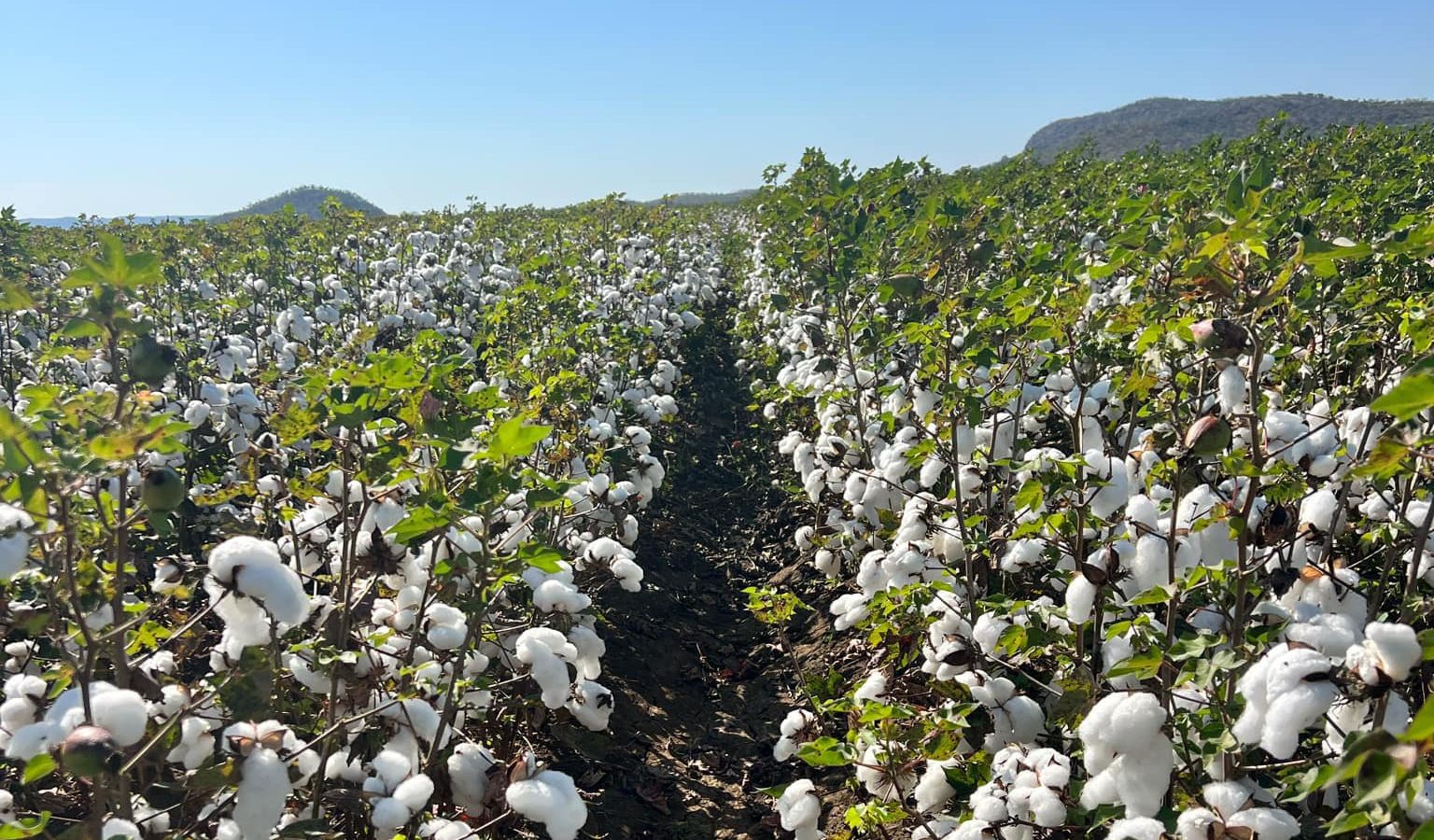
An Ord cotton crop. Photo: OrdCo
DELAYS in regulatory approvals are holding back the Ord Valley’s emerging cotton industry, a parliamentary inquiry has heard.
A key example was the First Point of Entry (FPOE) status declaration for Port of Wyndham, with funding secured in January 2025.
The declaration and supporting infrastructure would allow cotton containers to be exported from the port at rates comparable with other ports.
It was anticipated that FPOE infrastructure would be in place to export this season’s cotton crop but regulatory delays have pushed that back until at least mid-2027.
In the meantime, containers will have to be sent to the Darwin Port for clearance before being packed with cotton ginned at the Kimberley facility and exported out of Wyndham.
OrdCo chief executive officer Daniel Raymond told the Joint Standing Committee on Northern Australia this adds an estimated US$600 per container cost to growers.
He said at an estimated 1000 containers this was an extra A$1 million cost to export from Port of Wyndham.
“When you add that up, the additional cost, which is basically borne by the farming community, is really significant,” Mr Raymond said.
“We committed to a gin; we spent $60M building a gin and creating an industry.
“We had promises from the Prime Minister and various other people right through both sides of the federal and state government, yet we still find ourselves effectively exposed to that FPOE issue.
“I think everybody here in 2025 knew we’re going to have to wear that, but we all thought for 2026 that would be well and truly sorted.
“People are only…realising at the moment that it’s not the case.”
Cambridge Gulf operates Port of Wyndham under a management agreement with Kimberley Port Authority.
Cambridge Gulf CEO Tony Chafer said he was already seeing the negative commercial implications of this delay.
He said there were reports that the Darwin Port and Katherine Gin were making offers to growers to have cotton ginned and exported out of the Northern Territory at cheaper rates.
“The Katherine Gin is trying to convince some of the growers here to actually send their crop product modules up to Katherine for ginning,” Mr Chafer said.
Mr Chafer said reports of flooding wiping out crops, along with reduced planting, meant there was “maybe only 10,000 bales” of production this season.
“The Katherine Gin, as I understand it…is facing some real troubles this year.
“It’s a privately owned gin; so, I guess the person that owns that can afford to heavily discount to try and attract a few more modules of cotton through so he can enable the gin to survive for another year and until all of the trade is directed through the Northern Territory, if we’re not careful.”
Mr Chafer said there were similar reports of Darwin Port offering “very unsustainable rates” to export containers of cotton.
“It’ll be a very sad outcome if we lose an East Kimberley trade because the Darwin Port, for other reasons, decides to offer more competitive rates.”
Wyndham infrastructure work
Mr Chafer said finalising approvals for infrastructure required for FPOE status was one part of process still being worked through.
He told the committee that the “standard design” for Department of Agriculture, Fisheries and Forestry facilities was not practical for the smaller port sites like Wyndham.
“We don’t need kennels for dogs; we don’t need gymnasiums for DAFF employees,” Mr Chafer said.
“We just need somewhere where they can do their paperwork at the end of the day, have a shower and go to the bathroom.
“[W]e, working through the Kimberley Ports Authority, have managed to reduce the requirements to a more manageable level.”
Freight equalisation calls
To address the costs of exporting cotton through Wyndham, the industry has called for a freight equalisation scheme to be administered by the WA Government.
Mr Raymond said the scheme would see the government cover the cost of sending containers to Darwin for clearance as a temporary measure until FPOE was finalised.
“I’d love to see a system [to] effectively rebate that differential and I think that would…recognise probably the delays in things happening.”
He said the cost to the government would not be large, but the impact on affected businesses would be “enormous”.
“There are no big businesses here; we’re all small businesses, so all of the businesses here are very exposed to quite small movements in things like freight costs.
“Certainly, for the farmers, we’re trying to establish a new industry; everyone’s put a lot of money into it.”
Grain Central: Get our free news straight to your inbox – Click here
HAVE YOUR SAY