
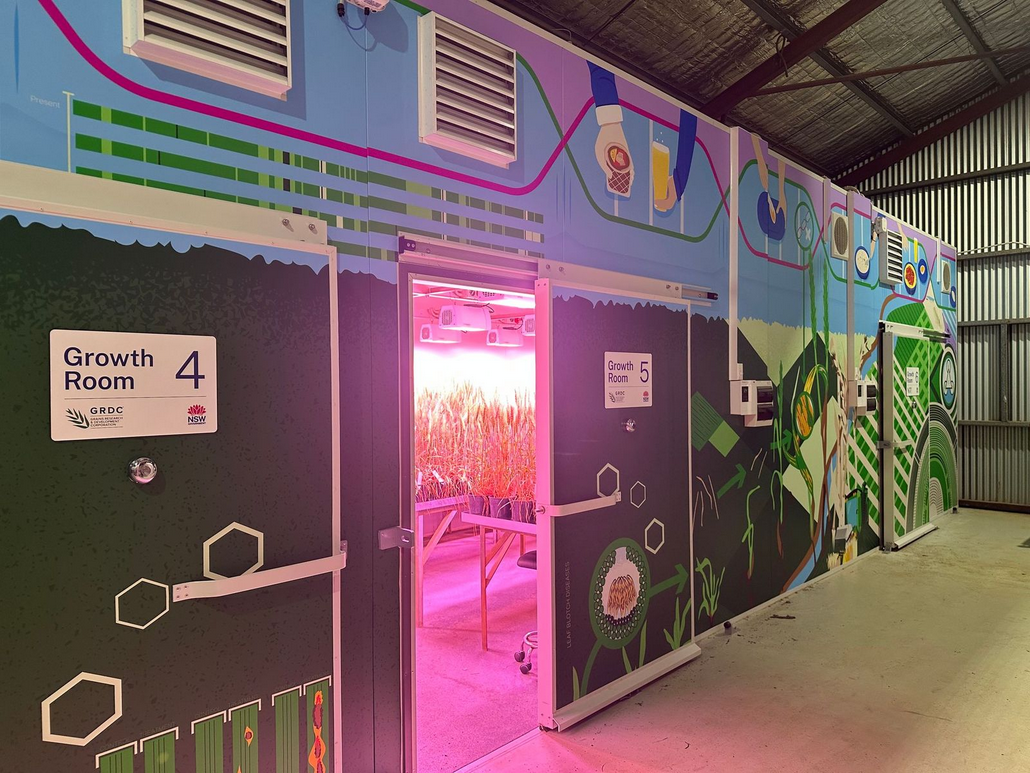
George Hulbert Seed Vault and the Plant Pathology Growth Rooms at the Wagga Wagga Agricultural Institute. Photo: NSW DPIRD
THE NEW South Wales Government has unveiled a new $1.1-million seed vault and plant growth facility at the Wagga Wagga Agricultural Institute, strengthening NSW’s ability to protect valuable crop genetics and support the development of more resilient grain varieties.
The facility will securely store thousands of unique grain seed lines in a climate-controlled environment, preserving critical genetic resources for future generations and safeguarding Australia’s food security.
The facility also includes three purpose-built Plant Pathology Growth Rooms, part funded by the Grains Research and Development Corporation, which will enable NSW Department of Primary Industries and Regional Development scientists to accelerate research into disease resistance in key winter grain crops.
Together, the new facilities will support the development of varieties better equipped to withstand emerging pests, diseases and changing climatic conditions, helping to secure the future of Australian agriculture.
Seed vaults are important as they safeguard the world’s crop diversity, providing vital insurance against disasters, climate change, disease, conflict and human error.
By backing up seeds, they protect food security and ensure future generations can adapt agriculture and recover from major disruptions.
This new seed vault is also home to the NSW DPIRD Rice Germplasm Collection, which holds almost 3000 accessions, including the first cultivars of rice bred and released by the department nearly 100 years ago.
The facility also holds wheat and barley germplasm, which is used for developing new sources of disease resistance, winter cereal mutant resources, and the DPIRD Lupin Germplasm Collection.
The seed collections the department maintains form a rich library of plant genetics, allowing DPIRD scientists to conveniently deposit and check out varieties for current and future research.
The seed vault, which includes a dehumidified cool room, a long-term freezer room, and an insulated ante room, is named after George Hulbert, a long-serving former storeman at WWAI who worked from the building where the facility is housed.
“This facility will protect the NSW Department of Primary Industries and Regional Development’s priceless seed assets and serve as the foundation for research aimed to enhance Australia’s cropping industry, making it more resilient and sustainable,” NSW Minister for Agriculture Tara Moriarty said.
Independent member for Wagga Wagga Joe McGirr said the district has long been at the heart of grain research in NSW, making it the ideal home for a facility that will help protect and advance the future of our agriculture sector.
“Having these world-class facilities based in the Riverina means researchers can work directly alongside growers and industry to develop the crop varieties needed to meet future challenges, from emerging diseases to a changing climate,” Dr McGirr said.
“This investment strengthens Wagga Wagga’s position as a centre for agricultural innovation, supporting highly skilled jobs, attracting research expertise and delivering long-term benefits for regional communities and the state’s grain industry.”
Source: NSW Government
HAVE YOUR SAY