
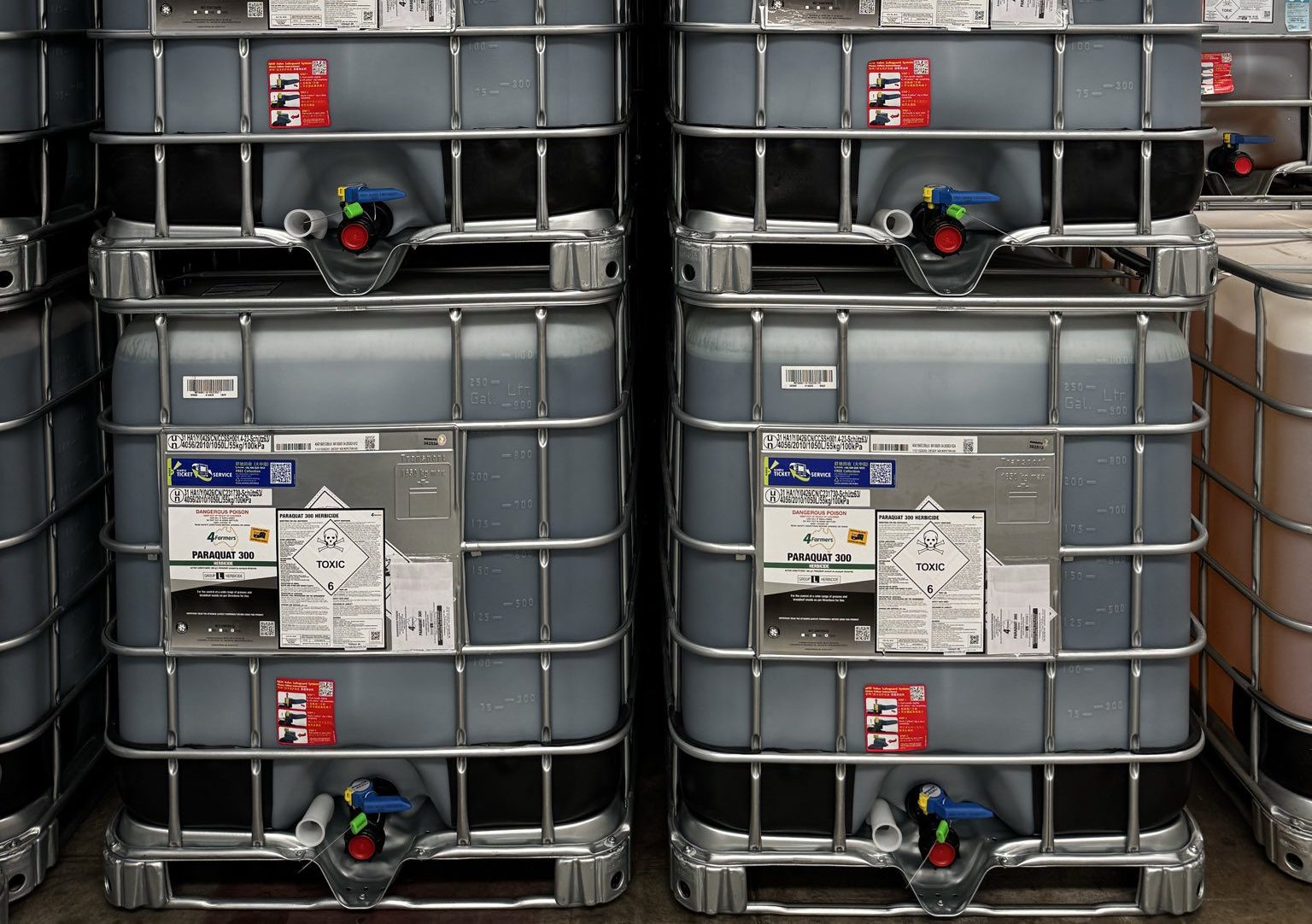
Existing stocks of paraquat and diquat can be used in accordance with labels they carry which pre-date APVMA regulations introduced this week. Photo: 4Farmers
THE federal regulator’s decision on paraquat and diquat has given clarity to Australia’s summer and winter croppers.
Released yesterday by the Australian Pesticides and Veterinary Medicines Authority, it ends a review process which started in mid-2024 around both products, primarily used to kill weeds in fallow, and to spray-top weeds and desiccate crops prior to harvest.
As responses from industry bodies roll in, gratitude that neither chemical has been banned is universal.
However, a reduction in application rates and uses is cause for concern, particularly in cotton, as growers and agronomists rethink strategies available to avoid a build-up in herbicide resistance.
Tough on north
For fallow use, the maximum rate of paraquat products has been set at 231g of active ingredient (gai) per hectare, and paraquat/diquat products at 251g/ha.
This will reduce blanket rates to below 900ml/ha of a 250gai/ha paraquat product,

Tony Lockrey.
In a statement issued in response to the APVMA decision, Cotton Australia said these rates are below what many growers currently rely on for control of hard-to-kill weeds in fallow situations.
It said industry feedback highlighted the new rates are unlikely to provide reliable control in cotton country of some weeds, particularly if they are large or stressed.
AMPS Moree-based agronomist and Crop Consultants Australia (CCA) president Tony Lockrey said those weeds include milk thistles, fleabane, and feathertop Rhodes grass.
“If paraquat can only be used on fallow…you might argue the north [has] lost a valuable product in the fight against [herbicide] resistance,” Mr Lockrey said.
Cotton Australia said all registrations specific to cotton have been removed from labels for products containing paraquat and diquat.
“This specifically means that these products can no longer be used for crop desiccation or control of cotton volunteers,” the peak organisation said in a statement.
“This change will particularly impact production of dryland cotton, where these use patterns have been a vital part of the production system.”
For optical spot spraying, use is allowed at up to 770gai/ha, or around 3l/ha of a 250g/l product, down markedly from the previous maximum allowance of 9l/ha.
“Cotton Australia and industry submissions also raised concerns that the APVMA assumption of 30-percent ground coverage with optical sprayers is too high, with field data indicating average coverage is closer to 10pc, which affects how practical and effective the new settings will be in real paddock conditions.”
CCA said the APVMA’s decision has provided clarity for all parties around the future use of paraquat and diquat.
“Thankfully the products will still be available to be used in a revised, safer manner,” the CCA statement said, referring to the phasing out of their use with backpack sprayers, and unsealed product transfer under the new regulations.
CCA pointed to several uses reinstated due to submissions received and outcomes further reviewed.
“Interestingly, the higher-volume and higher-rate applications along fence lines or around sheds and utility areas are reinstated at rates up to 4l/ha of 250gai/ha product.
“The APVMA has ultimately chosen to reduce products’ rates in accordance with the environmental modelling, with some minor adjustments based on the feedback they received.”
Further research possible: GRDC
Grains Research and Development Corporation managing director Nigel Hart said GRDC, like others in the grains sector, was taking time to review the APVMA decision in detail.
“We are aware that the APVMA had insufficient data to support some use patterns and in some cases, this has led to a reduced application rate or extended withholding period,” Mr Hart said.
“GRDC will now consider whether additional scientific research is needed to address these data gaps.
“This may include data to support shorter withholding periods in pulse crops or to address rate limitations linked to risks to small granivorous birds.”
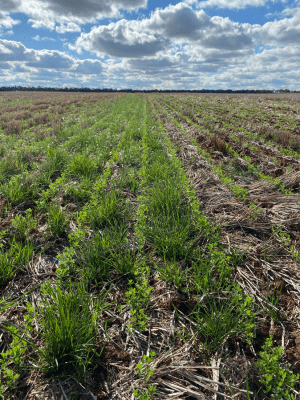
Paraquat is widely used in fallow as part of a double-knock application to control weeds including ryegrass ahead of sowing. Photo: Bec Marshall, Normanville, Vic
GRDC said this type of research could take two years and cost in excess of $500,000.
Mr Hart said GRDC had already invested significantly in alternative weed-management options for growers.
“Last year we announced we would invest $47 million over five years in a national Weed Management Initiative.
“This initiative brings together Australia’s leading researchers and communications and extension specialists together to work on innovative, cutting-edge weed management research, development and extension.
“Under this initiative, researchers have investigated alternative approaches in response to glyphosate and paraquat-resistant weeds.
“This work will be critical to understand how lower paraquat rates may affect weed control strategies.”
Grain Producers SA, NSW Farmers critical
Grain Producers South Australia said the APVMA restrictions will have significant implications for SA growers.
GPSA chief executive officer Brad Perry said paraquat played a vital role in controlling herbicide-resistant weeds, including annual ryegrass, and underpinned modern no-till farming systems used across SA.
“Paraquat is not simply another chemical in the toolbox; it is a foundation chemistry used by grain producers to manage resistant weeds, protect crop yields and support conservation-farming practices,” Mr Perry said.
“GPSA acknowledges that the APVMA revised several aspects of its original proposal following strong feedback from grain producers and industry, including retaining spray-topping uses critical for pulse crops such as lentils and allowing the continued use of optical spot-spraying technologies that were initially proposed to be removed.”

GPSA CEO Brad Perry.
He said while those outcomes have been welcomed, APVMA’s stricter regulations will impact farming businesses across SA.
Mr Perry said grain producers had consistently warned reduced access to paraquat could increase production costs, place greater pressure on existing herbicide options, and potentially accelerate herbicide resistance.
GPSA’s 2024 paraquat and diquat survey of 626 SA growers highlighted the importance of these products, with 92pc of respondents saying they used paraquat often or always.
“The real test will be whether the new rates and restrictions still allow grain producers to effectively control weeds such as annual ryegrass and maintain the no-till farming systems that have become the backbone of modern grain production.”
NSW Farmers president and Liverpool Plains grower Xavier Martin has been equally critical of reduced rates imposed for paraquat and diquat.
“Reducing application rates to the point where these products are potentially no longer effective doesn’t remove any perceived risk – it removes a critical solution,” Mr Martin said.
NSW Farmers warned that without effective use of paraquat and diquat, farmers will be forced to adopt practices that may undermine broader environmental and sustainability outcomes, including increased applications of chemicals and increased tillage.
“Farmers are deeply committed to managing their land responsibly, including minimising chemical use and protecting soil health, but you can’t effectively remove or downgrade a vital tool like this without a viable alternative ready and expect there to be no consequences.”
Ready to help
As with CCA, WeedSmart intends to work with agronomists and growers as they adapt to the new regulations.
“At this stage, WeedSmart will be providing a considered and continuing response supporting farmers with the practical application and adaptation of paraquat and diquat products within diverse weed management programs on-farm,” WeedSmart project manager Karen Smith said.
“WeedSmart will continue to support growers through a range of technical, evidence-based articles on our website, building specific tactics within our Big 6 framework to match regional farming systems.”
Ms Smith said WeedSmart will focus on multiple points of engagement for farmers and agronomists to enable transitioning protection of chemistry efficacy without increasing herbicide resistance in weed control leading up to 22 June 2028, after which previous rates will not be permissible.
Queensland’s Department of Primary Industries also plans to help its grain, sugarcane and cotton sectors adapt to the new regulations.
“Paraquat and diquat play a critical role in the double-knock weed management strategy, which is essential for controlling herbicide-resistant weeds and is used by 63pc of grain farmers in Queensland’s northern grain-growing regions,” QDPI deputy director-general agriculture Peter Donaghy said
“We understand the serious challenges this will pose for Queensland growers and we are here to support them through this period of transition,” Mr Donaghy said.
Support measures will include a roundtable, a webinar series, the continuation of development and extension, and working with agrichemical companies offering available and effective alternatives.
“The Queensland Government will engage with industry to develop effective weed management strategies through GRDC’s $47M National Weeds Management initiative,” Mr Donaghy said.
“We will also work with agrichemical companies to explore the pipeline of innovative products, and with research development corporations and industry organisations to support growers in adopting new practices.”
Sources: Cotton Australia, Crop Consultants Australia, Grain Producers South Australia, GRDC, NSW Farmers, Qld Department of Primary Industries.
I want it to be banned. 70 other countries can’t be wrong. And Parkinson’s is a frightening disease.