
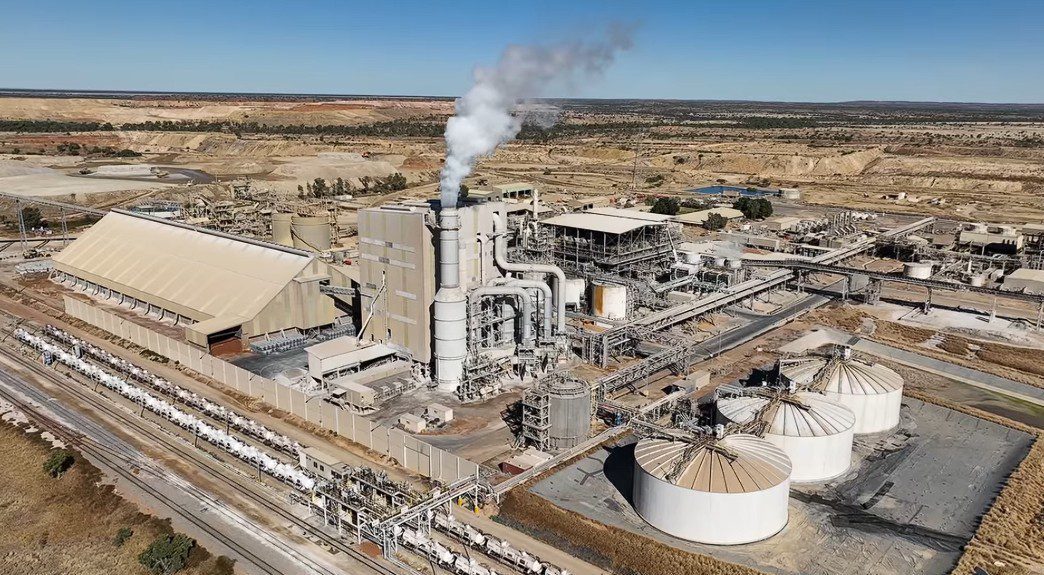
Phosphate Hill is Australia’s last remaining large-scale fertiliser producer. Source: Townsville Enterprise
THE FEDERAL and Queensland governments will provide a jointly funded $160 million loan facility to lock in the ongoing operations of the Phosphate Hill fertiliser facility.
The agreement will secure more than 500 direct jobs at Phosphate Hill, and 600 direct jobs at the Mount Isa Copper Facility and Townsville Refinery, as well as thousands of indirect jobs across north and north-west Qld.
The deal follows the Phosphate Hill sale to Brisbane-based Mayfair Corporation for nominal consideration of $1, and protects the Mount Isa Copper Smelter and Townsville Refinery.
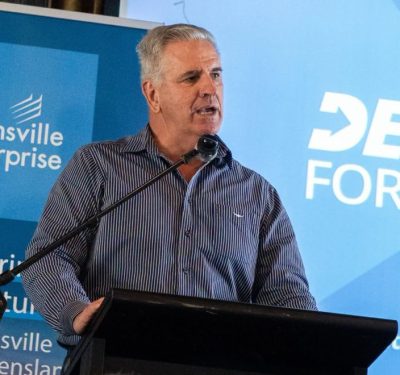
Dale Last
Phosphate Hill is Australia’s only domestic ammonium fertiliser producer, and is critical to the ongoing operations of the Mount Isa Copper Smelter and Townsville refinery.
The loan will be used to support the modernisation of the facility, and the package also includes additional targeted support to help it manage sulphur costs that have surged because of conflict in the Middle East.
The joint support package for the sale will allow Mayfair to prioritise the cyclical demand of Australian agricultural producers, and provide certainty to the workers, local communities and businesses that rely on Phosphate Hill’s operations.
Federal Minister for Industry and Innovation and Minister for Science Tim Ayres said the governments have worked closely with vendor Dyno Nobel and buyer Mayfair to assist in facilitating the transaction, and both governments remain committed to supporting operations that support Queensland and Australia’s sovereign capability.
This includes joint funding arrangements for the Mount Isa Copper Smelter and Townsville Refinery, and the Boyne Smelter at Gladstone.
“Phosphate Hill is a critical national asset – Australia’s only fertiliser producer and central to North West Queensland’s interconnected industrial system,” Mr Ayres said.
“Time and again, the Queensland Government has been right alongside the Commonwealth delivering for heavy industry, regional Australia and blue-collar jobs,” Mr Ayres said.
“The conflict in the Middle East has spiked sulphur costs dramatically, and our two governments have worked closely with Dyno Nobel and Mayfair to ensure this sale proceeds and that they can prioritise the long-term viability of this facility and its 500 workers.
“We expect the new owners to deliver on their commitments to the two governments, invest in the future of the facility and deliver a Future Made in Australia.”
Qld Minister for Natural Resources and Mines Dale Last said Phosphate Hill was a “key piece of Queensland infrastructure”.
“Importantly, funding support for the sale secures the future for tens of thousands of workers across the north-west and local communities, and shores up fertiliser supply for Australian farmers,” Mr Last said.
“We’re committed to delivering a better lifestyle through a stronger economy and our resources sector, including Phosphate Hill, Mount Isa Copper Smelter, Townsville Refinery and Boyne Smelter, are all a critical part of Queensland’s economy.
“We have made our expectations around the ongoing operations of the facility, and employment of workers, clear to the new operator and expect them to deliver on the principles that underpin the funding arrangements.”
Sale completion
The news came as Dyno Nobel announced yesterday that the sale to Mayfair was completed on June 30.
The buyer assumed the economic risk and benefit of Phosphate Hill from 1 April 2026 to completion on 30 June 2026, including all operating cashflows and capital expenditure.
Dyno Nobel made a fixed completion payment of $50M to Mayfair, incorporating the economic risk transfer, and adjustments for the increased value of inventory at hand on completion which reflects heightened sulphur prices because of the Middle East conflict.
Mayfair will be required to pay a $150M deferred consideration to Dyno Nobel, up from $100M, subject to conditions and performance hurdles being met.
Dyno Nobel will also fund $125.9M in support of the future rehabilitation and remediation of Phosphate Hill.
Dyno Nobel’s chief executive officer and managing director Mauro Neves said the transaction marks the end of the company’s involvement in the fertiliser industry.
“We are pleased to conclude the responsible transfer of ownership of Phosphate Hill, which protects the interests of all stakeholders, and in particular the north-west Queensland community, Mr Neves said.
“Through the sale of Phosphate Hill to [Mayfair], Dyno Nobel has delivered on its strategic milestone of exiting its fertilisers business to become a leading global pure-play explosives business.
“I am proud to acknowledge our talented teams at Phosphate Hill, Mt Isa and Townsville who will continue to provide Australian farmers with a secure domestic source of fertilisers supply under [Mayfair’s] ownership.
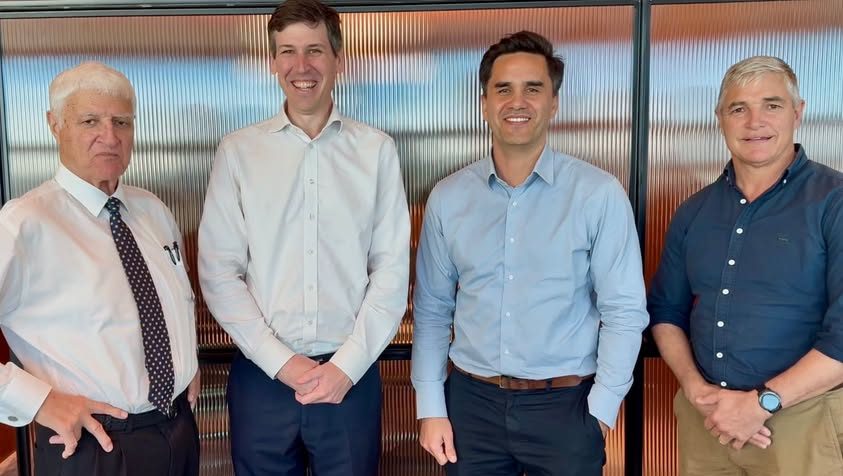
Bob and Robbie Katter with John Canavan and Mat Lynch from Mayfair Corporation. Photo: KAP
Katter welcomes sale
KAP Federal Member for Kennedy Bob Katter has welcomed the completion of the sale of Phosphate Hill, celebrating it as a major win for north-west Qld workers, industry and the future of Australian fertiliser production.
Mr Katter said the announcement represented the culmination of years of relentless campaigning to keep one of Australia’s most strategically important industrial assets operating.
“This is wonderful news for north-west Queensland,” Mr Katter said.
“For years we’ve been bashing the doors down, that if Australia wanted to keep industry alive, governments had to step in and secure a future for assets like Phosphate Hill.”
Mr Katter said the Federal Government’s Reserve Resource Policy had been instrumental in helping create the conditions for the sale.
“Getting a Reserve Resource Policy in place has been one of the major achievements of my political life.
“We fought tooth and nail because Australia should never be paying world-leading prices for our own gas.”
Mr Katter said affordable gas was fundamental to the survival of the north-west Qld’s industrial base.
“Everything at Phosphate Hill depends on gas.
“It powers the plant and drives the chemical processes that turn our natural resources into the fertiliser.
“Only a year or so ago we were staring down the barrel of losing one of Australia’s biggest industrial centres, with the closure of copper and phosphate production threatening thousands of livelihoods.
“This is an enormous relief for the workers, contractors, families and communities who never gave up.”
Mr Katter said the focus must now be on ensuring Phosphate Hill has the affordable energy certainty needed to remain strong operation for decades to come.
Source: Qld Government, Dyno Nobel, KAP
HAVE YOUR SAY