
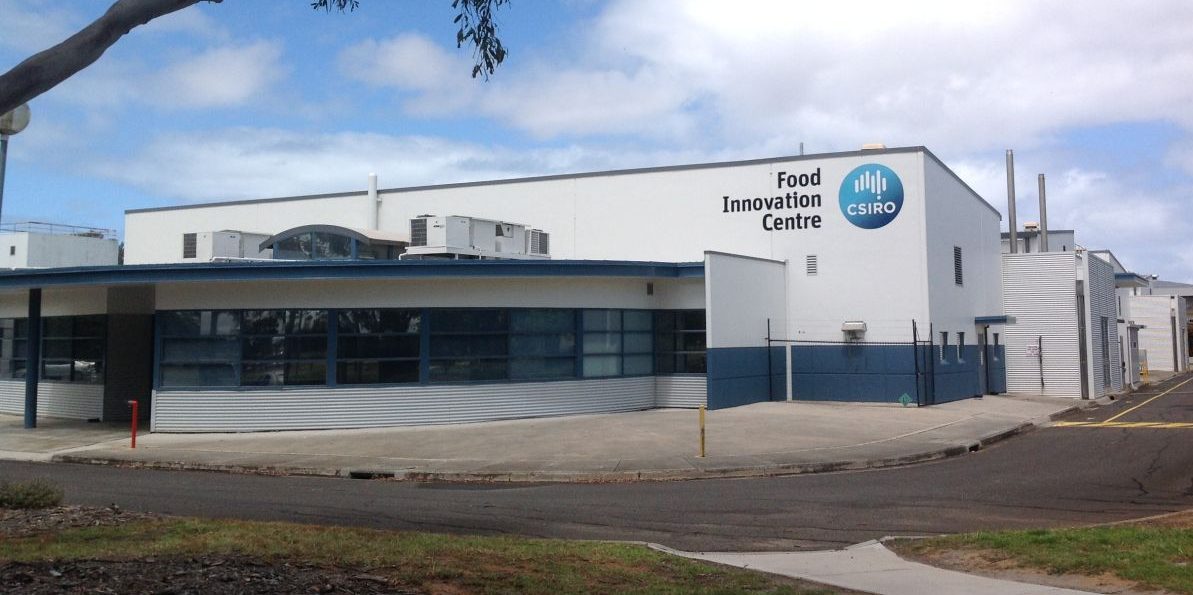
CSIRO’s Food Innovation Centre is located at Werribee in Victoria.
THE CSIRO has confirmed its decision to close and divest of its Food Innovation Centre located at Werribee in Victoria.
The announcement follows the CSIRO’s decision earlier this year to end research into future food technologies and cut jobs across the program and its broader agriculture and food division.
The closure of the Food Innovation Centre is expected to be a major blow to the plant-protein and precision-fermentation sectors, with the facility providing infrastructure, expertise and support to both industries.
A CSIRO spokesperson confirmed the decision and the impact on staff based at Werribee.
“CSIRO has made the decision to divest its Werribee site in Victoria,” the spokesperson said.
“This decision follows a reshaping of CSIRO’s Agriculture & Food Research Unit, as we exit research areas including food manufacturing and ingredient innovation to sharpen our focus on where we can deliver the greatest national impact.
“As a result, there will be a net reduction of 49 roles across the Research Unit.
“The impact on these roles may take the form of early cessation of term contracts, redeployment or redundancy.
“As these processes are still underway, we are not able to provide a specific breakdown by location until they are complete.
“As part of these changes, Agriculture & Food staff based at Werribee will either cease with CSIRO or relocate to Clayton by September 2026, significantly reducing utilisation of the Werribee site.”
Clayton is located close to Monash University’s main campus south-east of the Melbourne, while Werribee is located to Melbourne’s south-west.
“We have commenced early engagement with the remaining Werribee-based non-research staff on relocation to other sites and alternative working arrangements.”
Plant-protein, precision fermentation focus
According to its website, the CSIRO Food Innovation Centre assists industry by making “it easy for food, ingredient and equipment manufacturing companies to access our extensive expertise, technologies and support in innovation”.
The centre was promoted as a “$50-million world-class food manufacturing pilot plant… around 3000 m2 in size with a range of conventional and innovative processing technologies and equipment”.
The facility appeared to have a focus on supporting the plant-protein and precision fermentation industries.
This included access to infrastructure such as an “intelligent extrusion technology platform”, a “novel cooling die for high moisture protein extrusion”, and specialist services including “texture characterisation” and “formulation science”.
The facility has also been linked to the development of plant protein company v2food and precision fermentation business Eden Brew.
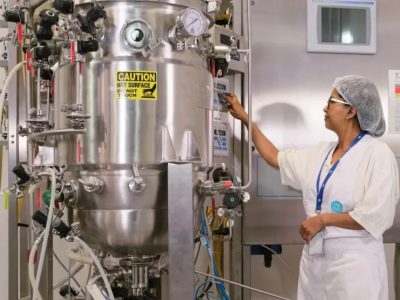
The centre appeared to have a decent plant-protein and precision fermentation focus. Photo: CSIRO
In its April Cultivated newsletter, industry group, Cellular Agriculture Australia, discussed the impacts of the then-potential closure of the CSIRO Food Innovation Centre on the industry.
It pointed to the “critical infrastructure” housed at the site included the “400L food-grade precision fermentation scale-up capability”.
“These changes risk perpetuating a structural gap in biomanufacturing research and scale-up infrastructure at a critical stage of sector development,” the publication said.
“Early indications suggest that reduced domestic capability is likely to prompt companies to seek scale-up support offshore.”
Food Frontier merger
The move comes at a challenging time for Australia’s plant-protein industry, which is still adjusting after the rapid growth and optimism of recent years.
The industry has hit further issues with the official alternative protein think tank, Food Frontier, announcing its merger with CAA in March.
Food Frontier will be integrated into CAA, creating a single organisation that will expand its focus to include alternative proteins alongside its existing advocacy for Australia’s cellular agriculture and food biomanufacturing sectors.
In a joint statement, the organisations said the decision “reflects the growing need for a unified approach to supporting an evolving ecosystem”.
“Innovations once seen as separate – plant-based proteins, precision-fermented ingredients, cultivated meat – are increasingly converging with diverse applications across the food system,” the statement said.
“This requires a coherent strategy to deliver long term market development and systems change.
“This merger establishes a clear, coordinated voice for the ecosystem, bringing together our complementary expertise, resources and programs that have been growing closer for years.”
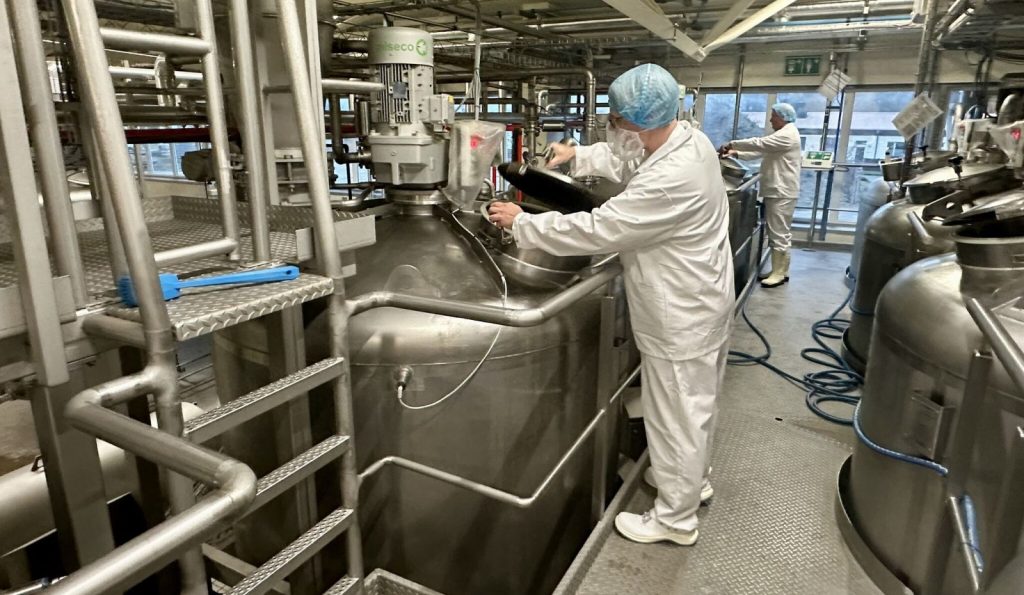
Wide Open Ag production facility at Germany facility
WOA production shift
Western Australian-based plant-protein ingredient manufacturer Wide Open Agriculture has also announced a significant shift in operations, moving to wind down its production facility in Germany.
WOA manufacturers and develops ingredients using WA-grown lupins.
In an announcement on July 2, the company said the decision would “significantly reduce cash burn” and would be followed by “a planned shift to a contract manufacturing arrangement” and “an ongoing review of supplier, and partner arrangements to ensure all commercial terms support the Company’s next stage of growth”.
“Looking forward, the company believes latent demand for its lupin protein isolate and co-products will outstrip the German facility’s current capability, unless there is significant additional capital investment,” the WOA statement said.
“In addition, the facility was not designed for integrated whole-of-lupin processing at the volumes required for cost effective commercialisation of oil and fibre, and elevated EU energy and operating costs have continued to negatively impact unit economics.
“Continued owner-operated production in Germany is no longer consistent with the company’s objective of building a scalable, profitable business in the future.”
The wind down is expected to be completed by mid-2027.
The contract manufacturing process is expected to focus on production of 500-1000 tonnes per annum of lupin protein isolate, with WOA having “a strong preference for Asia based production given proximity to key growth markets and a more favourable cost structure”.
“WOA is in discussions with numerous potential production partners across Asia and evaluating a short list of preferred suppliers to progress towards more formal agreements, with the aim of also protecting our IP.”
Grain Central: Get our free news straight to your inbox – Click here
HAVE YOUR SAY