
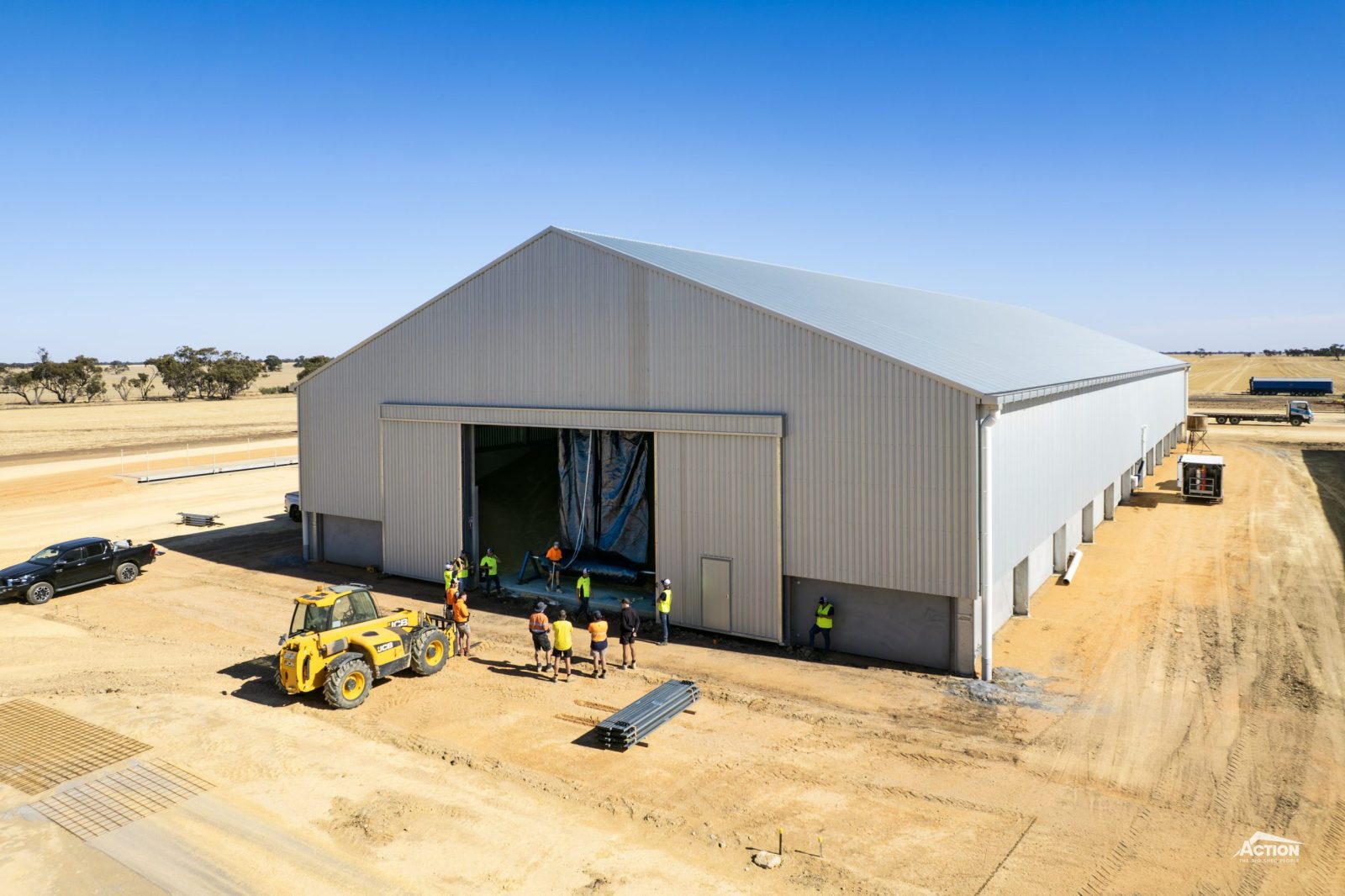
A trusted name in Australian farm sheds
Action Steel has spent three generations designing, manufacturing and installing farm sheds for cropping and livestock enterprises across Australia. From hay sheds to machinery sheds, shearing sheds to grain sheds, the team has worked alongside farmers to build sheds that hold up to the job.
That relationship with growers and fumigation contractors is where FumoFlow began.
One question, decades of frustration
Grain fumigation has always come down to one question: did the fumigant actually get where it needed to go?
Whether you’re storing in a silo, a flat store or a grain shed, the challenge is the same. Phosphine needs to reach every part of the stack, from the surface down to the floor, and hold there long enough to do its job. Get that wrong, and you’re looking at surviving insects, resistance building in your population, or grain knocked back at receival.
It’s a problem growers and fumigation contractors have managed around for decades, and one Action Steel wanted to help address.
An 18-month development, built with growers and contractors
FumoFlow didn’t start on a drawing board. It started in conversations with growers and fumigation contractors about where fumigation was falling short and what a better system would need to do.
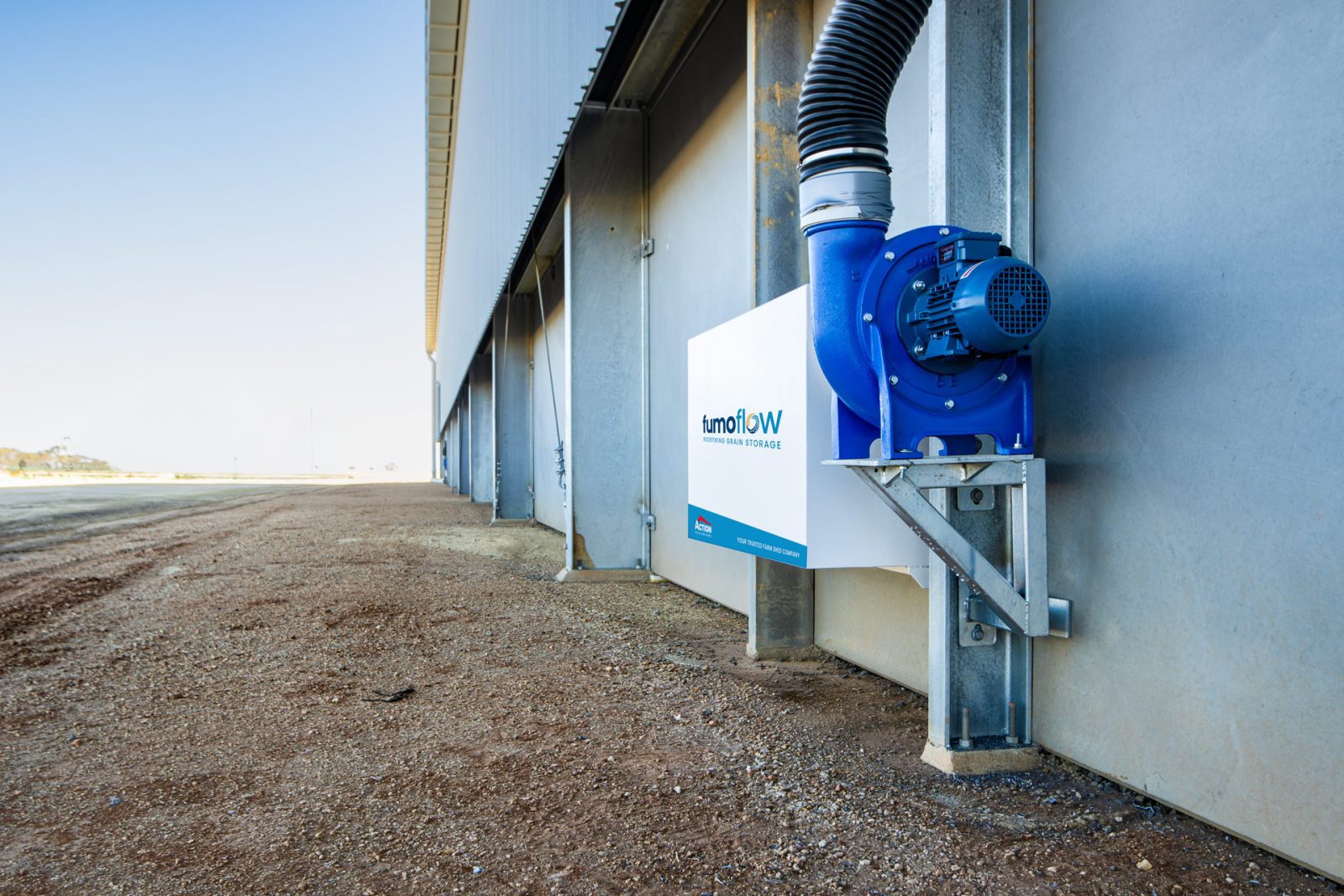
Over 18 months, that feedback shaped a grain shed with recirculation and ventilation technology designed into the structure itself. Not an accessory. Not something bolted on after the shed goes up. A system engineered to move fumigant actively through the full grain mass from the point it’s introduced, aiming to keep concentration more consistent throughout the stack rather than just near the point of introduction.
The result is a patent-pending grain shed, first-of-its-kind in the Australian market.
Putting it to the test
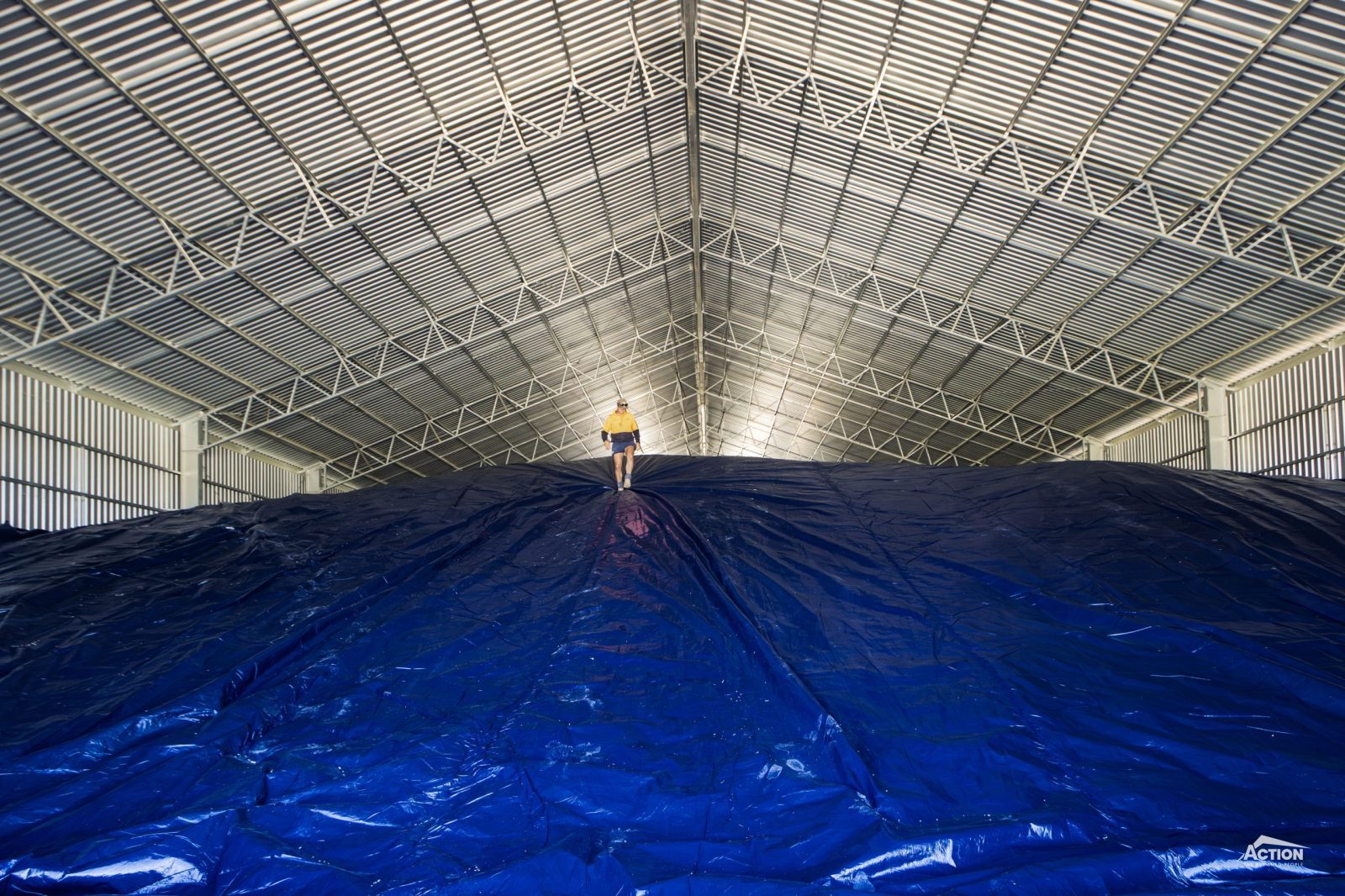
Design intent is one thing. Action Steel wanted to see how it performed under real conditions, so in March 2026 FumoFlow underwent its first full-scale phosphine fumigation trial.
5,420 tonnes of wheat. 12 independent monitoring probes. 15 days of data.
Before any results are worth talking about, it’s worth knowing what they’re measured against. Two thresholds are commonly referenced across the industry as fumigation targets: 200 ppm held for 10 days to overcome susceptible insect populations, and 550 ppm held for 7 days to address most phosphine-resistant strains.
Across all 12 probes, spread through the stack at surface and floor level, phosphine concentration peaked at an average of 1,068 ppm within 49 hours of introduction. Every single probe exceeded 550 ppm and held above it for the full 7-day window. Every probe also stayed above 200 ppm for the full 10 days.
Not one probe dropped below either threshold during the required exposure period, including the probes furthest from the fumigation boxes and at floor level, where uneven distribution has traditionally been hardest to avoid.
That’s what the data showed, on a commercial-scale shed holding 5,420 tonnes of wheat.
Ventilation that gets you back in faster
Fumigation is only half the job. Once it’s done, you need the shed cleared safely so staff can get back in and handling can resume.
In the FumoFlow trial, the shed reached safe clearance in 4 days, with the entire ventilation cycle managed from outside the shed. Compare that to traditional passive ventilation after tarp removal, which takes considerably longer and typically needs someone back inside to get the process started.
With tighter phosphine Workplace Exposure Limits coming into effect in December 2026, faster and controlled ventilation isn’t just a convenience. It’s becoming part of doing the job compliantly.
Why this matters for your operation
Resistance pressure isn’t going away. Regulatory requirements are tightening. And the cost of a failed fumigation, whether that’s rejected grain at receival or insects surviving to breed again, is a cost every grower would rather avoid.
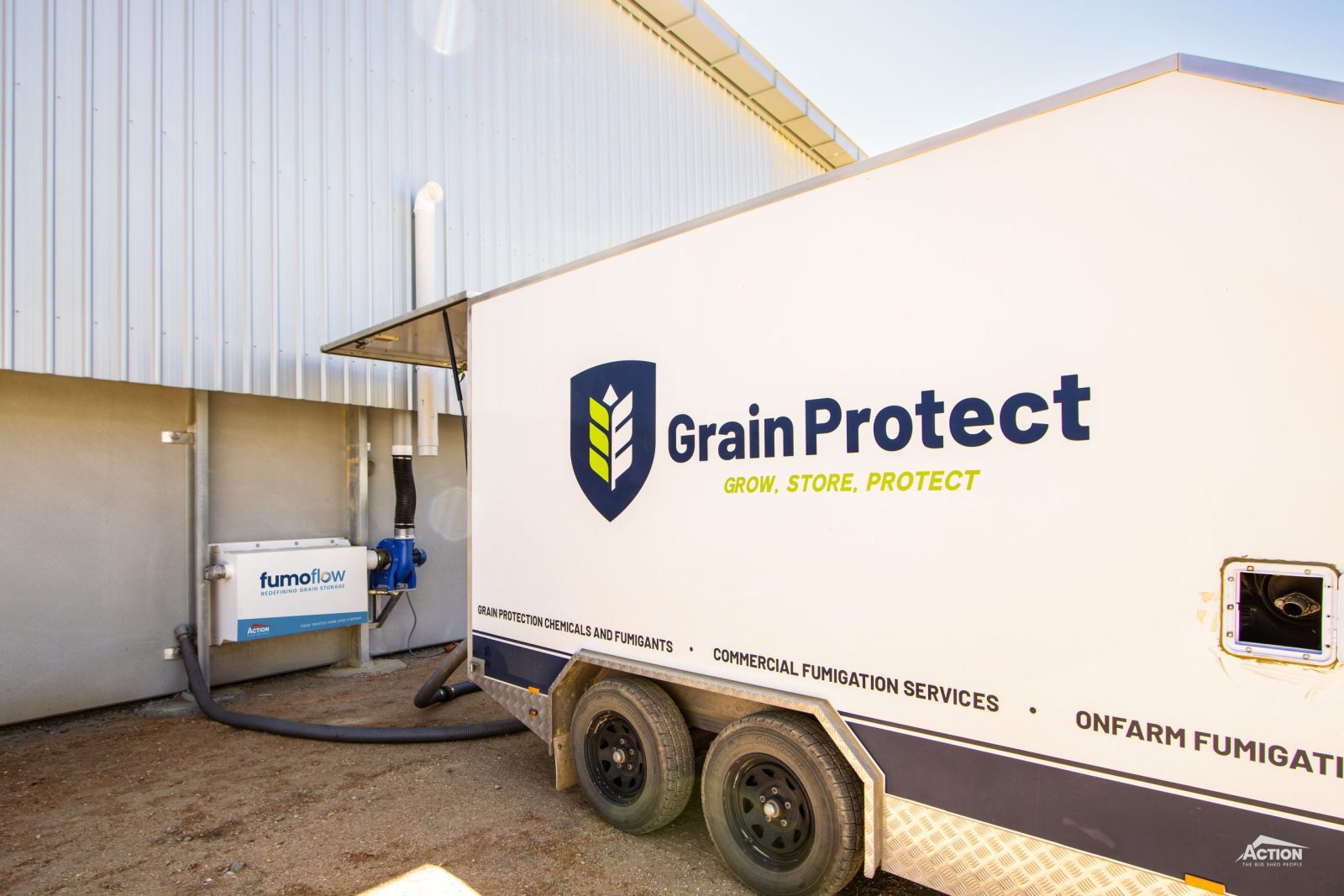
FumoFlow is one option growers and their fumigation contractors now have to work with, with trial data behind it rather than just design claims. It’s part of the same Action Steel family of farm sheds trusted by grain growers across Victoria, NSW, QLD, Tasmania and South Australia. The full trial results, including the probe-by-probe data, are published on the FumoFlow website.
Read the full trial results and see the data for yourself: FumoFlow Trial Results.
For more on FumoFlow grain sheds with patent-pending recirculation and ventilation technology, visit fumoflow.au, or explore Action Steel’s full range of farm sheds at actionsteel.com.au. To talk to the team about a FumoFlow shed for your operation, call 1800 68 78 88 or get in touch via our contact us page.
FumoFlow is a product of Action Steel, The Big Shed People.

HAVE YOUR SAY