
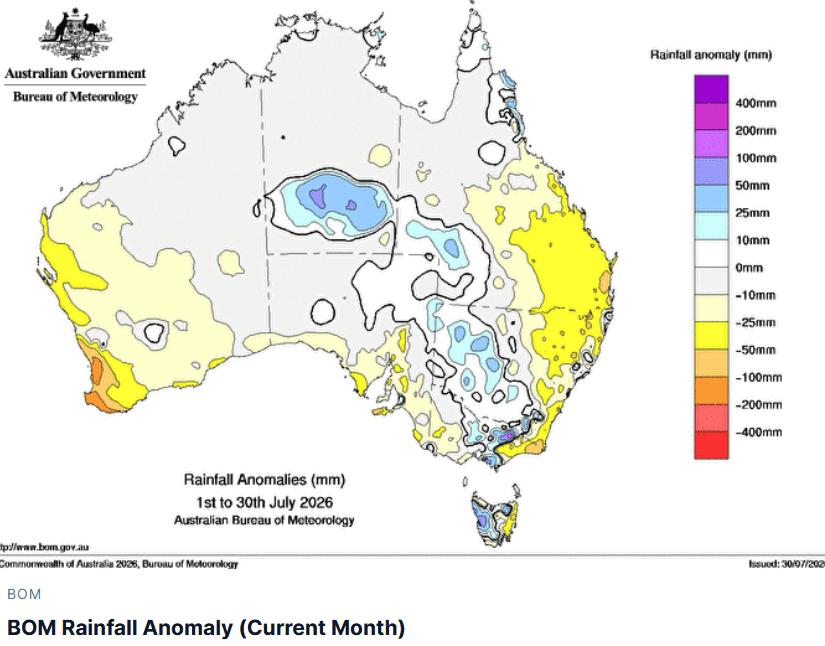
 Weather:
EU is still running hot – more a sunflower and corn story but the heat is now stretching into eastern EU.
Had some great conversations over the last 48 hours with clients – consensus is – don’t worry about the Indian Monsoon – it will catch up.
Markets
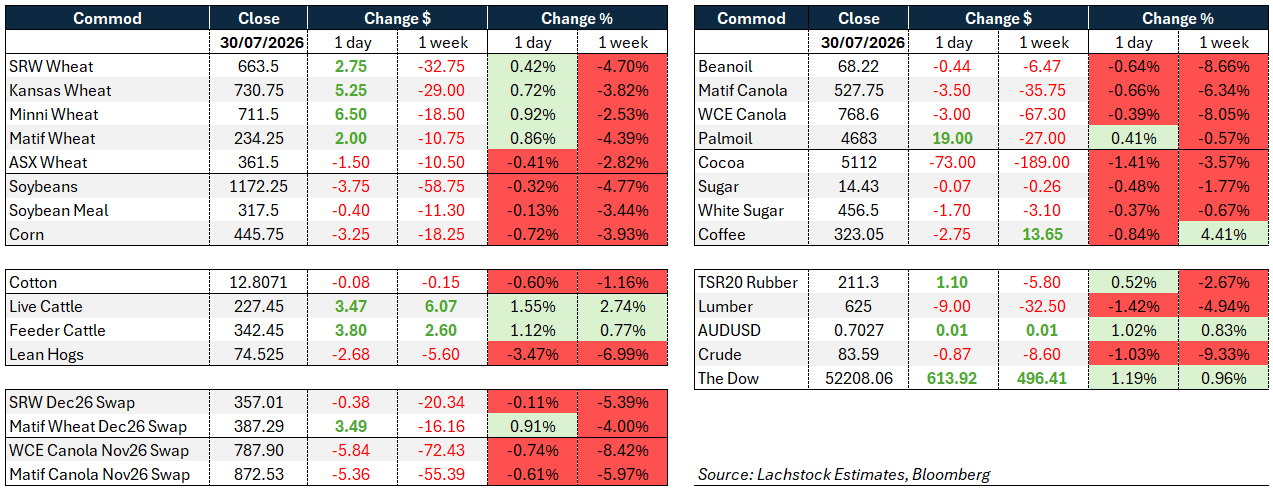
Wheat firmed on the day as a Ukrainian strike on Russia’s Taman port tightened Black Sea export logistics, though the week remains sharply lower across the wheat complex
Corn and soybeans reversed off midday lows on a wetter US weather outlook easing Corn Belt dryness concerns, with soybeans also supported by a fresh 132,000t flash sale to China
Canola eased on weaker Chicago soyoil and stronger Saskatchewan crop ratings (77% G/E vs 68% last year), with fund long liquidation a feature of a wide-range session
Crude extended its weekly slide as US-Iran tensions unwind while equities rallied and AUD firmed on RBA’s Hunter reinforcing inflation vigilance and a softer Fed hike outlook
Day Ahead – Australia
GTA AGIC sore heads – great line up this year I thought.
Markets still not really pricing more supply chain disruptions which is probably fair given the history of puking rallies back.
Slightly firmer today is my guess.
 Wheat: Board wheat firmed on the day despite continued weekly losses, taking support from a fresh escalation in Black Sea hostilities.
A Ukrainian strike on Russia’s Taman port on the Kerch Strait has triggered follow-on closures, tightening an already constrained Russian export logistics chain. Naomi Blohm of Total Farm Marketing flagged that grain movement will likely stay limited near-term while logistics costs climb.
Given Russia’s position as the top global wheat exporter and Ukraine’s own export weight, the disruption is underpinning a geopolitical risk premium even as the broader complex remains under pressure from favourable Northern Hemisphere weather.
ASX wheat lagged the US board lower, tracking the weekly downtrend rather than the daily Black Sea bid.
Other grains and oilseeds: Corn and soybeans reversed off midday lows as the USDA’s daily weather outlook showed rain pushing through the parched western Plains and moving east, easing concern built up over recent hot, dry sessions in the Corn Belt.
Timely rain forecast for Iowa and Illinois keeps production optimism alive after condition ratings had slipped through July.
Soybeans found some floor from a fresh flash sale of 132,000 tonnes to China for 2026/27 delivery, extending a recent run of Chinese purchases against the backdrop of ongoing US-China agricultural trade talks.
Mike Castle of StoneX cautioned the Black Sea disruption’s fallout won’t stay confined to wheat, flagging edible oils, corn and other feed grains as exposed.
Canola softened in sympathy with weaker Chicago soyoil and improving Canadian crop conditions — Saskatchewan canola was rated 77% good-to-excellent in the latest provincial report, well above 68% a year ago.
November ICE canola traded a wide range, down as much as C$15/t overnight before paring losses to close down C$3.00, with fund long liquidation cited as a feature of the session; hot southern Prairie temperatures kept some weather premium intact.
Bean oil’s steeper weekly slide continues to outpace the broader oilseed complex.
Macro: Crude extended its weekly slide as easing US-Iran tensions continue to unwind the geopolitical premium built up earlier in the month, even as equities pushed higher, with the Dow posting a strong daily and weekly gain.
The Aussie ticked higher after RBA Assistant Governor Sarah Hunter reiterated the central bank’s resolve not to let inflation expectations de-anchor, following Wednesday’s softer-than-expected CPI print that saw markets slash the odds of a further hike to around 63% by year-end.
RBA faces competing pressures — a rebound in oil prices and strong government spending against low unemployment — and may yet need to tighten further to hit target.
Domestically, the Fed’s hold this week was reinforced by a softer core PCE print, with September hike odds now near 60%, down from fully priced pre-meeting; the FOMC remains data-dependent into two more inflation and labour prints, with policymakers so far seeing little evidence of tariff and energy price shocks broadening into core inflation.
Local: Honestly – not much to add from yesterday – keen to see what next week brings.
HAVE YOUR SAY