
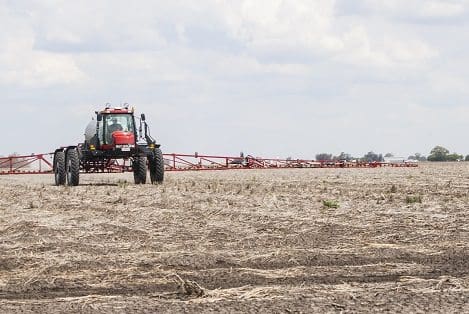
Bayer has made its first submission to the APVMA to start the approval process for icafolin-methyl. Photo: Weedsmart
BAYER Australia has submitted an application for the approval of icafolin‑methyl and is targeting a launch from 2028, subject to approval from the Australian Pesticides and Veterinary Medicines Authority.
Bayer’s Crop Science Division in Australia and New Zealand head of crop protection Tony May said the submission represents a milestone in Bayer’s global herbicide pipeline and reinforces the company’s long-term commitment to investing in innovation to support Australian growers.
“Weeds remain the single biggest cause of crop losses globally, driving higher management costs and placing ongoing pressure on farm productivity,” Mr May said.
“Herbicide resistance is a growing challenge for Australian growers, and it’s clear that sustainable farming systems depend on having access to new tools and new modes of action to complement integrated weed-management practices.”
Icafolin-methyl is a novel herbicide active discovered through Bayer’s global research-and-development program, and is non-selective.
Its efficacy on grass and broadleaf weeds gives it potential to be used as a knockdown herbicide.
It is the first chemistry from a new isoxazoline carboxamide chemical class to progress through advanced development, with potential application in grain-cropping systems.
A key enabler of Bayer’s herbicide innovation efforts in Australia is its long-standing Herbicide Innovation Partnership (HIP) with the Grains Research and Development Corporation.
“The HIP program has enabled earlier testing under Australian conditions, helping ensure earlier access to new chemistries for Australian growers that are better suited to local weed species and farming systems,” GRDC managing director Nigel Hart said.
“Our partnership with Bayer has been critical to Australia being considered early in the global development process, enabling earlier local evaluation and positioning Australia as a priority market for new herbicide technologies.
“This collaboration demonstrates the value of industry and research working together to address resistance challenges and support more sustainable farming systems into the future.”
Mr May said the discovery and development of new herbicide modes of action requires significant scientific investment and long-term commitment, with the time taken to bring new chemistry to market continuing to increase.
“Bringing new herbicide innovation to farmers takes more time, more data and more investment than ever before.
“It now takes more than a decade and significant financial investment to discover, develop and evaluate a new active ingredient, including meeting the regulatory requirements that underpin confidence in modern crop protection products.”
Icafolin-methyl represents the first product to utilise CropKey, Bayer’s breakthrough R&D approach to developing new crop-protection products, which is used to optimise molecules by considering multiple dimensions like efficacy, safety and sustainability criteria, and farmer convenience.
“CropKey will continue to accelerate how researchers ‘design’ new molecules that deliver targeted efficacy and better environmental outcomes, helping ensure future solutions are better suited to modern farming systems.”
Mr May said Bayer acknowledged the important role of Australia’s regulatory system in ensuring new products meet high standards for human health, environmental protection and on-farm performance.
“A robust, science-based regulatory framework is essential to maintaining trust in agricultural innovation.
“The regulatory assessment process plays a critical role in ensuring any new technology meets Australia’s stringent standards for safety, environmental stewardship and efficacy before it is made available to growers.”
The submission marks an important step in the regulatory pathway for icafolin‑methyl in Australia, with potential application in grain cropping systems.
Bayer will await the outcome of the independent assessment process while continuing to invest in research and development aimed at delivering new, sustainable weed‑management solutions for Australian growers.
Source: Bayer Australia
Looking forward to this product.
This new herbicide product, being developed by Bayer looks very promising for the grain and associated agricultural industries.