
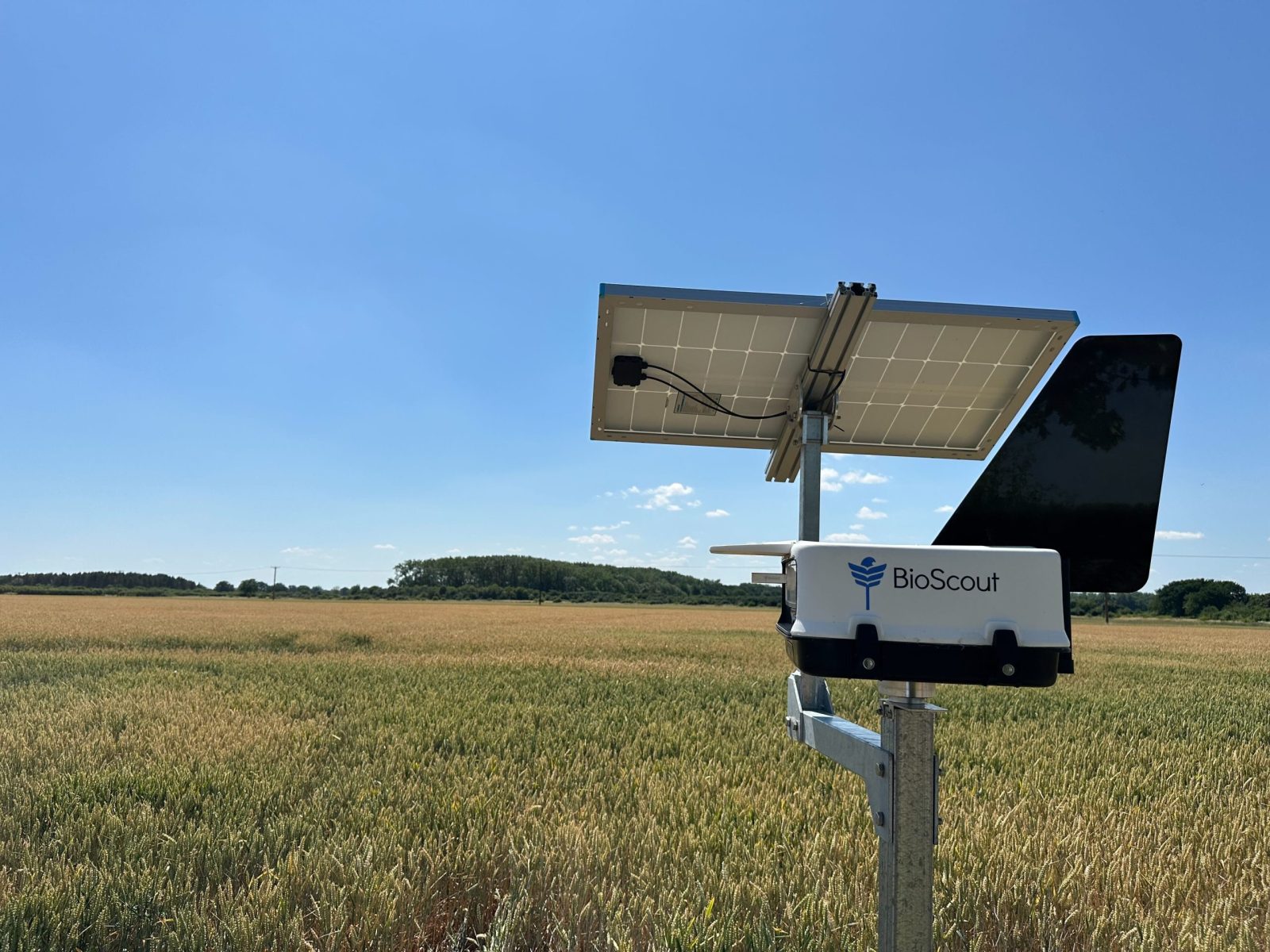
A BioScout sensor in a ripening Australian wheat crop. Photo: BioScout
AUSTRALIAN agtech company BioScout has developed a global agricultural disease-surveillance network, and has raised $6.75 million to help fund its expansion domestically and internationally.
BioScout already operates more than 250 disease-surveillance sensors across five continents, and plans to grow the network to 1000 sensors by 2029.
This latest round was co-led by European-based companies Demea Sustainable Investment and Astanor.
It builds on earlier and ongoing Australian investment from the Grains Research and Development Corporation’s and Artesian’s GrainInnovate fund, GrainCorp Ventures, and the Hort Innovation Venture Fund, as well as Europe’s Division Q.
Separate to its investment in BioScout through GrainInnovate, GRDC has an ongoing project with the company which has placed 60 BioScout units in the field across the growing area in Western Australia, South Australia, Victoria, and New South Wales.
“Through the project, GRDC offers network sign-up to growers, and the benefit is they can see where disease is coming from, and how it can be moving across a region before it gets to their farm,” BioScout chief operating officer Marley Harmon said.
BioScout started as the PhD of University of Sydney researcher Lewis Collins, and now employs 30 people over five continents.
“Every one of our sensors is designed and manufactured by a team of Australian scientists and engineers right here in Marrickville, New South Wales,” Mr Collins said..
Global expansion
In a statement, BioScout said it already has a foothold in Europe, and this funding will significantly expand its team and operations there, helping European growers better protect their crops as disease pressure rises across the continent.
Fungal disease destroys an estimated 20 percent of the world’s food supply each year, and growers spend around US$25 billion a year on fungicides to fight it.
“Climate change is compounding the threat, with a hotter, wetter world creating ideal conditions for fungal pathogens to take hold and spread, yet one of the most significant threats to the world’s food supply goes almost entirely unseen,” the BioScout statement said..
BioScout’s in-field technology gives growers real-time crop-health and disease-risk data, guiding on-farm crop-protection decisions before disease takes hold.
Each sensor monitors more than 40 airborne threats, from crop-disease spores to pollen and other particulates.
BioScout said acting on that early signal, rather than spraying to a fixed calendar, can halve growers’ spray costs.
“This supports more sustainable, environmentally responsible agriculture while improving growers’ margins at a time of rapidly rising fungicide prices.”
Source: BioScout
HAVE YOUR SAY