
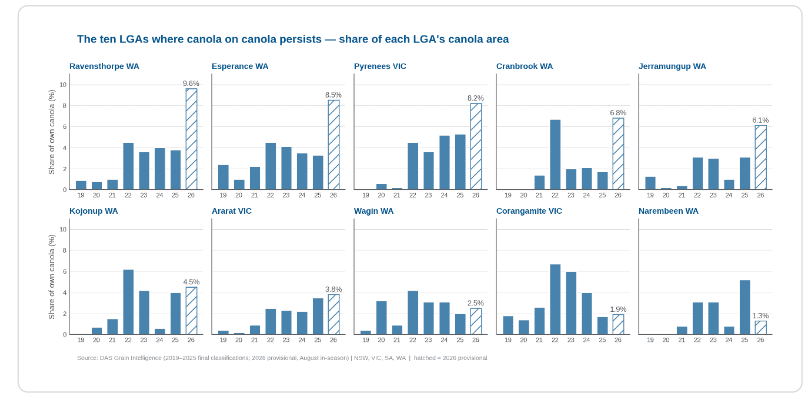
Figure 1: The 10 Australian LGAs with the most persistent record of canola on canola. Persistent does not mean rising: Corangamite is well below its 6.7pc of 2022, and Narembeen sits under its own 2025 level. Source: DAS
DIGITAL Agriculture Services has released new analysis showing Australian growers has this year planted just under 92,000ha of canola into last year’s canola stubble, a record area and dramatic expansion of this controversial practice.
Released today, DAS’ Canola on Canola: The 2026 Season report found repeat canola accounted for 2.1 percent of the national canola crop in 2026, surpassing the previous peak of 1.9pc recorded in 2022.
The 2026 repeat canola area was 7pc higher than in 2022, despite the national canola crop being around 260,000ha smaller.
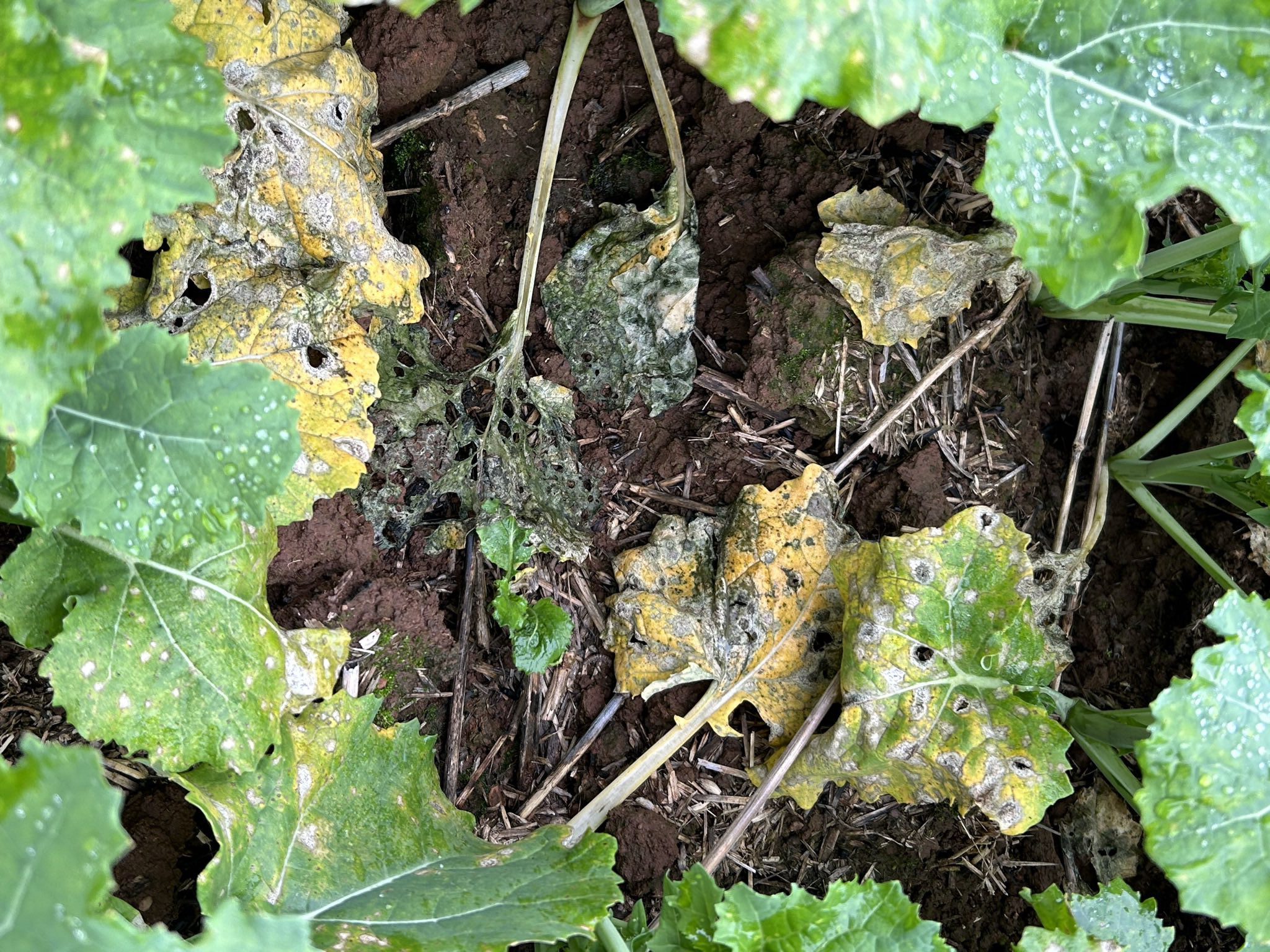
High levels of blackleg leaf lesions are being across southern Australia this year with expensive and hard-to-source fungicides, successive in-crop rain events and canola-on-canola plantings contributing to its incidence. Photo: Justin Kudnig, Pacific Seeds
In the report, DAS analyses repeat canola across New South Wales, Victoria, South Australia and Western Australia using DAS Grain Intelligence, which records crop type for every Australian paddock since 2018.
DAS found the distribution of repeat canola has changed since the previous peak in 2022.
While the practice was widespread across all four states in 2022, it is now more concentrated, with WA accounting for 78pc of Australia’s repeat canola area.
The 10 shires where the practice is most common now account for 56pc of the national total, compared with one-third in 2022.
With 24,700ha, WA’s Shire of Esperance shire recorded the largest repeat canola area nationally, representing 8.5pc of its canola program.
The Ravensthorpe and Jerramungup shires also recorded substantial increases, with 58pc of WA’s repeat canola area located across these three south coast shires.
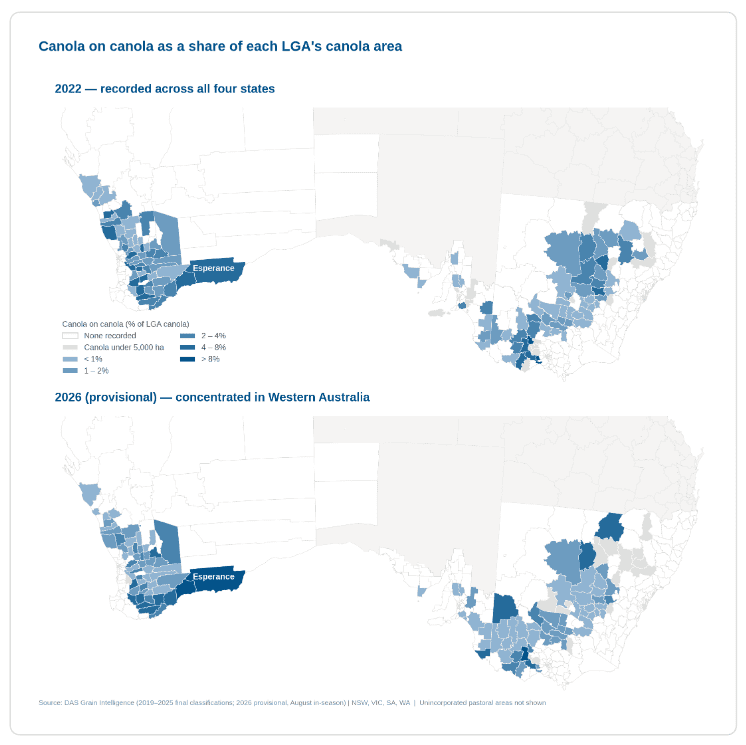
Figure 1: Canola on canola as a share of each LGA’s canola area. Source: DAS
The analysis is significant, given the Grains Research and Development Corporation’s Blackleg Management Guide advises to “never sow your canola crop into last year’s canola stubble”.
This is because it increases the risk of blackleg, a fungal disease which can contribute to significant yield loss, and shorten the effective life of resistant cultivars and fungicides.
DAS earth observations lead Sam Atkinson said the report also provides new insight into how repeat canola is occurring at paddock scale.
“By analysing paddock geometry, we can distinguish different drivers of repeat canola planting rather than treating every occurrence as the same,” Mr Atkinson said.
“We identified 692 separate repeat canola areas across the four states in 2026.
“Of those, 415 were paddock rotations being aligned into larger blocks, while 69 blocks larger than 300ha accounted for 50pc of the national repeat canola area.”
DAS classifies repeat canola into three forms:
- rotation alignment as paddocks are merged into larger blocks;
- standalone repeats; and,
- block-scale repeats.
Standalone repeats increased to around 13,000ha in 2026, while block-scale repeats accounted for half of the 2026 area and were the fastest growing of the three forms.
Source: DAS
HAVE YOUR SAY