
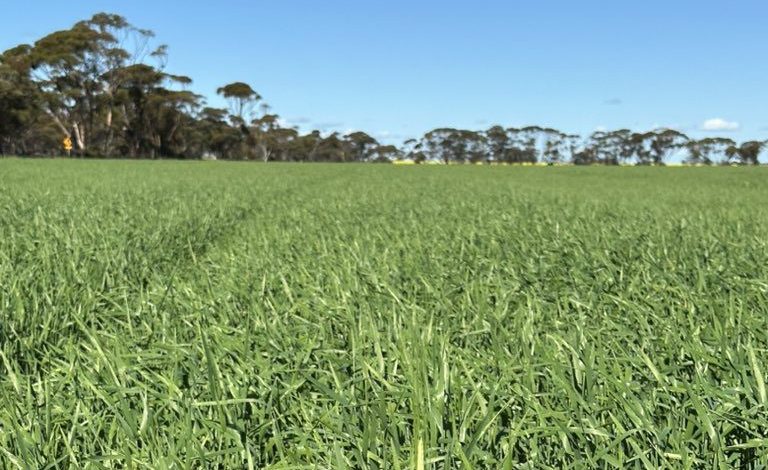
Barley starting to run to head late last month in the Salmon Gums district north of Esperance. Photo: Tim Starcevich
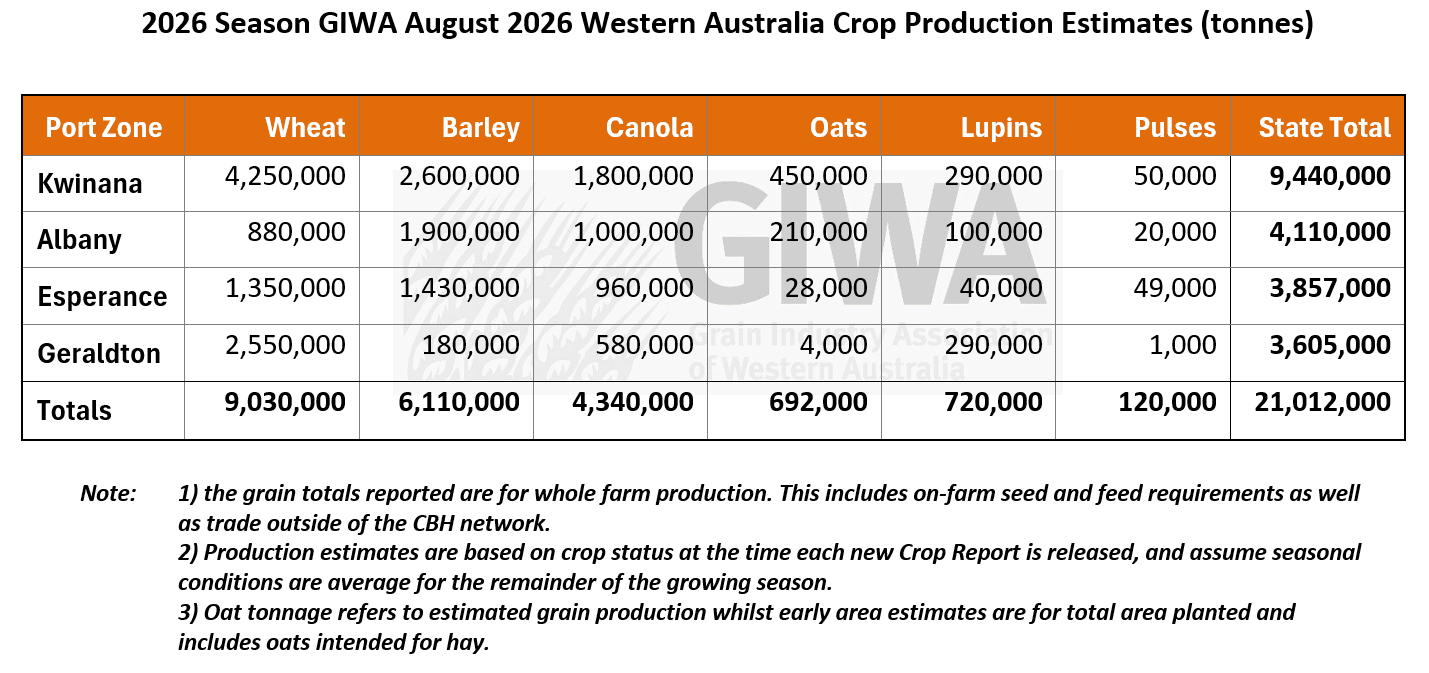
WESTERN Australia is forecast to harvest 21.01 million tonnes (Mt) of grain in the upcoming harvest, according to the Grain Industry Association of WA August Crop Report out today.
The figure is down from 22.66Mt forecast in GIWA’s July report, and author Michael Lamond said this reflects ongoing dry conditions over large areas of the southern Kwinana South port zone, the Great Southern and the Lakes Districts.
“Promising cold fronts have ended up delivering only light falls of rain and cold weather in these southern districts,” Mr Lamond said, adding this was being countered by very good conditions in most other regions.
However, he said the sudden change recently from still sunny days with very cold mornings to very cold windy days and cold mornings has put crops at immediate risk of lost potential due to frost.
“It is going to be a very nervous few weeks if the pattern of clear skies and lack of cloud cover after the cold fronts pass through continues.
“Crops were already feeling the effects of one of the driest Julys on record and now the cold fronts have slowed down growth dramatically, particularly in the southern regions.”
Mr Lamond said dry subsoil in most regions excluding Geraldton, the Midlands, West Albany, and Esperance is a greater concern than the potential impact from frost.
He said this is because crops in the drier areas will be more susceptible to heat shock by being less able to cope with the warming trend expected to occur at the end of August and into September.
“It will take a dramatic turnaround in increased rainfall over the next month to hit the high tonnage years in 2022 and 2025.”
Mr Lamond said the areas from Beverley to Bremer Bay that received the poorer start and were contracting following good rains in June have now started to go backwards over the past few weeks from lack of rain.
“Many areas in this region have had less than 150mm year to date, which is not enough to hit average grain yields.
“The expansion of this area of poorer crops is now going to have an impact on total grain tonnage for the state, as the area impacted is large, and is traditionally higher-yielding country.
“Whilst a decent rain is forecast in a few days, it is going to need to be a good old-fashioned dump of rain rather than the light sprinklings we have been having to reset crop-yield potential where rainfall to date has been light on.”
Mr Lamond said the better areas away from the low-rainfall strips in the Great Southern are still very good, particularly in the central/eastern Midlands and most of the Geraldton, Kwinana North East and the Esperance port zones.
“These areas are on track at the moment to be as good as those very high-tonnage years.
“The low-rainfall regions in the eastern and north-eastern regions are particularly good, with well above-average grain yield likely no matter what happens from now on, and potentially exceptionally good with a couple of more rainfall events.”
Challenges for wheat
In the report, Mr Lamond said barley and canola continue to be the standout crops across the state and together and could for the first time this harvest represent half of WA’s total grain production.
“Wheat tonnage estimated in this report could be the crop that swings the most.”
GIWA’s estimate for wheat production now stands at 9.03Mt, down from 9.55Mt seen last month.
“Wheat grain yields in the north and east of the state could still change quite a bit due to the impact of frost and whether or not they receive further finishing rains.”
Mr Lamond said the fertiliser supply and price issues at the start of the season have started to bite now in a lot of areas.
“Canola followed by barley crops were preferenced over wheat due to the potential profitability and earlier establishment, with most canola and barley looking to be okay and not yield-limited from reduced fertiliser applications.
“It’s the later-sown crops which are mostly wheat that are now noticeably underdone, and many will be capped in potential yield due to a lack of fertiliser.”
Mr Lamond said crops in the low-rainfall areas will not be as limited in yield from lack of nitrogen as those in the medium to high-rainfall areas.
Season ‘in the balance’
Mr Lamond said oat crops in the north-eastern regions away from Hyden and Newdegate mostly get harvested for grain and these crops “look sensational”, balancing the poorer oat crops in the more traditional oat grain-producing areas around Narrogin.
Lupin crops vary from very good in the north to not so good further south, with their growth slowed down by the recent cold conditions.
Pulse area is similar to last year, although there has been a swing out of field peas to lentils, nearly a direct swap of 20,000ha.
Lentils are planted in 54 Local Government Areas this year, up from 23 last year.
“Whilst many of these plantings are very small with just one or two paddocks per LGA, it points to the rapid expansion of lentils where there has been no significant movement in area planted of the other pulses for over 20 years.
“Overall, the season is still very much in the balance with much of the grainbelt requiring regular rainfall going into spring as there is nothing in the bank at the moment.”
Further detail on crop conditions in individual WA port zones can be found as part of the full report on the GIWA website.
Source: GIWA
HAVE YOUR SAY