
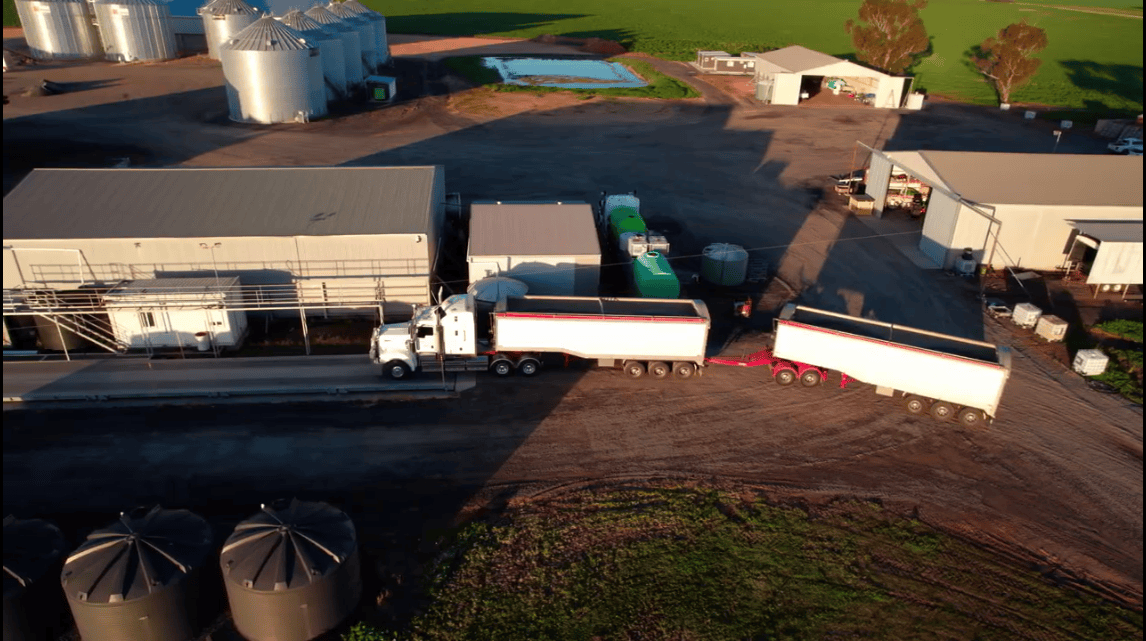
Justin Ruwoldt and family at Glenvale Farms in Victoria’s Wimmera have installed an AutoWeigh system ahead of the upcoming harvest to improve their grain-handling efficiency. Image: AgriChain
AFTER a strong and early start, and a wet and mild winter, growers across South Australia, Victoria, and southern New South Wales are gearing up for a bumper, and possibly record, harvest.
In its quarterly Australian Crop Report out September 1, ABARES fueled the fire by forecasting a Victorian winter crop now not far from harvest at 11.32 million tonnes (Mt), to break the 11.27Mt record set in 2022-23, and well ahead of last year’s 10.11Mt.
It has growers and bulk handlers of all sizes putting in place equipment and technology to store the crop, which harvesters these days can take off at up to 90 tonnes per hour.
From silo bags to bunkers to new technology which increases weighbridge functionality, work is under way on farm and storage sites to handle the crop.
The Adventure Crop Tour Mallee edition was held August 26-28, and the itinerary saw more than 30 people motorcycle around the region to see what organiser Dion Costigan said was an “unbelievably huge” Mallee crop.
“The Mallee’s moisture is there, and it’s not battling dry like it often is in September,” Mr Costigan said.
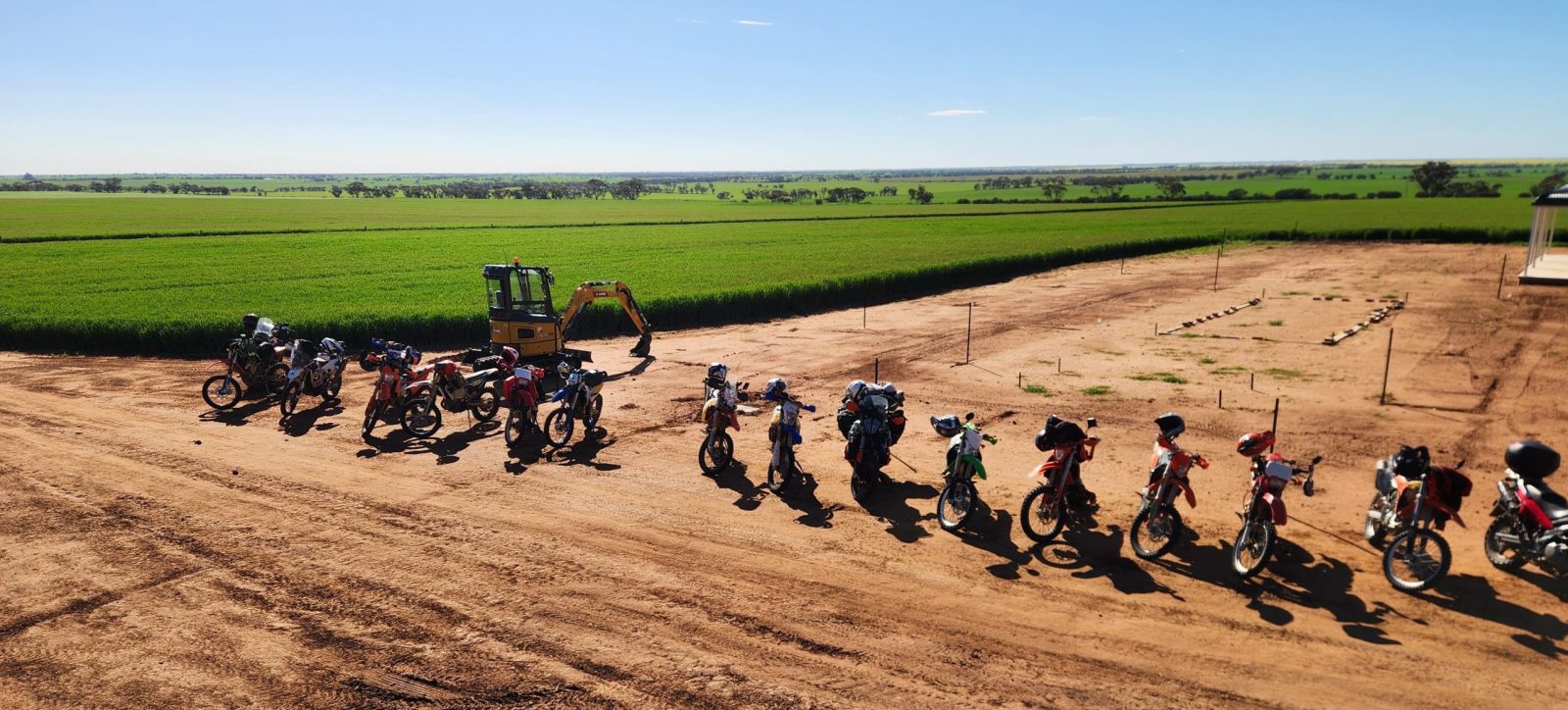
The Adventure Crop Tour, Mallee Edition last month involved more than 30 bikes and visits to farms where bumper to record yields are expected. Photo: Dion CostiganFrom his base in Bendigo, Mr Costigan will once again be heading out to a mate’s farm to help with harvest at Woomelang, one of many Vic farming districts where yields could well set new records.
Call for bunkers
Based in Cowra, NSW, Ellis & Sons makes tarpaulins and ground sheets.
The family business involves Sarah Ellis, who said the company has recently had a run of orders for various sizes of custom-made tarpaulins to cover bunkers, including many being built on farm to hold 2000-3000 tonnes.
“A lot of smaller operators are wanting to store their own grain and they feel they need that extra capacity and extra control in the marketing of it,” Ms Ellis said.

Ellis & Sons exhibitor Sarah Ellis talks shop with Global Sealing Group’s Paul Casey from Perth at AGIC 2026.
While the crop in northern New South Wales is patchy due to planting rain falling late or not at all, growers in the southern half of the state, as well as Vic and South Australia, are making provisions for yields rarely or not previously seen.
Despite an El Niño event being predicted and developing, the season for crops south and west of Cowra has mostly been stellar.
“Everyone held off a little bit on ordering; the start was so uncertain.
“People were saying it was going to be so dry; now they’re saying it’s going to be good, and demand is peaking now.”
Ellis & Sons services clients across Australia, and Ms Ellis said, as is the trend in each season, business is busiest where the crops look best.
The business has employed around 15 casuals to help its more than 30 permanents fill orders by the time the headers start rolling.
“We’ve still got some activity in the north, but a lot of what we’re doing is for south of us.
“We were down in the Mallee recently, and it’s as good as they’ve ever seen it.
“Everyone’s gearing up and they’ve got their bases covered.
Bag demand ‘unprecedented’
Melbourne-based Plastag managing director Sam Price said demand for silo bags, and the equipment to fill and empty them, is “unprecedented”.
“We’re probably seeing three or four times the demand for bags we see in a normal year, largely driven by the sheer tonnes that are out there,” Mr Price said of the southern crop.
This year’s cost of grain production incorporates diesel and fertiliser prices inflated by the supply chain impact of the US-Iran War, and Mr Price said this has factored into growers looking at where they can trim their overheads.
“We’re also seeing underlying demand from farmers wanting to sell their grain ex farm, and save $40-$50/t on getting it to a central storage point, and instore and outstore costs.”
“They’re saying ‘we can save…a lot in terms of our input cost by marketing ex farm.”
Mr Price said the increased capacity of headers was also factoring into growers being increasing willing to invest in silo-bagging systems.
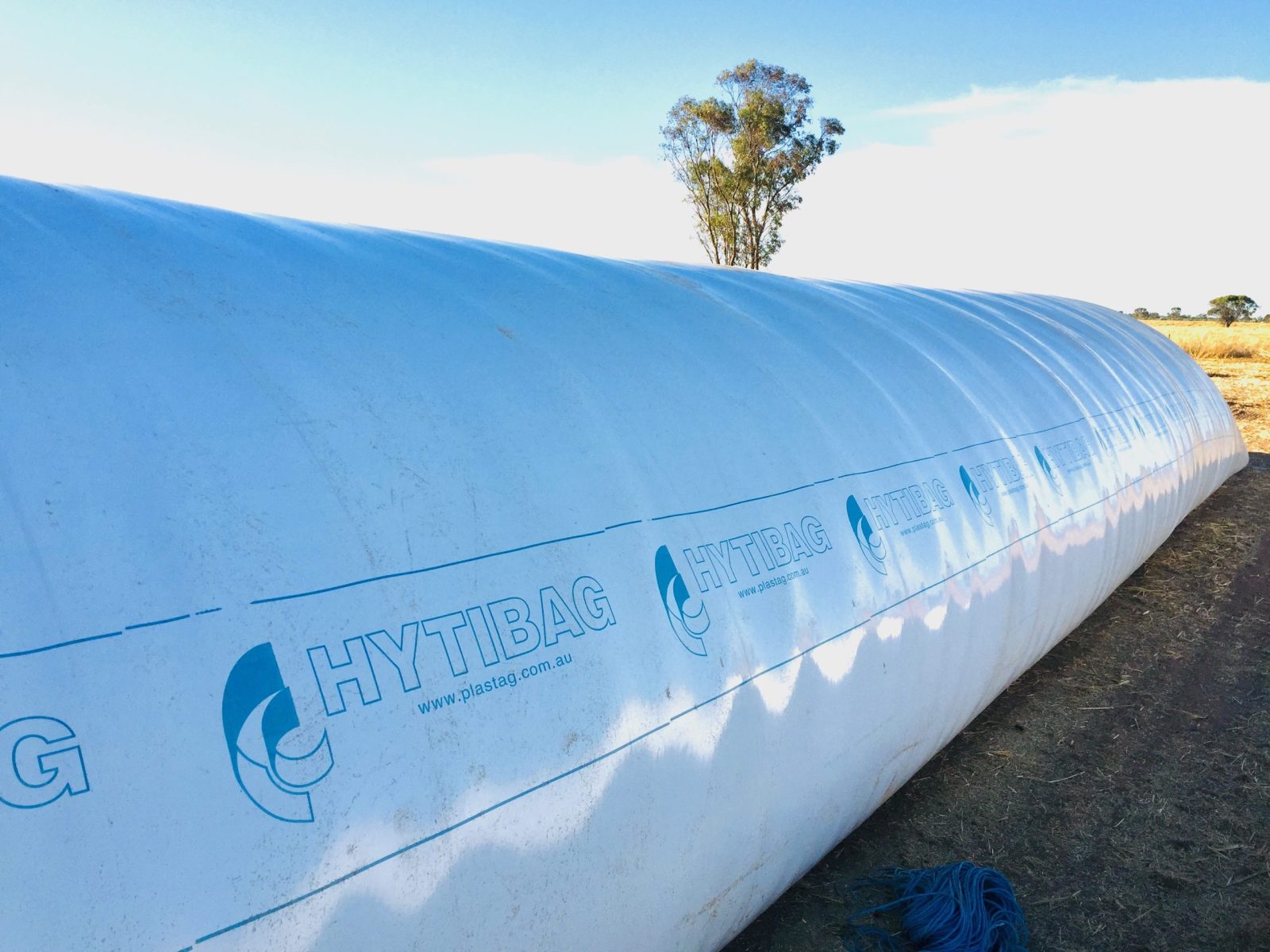
Demand for silo bags ahead of this harvest is very high as growers in Vic, SA, and southern NSW gear up for bumper or record yields. Photo: Plastag
The ballpark figure for bags is around $3.50/t, and the capital cost is around $100,000-$120,000 combined for pair of machines to load and empty bags, plus an optional $10,000 or so to roll up emptied bags ready for recycling.
“These new-generation headers aren’t doing 30 to 45 tonnes an hour, they’re doing 85 to 90.”
Mr Price said that makes it virtually impossible for growers or contractors to deliver grain off site and keep up with the what is being stored in field bins.
“These latest bagging machine can do 1400/t an hour, and the new-generation bagging machines really keep up with new-generation headers.”
The Bureau of Meteorology’s September 10 forecast points to below-average rainfall for south-eastern Australia for the coming quarter, part of the “firmly established” El Niño event which is expected into autumn 2027.
However, even a shower or two could stop harvest and carting for some days, even in light country like the Mallee, because of the unusually wet subsoil.
“Subsoil moisture is exceptional, and it’s not going to take much rain at harvest to stop work in the paddock.”
Mr Price said that means growers are keener than ever to get the crop off as quickly as possible into bags in the paddock, and “worry about the marketing later”.
Weighbridge smarts here for harvest
AgriChain has expanded its offering from software that enables inventory management already popular throughout the Australian supply chain to include hardware via the Autoweigh system.
It allows even short weighbridges to weigh multi-axle combinations without the driver having to leave the cab, and AgriChain chief executive officer Caile Ditterich said it is hot demand as harvest 2026 nears.
“Autoweigh’s been going for about eight years, and last year we changed it up to a new model which uses…licence plate recognition through a camera.”
“The innovation is the ability to split weigh.
“We put this new product together to automate weighing as well as the contract management side of things for growers.”
“A lot of the bulk handlers are putting them in too.”
AutoWeigh’s key piece of hardware is a kiosk, where the driver can enter the truck’s registration and the number of axle weighs required to capture the load if it is longer than the weighbridge.
The kiosk will also print out a docket and QR code, and has a camera attached to read the truck’s registration plate and eliminate the need for the driver to leave the cab when weighing out.
“You can turn that weighbridge at a site from an outdated asset to one that can handle the combination you have.
“If a truck’s in the database, the driver can reach out the window and say ‘this is the truck I am’, and say they do or don’t need to split weigh, and if they need to split once or twice.”
Instructions come from a digital message board, and each delivery or outload can feed into AgriChain’s database so the grower and/or bulk handler can track grain movements and interface with the National Grower Register if it is a commercial delivery.
AutoWeigh units are expected to make for some fast cycling on farm, or to bulk-handling sites.
Mr Ditterich said AutoWeigh is not about trying to cut out the major bulk handler, but to improve efficiency in the grain-handling system, which more and more involves on-farm storage.
“All bulk handlers offer a great service, and it’s a secure service.”
Whoever gets Victoria’s grain at harvest, Mr Ditterich is sure it will add up to one thing: “It will be their biggest year on record.
Grain Central: Get our free news straight to your inbox – Click here
HAVE YOUR SAY