
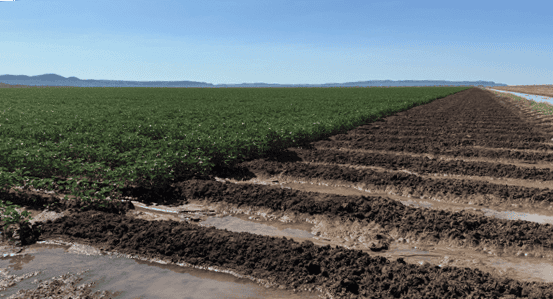
Irrigated cotton growing at Duxton’s Ord, WA, property.
DUXTON Farms has reported a $40.32 million loss after tax for the financial year ended June 30, more than three times the $12.5M loss recorded in the previous year.
The result comes during a period of change for the company, which has included its ongoing move away from broadacre farming in New South Wales, and the acquisition of Duxton Bees, Duxton Orchards, Duxton Dairies and Duxton Dried Fruits for a combined $78.87M.
ASX-listed Duxton Farms manages a portfolio of agricultural assets spanning approximately 183,000ha in six states and territories.
Duxton has reduced its NSW holdings since beginning to divest its large-scale cropping assets more than two years ago.
Early this year, Duxton sold the 940ha Cowaribin, and the neighbouring 535ha Merriment near Forbes to local interests.
Still for sale in the Forbes district are Duxton’s 1400ha Walla Wallah, 2174ha Yarranlea and 2709ha West Plain, which listed in January; their sale will effectively mark the end of Duxton’s large-scale cropping holdings in the region.
Duxton’s remaining broadacre cropping operations are focused in northern Australia, and include a lease over the 23,802ha Wildman Agricultural Precinct and ownership of NT Portion 5088 in the Northern Territory, as well as a 285ha lease in Western Australia’s Ord Irrigation Precinct.
It also holds a lease over the 141,000ha Mountain Valley cattle station in the NT, which has been identified as having potential for cotton production.
However, Duxton has recently revealed it intends to relinquish the station lease when it expires.
Financial breakdown
Duxton recorded total revenue of $18.11M in FY26, down about $680,000 on FY25.
Agriculture contributed the largest share of revenue at $9.95M, followed by viticulture at $6.1M, apiculture at $1.53M and horticulture at $553,000.
The agriculture segment comprises Duxton’s remaining broadacre and livestock activities and has the highest asset value at $95.75M.
The company attributed the reduction in revenue to the change in business activities and commodity mix undertaken during the year.
Its report noted the broadacre revenue contributed more than $20M in FY25.
The company’s cost of sales fell $2.89M to $22.23M for FY26.
Duxton’s expenses increased across several categories in FY26, with operational expenses more than doubling to $15.83M, impairment expenses rising from $502,000 to $5.9M, and business combination expenses increasing from $3.69M to $6.91M.
Its total liabilities jumped by $61.64M to $132.63M in FY26, largely driven by increases in current liabilities, including a $26.5M rise in borrowings and a $13M increase in bank overdrafts.
Mountain Valley shift
In an Activities Report for Quarter Ending 30 June 2026, Duxton said it was preparing to end its lease at Mountain Valley Station due to its lack of broadacre cropping potential.
“In preparation for the end of its lease over the station due to the fact that the company’s aspirations to develop a large area of land to cropping are unfortunately not feasible at Mountain Valley in the timeframes required by the company, Duxton Farms is preparing to sell the majority of its cattle,” the report said.
The company announced a five-year lease for the station in November 2022, with an option to extend.
It is unclear when the company made this decision not to extend the lease.
However, in the report for the quarter ending December 31, the company stated it was continuing “to work through mapping and surveying for further cropping development” at Mountain Valley.
The following activities report said that Duxton teams were “expecting to sell cattle at Mountain Valley as it winds down operations there ahead of the end of its lease”.
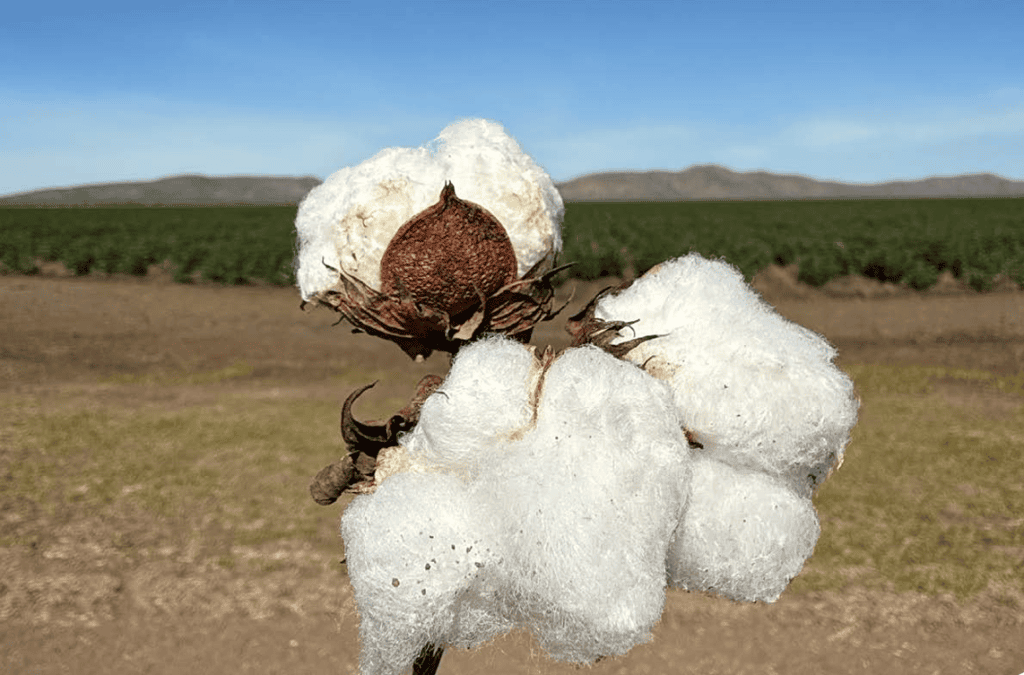
Cotton has been grown at Duxton’s leased block in the Ord.
Cropping update
The latest Duxton update said that summer cropping at the remaining Forbes aggregation had “finished well hot and dry conditions earlier in the year, with yields exceeding budgeted estimates”.
“Ginning is ongoing but the company has averaged 13 bales to the hectare to date, with the highest field on average at Walla Wallah coming in over 15 bales to the hectare, which is well above the expected output for the region,” the report said.
“The winter-cropping areas, which had been kept clean with limited sprays due to dry conditions, has not been planted and all country has been long fallowed.
“This decision was made earlier in the year as the Forbes aggregation is being marketed for sale as part of the company’s shift away from broadacre farming assets, and the economics of dryland winter cropping has been challenged by the increased diesel and fertiliser costs as a result of the war in Iran.”
At Wildman, Duxton has completed post-wet season burning, and fire breaks have been established.
“The company intends to plant the cleared areas to fodder (and potentially grain sorghum), which will be the first full crop at the precinct.
“The company progressed its permitting and licencing to clear additional areas over the quarter in line with its obligations to the Northern Territory Government.”
Over the border in WA, Duxton confirmed it had to replant “about 60pc of the area planted” at the Ord block due to flooding.
At the time of publishing the report, the crop was “performing well, with replanted areas having caught up in terms of growth to the original crop”.
“The Operations Team is not expecting any impact on yield or quality.”
Grain Central: Get our free news straight to your inbox – Click here
HAVE YOUR SAY