
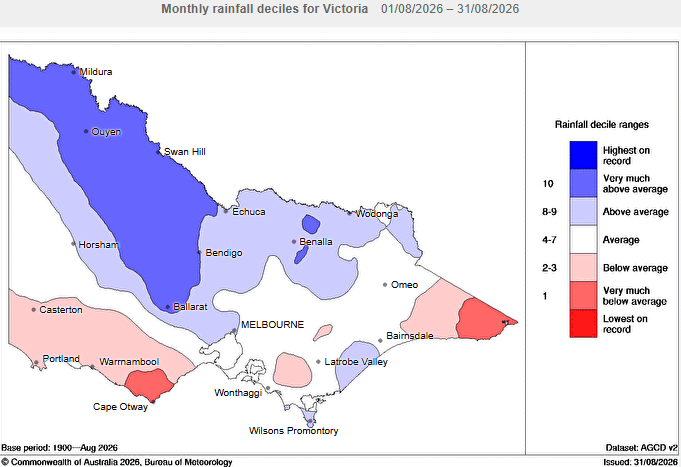
Figure 1: Monthly rainfall deciles for Victoria over August. Source: Agriculture Victoria
MONITORING of soil moisture in Victoria indicates crops in the Wimmera and Mallee are well set up for spring following average to near-record rainfall over August.
Information comes from the Soil Moisture Monitoring Project, which gathers data from a network of underground probes that provide calibrated, real-time soil-water data.
Over 16 years, the data has shown five wet, four average and seven below-average annual rainfall decile years, highlighting the seasonal variability faced by cropping farmers.
Original sites measure soil-water content at a single reference point within a paddock, from 30cm to 1m deep, while recently commissioned sites measure from a depth of 20-130cm.
Rainfall in the 50-100mm range across large areas of the cropping district in August generated above-average rainfall deciles and boosted soil moisture profiles back to 75-100 percent.
As a result, this allows the region to enter spring with high confidence that deep moisture reserves are in place to support critical crop stages, including flowering.
At cropping sites, July rainfall was average to above average, and August rainfall was above average across much of Victoria, falling on soils that were already wet.
This has created some waterlogging in low-lying areas of paddocks, but free-draining soils and better soil types have continued to bank deep soil water reserves below 100cm and build above-average yield potential.
Paddock trafficability has been tested for herbicide and fungicide applications.
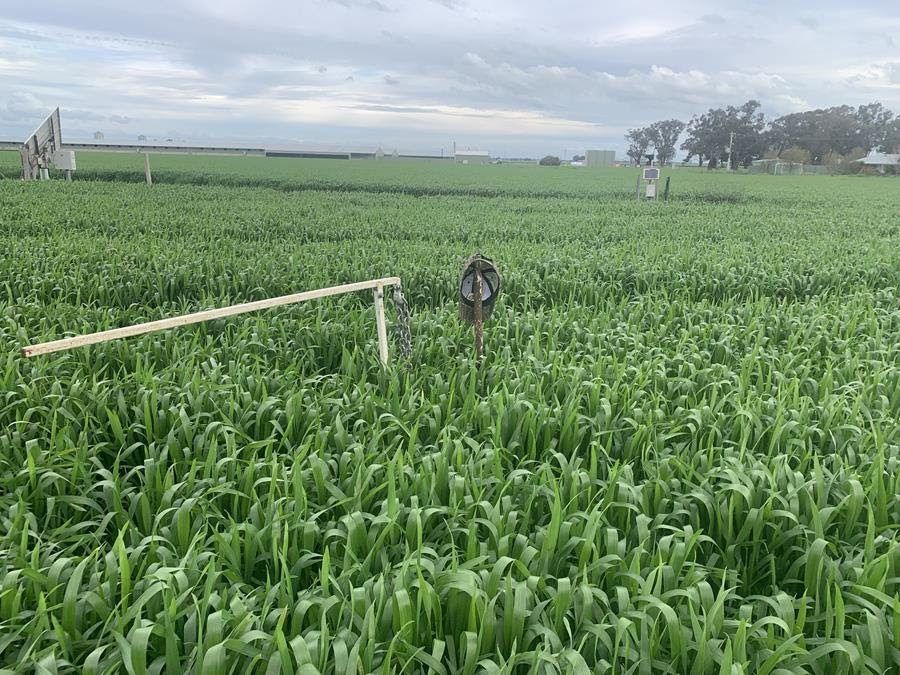
A wheat crop sown May 10 at Elmore. Photo: Agriculture Victoria
Cropping regions are well ahead of the usual development schedule, with biomass levels reflecting above-average growth.
There were some indications of early and shallow moisture depletion in July, but those losses were regained during August.
Some sites have moisture graph trend lines very similar to 2017, when despite a dry September, cereal crops were able to finish on deep moisture reserves.
Based on past observations, cereal crops have depleted full moisture profiles in six weeks with limited spring supporting rain.
Yield range was 4-4.5t/ha wheat for these examples, with 4t/ha in the Normanville example below, and access to moisture got tight during grain fill which took off some yield.
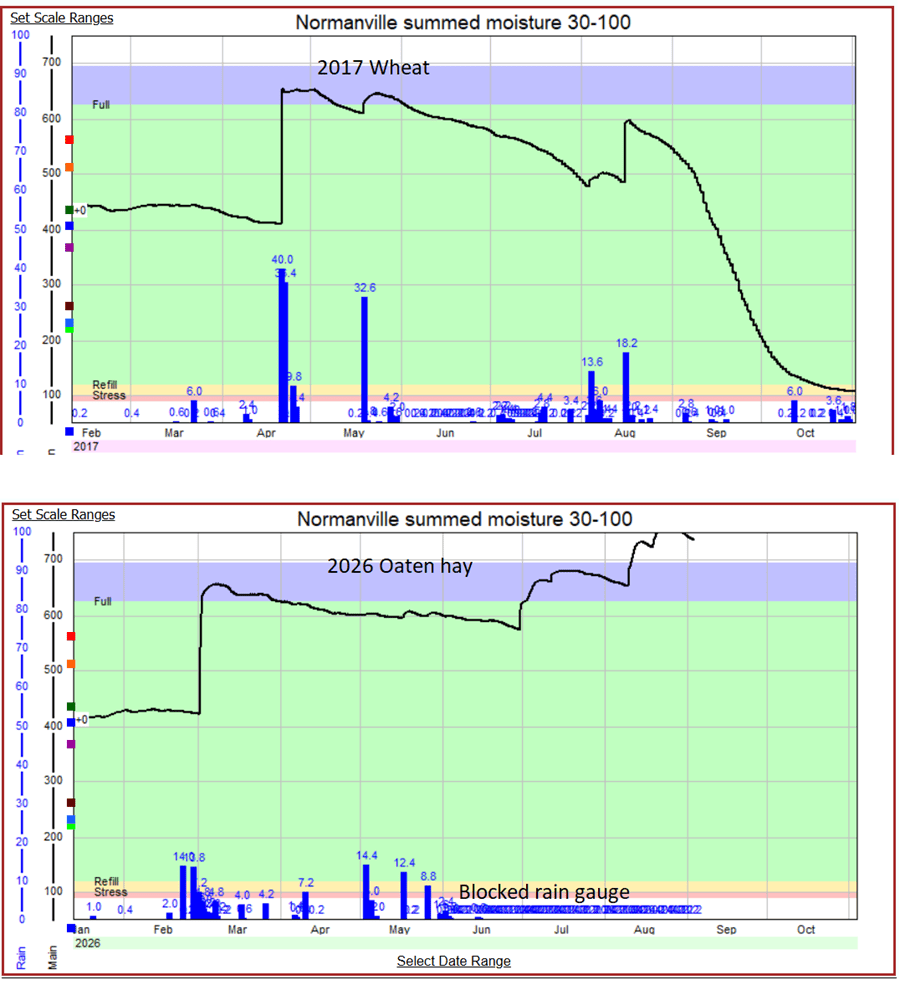
Figure 2: Summed moisture for 2017 and 2026 crops at Normanville in the Victorian Mallee. Source: Agriculture Victoria
Some moisture graphs look very similar to 2017, with characteristics of:
- carry-over/good starting soil moisture;
- early emergence and solid connection of new-season moisture and deeper reserves; and,
- top-up late August.
In years like 2017, root systems were able to extract high levels of soil moisture at depths down to 100cm.
Inspection of root systems in early September should find active roots down to 80-100cm and beyond in better soil types.
Restricted root depth in soils with sub soil constraints and waterlogged area.
Indicative soil-moisture levels at selected SMM sites over 10cm intervals between 30cm and 100cm are:
- Mallee: Ouyen 82-100pc, and Normanville and Speed 100pc;
- Wimmera: Birchip 78-100pc; Brim 87-100pc; Minyip 99-100pc; Sheep Hills 97-100cm, and Taylors Lake 100pc;
- North Central: Coonooer Bridge: 100pc;
- South-west: Hamilton 76-100pc, and Willaura at 20-120cm 34-100pc; and,
- Gippsland: Giffard West 54-84pc.
Victorian growers are invited to use Agriculture Victoria’s estimator for yield later this month to help plan for the upcoming harvest, and finalise crop-protection insurance.
Source: Agriculture Victoria
HAVE YOUR SAY