
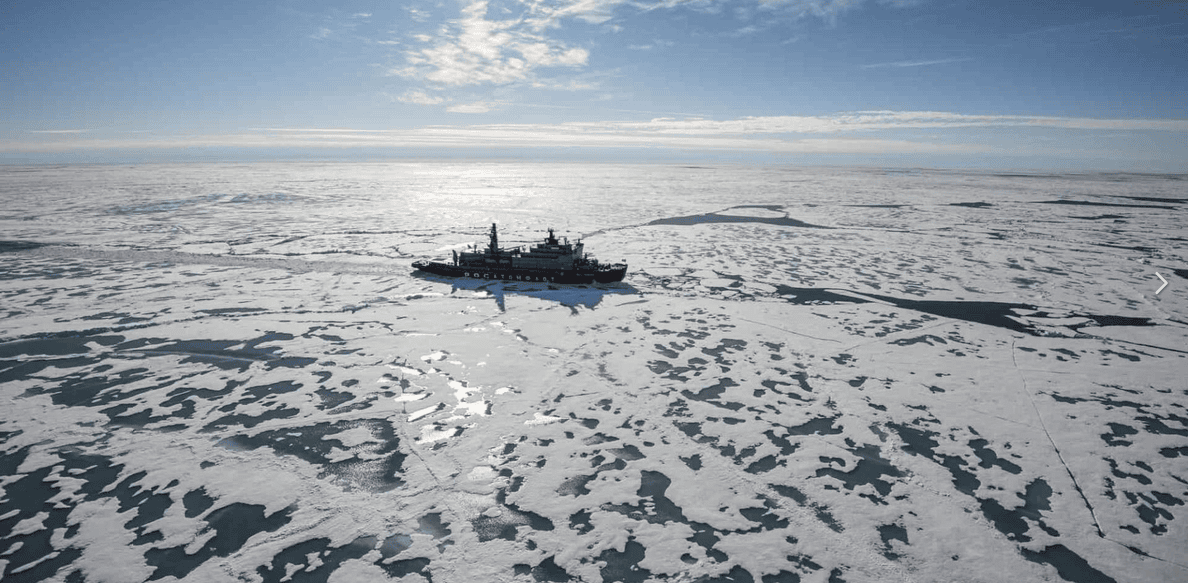
Tourism operators including Russia Discovery are already navigating Arctic waters during the northern summer. Photo: Anthony Smith/Russia Discovery
THE Northern Sea Route (NSR) has stirred the imagination of maritime pioneers and governments for centuries. Also known as the Northeast Passage, the mythology goes back to the days of Marco Polo and centres on Europe’s obsession with finding a shortcut to the riches of Asia. Early explorers stubbornly believed an ice-free, warm ocean ringed the North Pole, which would easily connect European ships to the Pacific.
The NSR slices an icy trail along Russia’s Arctic coastline from the Bering Strait, which connects the Pacific and Arctic oceans, to the Barents Sea north of Norway. The 5600km sea lane is the shortest maritime passage from East Asia to Europe or the Atlantic coast of North America.
While it is only navigable late in the Northern Hemisphere summer, the window has widened in recent years as the ice sheet surrounding the North Pole has retreated. At the same time, advances in ice-class vessels, satellite remote sensing, ice forecasting and digital navigation have made Arctic operations more practical.
Geopolitical risks in other major shipping corridors have also added to the appeal of route diversification. Disruptions and tensions in critical waterways such as the Red Sea, the Black Sea, the Strait of Hormuz and the Suez Canal have strengthened international interest in alternative routes and greater supply-chain resilience.
Faster route in narrow window
The route can cut the time it takes to get from China to Europe by more than half. Russia promotes it as a quicker, cheaper and environmentally friendly alternative to existing global shipping lanes. But the benefits come with serious environmental and political risks that could outweigh the gains.
Melting ice, harsher weather, shallow sections at the eastern end, floating ice, and inadequate rescue infrastructure make this Arctic corridor far riskier and more polluting than Russia would like the world to believe. The ships themselves are limited in size, require reinforced ice-class or polar-class hulls, specialised crews and permits, and face steep insurance premiums.
Escorts from Russian icebreakers are also required for part of the NSR. Russia’s state nuclear company Rosatom issues the required navigation permits and oversees shipping along the route, while also providing the nuclear-powered icebreakers that are needed to accompany commercial vessels.
Services running
While India, Japan, Korea and the United States have long expressed interest in sending cargoes via the Arctic Circle route, it is China that has established the initial regular service. In August, Chinese shipper Sea Legend Shipping launched the world’s first container cargo service via the Arctic route, after carrying out a test crossing last October. The move represents the most significant development in Arctic container shipping since Maersk conducted a trial voyage in 2018.
The new “Ice Silk Road” begins at the port of Ningbo-Zhoushan on China’s east coast and terminates at Felixstowe in south-eastern England. The journey is expected to take as little as 18 days compared with more than 40 days via the Suez Canal, or more than 50 days via the Cape of Good Hope, if Red Sea transit is not possible.
Since the Sea Legend announcement, six Chinese shipping companies have reportedly planned 29 vessels to operate 44 Arctic voyages this year, the highest number since China’s first Arctic voyage in 2013. South Korea also passed legislation earlier this year to turn its southern port city of Busan into a major Arctic shipping hub. On August 19, it also announced its intention to run a container ship trial in September.
Sea Legend reportedly plans to sail one voyage per week after its August 15 maiden trip for a total of eight consecutive sailings. This suggests a degree of schedule stability, allowing exporters to book cargo and plan production and logistics in advance. The first voyage reportedly carried Chinese-made electric and hybrid vehicles, lithium batteries, solar equipment and other goods sold to European markets.
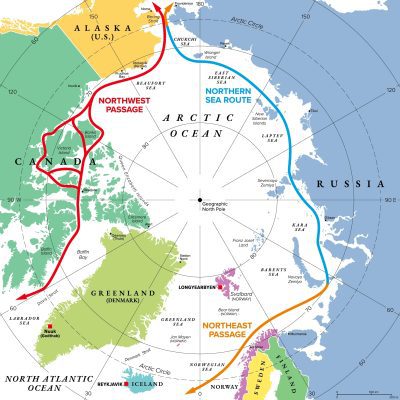
The Northern Sea Route is being plied by at least one commercial shipping operator during the current northern summer. Image: Shutterstock
Experts say the route is ideal for cargo that is sensitive to temperature, including electric vehicles, lithium batteries and solar products – among which China has become a dominant global supplier. However, much of the traffic currently utilising the Arctic path is Moscow’s shadow fleet: old tankers often operating without insurance or proper regulatory oversight, making ad hoc journeys to evade Western sanctions on Russia’s oil exports.
China has been extremely proactive in developing the NSR route after proposing a Polar Silk Road in 2017. Moscow was initially wary of China’s growing presence in the Arctic, but after its full-scale invasion of Ukraine in 2022, Russia has been left increasingly dependent on China, giving Beijing greater leverage and access.
For China, it offers a crucial alternative to the Malacca Strait, through which around 80 percent of the nation’s imported oil and a large share of its trade must pass. Moscow and Beijing have set a target of reaching 20 million tonnes of bilateral cargo traffic along the route by 2030, highlighting the growing importance of the Northeast Passage to trade between the two countries.
Japan also views the Arctic pathway as a vital energy shortcut. Deep-water ports on the islands of Hokkaido and Honshu are geographically primed to serve as major entry points for liquefied natural gas from the Arctic. However, historically frosty relations with Russia have necessitated a more cautious approach.
Possible path for ag exports
Utilisation of the NSR for bulk grain and oilseed movements has been limited to date. However, Russia and China are reported to have advanced plans to utilise the trade corridor for bulk and agricultural trade. The surge in Russian grain and oilseed exports via its Baltic ports due to the ongoing war with Ukraine may also prompt some experimentation. However, traditional global flows would not benefit greatly from the option, and Moscow’s control of the passage, as it is largely in Russia’s exclusive economic zone, is viewed as too great a risk for many merchants.
Industry pundits caution that the recent developments should not be interpreted as a replacement for established trade routes such as the Suez Canal. Instead, they said the Arctic corridor is entering a phase in which its commercial viability, supply-chain resilience, and role in global shipping governance are being tested. While it has moved beyond feasibility into trade validation, at this early stage the corridor should be best viewed as a seasonal supplement to other key international shipping routes.
HAVE YOUR SAY