
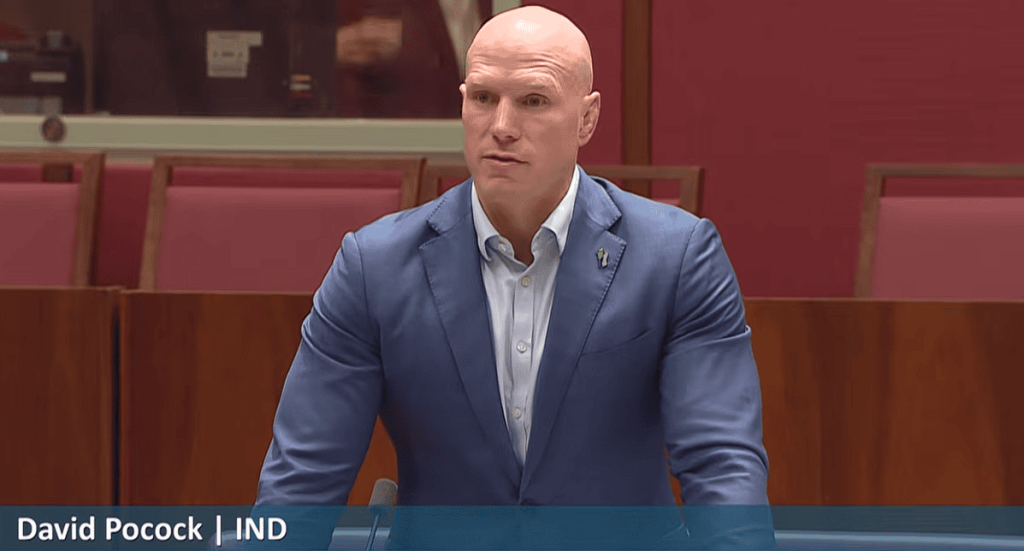
THE SENATE has voted to hold an inquiry into the Australian Pesticides and Veterinary Medicines Authority’s June 2026 regulatory decision on paraquat.
The motion was put forward by independent Senator David Pocock, who had criticised the regulator’s decision to tighten controls on its use rather than ban it.
The controls on the knockdown herbicide included reducing its maximum application rate, requiring enclosed mixing and loading systems for all uses, and phasing out its use in backpack sprayers.
Mr Pocock moved that the APVMA’s decision be referred for inquiry, with reference to:
(a) the scientific evidence considered by the APVMA in reaching its decision;
(b) the adequacy, transparency and independence of the APVMA’s decision-making process;
(c) the current evidence regarding any association between paraquat exposure and Parkinson’s disease and other neurological conditions;
(d) the implications of the decision for farmers, agricultural workers, rural and regional communities, golfers and others who may be exposed to paraquat;
(e) the extent to which Australia’s regulatory framework appropriately responds to emerging scientific evidence and uncertainty regarding the long-term health impacts of agricultural chemicals;
(f) international approaches to the regulation of paraquat and other agricultural chemicals with potential long-term health impacts;
(g) whether any changes to Australia’s regulatory framework are required to ensure public confidence in the assessment of agricultural chemicals; and,
(h) any related matters.
Proposed Parkinson’s risk
Mr Pocock asserted that paraquat was “linked to Parkinson’s disease”, which he said was “the overwhelming opinion of scientists who have for decades been looking at why and how rates of Parkinson’s disease have been climbing in farming communities around the world”.
“It’s now banned in more than 70 countries, including China, which is one of the largest manufacturers of this chemical,” Mr Pocock said.
“Yet, after a review lasting almost 30 years, the APVMA has decided to allow its continued use in Australia, putting even more generations of farmers at risk.
“I totally get the argument from farmers and some in the ag sector about the efficacy of the herbicide and how crucial it is, but the APVMA is tasked with looking at the evidence and the safety for human health, and the APVMA concluded that the available evidence did not convincingly demonstrate a direct causal link between exposure to paraquat and an increased risk of Parkinson’s disease.”
He pointed to the opinion of Melbourne-based neurologist Professor Wes Thevathasan who stated that “major studies of exposed communities were largely ignored by the APVMA studies, which have repeatedly found a link between paraquat exposure and Parkinson’s”.
“He said the APVMA reports wouldn’t pass the first test in a science degree, and that should disturb all of us greatly, because this is our regulator.
“Other experts I’ve spoken to say the APVMA treated studies differently depending on their findings and relied on research linked to Syngenta, the manufacturer, without properly addressing those conflicts.”
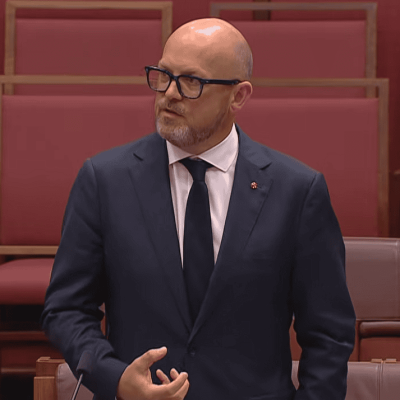
WA Liberal Senator Matt O’Sullivan said the enquiry could bust myths about the herbicide.
Greens Senators Jordon Steele-John and Steph Hodgins-May also spoke in favour of the motion, citing the potential link between paraquat and Parkinson’s disease and the number of countries that have banned the chemical.
LNP calls for balance
The Liberal and National party Senators spoke in support of the motion but called for a balanced view of the issue and cautioned against fearmongering.
Senator Slade Brockman said that “all chemicals are dangerous” and, as such, were “significantly regulated” in Australia.
“The fact is that paraquat has just been through an extensive regulatory process with the government regulator of agriculture and chemicals in this country, widely considered to be one of the top three regulators in the world if not the best regulator in the world,” Mr Brockman said.
He acknowledged that paraquat had been banned in other countries, citing China as an example, where it was banned because of its use in suicides among peasant farmers.
He said this did not apply in Australia, and should not be used as a like-for-like comparison.
“No farmer in Australia wants to use one gram more of pesticide or herbicide than they absolutely have to.
“In fact, farmers have got much, much more efficient at using computer-controlled spraying to ensure that only weeds are sprayed, rather than whole fields, to spot spray.
“I would never not want to see the Senate able to scrutinise matters, but I think it is very important that we actually take our roles seriously, that we do not use committees such as this one for fearmongering and that we actually seek to understand the reality of the use of these chemicals in Australia and the reality of the scientific decisions that have already been made.”
Fellow Western Australian Liberal Senator Matt O’Sullivan said it was hoped the inquiry would “myth-bust any of the concerns and the fearmongering out there” on paraquat.
“For those that are using this product safely with all of the precautions advised on the label, this is an opportunity for the truth of best practice when it comes to using chemicals that, as we’ve heard, are inherently dangerous herbicide is so there must be proper handling of these products,” Mr O’Sullivan said.
“This inquiry brings the opportunity to be able to hear all the evidence both for and against and then deal with it in a calm way.”
Voting for the enquiry were Senators from The Greens, Liberal Party, The Nationals, independents including Mr Pocock and Lydia Thorpe, Jacqui Lambie Network, Australia’s Voice and One Nation.
Opposition to the motion came from Labor Senators.
The Senate Rural and Regional Affairs and Transport References Committee will be conducting the inquiry and will report by the first sitting day of 2027.
Grain Central: Get our free news straight to your inbox – Click here
HAVE YOUR SAY