
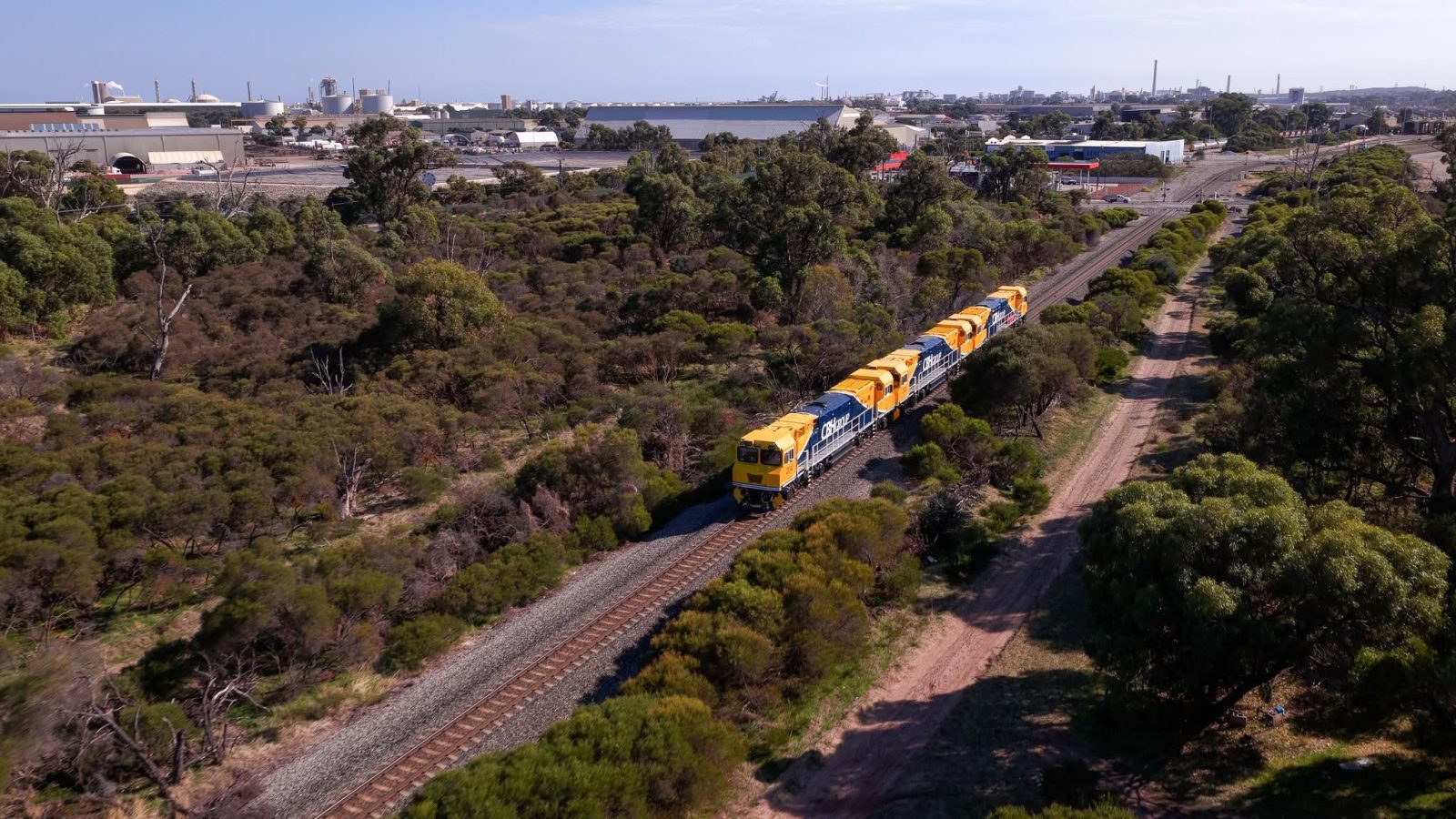
CBH has been a major supporter of returning the rail line to public ownership. Photo: CBH Group
THE WESTERN Australian Government has begun the process of potentially buying back the state’s rail network via introducing legislation in parliament, as the National Intermodal Corporation emerges as the buyer of a 170ha site west of Toowoomba.
Meanwhile, Victoria and Queensland have put rail at the centre of plans to support their respective freight networks.
WA bill introduced
The WA Labor Government has introduced legislation to pave the way for it to resume control of the state’s freight rail network.
WA Transport and Major Infrastructure Minister Rita Saffioti introduced the Rail Freight System (Acquisition and Reorganisation) Bill 2026 on Wednesday, with the legislation adjourned shortly afterwards during its second reading in the Legislative Assembly.
Commercial negotiations are continuing with lessee Brookfield, which has 23 years remaining on its contract.
Ms Saffioti told parliament the “bill doesn’t bind the state to proceed with the acquisition”, but instead provides a framework for a potential transaction and change of ownership.
“The bill provides the framework for the state to acquire a below freight rail business and, if decided, reorganise it after acquisition,” Ms Saffioti said.
“It gives the Public Transport Authority the responsibility for effecting and carrying on an acquired below-rail freight business.”
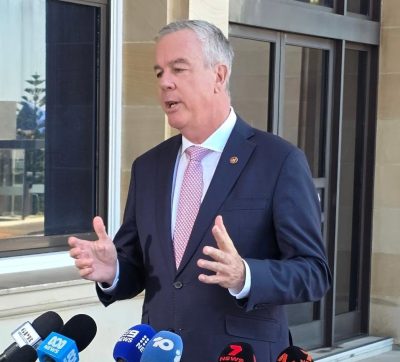
Shadow Minster for Transport Steve Martin MLC
She said the “acquisition would be effected under a share-purchase agreement”.
Ms Saffioti confirmed that “due diligence work” was being carried out by WA’s Department of Transport and Major Infrastructure, Public Transport Authority and Department of Treasury and Finance, supported by external commercial, financial and technical advisors.
“This work is being undertaken with advice from the State Solicitor’s Office and support from specialist external legal advisers.”
Ms Saffioti said “returning the freight-rail network to public hands [is] one of the most strategically significant and economically consequent reforms we are pursuing”.
“I fundamentally believe that this decision will enable Western Australia to continue to be the economic powerhouse of the nation.”
The Liberal and National parties are yet to formally state their positions on the legislation.
WA Shadow Minster for Transport Steve Martin said the Opposition was considering the legislation and would not decide whether to support a potential rail buyback until the details were finalised.
“The government also confirmed that commercial negotiations for the buyback are still ongoing – and so details of the potential deal, including the cost, are not known yet,” Mr Martin wrote on social media.
“There is dissatisfaction with the current rail network – issues around access and costs have been raised by CBH, mining and resources companies and other users and aspiring users.
“There is an opportunity here – however, we need to see the details of the deal before we can fully assess the proposal.
“In the meantime, the Opposition will continue to scrutinise the government’s progress on this and will consider the bill through the Parliamentary process.”
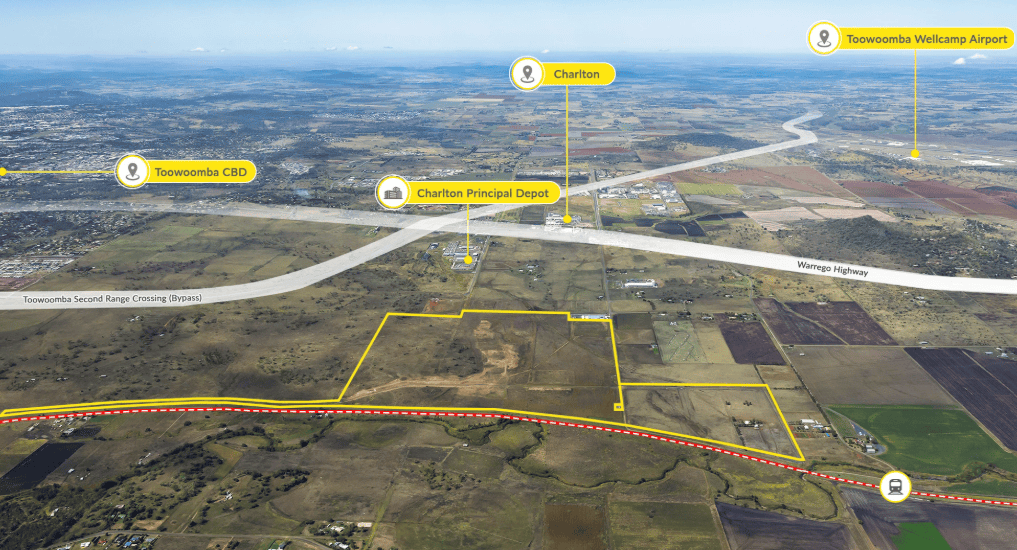
National Intermodal this month emerged as the buyer of land west of Toowoomba originally ear-marked for an intermodal hub. Photo: Ray White
Govt buys Charlton site
National Intermodal Corporation, a wholly owned entity of the Federal Government, has purchased land originally intended as the Gowrie intermodal hub of the Inland Rail project.
Ray White Special Projects in Queensland announced last week that NIC had purchased the 170ha site at Charlton, west of Toowoomba, for $14 million.
The property was sold on behalf of the mortgagee in possession, and with approvals granted to InterlinkSQ to construct a global logistics centre and rail intermodal facility.
InterlinkSQ went into liquidation on May 19, several weeks after the Federal Government announced the Inland Rail route, initially proposed to link Brisbane and Melbourne, would not be actively pursued north of Parkes in central NSW.
In making the decision, Minister for Infrastructure, Transport, Regional Development and Local Government Catherine King said the corridor and land earmarked for intermodal terminals would be “preserved” in Qld and northern NSW in case work resumed in the future.
The purchase by NIC appears to be part of that pledge.
“We are protecting the location for terminals in south-east Queensland to support the potential re-activation of Inland Rail and are considering interim logistics activities,” the NIC website said.
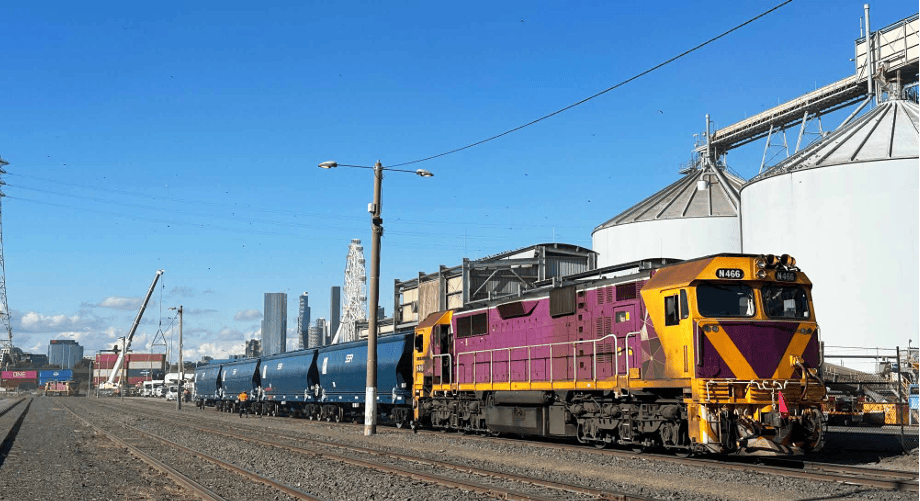
The Victorian rail plan set a 21 TAL minimum target for the line. Photo: Vic Gov
Vic Rail Freight Plan sets 21 TAL goal
The Victorian Government on Wednesday launched its Freight on Track: The Victorian Rail Freight Plan 2026-2036 designed to help drive investment, support new freight facilities and encourage more businesses to move their goods on a fast and safe rail-freight network.
The report highlights the role of rail in transporting bulk and containerised grain from agricultural hubs to ports.
“Regional container trains transport $2 billion worth of freight annually and grain trains transport over $400 million worth of exports,” the plan said.
The plan set 10 actions aimed at supporting the rail-freight task and expanding its use over the coming decade.
It also provided support for actions outside of the Vic Government control, such as backing the ARTC $150M investment to upgrade the Maroona to Portland line, a key export route for grain and mineral sands.
The plan mandated the Department of Transport and Planning to develop “a 10-year plan for maintenance and upgrade of the regional rail network to achieve a minimum of 21 TAL across the network”.
This action was aimed at improving the “predictability and confidence” in the network with a 21-tonne axle load, or TAL.
The plan also features actions around strengthening “consideration of rail-freight access in network coordination and project delivery decision-making”.
The competing demands of passenger and freight rail on Victoria’s network have long been a concern for the industry.
Under the plan, the DTP will develop a Freight Rail Disruption and Service Continuity Management Framework to “establish shared principles and processes for identifying, planning for and mitigating freight impacts during disruptions”.
It will also “implement reforms to require reporting and performance monitoring of rail freight impacts through the next Metropolitan Rail Franchise” as well as “establish a cross transport agency committee to oversee freight rail network planning and performance”.
Vic Minister for Ports and Freight Melissa Horne said the measures will help improve the capacity, resilience and efficiency of the rail-freight network while helping to cut emissions.
“The Victorian Rail Freight Plan aims to strengthen the freight sector as the economic engine for Victoria, supporting more jobs across the state,” Ms Horne said.
“We are planning for the future to deliver an efficient freight network that makes it easier and cheaper for local businesses to get their goods to market on rail.”
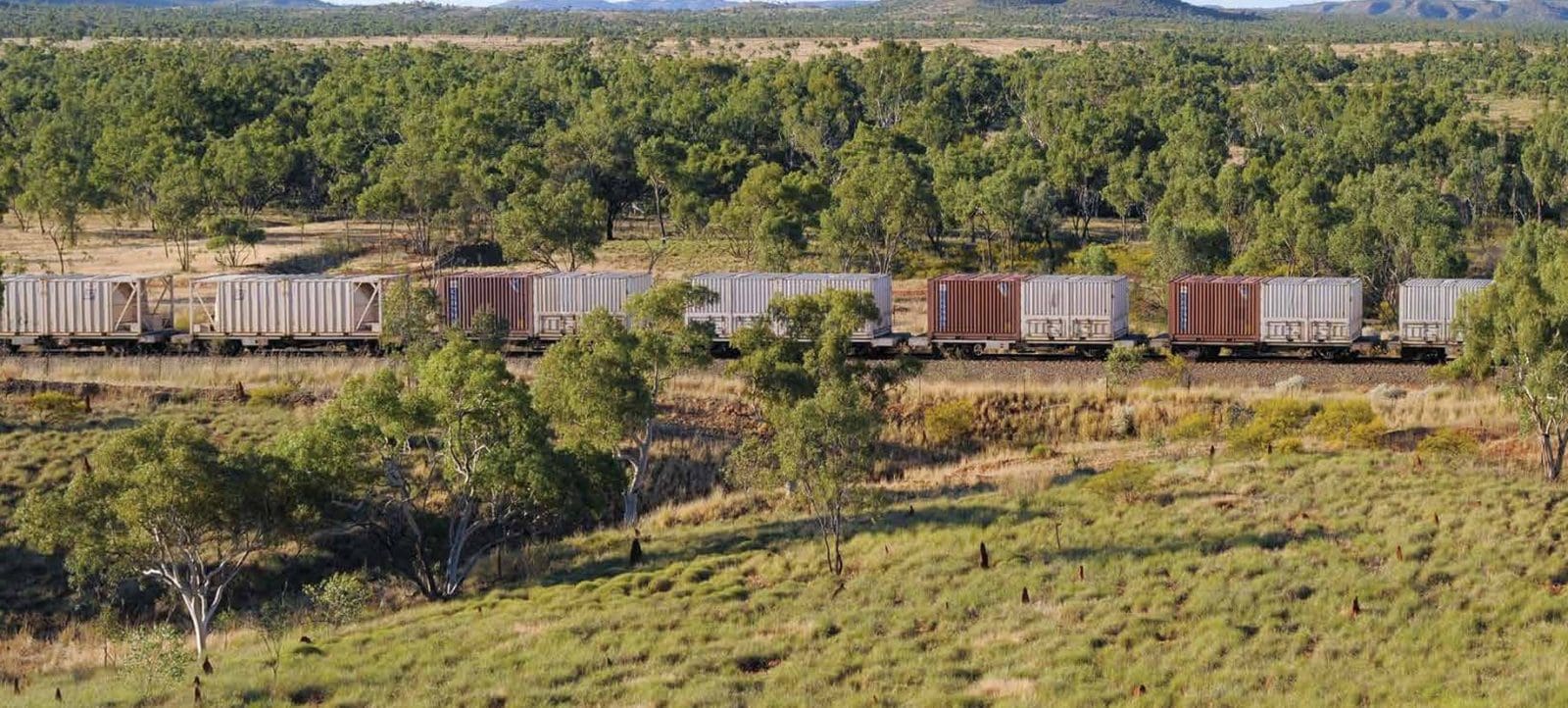
The new Qld freight pan features incentives for rail freight on the Mount Isa line. Photo: Queensland Rail
Qld freight plan targets phosphate
The Qld Government last week unveiled its Queensland Freight Delivery Plan 2026 designed as a roadmap to strengthen freight productivity, reliability and safety.
The plan outlined new and continuing initiatives targeting both road and rail freight.
The report’s featured several rail-targeted initiatives with an objective to make “rail a more competitive option for freight”.
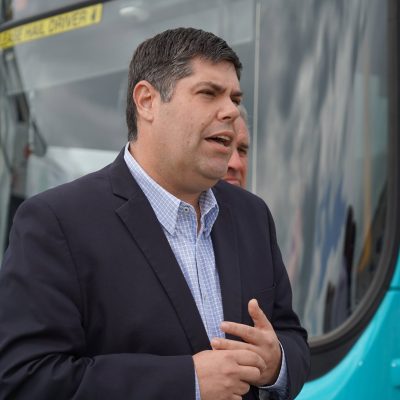
Qld Minister for Transport and Main Roads Brent Mickelberg.
It featured a new Rail Freight Container Incentive Scheme, to be trialed for three years, and offering a rebate of up to 50 percent on below-rail access charges for freight customers opting to move an additional 250 twenty-foot equivalent units (TEU) per annum on the North Coast Line, Mount Isa Line and Southern Queensland systems.
Targeting the north-west phosphate industry, the report said there will also be a 10pc subsidy for all customers on the Mount Isa Line for a period of four years to encourage greater rail-freight volumes.
There will also be a reduction in rock phosphate access charges on the Mount Isa Line, which is 30pc cheaper than the standard bulk rate, to encourage growth of the North West Minerals Province.
The report also included a new initiative to develop small and medium-scale open-access intermodal freight terminals across the state, with a focus on new loading and unloading facilities along the Mount Isa line and at the Port of Townsville.
A new grains-focused initiative included plans to investigate improvements to the rail network in Central Qld.
It looks to “undertake below-rail assessment of grain rail infrastructure and investigate first and last-mile rail-upgrade requirements at Mount McLaren, Mackay and Gladstone ports to improve operational performance and increase the use of rail to support the end-to-end grain supply chain”.
Minister for Transport and Main Roads Brent Mickelberg said the Queensland Freight Delivery Plan was about delivering the infrastructure and policies needed to keep Qld moving.
“Queensland’s future prosperity depends on our ability to move freight efficiently, reliably and safely, which is exactly why we’ve developed this plan,” Mr Mickelberg said.
“Whether it’s farmers getting produce to market, critical minerals reaching export ports, businesses receiving stock or Queensland families relying on goods arriving on time, freight touches every part of our economy and daily lives.”
Grain Central: Get our free news straight to your inbox – Click here
HAVE YOUR SAY