
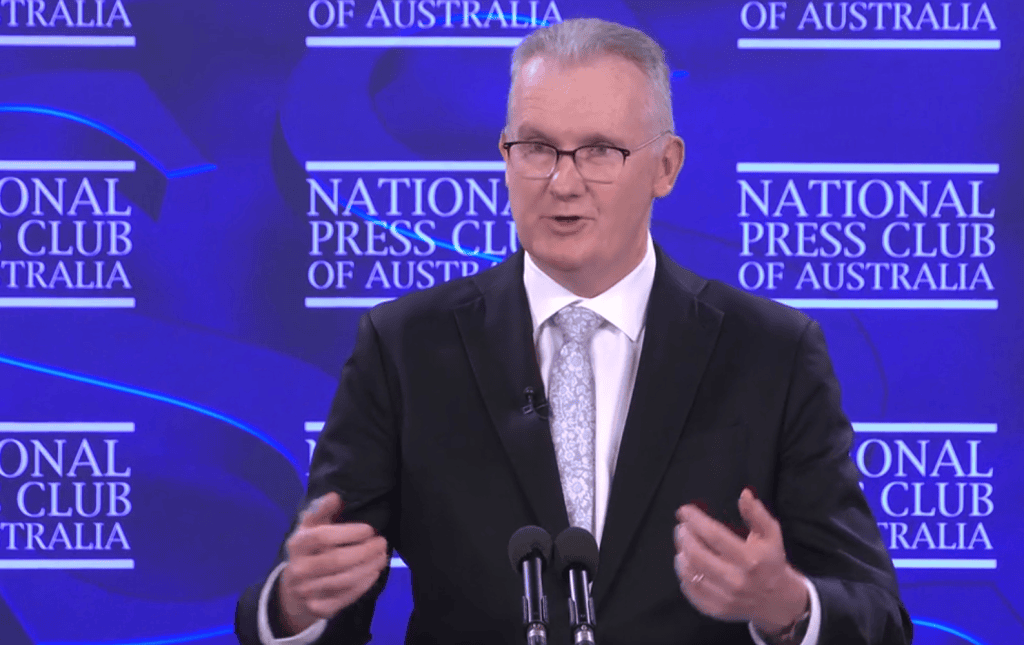
Tony Burke addressing the National Press Club in Canberra today.
MINISTER for Immigration and Citizenship Tony Burke has revealed changes to working holiday visas and the wider immigration system during his long-awaited National Press Club address today.
The changes will elevate agriculture to a priority sector under the skilled visa processing system, which Mr Burke says will return applications to “normal processing speed”.
In a separate release, the Federal Government has stated that Working Holiday Maker application processing times will stabilise to three months.
However, the National Farmers’ Federation said the change would not take effect until next year, a timeframe the Federal Goverment is yet to confirm.
Since July 25, the government has been prioritising skills visa applications from those supporting Australia’s law enforcement or defence interests, followed by those relating to construction, healthcare, and teaching.
The change in direction has contributed to delays in securing overseas workers for the upcoming harvest.
Mr Burke said adding agriculture and fisheries to the priority list would ensure growers had access to the workers they needed for harvest.
“Working holiday maker processing is now being restored and we’ll be moving through those again effectively,” Mr Burke said.
The government will introduce a ballot for workers seeking to extend their working holiday visas into a second or third year.
Under the system, the regional work requirement will remain at 88 days for a second-year visa and six months for a third year, but the number of workers eligible will be significantly reduced.
Mr Burke said the second-year ballot would be capped at 45,000 places, down from the 57,000 people who qualified last year.
He said the third year will see the largest cut at 5000, with 31,000 people in this group last year.
“[N]ot everybody will get through because we need to have some control and certainty of what those numbers are.”
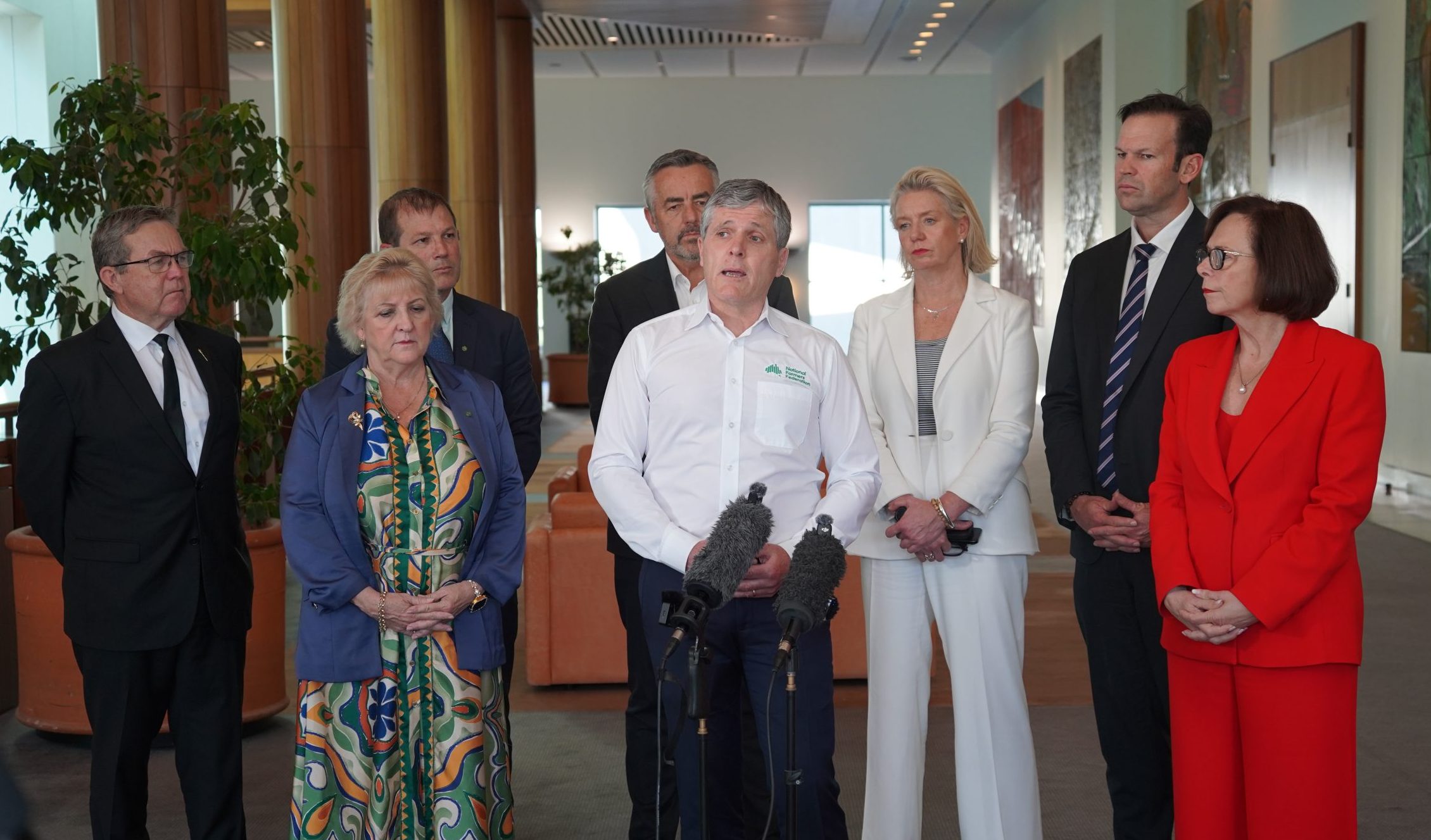
NFF CEO Michael Guerin (centre) joined members of the National Party to discuss the impact the visa processing delays are having on the agricultural industry.
NFF critical of delays
In response, the National Farmers’ Federation criticised the three-month processing timeframe for Working Holiday Maker visas, saying approvals had previously taken only days.
“This is a low blow for farmers and the businesses that produce Australia’s food and fibre,” NFF president Hamish McIntyre said.
“The government’s unilateral slowdown on Working Holiday Maker visas has already caused havoc across agriculture ahead of the busiest time of year for food and fibre production.
“Today’s announcement does not fix the crisis the government created.
“A three-month processing target leaves farmers completely stranded with harvest already under way in parts of Queensland and the main season only weeks away.
“Farmers need approvals in days, not months; for many farms, three months is the difference between harvesting a crop and losing it.”
Speaking at a press conference following the event, NFF chief executive officer Michael Guerin said this was compounded by the fact that this change to the Ministerial Direction will not help growers this season.
“What we had before July was a system that had worked for years where overseas people applied for visas; they were processed within days or weeks,” Mr Guerin said.
“Those people could then confidently book their airfares, drive the harvesters, pick the vegetables, milk the cows, support our industries in Australia.
“This year, we now have those skilled migrants we are relying on to get the food on to the shelves cancelling airfares because they don’t have visas and they have no confidence.
“For the Minister to say to those 80,000 farmers today, they will restore processing to three months next year after we had a system where we could process them within days or weeks until July, beggars belief.”
No clarity
Based in Victoria’s grain-growing region, Member for Mallee Anne Webster said that there were farmers in her electorate who were “unbelievably anxious right now about crops that are due in the next three weeks”.
She said growers relied on the same workers to return year after year because they “operate multi-million dollar combines and harvesters” and were an integral part of the grain supply chain.
“Our farmers trust them; they know their names; they have them booked to arrive for harvest.
Member for Mallee Anne Webster.
“What Labor have done is…increase the time from one day, which is the departmental time frame for processing working holiday maker visas, now to over 40 days – I think we’re heading to 50 days.
“We’ve got farmers who are hay baling next week and then others that are going to be cropping for canola and barley and wheat in the coming weeks.
“Our farmers need certainty, they do not have it from Tony Burke today.
“Tony Burke needs to go out and visit some of our areas and understand how dependent we are on working holiday makers for the productive nature of Australia.”
Mixed view on ballot
The NFF currently has a somewhat positive view of the ballot proposal for the year two and year three visas if the regional work requirements are maintained.
“The government’s move to introduce a ballot for second and third-year Working Holiday Makers may be a step in the right direction if it protects regional work and keeps workers flowing to the farms and towns that need them,” Mr McIntyre said.
“However, a ballot will mean little if the system cannot process people in time.”
National Party leader Senator Matt Canavan criticised the proposal, citing the overall reduction in the number of visas.
“That’s a cut that will actually cut the amount of food we can grow as a nation and that will cause jobs to be lost, farms to become under pressure in our regional areas,” Mr Canavan said.
‘Iron-clad commitment’ needed: GrainGrowers
In a statement, GrainGrowers said the government announcement on WHM visa reforms has done nothing to quell the fears of growers.
GrainGrowers CEO Shona Gawel said the agriculture sector had highlighted the importance of WHM visas on Australian farms to the government, but the serious concerns had been overlooked.
“Historically, 31 percent of the grains industry workforce has been made up of Working Holiday Makers, and they are most needed from September to January when grains are harvested,” Ms Gawel said.
“These workers are integral to bolstering the grains workforce and combating regional worker shortages, so this decision and the lack of clarity about impacts of the changes could not have come at a worse time.
“The long-standing labour challenges in regional Australia are well-known and backpackers have provided a reliable source of hardworking seasonal labour on farms for years.”
Ms Gawel said many growers would now be scrambling to find workers to fill positions in the short-term, while concerns also remained about the introduction of ballots and significantly reduced visa numbers going forward.
“We need an iron-clad commitment that processing will resume as a priority.
“Any business owner small or large would know how critical it is to have staff available during their busiest periods.
“The grains sector contributes $29.3 billion to the Australian economy each year and we urge the government to reconsider and fully understand the impact these reforms will have on an important source of workers for the industry.”
Drop in migrant applications seen: GPA
Grain Producers Australia has welcomed the announcement by the Federal Government today to prioritise migration for key sectors including agriculture, but is cautious about the broader impact on the upcoming harvest.
GPA has recently been vocal in relation to its serious concern about the August announcement that the government was intentionally slowing down the processing of applications for Working Holiday visas, and the impact on the upcoming grain harvest.
In his announcement today, Mr Burke stated that the updated prioritisation of migration in areas such as agriculture will “allow us to restore the normal processing speed that we were previously at for primary applications for working holidaymakers”.
“It is critical that the importance of skilled migrant workers to grain growers has been reflected in today’s announcement,” GPA chair and northern New South Wales grower Matthew Madden said.
“Many of our members have to rely on Working Holiday visa holders to meet their staffing capacity needs at critical times such as harvest, and our members have seen a downturn in migrant applications while undertaking recent recruitment for harvest.
“GPA members and the Australian grain sector have been facing monumental challenges recently, including fuel and fertiliser supply and price challenges caused by the Iran war.
“We don’t need any further burdens imposed by the government.
“GPA is aware of the significant political pressure related to migration numbers, but our nation’s leaders need to ensure that any policy setting does not impact our critical food and grain production.”
Grain Central: Get our free news straight to your inbox – Click here
HAVE YOUR SAY