
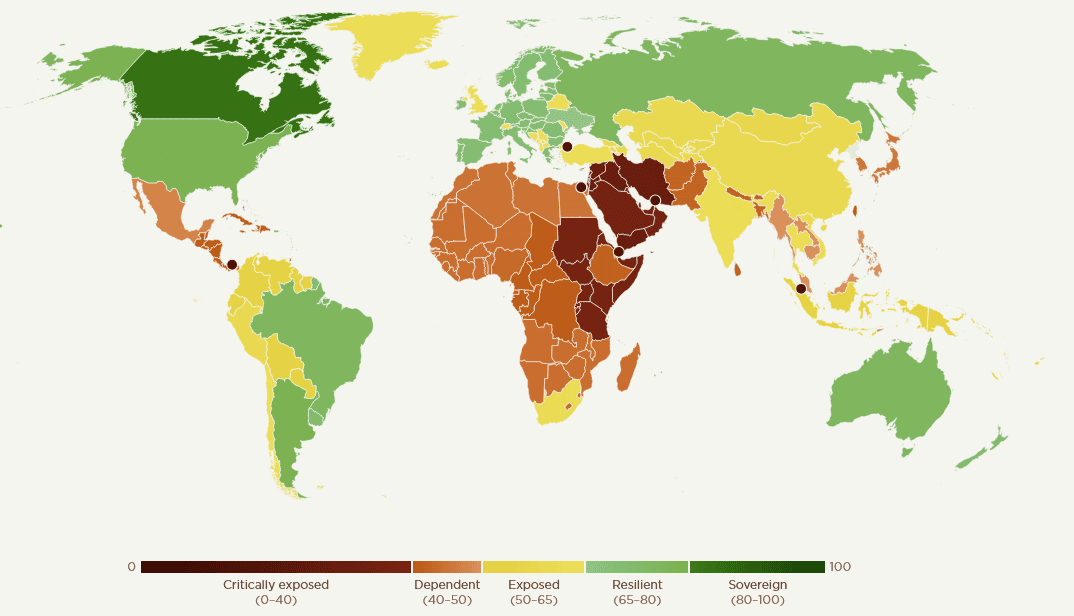
Figure 1: The 2026 Protein Sovereignty Index. Source: Full Circle Biotechnology
A SUMMARY of the world’s protein sovereignty has been released and shows only one country or bloc, Canada, as sovereign.
Behind Argentina and the US, and ahead of Russia, Brazil, New Zealand, Uruguay, the EU, Norway, and Ukraine in the resilient grouping, Australia sits at number four in the rankings.
Canada has a score of 82.8, and Australia 75.7, while the lowest scores belong to the critically exposed blocs of East Africa and Horn excluding Ethiopia on 39.2, the Gulf Cooperation council on 36.5 and the non-GCC Middle East bloc on 30.5
The index says Australia’s reliance on imported fertiliser, fuel, and crop-protection chemicals challenges the sovereignty of its cropping and therefore livestock-production systems.
The Protein Sovereignty Index measures how well each country’s protein supply holds up under pressure, and traces that supply from the fertiliser and feed behind it to the prices people pay, as well as estimating how long stocks would last if trade stopped.
It has been published by Singapore-based company Full Circle Biotechnology, which primarily manufactures aquaculture feed in Thailand made from insect protein and agricultural byproducts.
The index’s methodology and a selection of assessments were reviewed prior to publication by an expert panel of 10.
The panel includes former USDA chief economist Joseph Glauber, StoneX vice president of fertiliser Josh Linville, investor and former negotiator at the Office of the US Trade Representative Mikhail Zeldovich, and Aberdeen Investments chief executive officer Asia Pacific Ian Macdonald.
“Even the US, one of the few countries that can feed itself on protein, depends on a handful of beef
processors and a single phosphorus producer,” Mr Zeldovich said.
“Most other countries are more exposed still, relying on feed and fertiliser from abroad.
“Supply chain security has focused on chips and minerals; food and feed deserve the same attention.”
Mr Macdonald said some of the wolrd’s wealthiest markets are among the most exposed.
“Japan, South Korea and Taiwan raise much of their own meat and eggs on feed that arrives by sea,” Mr Macdonald said.
“Thailand exports chicken and seafood, and Vietnam exports seafood, but both rely on imported feed to do it.”
Following is a summary of sections of the report pertaining to Australia, Canada, and the Middle East from the full report, which is available online.
Fuel, fertiliser erode Australian sovereignty
Over the three years to 2024-25, farms exported 71 percent of their production by volume, and produced more than three times the beef and sheepmeat available for domestic use, while poultry production slightly exceeded local demand.
Seafood and pork are the main exceptions: imports meet 73pc and 38pc of domestic supply respectively.
The high reliance on seafood imports comes despite Tasmanian farmed fish production, which in 2020-21 saw more than 83,000t of salmon and trout harvested.
The US supplied 41pc of Australia’s fresh and chilled boneless pork imports in 2023, and 51pc in 2024, when Australia produced about 2.6Mt of beef and veal and exported 1.3Mt, making it the second-largest beef exporter after Brazil.
Sheepmeat exports reached a record 614,389t the same year, and Australia remains the world’s largest sheepmeat exporter.
Milk output was 8.47Mt in 2023, with 22pc exported.
Chicken is the most eaten meat, at about 50kg a head, and Australia produces about 1.5Mt of poultry a year.
More cattle are now fed grain rather than being grassfed, pig and poultry farms use imported soymeal, and salmon farms rely on feed made from wild fish.
The more serious dependence is behind the farm gate.
In 2023, net imports covered 83pc of nitrogen fertiliser use, 47pc of phosphate, and all potash use.
If the Phosphate Hill mine in north-west Queensland closed, phosphate imports would rise from 47pc of use towards 100pc.
Australia makes no urea, and closed its only manufacturing plant in January 2023 because it could not secure affordable gas.
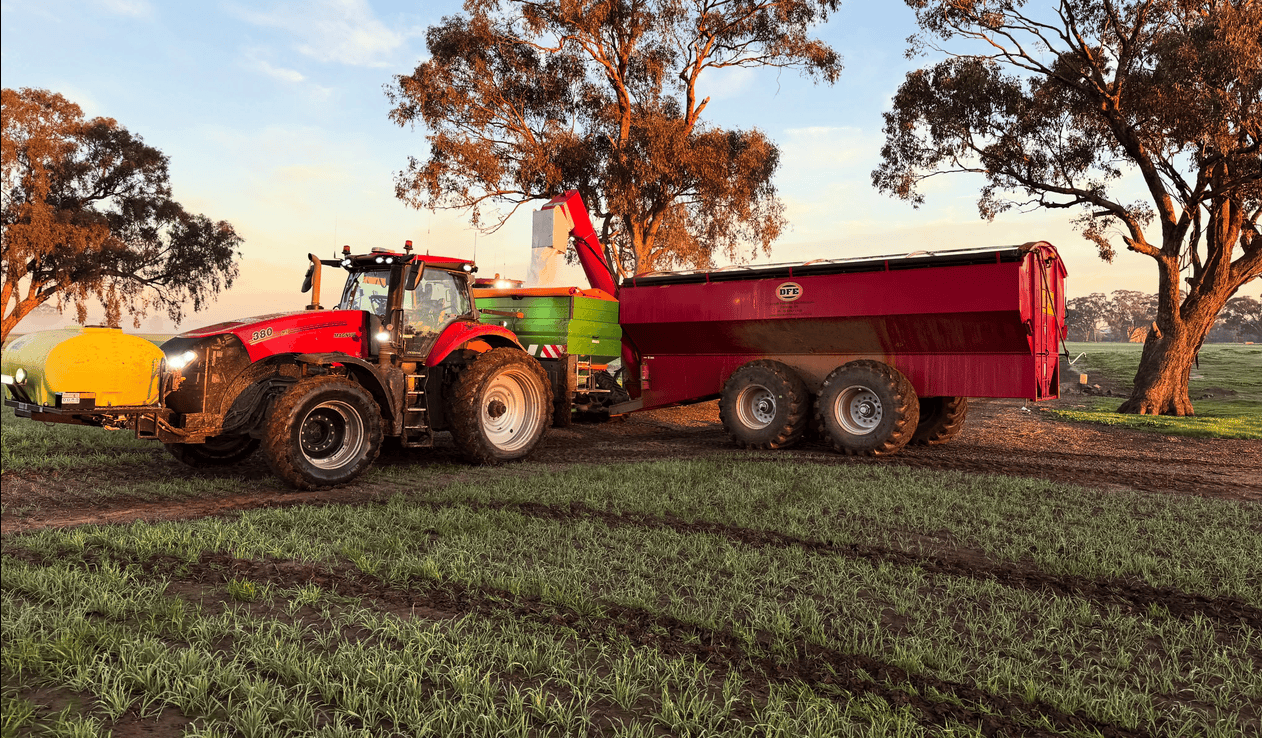
Spreading urea in July in the Oaklands district of southern NSW. Australia imports all of its urea. Photo: Narrain Grain
Australia in 2023 imported 3.2Mt of urea, and 3.85Mt in 2024, with 68pc supplied by Gulf states, and plants inside the Strait of Hormuz accounting for around 55pc.
During this year’s Strait of Hormuz closure, farm urea prices rose from about A$835/t tonne to $1435/t by May 7, then fell after the June ceasefire.
On fuel, Australia refines only about one fifth of what it consumes, and fuel stocks have been thin throughout the Strait of Hormuz closure period.
Diesel cover averaged 32 days in the March quarter of 2026 and stood at 39 days on July 28, with petrol at 43 days and jet fuel at 34.
Australia has not met the International Energy Agency’s 90-day stockholding rule since 2012, although it committed to comply by 2026.
Required diesel stocks are 20 days for refiners and 32 for importers, with a temporary 20pc cut extended to 30 September 2026.
The 2026 shock lasted about four months, from late February to a June ceasefire that reopened the strait.
Fuel supply held up: stocks stayed above pre-conflict levels and only 65 of 8118 fuel stations were out of diesel on July 31, even though diesel traded 80pc above its pre-conflict price in late July.
Required diesel stocks were lowered during 2026, not raised.
Farm output remains substantial; a prolonged input shortage would make the next harvest more costly and less certain.
Most households can afford food, and only 3.2pc of Australians could not afford a healthy diet in 2024.
That national figure sits alongside much greater hardship in remote communities; in 2022–23, 41pc of Aboriginal and Torres Strait Islander households reported food insecurity for lack of money, rising to 50.7pc in remote areas.
The climate is making that land less reliable; changes in the seasons between 2001 and 2023 cut average broadacre farm profits by an estimated 18pc.
The main risks to Australian resilience in protein production are climate and dependence on imported inputs, and 2026 showed both recur.
Farm output remains high, but 2026 showed how imported inputs and thin reserves can hold it back when shipping routes close.
The 18pc fall in broadacre farm profits is a trend, and each drought now starts from a warmer baseline.
The next steps for Australia are completion of Project Ceres, to build stocks of diesel, AdBlue and crop chemicals sized to what Australia imports, and make more crop chemicals onshore.
Canada’s potash adds strength
Canada’s large food-producing base and world-leading potash industry make it the only country in the index rated sovereign.
That strength extends across crops, meat and farm inputs.
Its weak points are specific rather than a lack of food.
Canada imported all its phosphate fertiliser nutrient in 2024, and the US supplied 55pc of consumer-oriented food imports.
About half of field-crop exports pass through Vancouver, where a four-day strike stopped shipments in 2024.
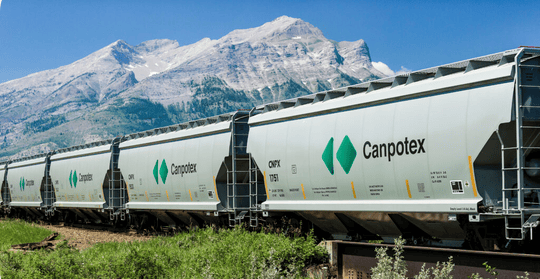
Canada is the world’s largest exporter of potash, and the locally mined product covers its national agricultural demand. Photo: Canpotex
Those links can raise costs and interrupt trade even as farms continue to produce a surplus.
Canada is one of the world’s biggest wheat exporters, and is its biggest canola producer and exporter.
Canada is self-sufficient or a substantial net exporter in every major protein class, from cereals and oilseed meals to pulses, pork, beef, seafood, dairy, poultry and eggs.
Agricultural credit is a strength: it accounted for 8.7pc of bank lending in 2024, about five times farming’s share of the economy.
Climate remains a production risk; the 2021 Prairie drought cut wheat output 36.7pc and canola 26.9pc from 2020.
Beef deficit, US relations pose risk to Canada
Canada’s main animal-protein import exposure is beef, about 14pc of domestic supply in 2023.
Food imports are more concentrated: the US supplied 55pc of consumer-oriented agri-food imports in 2024.
The supplier relationship now carries trade-policy risk. US proclamations in July 2026 set 50pc tariffs on a broad range of Canadian goods, including many dairy products, effective 19 August 2026.
Tariffs apply to Canadian exports, but the dispute raises the risk of retaliation and border friction on Canada’s largest food-import route.
Canada makes slightly more nitrogen than its farms use and grows domestic feed crops.
It is the world’s largest potash producer, mining 15Mt of K2O in 2025 of a world total of 49Mt, and its potash reserves are 1.1 billion tonnes, second to Russia’s 2Bt.
Canada also produced 3.57Mt of nitrogen nutrient in 2024 against agricultural use of 3.21Mt.
While it exports energy and grows its own feed, Canada produced no phosphate nutrient in 2024, imported 1.12Mt, and applied 1.16Mt.
Its monoammonium phosphate imports alone were 1.78Mt of product, 70.8pc from the US and 27.9pc from Morocco.
Nitrogen is less secure than the national output figure suggests: Canada imported 1.2Mt of nitrogen nutrient in 2024 against 640,000t exported, a western industry exporting south and an eastern market drawing on imports.
The 2026 Strait of Hormuz disruption showed a third exposure: price contagion.
With about 35pc of global urea exports normally transiting the strait, prices climbed above US$850/t in April 2026, up 80pc since February and the highest since April 2022.
Middle East most vulnerable
Tthe Gulf Cooperation Council nations of Saudia Arabia, Bahrain, Kuwait, Oman, Qatar and the United Arab Emirates have a combined PSI score of 36.5, ahead of only the non-GCC Middle East countries on 30.5.
These comprise Iran, Iraq, Israel, Jordan, Lebanon, Palestine, Syria and Lebanon, and reflect the impact of water stress, conflict and unaffordable food.
Food security varies sharply across this region: Iran harvested 19.5Mt of cereals in 2025, Iraq and Jordan hold substantial grain reserves, and Israel produces nearly all the poultry it consumes.
These strengths do little for people living amid war or economic collapse elsewhere in the region.
Yemen imports roughly 85pc of its food, and in Syria, the share unable to afford a healthy diet rose from 41pc in 2019 to 73.5pc in 2024.
Even the stronger producers depend on outside supply. Iran is forecast to import 11Mt of corn in 2026–27, much of it for livestock, while its feed stocks cover only 14- 21 days; agriculture also uses about 92pc of Iran’s water withdrawals.
The region can buy or grow large amounts of food, but access depends heavily on where people live, what they can earn and whether trade routes remain open.
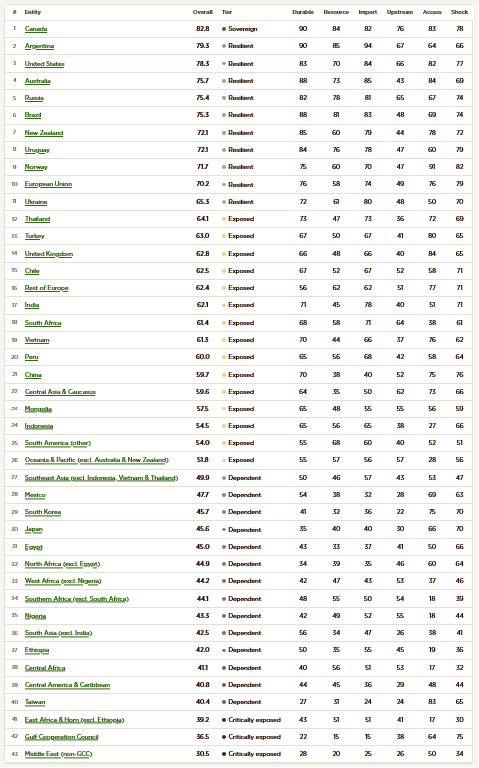
Table 1: The 2026 rankings for protein sovereignty. Source: Full Circle Biotech
In the GCC nations, import exposure is a defining weakness, as tested by this year’s closure of the Strait of Hormuz.
The GCC nations overall import about 85-90pc of their food, and more than 70pc of those normally pass through the Strait of Hormuz.
The Middle East Institute puts 81pc of rice through the strait.
Grain is split across two exposed routes: about 39pc of wheat and other grains from western suppliers comes through Bab el-Mandeb, and 35pc through Hormuz.
The suppliers are few as well; across the five members that report rice imports, India supplied 76.1pc in 2024 and Pakistan 13.7pc by weight.
Tanker traffic through Hormuz was down by more than 90pc when the United Nation’s Food and Agriculture Organization chief economist assessed the crisis on 26 March 2026, and the closure was still disrupting Gulf shipping in July.
Grain shipments were disrupted at once, and Saudi Arabia moved its purchases to King Abdullah Port and Jeddah on the Red Sea.
The Gulf has found partial ways round the strait.
Saudi Arabia’s Red Sea ports, Oman’s Salalah and Duqm and the UAE’s east coast have all worked in a real crisis.
Weekly container traffic at Khor Fakkan rose from about 8000 to 65,000 TEUs after ships were diverted.
Gulftainer is spending US$2B to raise yearly capacity from 3.5M to 10M TEUs, and Fujairah has silos for 300,000 tonnes of grain.
None of this helps Qatar, Kuwait or Bahrain, which have no coast outside the Gulf.
Feed matters most for a protein system built on poultry, dairy and fish farms, and the Gulf imports nearly all of it.
Breeding stock is imported too; Baladna’s dairy herd in Qatar began with about 4000 Holstein cows flown in from the US and Europe following a blockade imposed by some of its neighbours in 2017.
Another 3200 cows arrived by sea in 2018, with 3000 more planned for that November; the same model runs across the Gulf.
For other inputs, the Gulf sells to the world rather than buying.
Qatar’s QAFCO can make 5.6Mt of urea and 3.Mt of ammonia a year, and calls itself the world’s largest single-site urea exporter, with 14pc of world supply.
The Gulf petrochemicals association gives a more cautious figure: about 7pc of world nitrogen and phosphate output, with Saudi Arabia fifth in nitrogen and sixth in phosphate.
Saudi Arabia’s Ma’aden’s Phosphate 3 complex will add 3Mt, taking phosphate fertiliser capacity to about 9Mt a year, with the second phase due in 2027.
The energy for fertiliser, desalination and cold stores is produced at home.
Gulf-owned trading companies add a further buffer.
Saudi Arabia’s SALIC owns 81.8pc of Olam Agri, which gives the Gulf its own global business for buying, processing and trading grain.
Al Dahra does the same for animal fodder; Abu Dhabi’s ADQ has held a large stake since 2021.
These companies give Gulf buyers more control over where food comes from and how it travels than buying on the open market.
Gulf sovereign wealth funds hold about US$4-5 trillion, so governments can outbid almost anyone when food is short; food reserves are deep too.
The Gulf will keep importing most of its food, because it lacks the land and water to grow it.
Turning imported feed into meat, eggs and milk with desalinated water keeps its food production dependent on foreign supply.
Its real protection is money, reserves and the ability to reroute cargo quickly, all at high cost.
Source: Protein Sovereignty Index
HAVE YOUR SAY