
 Weather: Weather attention is firmly focused locally, with widespread rain across SA, Vic and southern NSW halting harvest over the weekend. Falls of 30–50mm through the SA and Victorian Mallee may raise some barley quality concerns, although generally viewed as manageable if this is the last rain event. Hay quality, however, is shot. Further south, the rain and cooler temperatures forecast for the coming week should provide a near-perfect soft finish. Southern Qld and northern NSW remain wet, with another day or two of showers expected and grain quality likely to be questionable at best when harvest resumes. Around Griffith, falls of up to 25mm were among the best of the year after a season to forget, but have halted harvest and could lead to quality concerns.
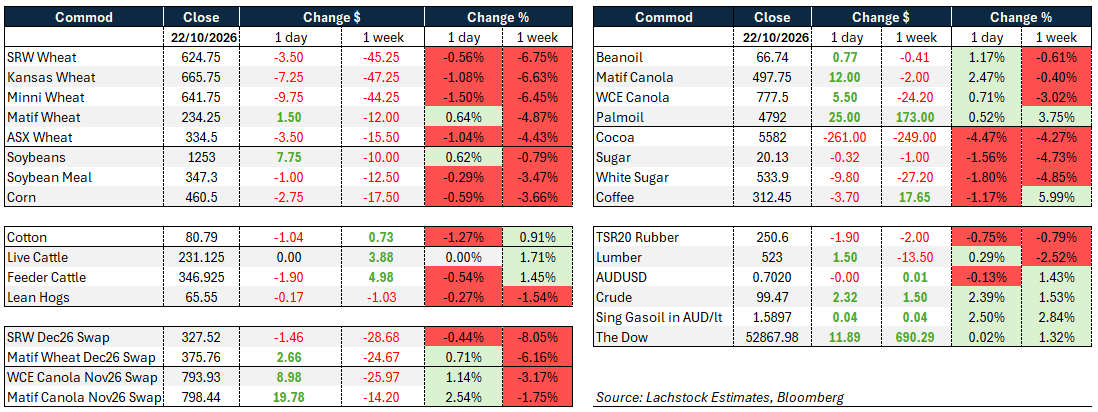
Markets: Wheat was mostly softer on Friday, rounding out an eighth consecutive lower weekly close as hopes of Black Sea peace talks and ample global supplies continued to weigh. Russian wheat remained competitive at US$199/t, while tightening nearby US spreads and rumours of Chinese buying offered limited support. Corn also eased under harvest pressure and continued fund liquidation, with export demand still lagging last year.
Soybeans firmed for a second consecutive session as active Chinese buying helped absorb harvest selling. Canola, European rapeseed and vegetable oils also advanced as rising crude prices provided support. South American weather is attracting greater attention, with excessive rain in southern Brazil and dryness further north raising concerns for planting and crop development.
Day ahead – Australia: Expect a slow day locally as the trade assesses the weekend rainfall, harvest delays and potential quality impacts. Wheat is likely to open softer following offshore weakness, while barley should be steady to slightly softer as buyers weigh ample crop prospects against emerging quality concerns. Canola could gain a couple of dollars on support from firmer crude and vegetable oil markets, although a slightly stronger AUD will temper the upside. Interrupted harvest may also limit grower selling and keep activity subdued.
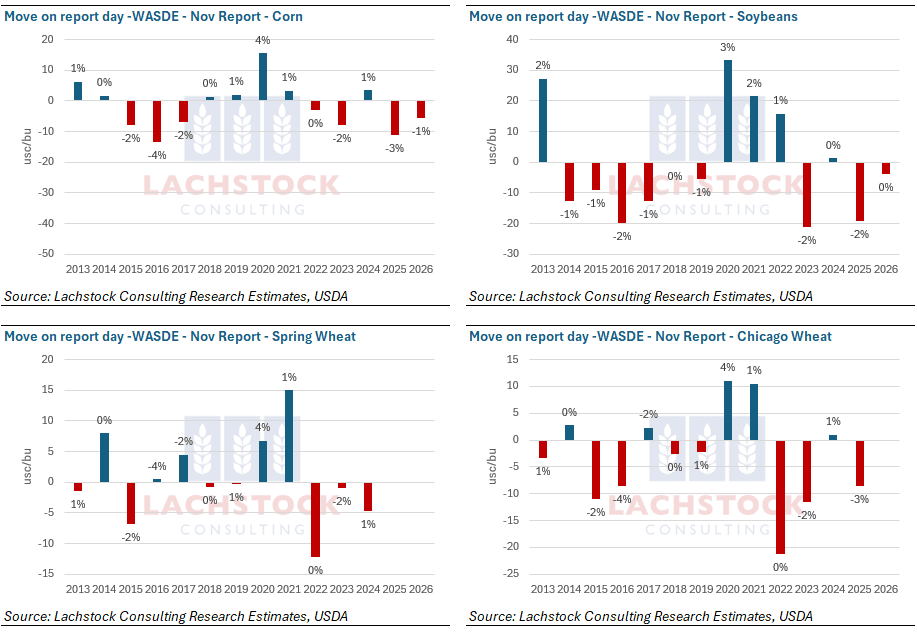
Wheat: Wheat recorded an eighth consecutive lower weekly close, with expectations of Black Sea peace talks and large southern hemisphere crops continuing to erode risk premiums.
Russian wheat was unchanged at US$199/t. Exports through Baltic and other alternative routes are maintaining supply, although winter disruption remains a risk as buyers purchase hand to mouth.
Chicago and Kansas nearby spreads have tightened despite weak outright prices. Rumours of Chinese interest in US soft red winter wheat emerged, but fresh demand remains unconfirmed.
Argentina’s BAGE maintained its 2026-27 wheat estimate at 23.4 million tonnes (Mt) despite late frosts affecting up to 15pc of wheat in some areas. Further cold, rain and limited sunshine could reduce yield potential. French soft wheat planting reached 45pc, up from 15pc the previous week and ahead of the five-year average of 42pc. Türkiye’s wheat production is forecast by TurkStat to rise 37.9pc to 24.8Mt.
AgResource expects US winter wheat area to increase by 3-4M acres, encouraged by insurance prices. South Korean flour mills meanwhile sought 50,000t of US milling wheat for March shipment.
Other grains and oilseeds: Corn remains pressured by harvest selling and fund liquidation following USDA’s higher production estimate. US exports are reportedly 34pc behind last year, with slower Mexican buying a major contributor. USDA retained its October corn yield estimate of 181.2bu/ac after correcting a September processing error. AgResource remains below that estimate, highlighting disappointing field results and scope for later revisions.
Soybeans posted a second higher close as Chinese buying helped absorb harvest pressure. AgResource estimates China has secured around 18Mt against its 25Mt US purchase commitment, including another four to six cargoes on Friday.
Brazilian weather is becoming more uneven, with excessive southern rainfall and northern dryness drawing attention. Flooding risks in Paraná could delay or damage soybean and corn planting into November.
Stronger Brazilian processing demand is limiting export growth. Above forecasts 2027 soybean exports at 113Mt, down 0.8pc, while firmer crude supported canola, rapeseed, soyoil and palm oil.
Saskatchewan’s canola harvest reached 96pc. Canadian weekly exports eased to 158,000t, but season shipments of 1.377Mt remain ahead of 955,000t last year; domestic use reached 2.608Mt versus 2.312Mt.
Macro: Middle East tensions lifted energy prices, with Brent gaining more than 6% over the week to around US$116/bbl and WTI closing Friday near US$103.30/bbl. Attacks on shipping through the Strait of Hormuz and increased Houthi activity are raising concerns about prolonged supply disruption, with US officials warning the Iran conflict could persist for another year. European natural gas reached €94/MWh, its highest since December 2022, while North Asian LNG hit a four-year high. Winter inventory withdrawals and reduced LNG availability are tightening the outlook. US consumer sentiment fell to a five-month low of 48. One-year inflation expectations rose to 4.7pc, highlighting pressure from energy costs, mortgage rates and affordability. October composite PMIs eased in the US to 57.6 and the euro area to 51.9. France slipped into contraction at 48.4, complicating central banks’ response to energy-driven inflation. Equities weakened, with the S&P 500 down 0.5%, while US 10-year Treasury yields rose to 5.0% and gold slipped below US$4,000/oz. The AUD edged higher ahead of a busy central bank wee.
Local: Some life returned to canola markets after a string of down days, with western bids lifting A$10/t on Friday. Wheat was softer at $373, while barley was $323 FIS Albany. Canola also ended the week stronger in the east at $780, with wheat at $336 and barley at $285 track Geelong.
Harvest pressure is likely to weigh on canola over the next two months, although the underlying fundamentals remain supportive, with strong European demand and well-supported vegetable oil markets.
If ever there was a year you would have expected quality hay, it would have been a super El Niño. Instead, another 20-50mm across much of South Australia and Victoria has seen hay quality deteriorate further.
HAVE YOUR SAY