
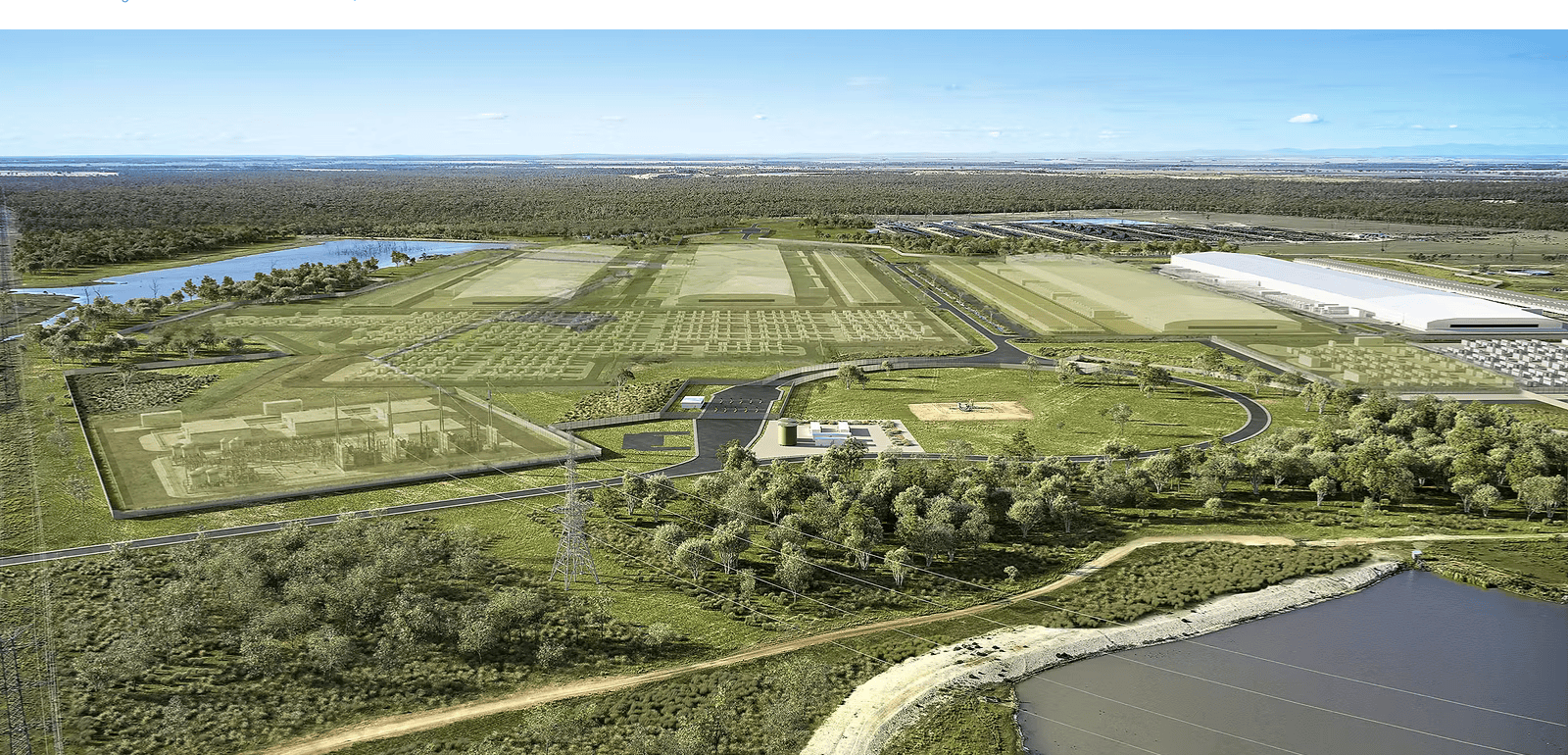
Artist’s impression of the proposed development showing Phase 1 at right, and future phases shaded in green. Final design and staging remains subject to approvals. Image: Western Downs Digital Park
AN APPLICATION before the Western Downs Regional Council is sparking a range of emotions, and a series of events, as parties consider what the proposed Zerra DC AI data centre will mean for the region.
The application for the Western Downs Digital Park was lodged with Dalby-based WDRC on August 20, and the public has until November 11 to make submissions that outline any concerns around what, if approved, will be one of Australia’s biggest data centres.
The proposed site, Wambo Cattle Company land at Kogan in southern Queensland, is adjacent to the gas-fired Braemar Power Station, and in the midst of country that produces grass and grainfed cattle and summer and winter crops, as well as natural and coal-seam gas.
Aside from ethical concerns around AI generally, the WDDP proposal has sparked concerns by some about its drawdown on water and power.
Last week, the recently formed Western Downs Says Pause group held public forums in Dalby and Toowoomba’s Glenvale to consider what the Zerra development may mean, and tomorrow, a less cautious approach is expected at the Toowoomba and Surat Basin Enterprise Evening in Dalby.
Being held in Dalby, it will hear from Zerra DC chief executive officer Dave Cooper and WDDP special advisor Joseph O’Brien, as well as WDRC Mayor Andrew Smith, and Qld Minister for Local Government and Water Ann Leahy.
About the project
Information provided by Zerra DC via its drop-in boards outlines the WDDP as “a nationally significant digital infrastructure investment” to be built in four stages at 1933 Dalby-Kogan Road.
The first will get the 360MW Building A data hall into operation using power from the grid via Powerlink, and subsequent stages will access batteries also.
Zerra has said its data halls will be fully air-cooled via a closed-loop system, indicating the facility will use limited water, and said WDDP will not compete with existing industry for “one of the region’s most precious resources”.
“The data halls have no continuous water draw for cooling – demand is driven by the people on site, not by IT or cooling load.
“WDDP will not connect to the town water network for operations, and no groundwater or bore extraction is proposed.”
Zerra said Building A will require approximately 21,000 litres per day of water in total, with more than one third to be supplied through on-site water recycling, which it said compares with Wambo Feedlot’s annual water use of 700 megalitres.
A Grain Central calculation says that means Wambo Feedlot uses 1.9 million litres per day, around 90 times Building A’s projected water use.
The proposed WDDP will be located within the planned Kogan East Special Industry Area to include Wambo Feedlot, and the existing Darling Downs Solar Farm and Daandine as well as Braemar power station.
Council cautious
Mayor Andrew Smith said WDRC will “undertake a thorough and comprehensive assessment” of the WDDP proposal under the Western Downs Regional Council Planning Scheme.
He said the application and supporting documentation are publicly available through the WDRC website, enabling residents and interested stakeholders to review the proposal and “understand exactly what is being proposed”.
“This will form part of the assessment process and consideration of the supporting technical documentation.
Cr Smith said Council may seek further information from Zerra DC to inform its decision, and Qld Government agencies will assess matters within their respective areas of responsibility.
“No steps in the process will be overlooked, particularly when it comes to public notification and opportunities for community input.
“As assessment progresses, the community will be kept informed of key milestones and statutory consultation opportunities.”
Cr Smith said given the scale and complexity of the proposal, it was too early to speculate on when a decision on the proposal would be forthcoming.
Who’s behind it?
Zerra DC is a developer of data centres with a portfolio of sites in Australia, Japan and India.
Its website indicates its current and near-term development pipeline comprises more than 2GW of planned IT capacity.
Zerra sits under AGP, a founder-owned investor based in Singapore, and with offices in London, Sydney, Mumbai, and Long Beach, California.
In addition to Kogan, Zerra’s other Australian site is Campbellfield, 16km north of the Melbourne CBD, which proposes six data halls with a 336MW capacity, less than one quarter of the proposed WDDP at 1.44GW.
A planning application for the Campbellfield facility is being assessed by the Victorian Department of Transport and Planning.
In Tokyo’s Chiba prefecture, Zerra’s planned hyperscale data centre will have around 130MW of planned IT capacity, and in Navi Mumbai, or New Mumbai, construction started last month on the development with its 240MW of planned IT capacity.
Zerra on October 6 announced Macquarie Capital Infrastructure Principal was on board, building on the investor’s existing relationship with Zerra at WDDP.
“Zerra is developing and will operate the campus, with Macquarie Capital participating as a consortium partner and acting as project and financial adviser.
“WDDP is one of Australia’s largest digital infrastructure projects and recently has secured a long-term lease agreement with global frontier AI lab, Anthropic.”
This was referenced in the Qld Parliament on September 16 by Premier David Crisafulli, who said Anthropic had that day “signed an historic agreement” for its first Australian data centre.
“Queensland will be home to the Western Downs Digital Park, a long-term commitment to our state with the site planned to come online in 2027.
“It is a major win that will deliver more jobs and put more energy into Queensland’s grid.
“I met with Anthropic during my recent trade mission to outline why Queensland was the place to invest, with energy security and a streamlined approvals process.”
The political divide between Mr Crisafulli as an LNP faithful and Prime Minister Anthony Albanese as an Australian Labor Party one was bridged with the Premier throwing the PM a nod on giving Qld the reins on power.
“I…want to acknowledge the commonsense decision endorsed by the Prime Minister to allow Queensland to chart its own path for power supply, but we must get it right and it must be on our terms.”
Mr Crisafulli said WDDP “must add energy generation to the grid and drive down power prices for Queenslanders”, and indicated it must not have carte blanche on water.
“It must protect local water supplies and respect the communities where these centres go.
“We will take hold of the economic benefits of data centres with both hands, but we will do it in the right locations and in the right way.
“Communities will have a say, just as they now do for projects like wind, solar and batteries.
“Data centres must add value to local communities so Queenslanders benefit from the opportunity too.”
‘Energy-hungry monster’
Save Our Darling Downs started in 2010 to protect land, water and livelihoods, particularly agricultural ones, from being adversely impacted by CSG.
It is supportive of the Western Downs Says Pause group, and ahead of their meetings last week, SODD spokesperson Liza Balmain in an emailed invitation described the WDDP as “an energy-hungry monster” requiring 2.16GW of power at full operational capacity.
“To provide some context, this is the equivalent power of about 1.5 million homes, a quarter of Queensland’s current electricity consumption,” Ms Balmain said.
This is well above capacity of even Qld’s largest single electricity source, the Gladstone Power Station, on 1.68GW.
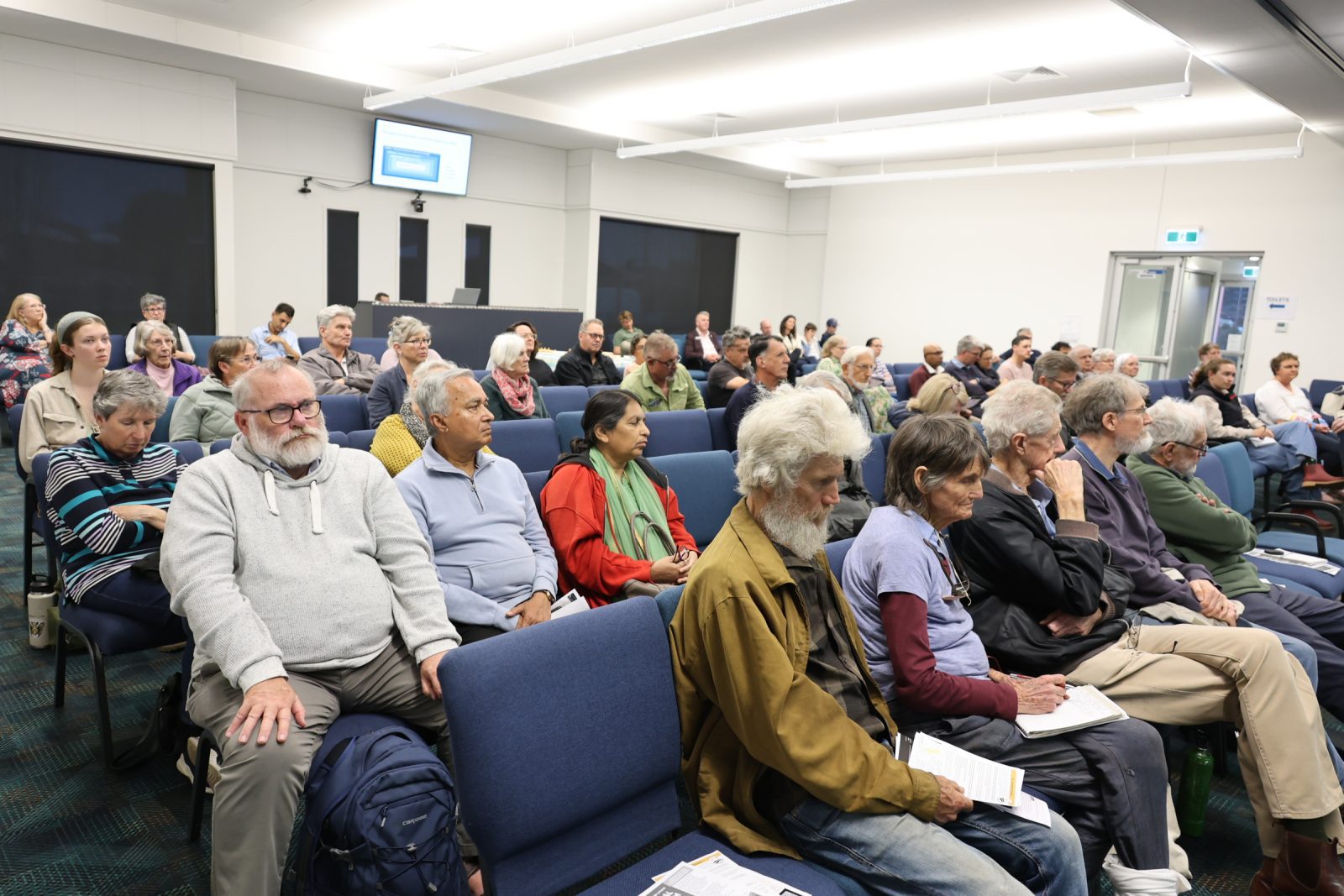
Around 60 people attended the Western Downs Says Pause event at Lifeworks Uniting Church, Glenvale, last Wednesday.
SODD and WDSP hold concerns around the amount of energy AI data centres will need to operate.
“While the Federal Government is working on national legislation to regulate the energy use of AI data centres, with an obligation on the generation of clean energy to offset their energy needs, the Crisafulli Government is happy for them to run on fossil fuels, including gas.
“Whether you agree with climate change and the need to wean ourselves off burning fossil fuels or not, without mandates for new power generation to be underwritten, such developments risk increasing our already expensive power bills.”
“We are also fearful that the data centre development boom will be used as an increased push, impetus and reasoning to develop gasfields in our food bowls and priority agricultural areas like the Condamine Floodplain.”
More than 24,000 people have signed the Stop the Proposed Western Downs Digital Park Data Centre Development e-petition open to Qld residents in which opened September 3 and will close 1 March 2027 ahead of presentation to the Qld Parliament.
Opinions differ
When the CSG field was new 10 or more years ago, its impact on underground water supplies was a contentious issue for some landholders, including Wambo Cattle Company principal Max Winders.
Mr Winders and family own the land on which Zerra hopes to build the WDDP, and Mr Winders is all for the Zerra project, which he said is ideally placed for its energy needs.
“There’s energy to burn,” Mr Winders said.
“That’s why it’s such a great site and I was happy to enter into negotiations.”
“We’re very happy that the Council’s very supportive of it, and the mayor’s been out a few times.
“I think this one’s home and hosed.
“I think having someone like Anthropic in there is a good thing.”
Mr Winders said the proposed data centre will not stop operation of the Wambo feedlot, which currently holds 16,000 head.
“Our capacity is down to about two-thirds; we didn’t get a lot of run-off from this last bit (of rain),” Mr Winders told Grain Central last month.
According to Beef Central’s Top 25 Lotfeeders of Australia series published in 2023, Wambo came in at 23.
One of those not nearly as enthusiast about the WDDP as Mr Winders is Chinchilla resident Shay Dougall, who spoke at last week’s WDSP Glenvale event.
Dr Dougall’s work focuses on the lived consequences of energy and industrial development in regional and farming communities, and she said assessment of Zerra’s application for the WDDP was happening within a “really complex legislative environment”.
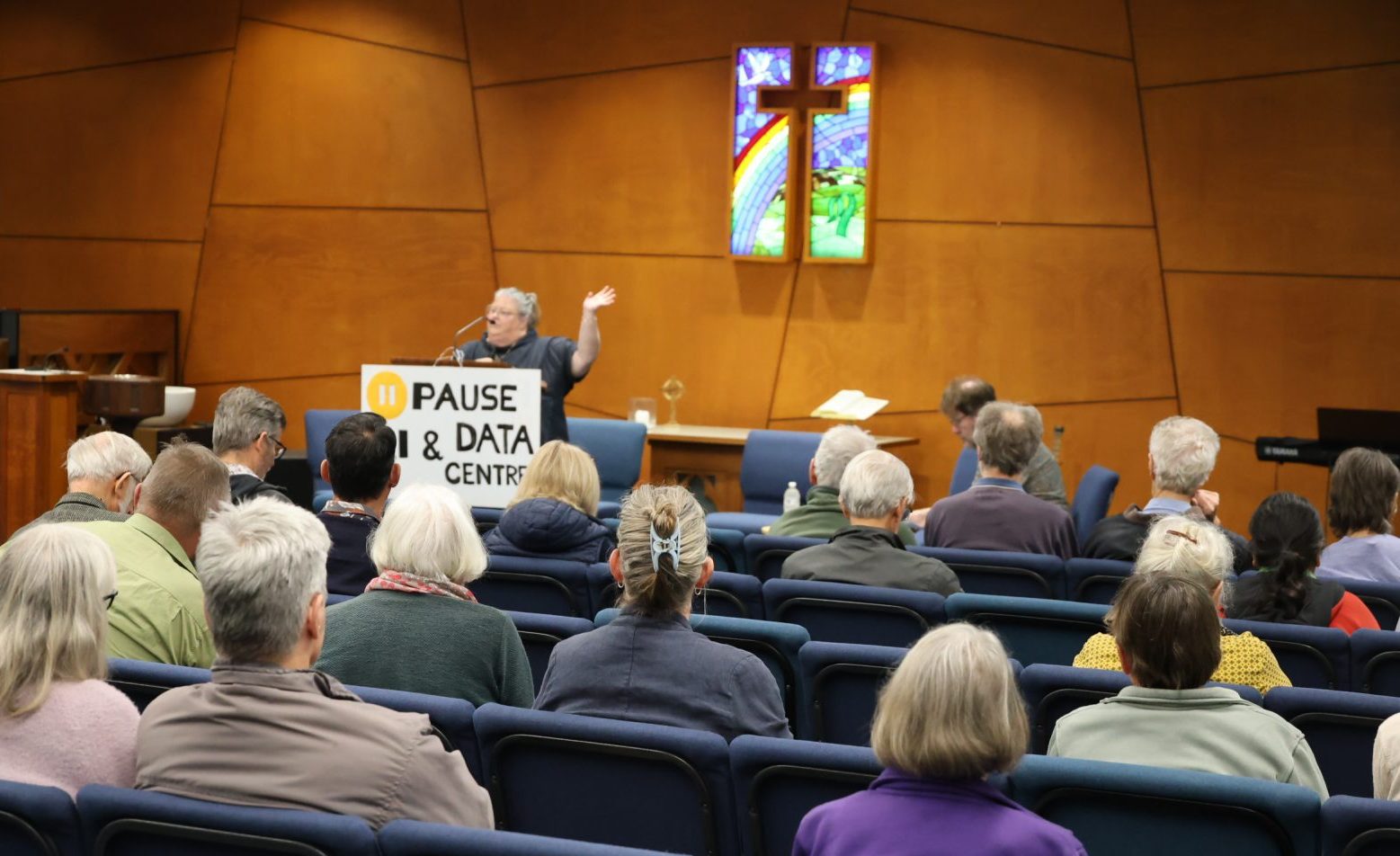
Dr Shay Dougall speaking at the Lifeworks Uniting Church, Glenvale, last Wednesday.
She said Zerra’s application will link it to power generation coming from coal and CSG as fossil fuels, and wind and solar as renewables.
“They’re coming to take advantage of what is already an energised landscape,” Dr Dougall said.
“Having seen what I’ve seen, it’s not our first rodeo, it’s about our fourth, and it’s getting tiresome.”
At the meeting, Dr Dougall voiced her reservations around Zerra’s estimations of water use, and the quality and amount of its wastewater.
“It’s not unreasonable of us to expect…independent data.”
She is also dubious about what it will return to the community.
“Do we get to benefit from it, or do we see four or five companies from overseas getting to benefit from it?”
Western Downs grower Brendan Taylor is AgForce Grains President, and also sits on its Land Use Protection Committee.

AgForce Grains president and Warra farmer Brendan Taylor.
Mr Taylor said the region needs to have a clear idea of what Zerra’s and any subsequent, data centre developments will mean for power, water, and land use before approval is granted.
He said some CSG and wind-farms developments have been poorly planned, and data centres could go the same way.
“We’ve seen some pretty bad examples of bad planning and bad delivery, and not having all the frameworks in place for a seamless development.
“We need to make sure all the planning is done to death before any of these things get started.
“It’s not just about the development of the data park, it’s about what impact it will have on the broader community.”
The WDDP website said the project will create around 1500 on-site jobs during construction.
How that fits into the building requirement for Brisbane’s 2032 hosting of the Olympics, including equestrian facilities in Toowoomba, remains to be seen.
“There’s this little thing called the Olympics, and that’s going to put a massive call on labour resources.”
Grain Central: Get our free news straight to your inbox – Click here
HAVE YOUR SAY