
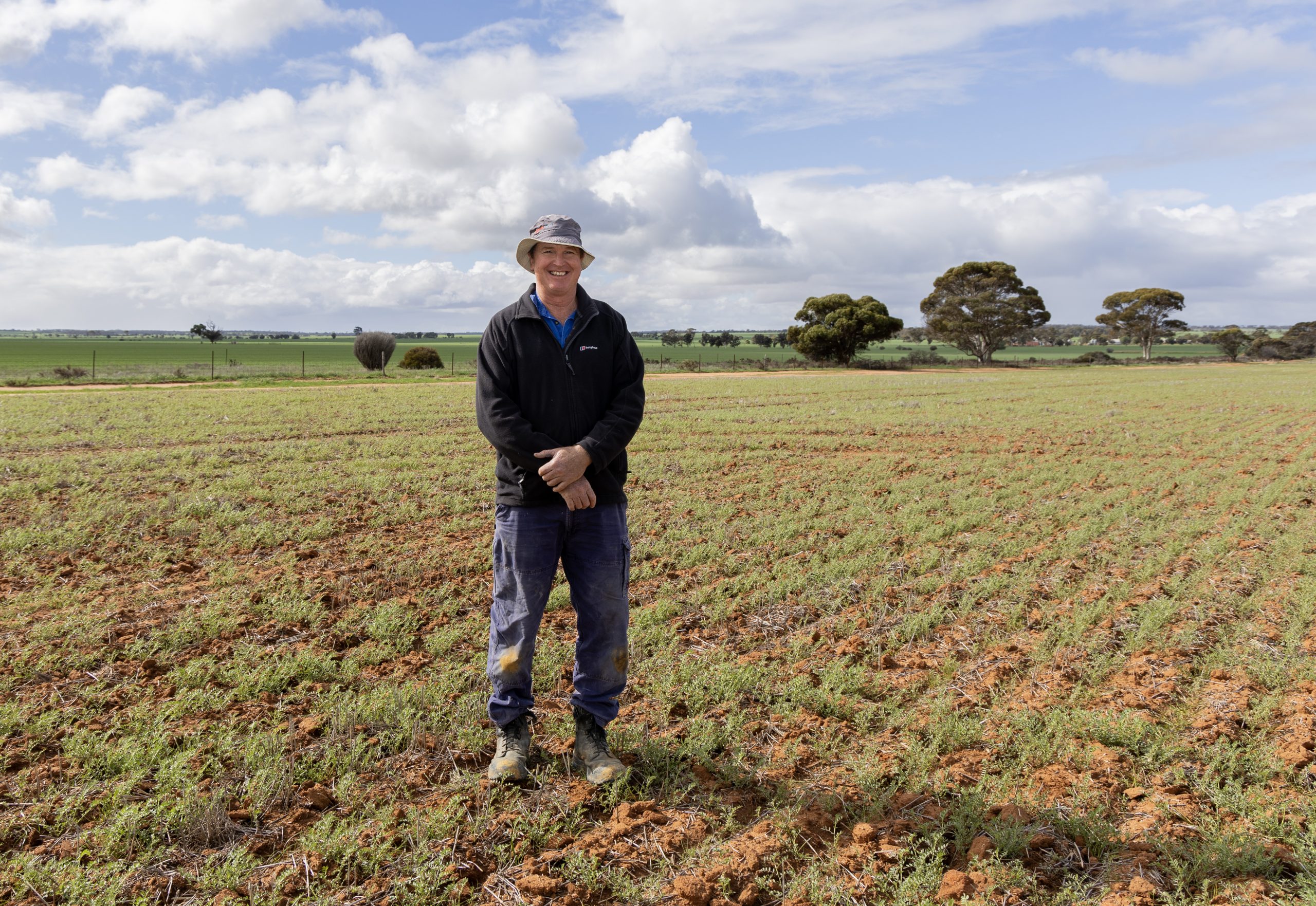
Neil Smith in a chickpea crop on his family’s farm in WA’s Wheatbelt. Mr Smith has been involved in research trials and initiatives aimed at improving the profitability of farming in low-rainfall environments. Photo: GRDC
A WETTER-than-average summer could increase weed pressure across Western Australia’s grain growing regions, prompting calls for growers to review weed-management plans.
The Grains Research and Development Corporation’s Weed Management Initiative says forecasts of above-average rainfall may create ideal conditions for summer weeds and allow a green bridge to persist into autumn.
The advice follows the Grain Industry Association of Western Australia’s October Crop Report, which forecasts a strong 2026 harvest while highlighting the potential for increased weed challenges under wetter seasonal conditions.
The Bureau of Meteorology outlook indicates an increased chance of rainfall in the highest 20 per cent of historical totals across the southern wheatbelt between November 2026 and January 2027.
GRDC manager weeds Sarah Morran said the outlook reinforced the importance of growers making summer weed control part of their post-harvest planning.
“After what is shaping up to be a very good grain harvest across much of WA, growers will understandably be looking forward to putting their machinery away and taking a break,” Ms Morran said.
“But if the rainfall forecast eventuates, we could see substantial summer weed growth, with weeds rapidly consuming the moisture and nutrients growers need for their 2027 crops.
“Summer weeds and volunteer crops can also provide a green bridge for pests and diseases to survive between seasons, potentially creating additional challenges when growers begin sowing next autumn.”
For low-rainfall Wheatbelt grain grower Neil Smith, summer weed control is an essential part of maintaining profitability and maximising crop potential.
Mr Smith farms with his wife Rosemary and daughter Joanna between Merredin and Nungarin, cropping approximately 5500ha of wheat, canola, chickpeas, barley, oats and lupins, with a further 500ha sown for sheep production.
A long-standing committee member and former chair of the Merredin and Districts Farm Improvement Group, (MADFIG), Mr Smith has been involved in numerous research trials and initiatives aimed at improving the profitability of farming in low-rainfall environments.
“In our part of the Wheatbelt, every millimetre of rainfall counts, so controlling summer weeds is critical to making the most of the moisture and nutrients available for our winter crops,” Mr Smith said.
“Summer weed control is just one part of the equation, but it’s an essential one.
“If we get good summer rainfall, we want to make sure that moisture is stored in the soil rather than being used up by weeds.
“Through MADFIG, we’ve been involved in a lot of research looking at ways to improve profitability in low-rainfall farming systems, and effective summer weed management is an important part of that.
“If we get the wetter summer that’s being forecast, staying on top of weeds early will help put us in the best possible position for the 2027 growing season.”
WMI consulting agronomist and ADAMA market development manager Bevan Addison said the longer-range outlook was a timely reminder for growers to review their summer-spraying options.
“The key is to target weeds when they’re small and actively growing, rather than allowing them to become established and much harder and more expensive to control,” Mr Addison said.
Mr Addison said growers should monitor paddocks following rainfall events and select appropriate herbicide strategies based on weed species, growth stage and resistance status.
“Depending on the situation, that may involve carefully selected herbicide mixtures, double-knock strategies or a combination of chemical and non-chemical control methods.
“It has been a few seasons since a widespread summer spraying year and in that time the sheep flock has dramatically declined as well.
“Growers who used summer weeds as sheep feed and the sheep as a weed reduction option will have to rethink their strategies and potentially be prepared for earlier and more time on the boom spray.
“Repeated reliance on the same herbicide chemistry increases resistance risks.
“Growers need to consider effective mode-of-action diversity, application conditions and relevant plant-back restrictions.
“Good summer weed management isn’t just about cleaning up paddocks after harvest.
“It’s about protecting soil moisture, preserving nutrients and reducing the weed seedbank ahead of next year’s crop.”
“It’s also important to keep weeds at bay and reduce the build-up of soil borne diseases by removing the hosts in a timely fashion.”
Ms Morran said the forecast highlighted the importance of GRDC’s investment in research through the Weed Management Initiative to develop more effective, sustainable weed management strategies.
“Herbicide resistance is already one of the most significant challenges facing Australian grain growers, and seasonal conditions can quickly change the level of weed pressure they face,” Ms Morran said.
“Through the WMI, we’re working with researchers, agronomists and industry to develop practical solutions that help growers manage weeds more effectively while protecting the long-term productivity of their cropping systems.
“The forecast rainfall presents both an opportunity and a risk. If growers can retain that moisture rather than lose it through uncontrolled weed growth, it could provide a valuable foundation for next year’s crops.
“The decisions growers make over the coming months could have a significant influence on their weed management costs, crop establishment and productivity in 2027.”
Growers are encouraged to consult their agronomists and develop summer weed management strategies appropriate to their local conditions, weed populations and paddock history.
GRDC’s Weed Management resource page provides growers with actionable advice to manage weeds on their farms.
Growers can access region-specific weed-management resources via the MyGRDC portal and app, which provides seasonal guidance and expert advice tailored to their location.
Source: GRDC
HAVE YOUR SAY