
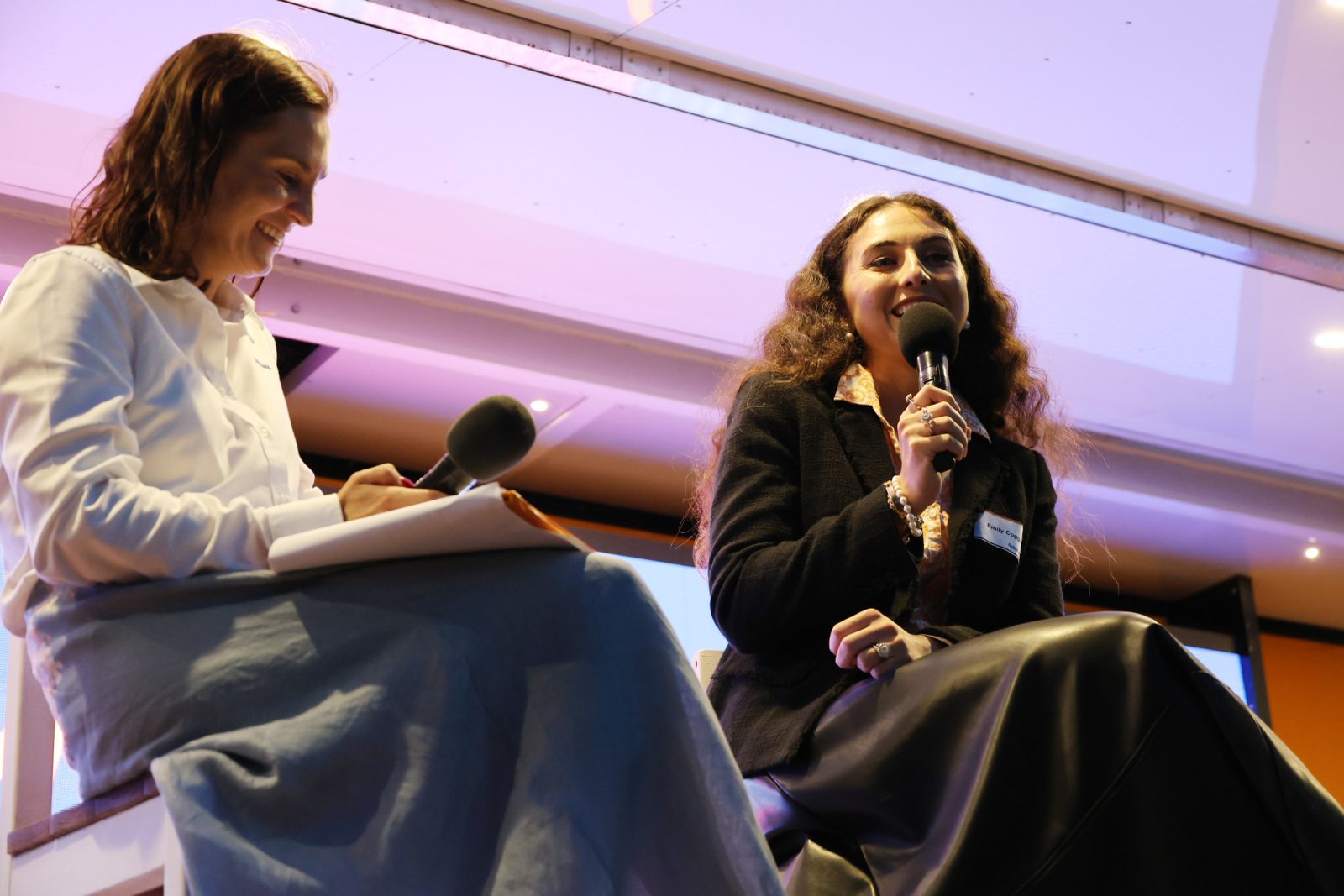
Rabobank South East Qld area manager Nadine Kraut interviews Emily Coggan from Coggan Farms, Inglestone, at Rabobank’s event on Thursday celebrating 30 years for Rabobank’s Toowoomba branch.
NEW technologies including SwarmFarm for cropping and Halter for livestock are helping to propel Coggan Farms towards its centenary.
Their introduction to the operation at Inglestone on southern Queensland’s Western Downs was one of the topics covered by Coggan Farms director Emily Coggan at an event held at Bracknell Lodge, Wyreema on Thursday to celebrate the 30th anniversary of Rabobank’s Toowoomba branch.
In conversation with Rabobank area manager Nadine Kraut, Ms Coggan provided insights into what makes the family farming business tick in changing times, and how the foresight of her grandparents and great grandparents is paying dividends today.
Tech investments pay dividends
Coggan Farms covers 26,300ha over 14 contiguous farms, and started with the home property, Enarra, in 1937.
On newly cleared land, it allowed Ms Coggan’s great grandparents Val and Edna Coggan to build up to 10,000 Merino sheep on 10,000 acres.
“They did visionary things around water, and I don’t think that there’s a person in this room that wouldn’t take the opportunity to capture more water, legally of course,” Ms Coggan told the gathering of Rabobank Toowoomba clients.
“The decisions they made around water infrastructure in the ‘30s have really changed the trajectory of our family.”
Involvement with DPI trials helped to move the next generation, the now retired John and Lynn Coggan, into controlled-traffic farming and zero tillage.
The latest investment in that field for Coggan Farms came in 2022 with two SwarmFarm autonomous sprayers.
“To make a decision to invest in a piece of technology or a subscription, which many of them are these days, is a big leap.
“With SwarmFarm, we were pretty early on that curve.”
Ms Coggan said conversations with SwarmFarm founders Andrew and Jocie Bate of Gindie, Qld, compelled them to spend the money.
“They are farmers first and that’s sort of what got us over the line initially.
“Then we just saw the greater efficiencies that we could have, and I think it was a realisation for us that we as the farmer or as the human beings are sometimes the bottleneck.”
Ms Coggan said the SwarmFarm units allow Coggan Farms to keep on top of spraying at times when other tasks like planting or harvest need to be prioritised.
“Spraying is still a priority and by being able to get on the ground quicker, we make our lives easier down the track.”
These days, Ms Coggan’s parents Phillip and Cindy Coggan are the operation’s directors, alongside son Tom and daughter Emily, who left her corporate career with Deloitte to join the family business.
Youngest sibling Sarah is currently pursuing a career off farm, and has the option to join the business.
Coggan Farms includes a grazing and multi-species feedlot operation, and has recently invested in Halter, a virtual fencing system developed in New Zealand.
Following Tom’s visit to a New Zealand dairy farm where Halter was being used, he put together a compelling argument for 200 units on the farm, and Phillip quickly championed the case to double it.
“He’s a very practical man,” Ms Coggan said of her dad.
“His hobbies include the weather, and that’s about it, but he was the one that after we put the first 200 collars on the cows, doubled down and said: ‘right, let’s order another 200’.
“They hadn’t even got an app in the paddock yet.”
While SwarmFarm and Halter are two of the success stories, Ms Coggan said the business has sometimes had to cut its losses on technology investments, and has discovered that “leading from the top” is essential when it comes to adoption.
“We find with staff on farm, you need to back the change in because if you don’t believe in it, there’s no way anyone in your team is going to believe in it.”
Think big on storage
The Coggans were early entrants into grain storage, something Ms Coggan said farms cannot overdo.
“If you’re going to build a 1000-tonne silo, make it a 2000-tonne one.
“Every time we look at our grain complex, we always go: ‘oh, we should have gone bigger’, but at the time, that was more than we’d ever grown in a year.
“That’s probably indicative of Australian agriculture in general.”
Great grandfather Val initially got the Coggans into grain storage to ensure the business was being paid fairly for the grain it produced.
“At the time when that was built, that was the biggest in Queensland, bigger than all the depots themselves.
“To sum it up, we stand on the shoulders of the generations before and I hope that we leave our farm in a position that has the infrastructure, the resources and the debt level that will allow them to succeed in the future and have choices of their own.”
Another winning decision made by earlier generations was to develop an on-farm feedlot, and maintain the option for expansion.
“Early decisions around water were crucial; early decisions around grain storage for us on farm were crucial.
“Decisions around actually applying for that feedlot license when you probably never intended to build it…were crucial.
“Anything that allows us to have increased capacity I think in the long term will prove absolutely valuable.”
Ms Coggan said the family business can see a nitrogen plus from manure for both profitability and sustainability as part of vertical integration in the mixed-farming system, but is yet to capture it.
“The best N, the cheapest N, is the N that comes out of the feedlot.
“The trick is the most efficient period to use it is within 48 hours.
“I haven’t solved that one yet, but if anyone’s got a solution for that, and can do it on a broad scale, I’d love to hear about it.”
Communication key
Ms Coggan said working together on the farm, and off farm at horse and other events in the children’s school years, has made for a healthy dynamic that has the potential to build for future generations.
“We don’t have to choose to get along, but the reality for our future is that if we keep subdividing and dividing and dividing and dividing, there will be no Coggan Farms that looks like it does today.”
The Coggans communicate well as a business unit, and are committed to maintaining objective discussion and decision-making.
“In a normal workplace, when you’re not related to everyone there, it’s really easy to have a disagreement and leave it at work.
“Often the disagreement comes because you’re so passionate and emotionally invested in the outcome.
“You genuinely believe that if you had $10, this is the best way you can spend your $10.”
Around 18 months ago, they put in a headquarters office, which Ms Coggan described as “a big step” away from doing business “around the kitchen table”.
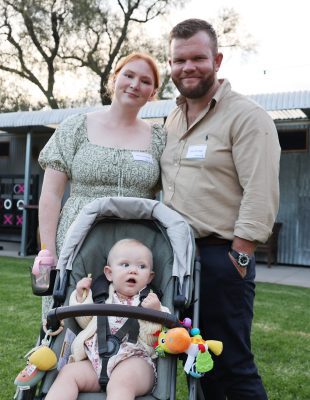
Cecil Plains farmers Rosie and Tyson Armitage with baby Ashtyn were part of the audience at Thursday’s Rabobank event at Wyreema.
“It’s actually fundamentally changed how we make decisions not in anyone’s home… where the…other dynamics can come in.”
They have also introduced a WhatsApp group chat for Coggan Agriculture called the CAG Brains Trust which involves Emily and Tom and their parents, and covers everything from operational updates to links to items of interest.
“It’s just a way for us to articulate the thoughts of the day without having to stop and individually talk to each one of us.
“We try to have leadership meetings now and…we’ve changed the structure of how we have these meetings, and it’s decision, discussion, information.
“Anything that needs a decision immediately we’ll talk about first.
“Anything that needs discussing we’ll talk about, and then there’s the FYI information.
“I wish we could say we have a meeting every week; it’s just been harvest, so I don’t think we had one for like four months, but we’re back on track.”
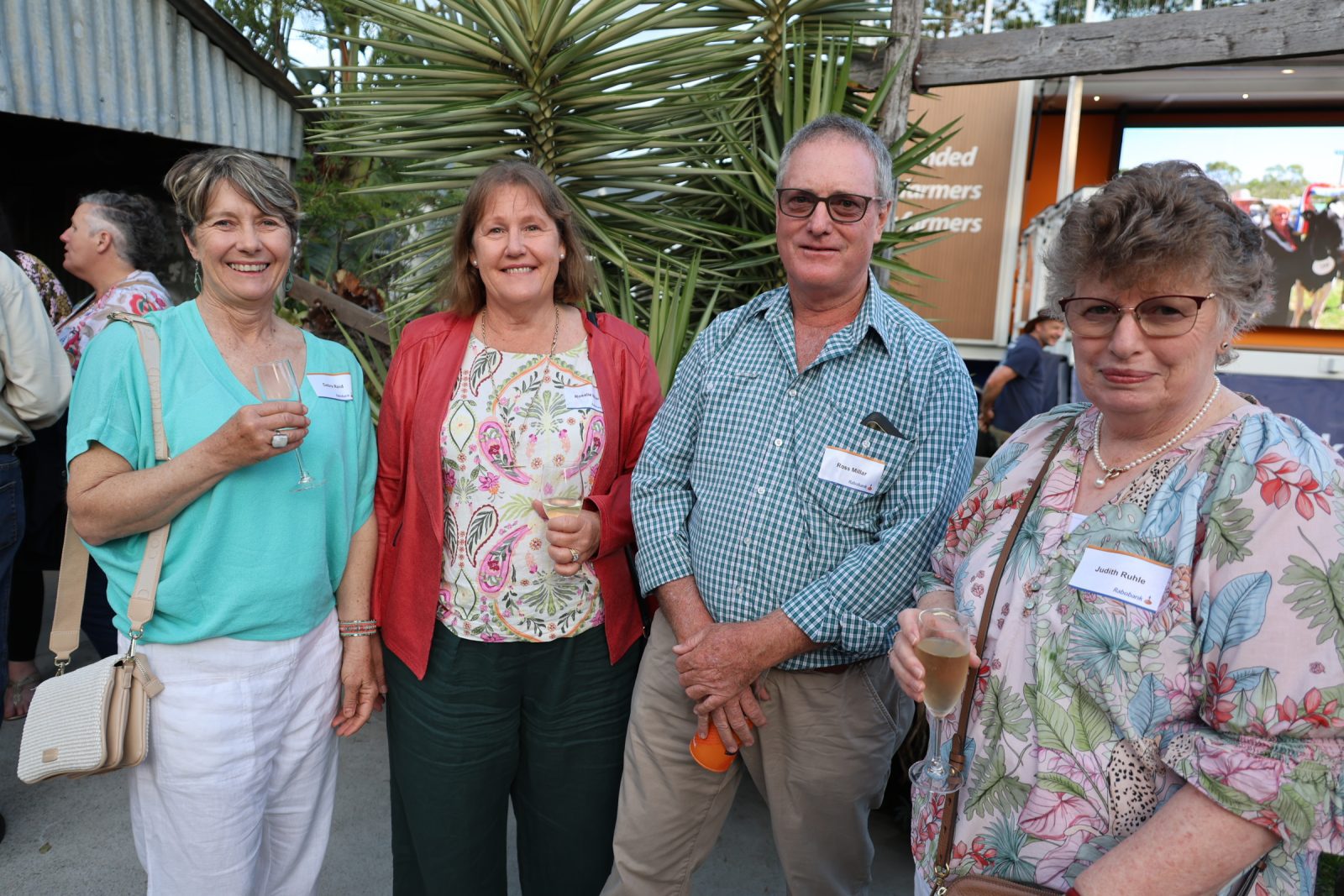
Debra Reid, Millmerran, Rosalie and Ross Millar, Bringalily, and Judith Ruhle, Bongeen.
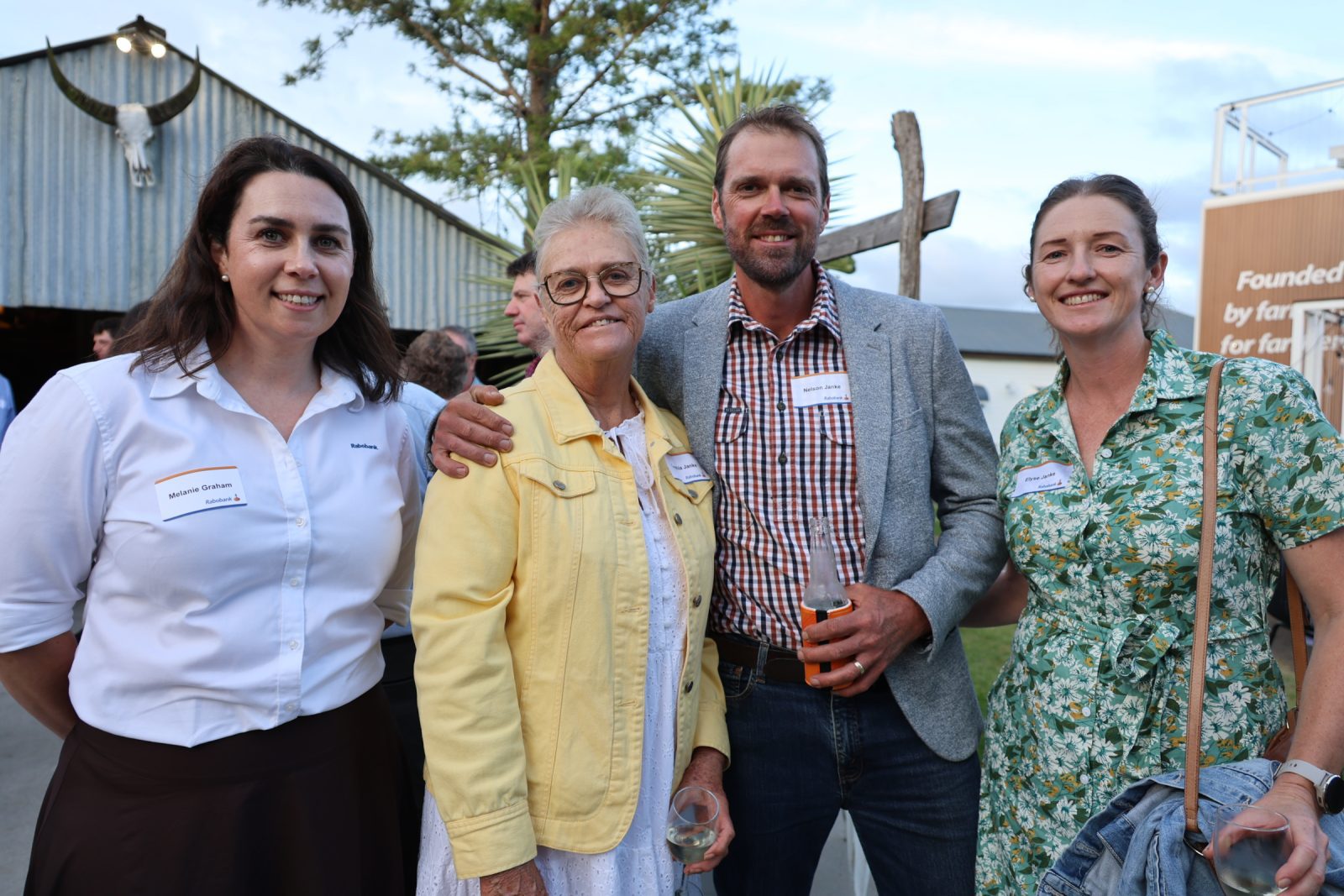
Toowoomba-based Rabobank senior rural manager Melanie Graham with Cynthia, Nelson and Elyse Janke, Westbrook.
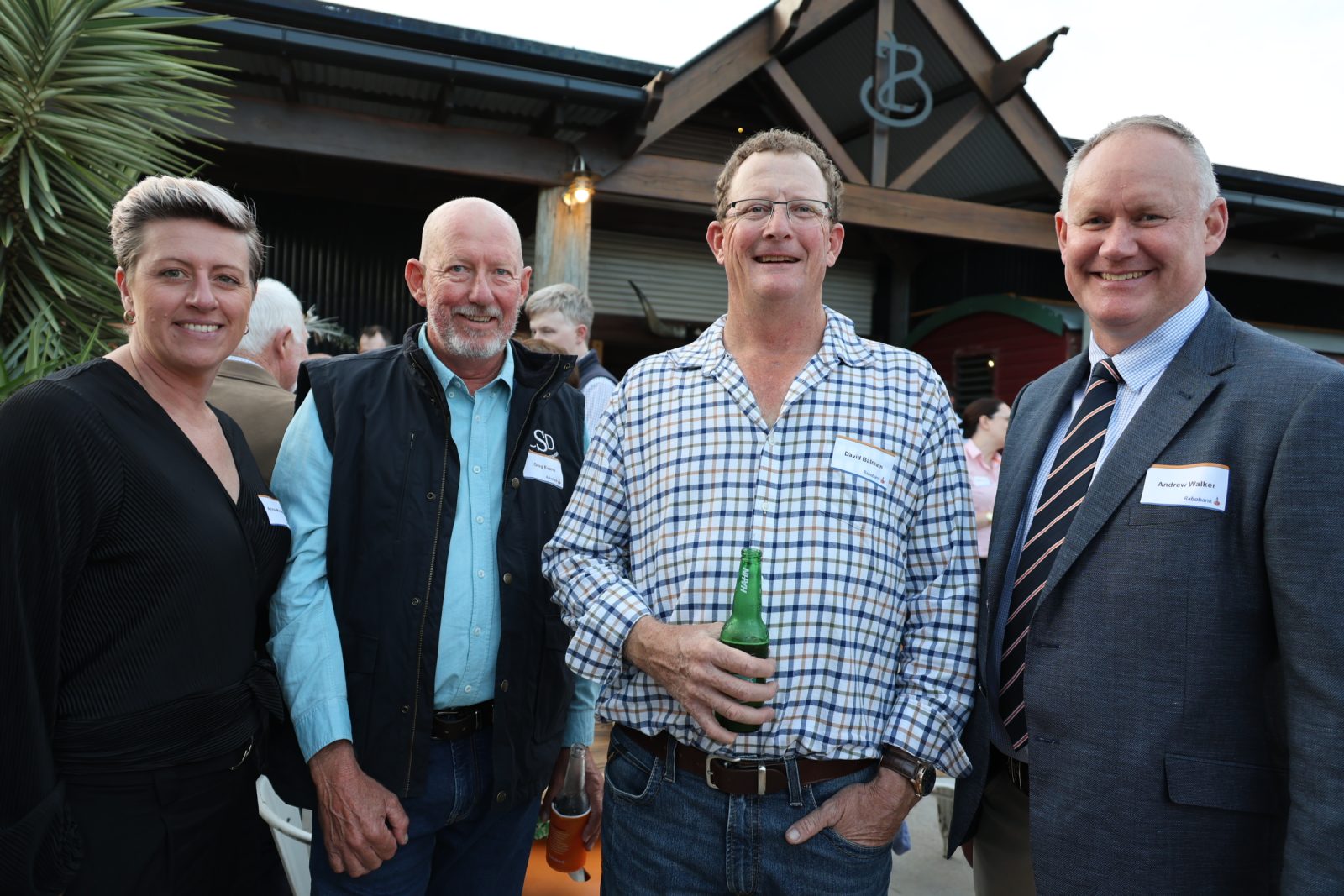
Anna Mickelborough, Glenesk Farming, Dalby, Greg Evans, Chinchilla and David Balmain, Cecil Plains with Rabobank’s deputy regional manager southern Qld Andrew Walker.
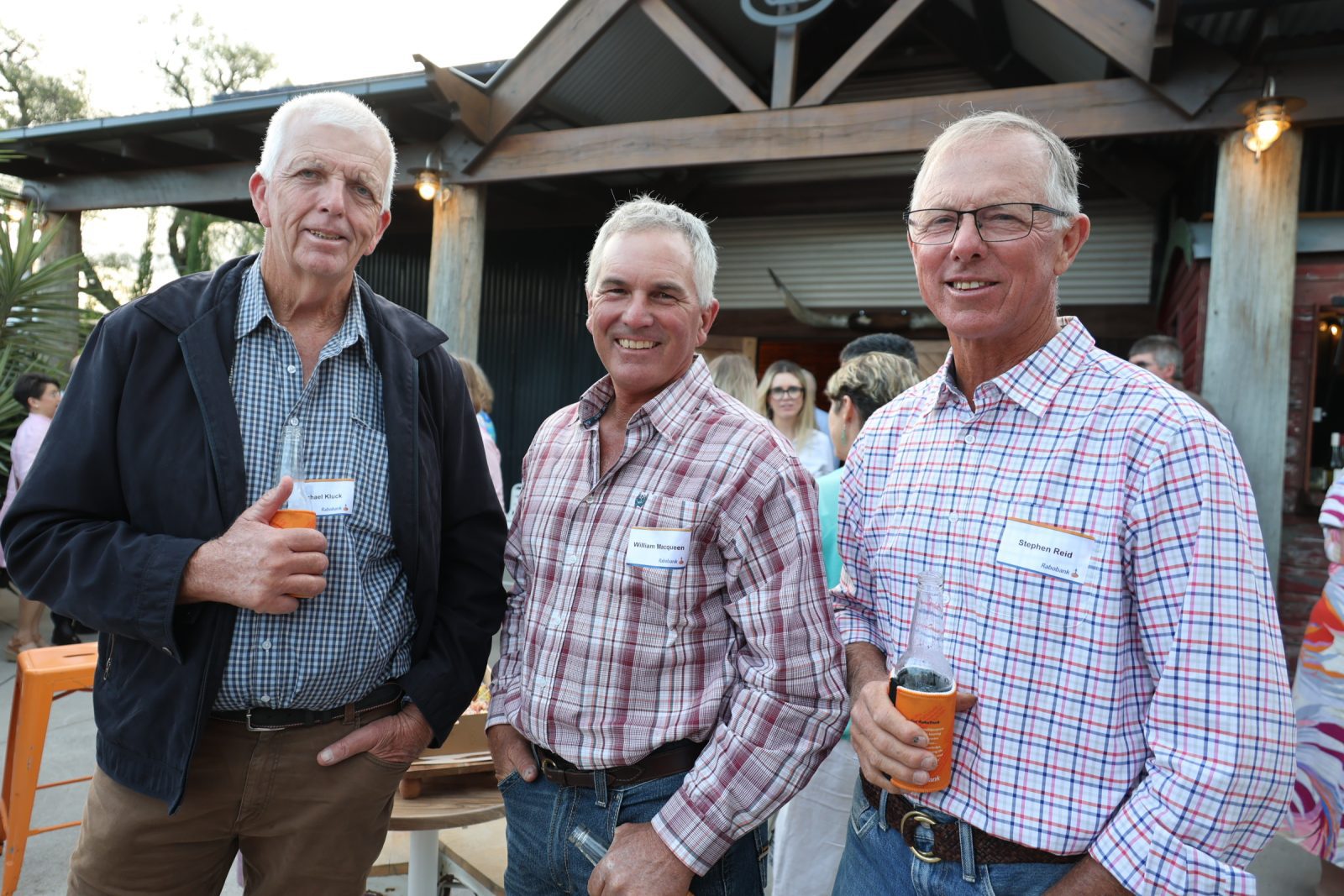
Michael Kluck of Flagstone Creek with Billy Macqueen and Steve Reid from Millmerran.
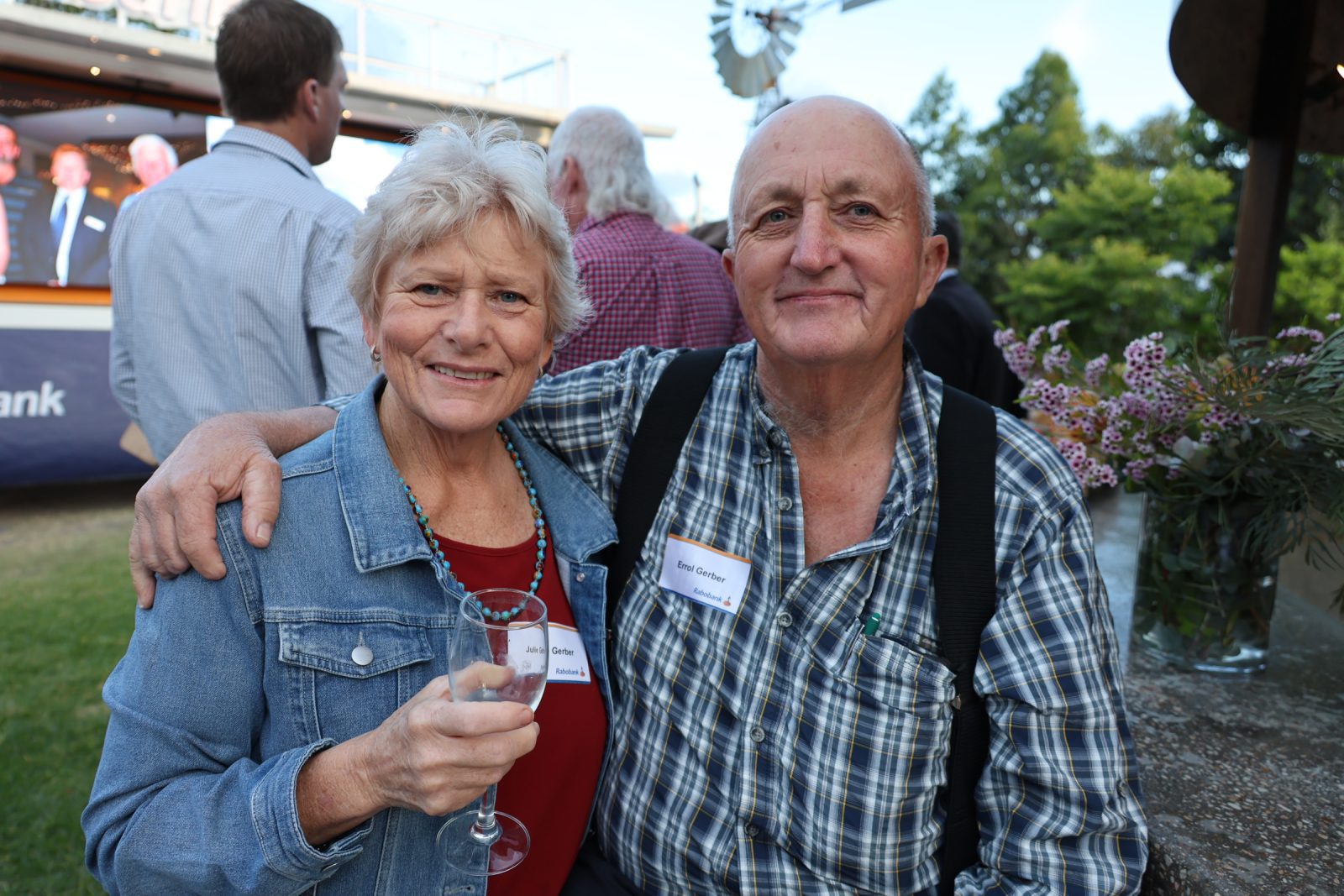
Lowood corn growers and former dairy farmers Julie and Errol Gerber.
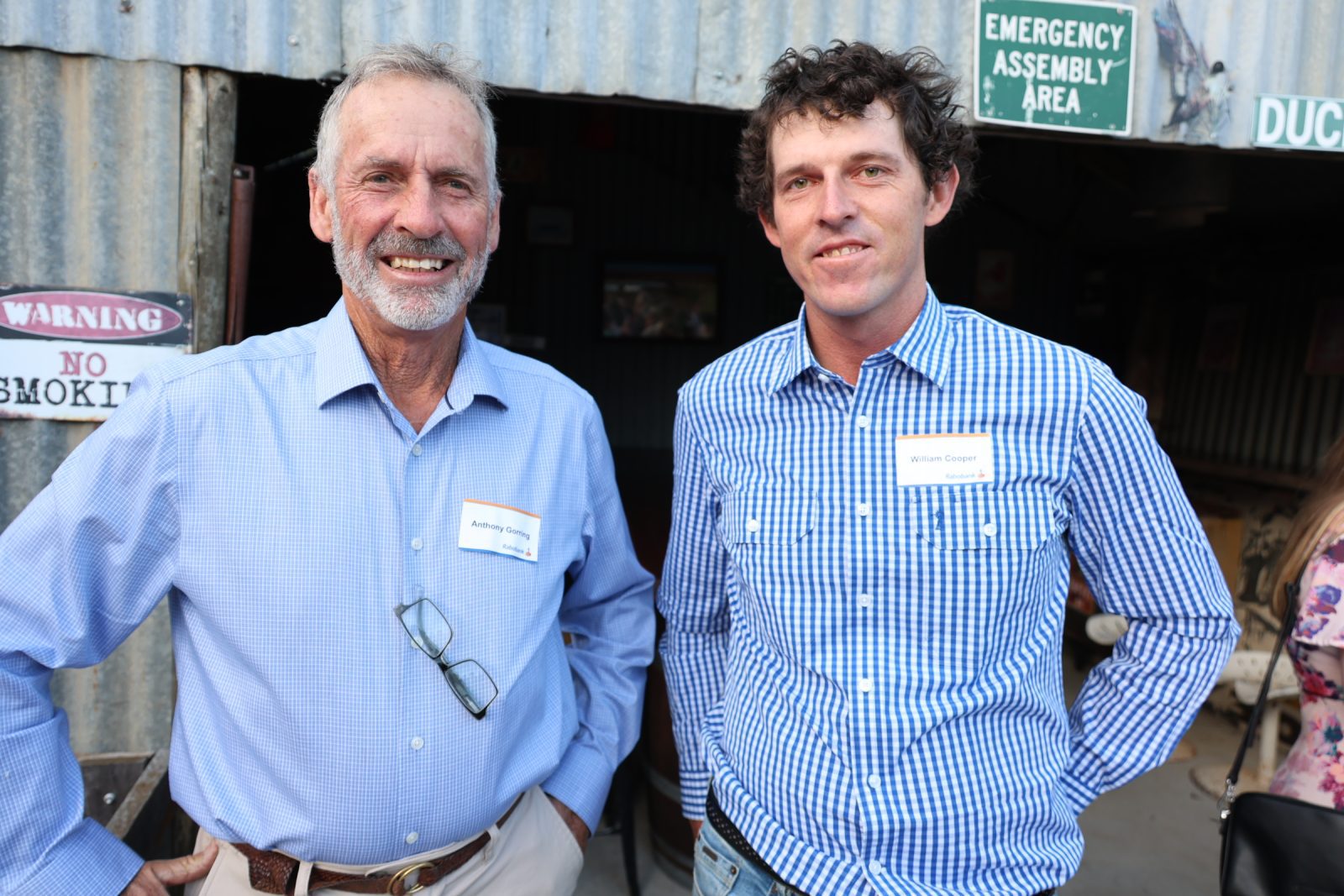
Anthony Gorring, Southbrook, and Bill Cooper, Rossvale.
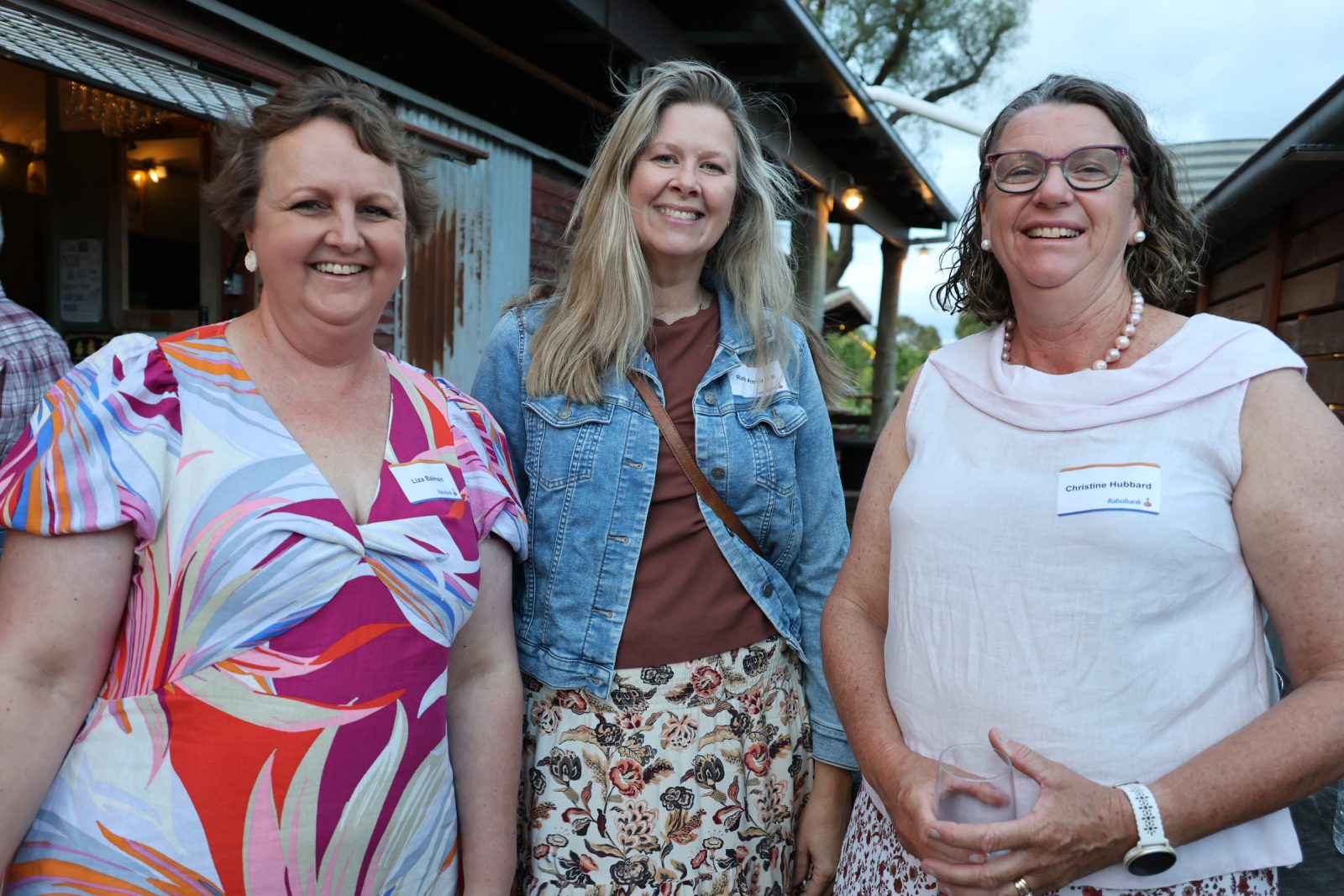
Cecil Plains farmers Liza Balmain, Ruth Armstrong and Christine Hubbard.
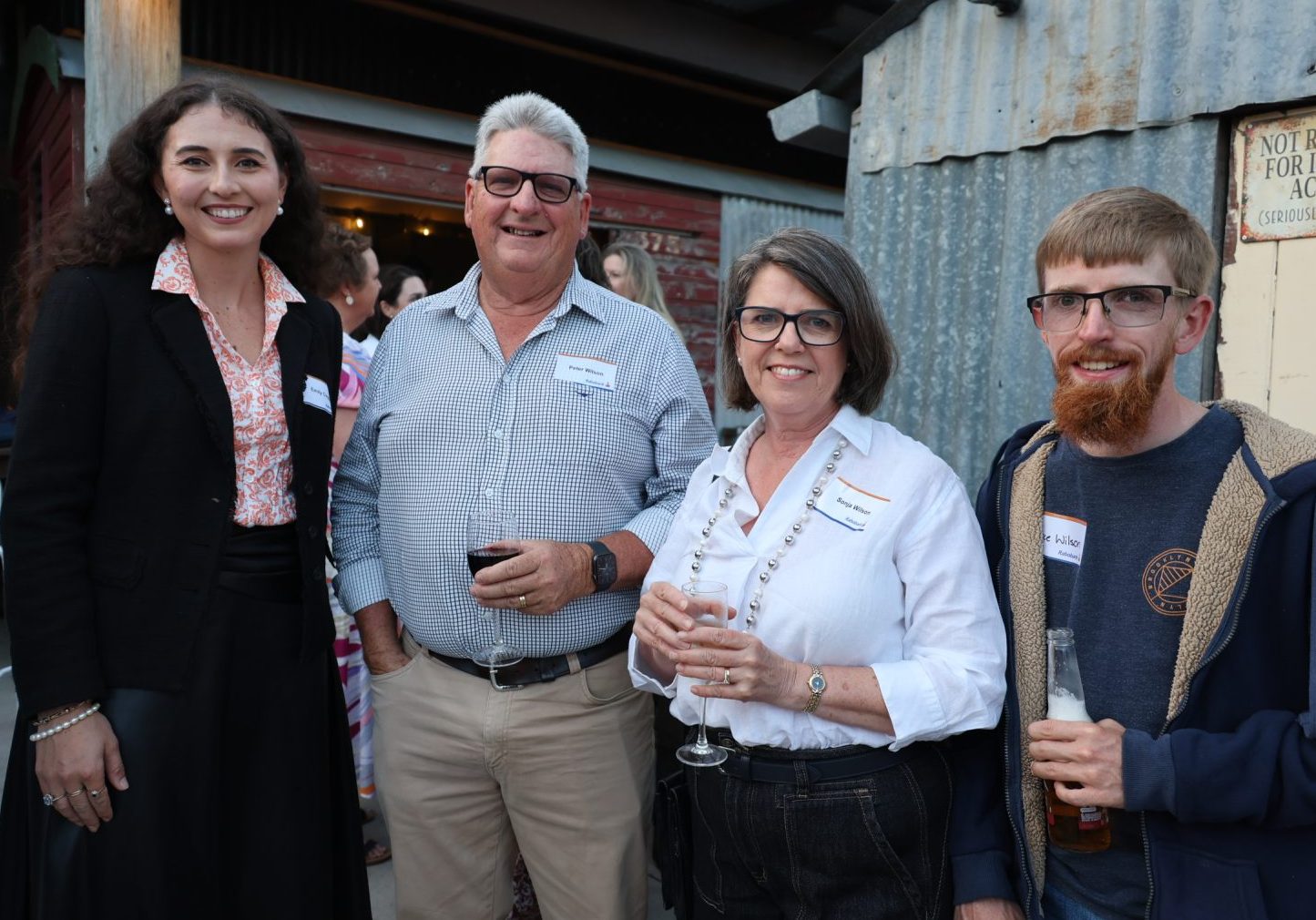
Emily Coggan of Coggan Farms, Inglestone, with Wyreema farmers Peter, also a chickpea broker, and Sonja Wilson and their son Pierce.
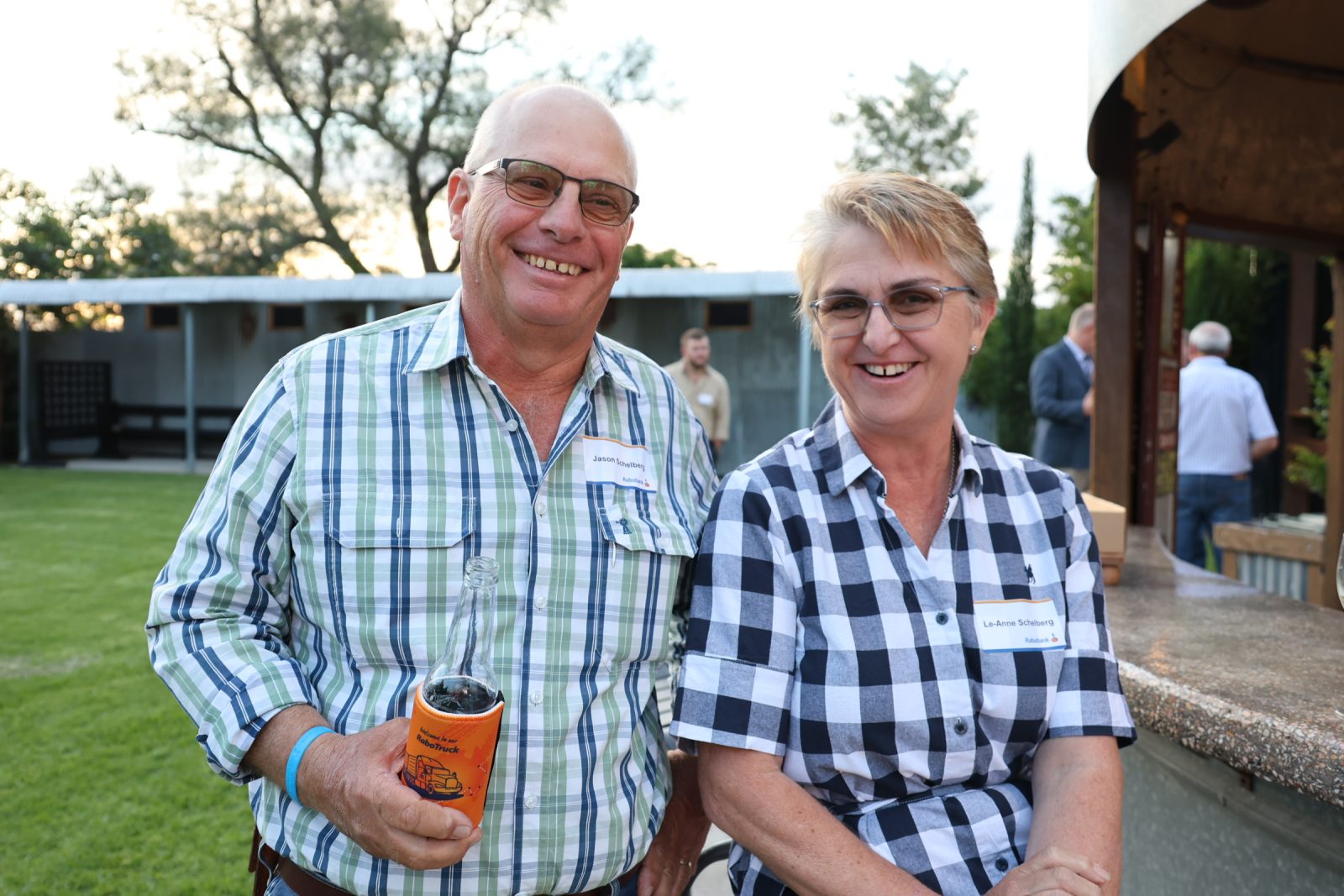
Macalister farmers Jason and Le-anne Schelberg.
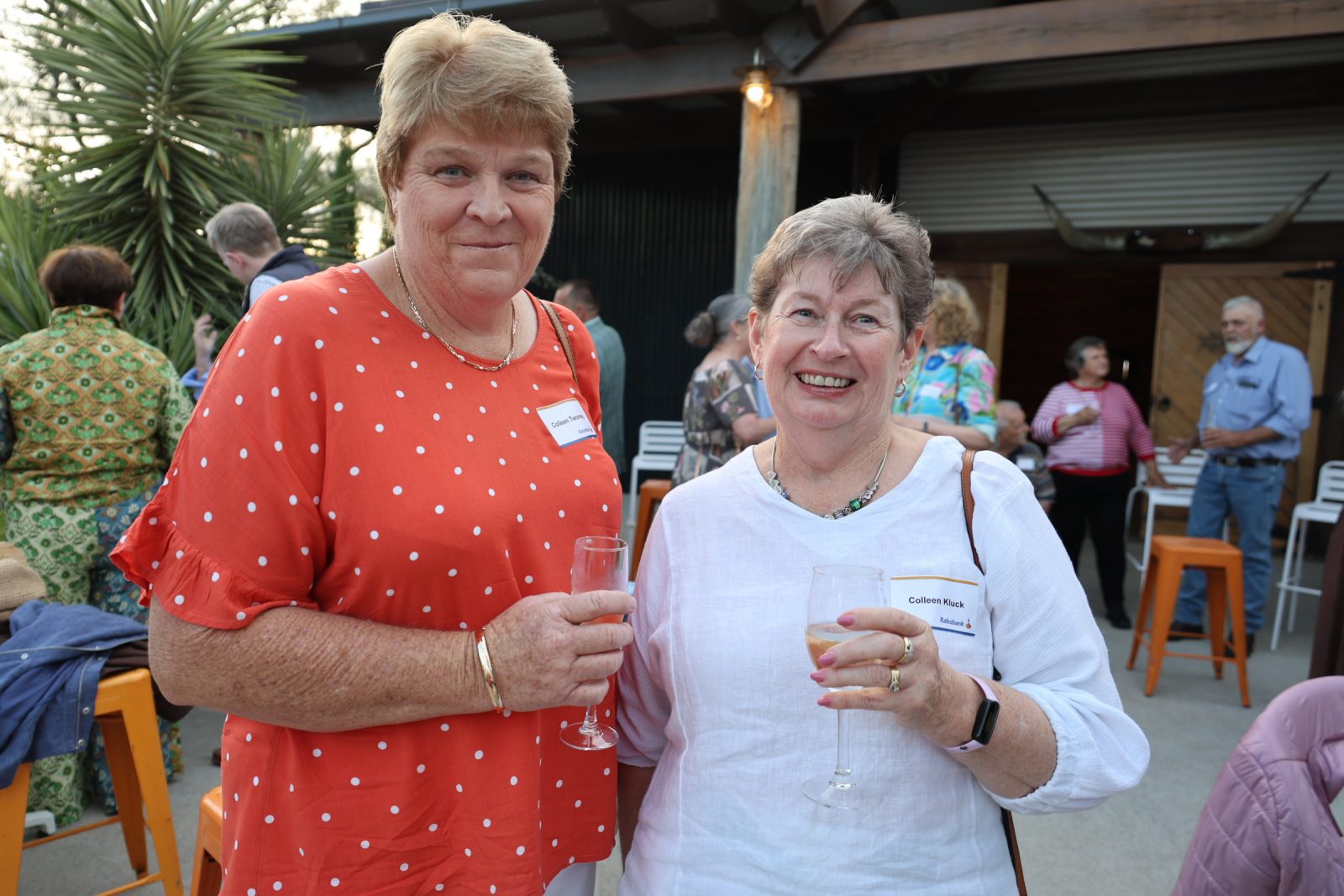
Colleen Twomey, Clifton, and Colleen Kluck, Flagstone Creek.
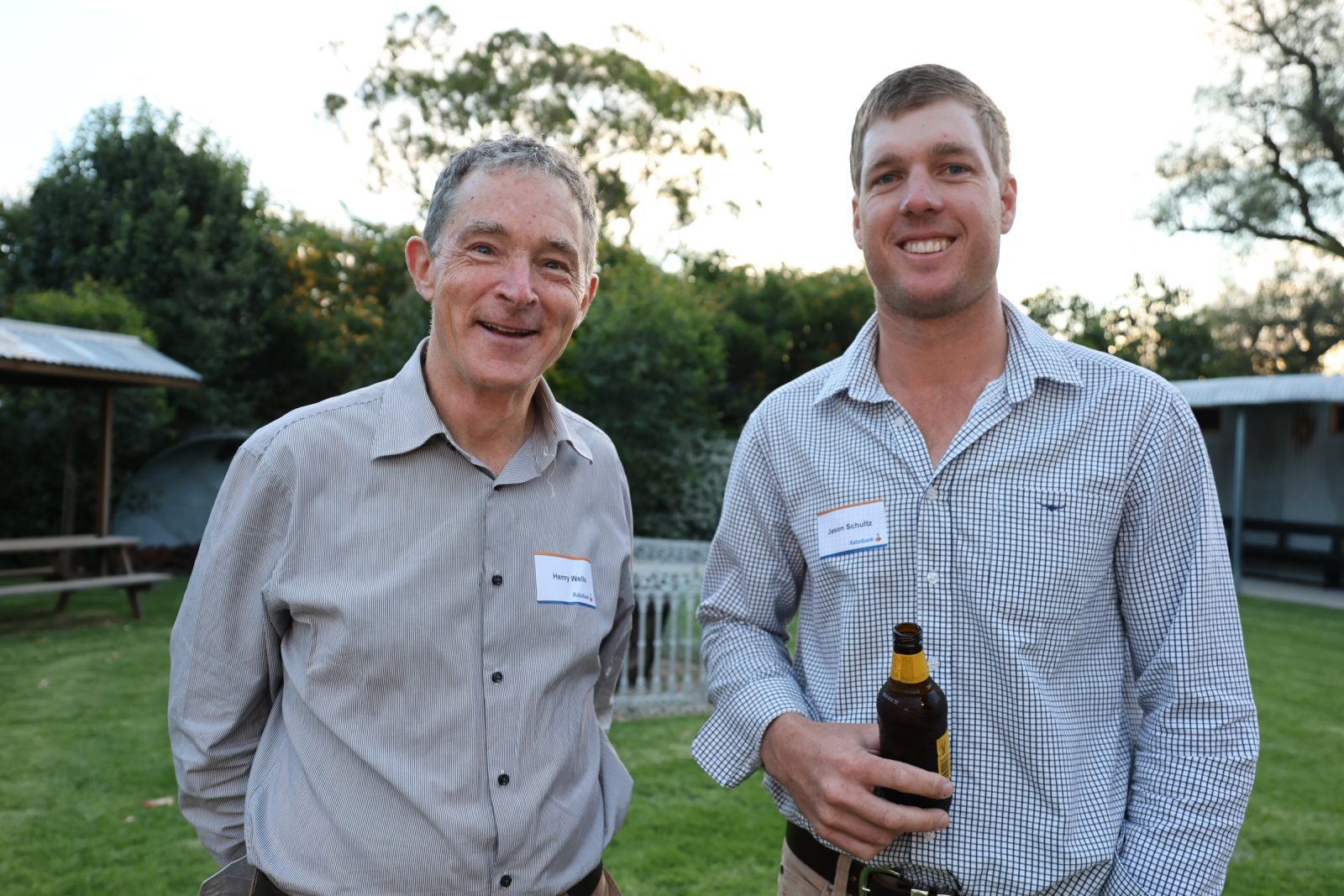
Grain Central’s Henry Wells and Wellcamp grain and hay producer Jason Schultz.
Grain Central: Get our free news straight to your inbox – Click here
HAVE YOUR SAY