
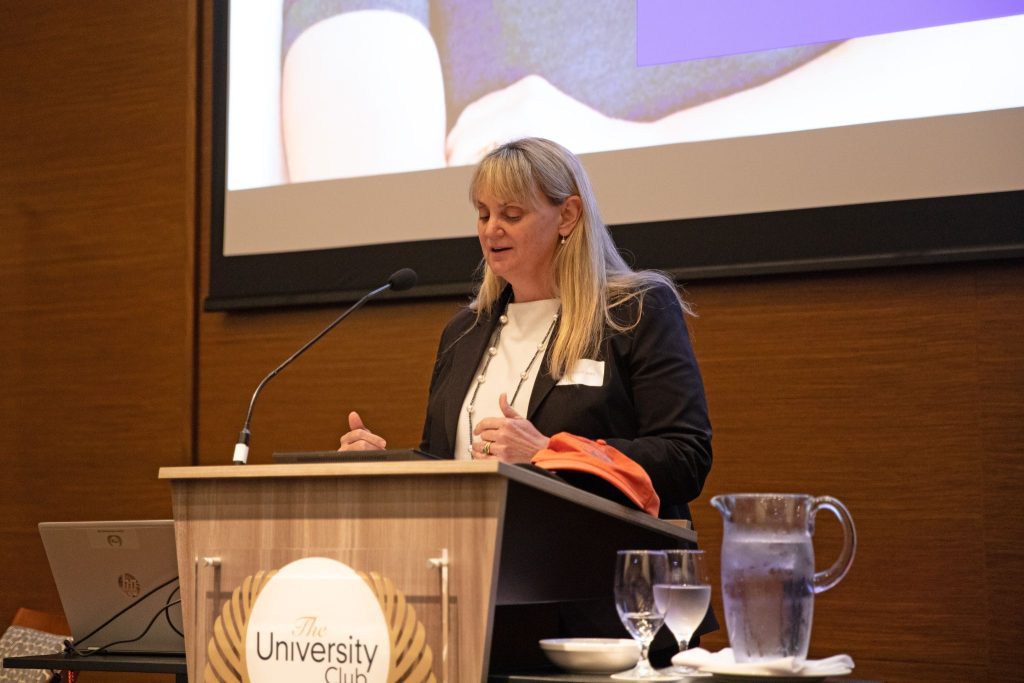
WESTERN Australia’s Tress Walmsley has called on the grains industry to develop innovative, collaborative models for funding research and development as government support continues to decline.
Speaking at the UWA Institute of Agriculture’s 19th Industry Forum last month, the InterGrain chief executive officer and Grain Industry Association of WA chair challenged researchers and growers to “do something better” in funding R&D, rather than wait for government support to return.
The comments come amid major shifts in grains R&D funding, with the WA Government withdrawing from the Australian Export Grains Innovation Centre and ending support for the Grower Group Alliance which supports regional R&D and extension groups.
Nation-wide, CSIRO is under pressure to cut spending, with job losses expected, while agriculture departments in New South Wales and Victoria also face cuts.
“The current WA grains RD&E ecosystem is not in a healthy state; I teeter on actually saying that it’s broken,” Ms Walmsley said.
She said many industry leaders have been trained in the WA Department of Primary Industries and Regional Development (DPIRD), not the case anymore.
“This decline has found us in a situation where industry feels disconnected from DPIRD and we’re having a realisation that DPIRD is no longer in the centre of our venn diagram and our ecosystem.
“Whilst there are absolutely well respected and highly competent individuals remaining in DPIRD, industry is concerned that they’re not supported by appropriate funds from government.
“They don’t have viable resources and there are no viable succession plans for the next generation to come through.”
Ms Walmsley said alongside the universities, CSIRO in WA was also seeing these challenges.
“It’s not just a DPIRD issue; in the same timeframe, CSIRO has seen significant downsizing in WA.
WA universities Curtin, Murdoch, and UWA, along with CSIRO, WA DPIRD, and the Grower Group Alliance, form the WA Agricultural Research Collaboration.
“Our universities are fractured and unfortunately WAARC hasn’t delivered the grains industry a magic bullet.”
Industry needs to take control
Despite these challenges, Ms Walmsley said there was scope for industry change and this was a choice members had to make.
“We can continue to complain and whine about reduction of government funding and withdrawal of state government, or we can actually do something about the issue.
“If the grains industry was a business, future funding would sit on the risk register in massive red capital letters.
“We would be running constant scenario plans around how are we going to respond to a diminishing state and Commonwealth government set of funding.
“We’re not doing that as an industry.”
Ms Walmsley offered the Minerals Research Institute of WA (MRIWA), as an example of a successful RD&E organisation that receives government funding and uses it to leverage additional funds.
While not “directly transferable” to the grains industry, she said the fact that the body’s industry-led board set the “strategic plan and the industry funding priorities” was “something that we should look at”.
“Now is the time to take these as an industry and a commitment to coming together to take ownership of our RD&E ecosystem in WA.
“I put to industry key stakeholders here today: stop accepting the status quo, stop complaining about what’s not happening, lean in, participate in the conversation of how we can remodel the RD&E ecosystem.”
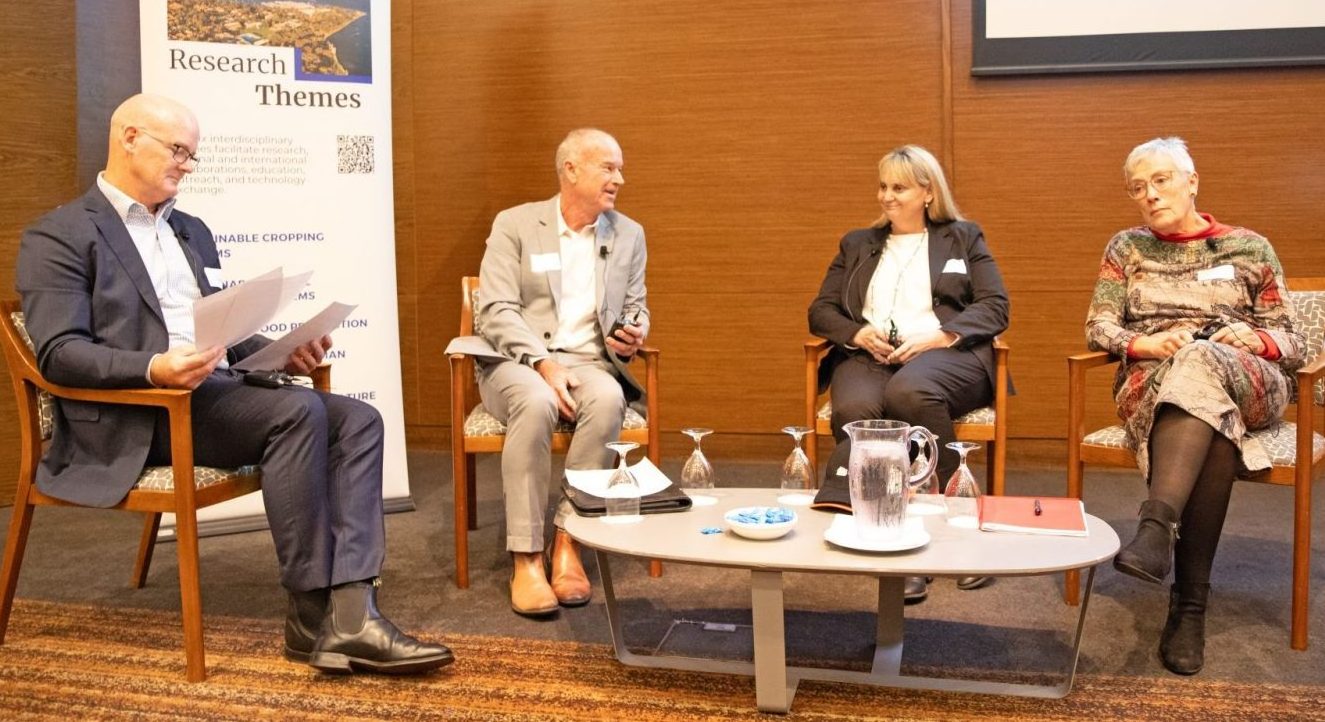
Paul McKenzie from Agrarian Management with AEGIC director Terry Hill, InterGrain CEO Tress Walmsley and ACIAR member Dr Beth Woods during an industry panel held at the UWA IOA 2025 Industry Forum. Photo: UWA
Infrastructure gaps
Ms Walmsley’s speech drew commentary from former DPIRD chief scientist – primary industries, now group leader at CSIRO, Ben Biddulph, who pointed out that the state of R&D infrastructure was “pretty much at end of life” and in dire need of investment.
He questioned who now carried responsibility for funding infrastructure, once paid for entirely by governments.
“One of the biggest challenges that I have faced throughout my career, and this we’ll face for the next generation. is the infrastructure requirements to actually deliver the R&D,” Mr Biddulph said.
“State governments historically and federal governments have footed the bill for that, and universities to some extent.
“We have seen the DPIRD South Perth facility been catastrophically closed and the fallout from that.”
Ms Walmsley said governments still had “a responsibility to provide a supportive environment so that there can be co-investment” and shouldn’t “have to bankroll it all”.
She pointed to support measures, such as providing land, planning arrangements, or hubs to promote private investment.
“I don’t see evidence of that going forward, in WA, that we are going to have big infrastructure investment for our R&D institutions.”
Perception change
The last word on the topic was given to audience member, chief economist at DPIRD and former chief economist at AEGIC, Ross Kingwell.
Professor Kingwell said there was a “credible” agreement to make for governments to invest in agricultural R&D, but that the case needed to be better communicated to the wider community and decision-makers.
He said farmers had historically been the main beneficiaries of R&D funding, and it had resulted in many becoming successful and wealthy.
“The flipside of that is that because agricultural R&D has been so successful, the holders of the public purse ask: ‘why is taxpayers money going to these multimillionaires?’” Prof Kingwell said.
“For me, the strategic issue going forward for funding agricultural R&D is painting the story of who are the beneficiaries of agricultural R&D.
“If you are able to explain to an urban household how they, their children and grandchildren benefit from agricultural R&D…then the people who hold the public purse have a reason to keep dipping into that public purse.”
He said the issue going forward had become one of a “science-communication challenge”.
“In order to attract future dollars out of the public purse that narrative has to be really winsome and well told and that for me is the missing part of the story.”
Grain Central: Get our free news straight to your inbox – Click here
HAVE YOUR SAY