
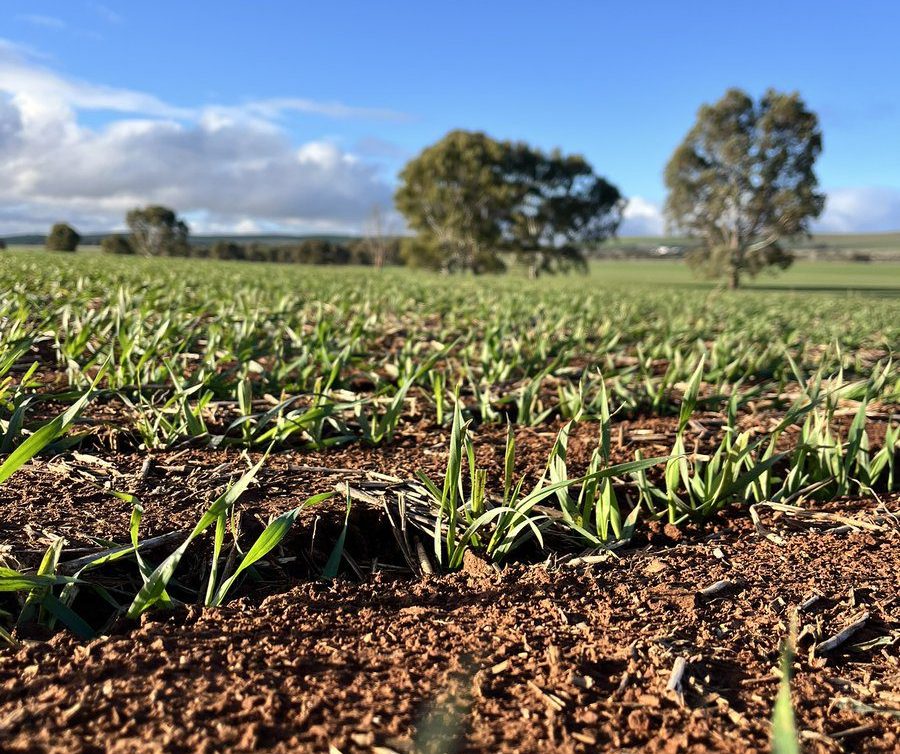
Barley sown June 1 in SA’s Mid North and photographed July 24. Photo: Crop Smart
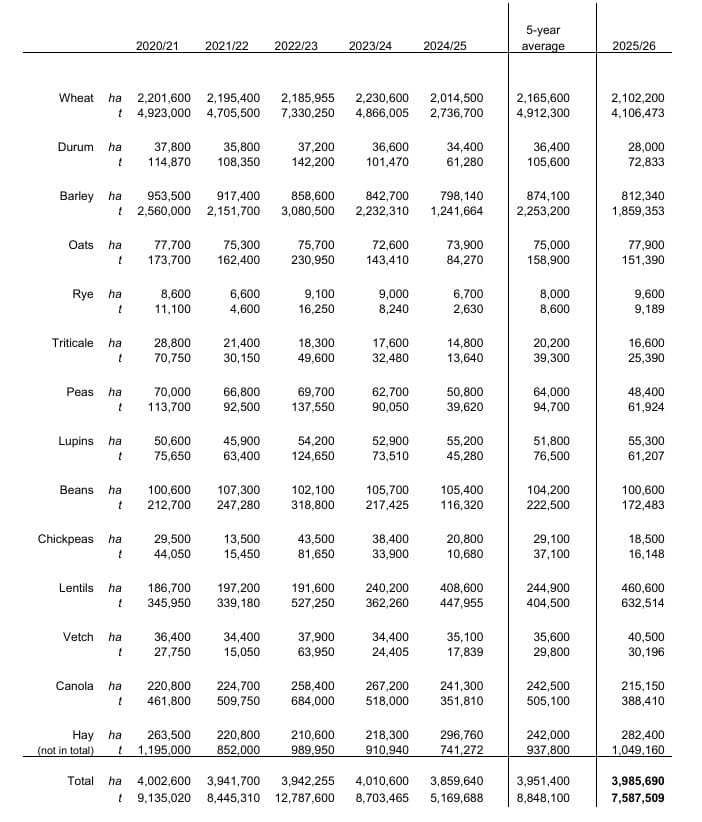
SOUTH Australia is forecast to produce a winter crop of 7.59 million tonnes, according to the Primary Industries and Regions SA Crop Emergence report.
This is down from the previous report which pegged production at 8.18Mt, based on conditions as of May 15, but is well up on PIRSA’s estimate for the harvested 2024-25 crop of 5.17Mt.
Current as of July 10, the report doesn’t factor in any potential impacts from rainfall seen since then, including widespread double-digit falls recorded last week.
The new estimate is also more in-line with the preliminary ABARES figure of 7.5Mt released in its June 3 Australian Crop Report.
PIRSA is forecasting SA’s new-crop wheat production at 4.11Mt, down from the previous estimate of 4.48Mt, and barley at 1.86Mt, also a reduction from the May forecast of 2.08Mt.
The report forecast a further jump in lentil production to 632,514t from 460,600ha, up from the previous estimate of 592,810t from 430,600ha.
The PIRSA report said rootzone soil moisture was “variable across the regions” with some areas on Eyre Peninsula reporting “average to above average” levels while the remainder of the state’s levels were “below average”.
“The late break to the season, when combined with cold soil conditions has resulted in slow crop and pasture emergence and growth,” the report said.
“Achieving near-average yields will be dependent on late winter and spring rainfall, as there are low soil moisture reserves at present in most regions.
“With crops sown later than normal and some resowing, the risk of heat shocks during flowering and grain fill is significantly higher this season which may negatively impact total production.”
The report further highlighted the preference for lentils and wheat this season over canola and durum.
“The area sown to lentils is estimated to have increased further (13pc above 2024-25), mostly on Eyre Peninsula.
“Wheat area has increased by 4pc from last season, while durum has decreased, mostly in the Lower North due to herbicide residue issues.
“Canola has also reduced in area, down 11pc from the previous season, with a swing away from higher cost, higher risk crops.”
The PIRSA report noted that some weed management challenges were being seen due to dry sowing.
“High levels of volunteer crop species from the previous season are occurring in many establishing crops due to the lack of opportunity for control prior to seeding are a particular challenge.
“Dry sowing has also placed additional pressure on pre-emergent herbicides, however, so far strategies appear to be reasonably effective.”
The Bureau of Meteorology’s modelling predicts the El Niño Southern Oscillation, which is currently neutral, to continue until at least December.
Above average rainfall is likely for much of the eastern two thirds of Australia, with an increased chance of unusually high rainfall for parts of southern South Australia for August to October.
Source: PIRSA, ABARES
HAVE YOUR SAY