
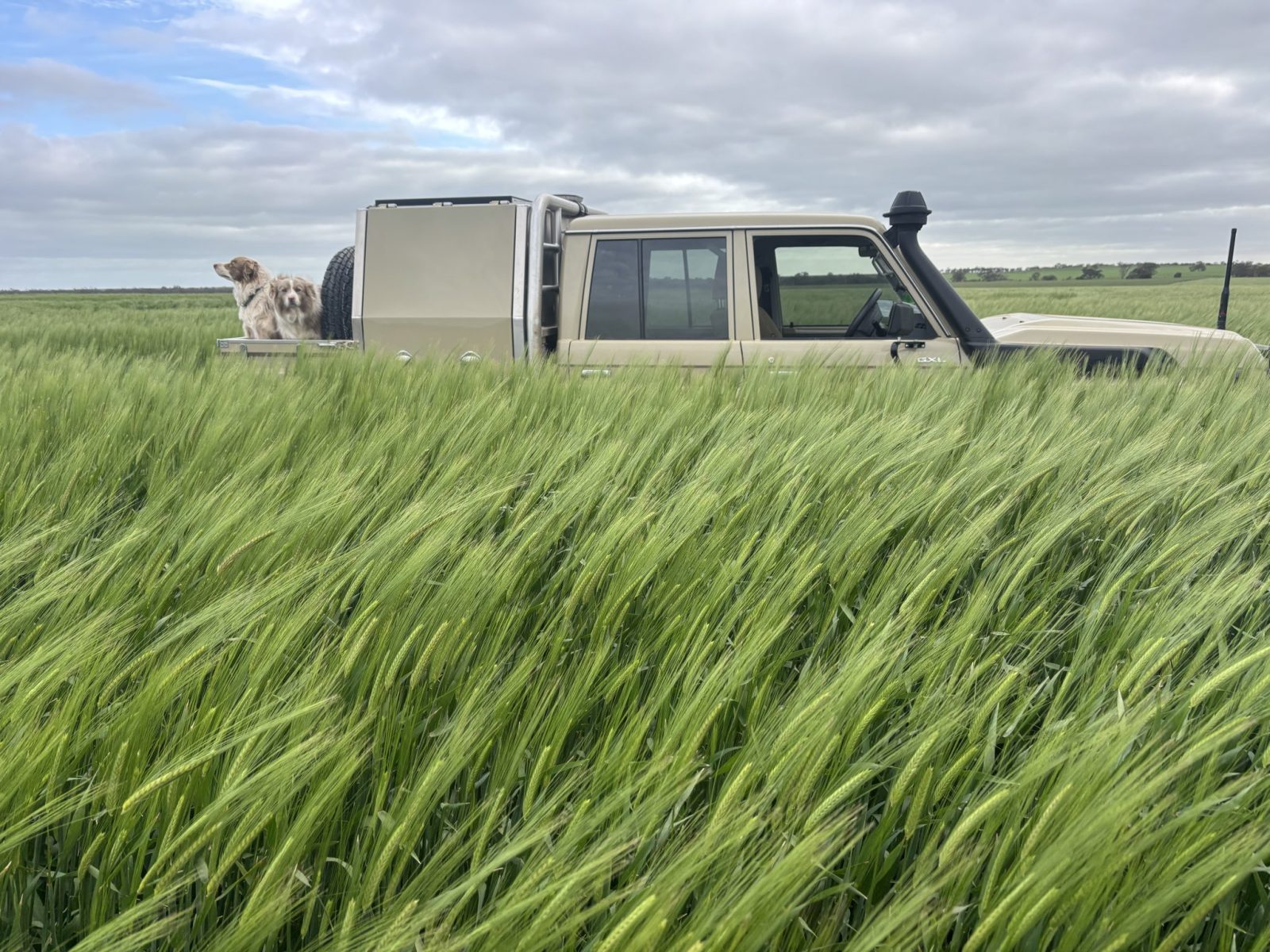
A crop of barley on SA’s Upper Eyre Peninsula shows outstanding yield potential for the region. Photo: Ben Shipard, Kimba
WHEAT and barley prices have fallen in the south in the past week, while northern rates have firmed as quality and production prospects deteriorate for the southern Queensland crop.
Consumer confidence in supply comes from the stellar yield outlook for the Victorian and southern New South Wales crops, although barley at harvest may be hard to get if growers prioritise sale and outturn of wheat and canola as expected.
| Sep 3 | Today | |
| Downs barley | $403 | $405 |
| Downs SFW | $415 | $417 |
| Downs sorghum | $375 | $380 |
| Mel barley | $318 | $315 |
| Mel ASW | $385 | $370 |
Table 1: Indicative prices in Australian dollars per tonne.
Heat hits north
Northern growers have reined in their selling of wheat and barley as production prospects for crops west of Qld’s Inner Downs deteriorate following a hot weekend, and another on the forecast.
Some locations recorded maximum daytime temperatures in excess of 30 degrees Celsius with drying winds last weekend, and for those crops with little to no moisture beneath them, yield potential has been lost.
Concern about low testweights from moisture-stressed barley crops, on top of hopes for stronger Downs pricing into next year, are further reasons for growers not to forward sell.
Sorghum remains the cash sale of choice for those with stocks left on farm in southern Qld and northern NSW.
“A lot of sorghum’s been sold in the past few weeks to domestic consumers and packers, but nothing’s going into the boats,” Knight Commodities Goondiwindi-based broker Gerard Doherty said.
Growers harvesting chickpeas and wheat in Central Queensland are tending to hold the wheat in the hope that the domestic market lifts to well over export parity.
Cereal crops in pockets of southern Qld could achieve average yields if their season has a kind finish.
However, maximum temperatures are forecast to nudge 30 degrees early next week, and stressed crops could well be grazed or baled while they still have some biomass.
“The Queensland crop continues to deteriorate week on week, but once you get over the border, it improves with every kilometre south you go.”
“A lot of guys north of the border are reluctant to forward sell based on the minimum testweight for BAR1.”
That figure is 62.5kg per hectolitre, and a testweight below that could see it drop into BAR2 or BAR3 at substantial discounts.
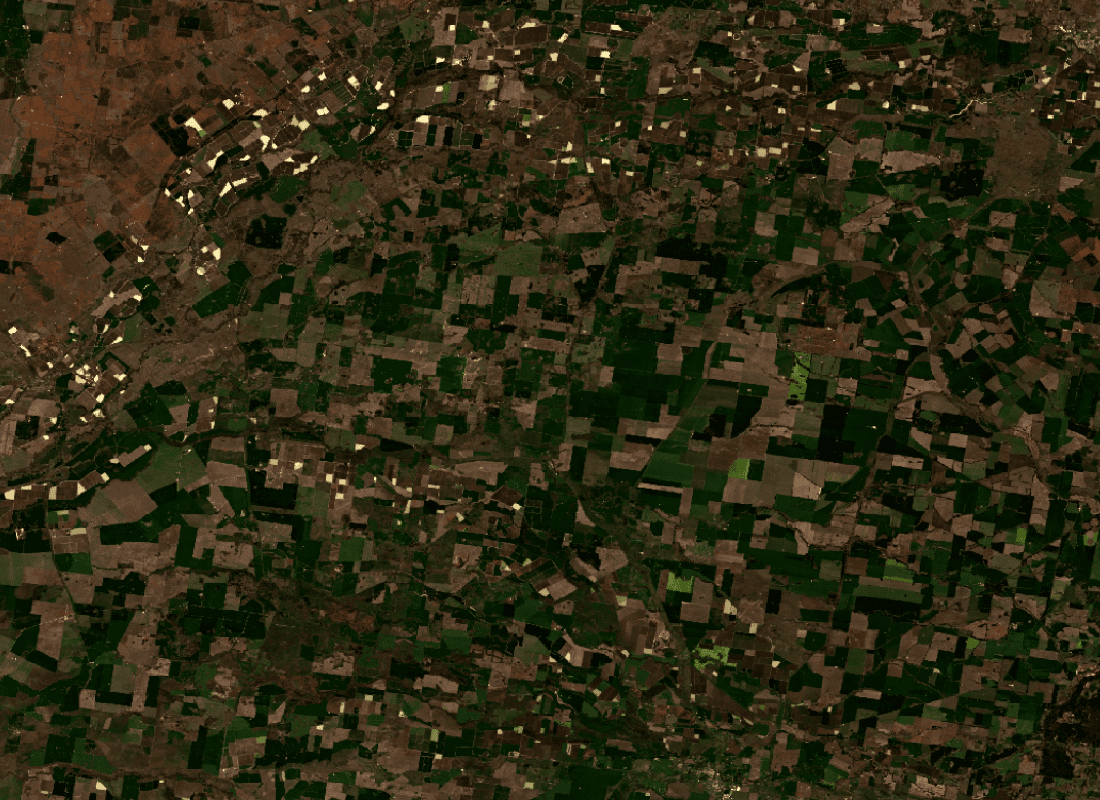
Satellite imagery of the Mungindi, Goondiwindi and Moree districts taken in August 2025. Image: DAS
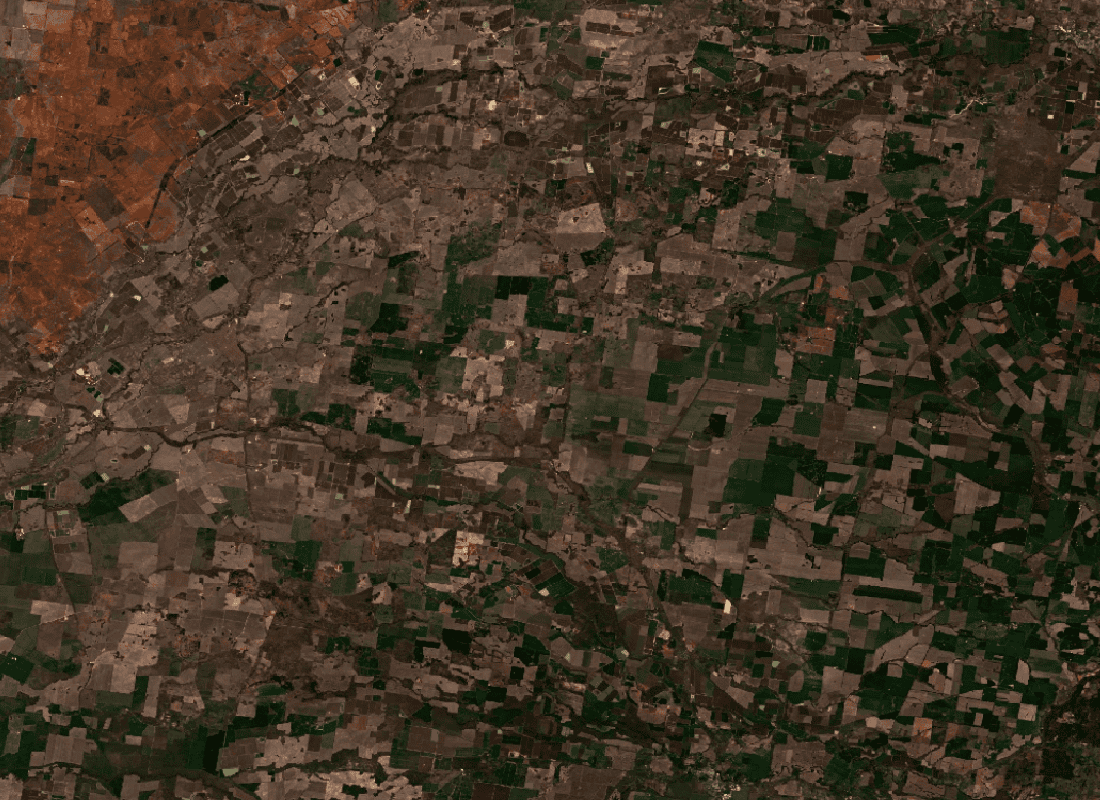
Satellite imagery of the Mungindi, Goondiwindi and Moree districts taken in August 2026, which shows significantly more fallow than the image from 12 months prior. Image: DAS
As one source in the stockfeed industry said, grower selling in the north has dried up based on high price expectations for any current crop still on hand, and production concerns about new crop.
Meanwhile, feedmills continue to source grain coming north by road from areas as far south as the western Riverina of NSW, where growers are gearing up for a bumper harvest.
A broker has pointed out the importance of remembering that while cropped area is certainly down in northern NSW and southern Qld, as evidenced in the latest DAS figures, there should still be plenty of crop in NSW overall based on a reasonable season for much of central NSW, and a big one in the south.
Barley is expected to struggle to get on to stems in the front months of the shipping year, which starts October 1, and its run north by road looks likely.
“Barley is a long way from pricing transshipment,” the broker said.
“With wheat and canola [export] demand, there will be limited slack stem to allocate for transshipment of barley in my view; it’s more likely to go on trucks for the first half of the year.”
On cottonseed, ginning has started to wind down, and Australian Bureau of Statistics data confirms this year to date is yet to see any seed exported.
Woodside Commodities managing director Hamish Steele-Park said this confirms domestic-only sales being made this season to date.
“The market is trading hand to mouth, with most feedlots having coverage till year end,” Mr Steele-Park said.
Cottonseed in the prompt ex-gin market is trading at around $540/t in the Gwydir Valley, $510/t in the Macquarie Valley, and $530/t in southern NSW.
Canola leads southern selling
At Young, Grain Focus managing director Michael Jones said barley is still available from growers at $260-$280/t, with farms close to the Newell Highway for the run north getting the better bids.
“Wheat is starting to get tight now,” Mr Jones said, adding that the season in the south-west slopes and points west was running early, and harvest of barley and canola on the plains could start before October is done.
Canola remains the forward sell of choice for the southern grower.
“We keep hitting $800 depot at eastern sites, and that’s a target for the grower.”
Based on the expense of fuel and fertiliser during the growing season, Mr Jones said growers were looking to recoup some of their expenses through the oilseed.
“It’s been a big-cost year, and they’ll sell canola; forward selling canola at current rates is attractive; selling wheat at $340 site is not.”
Talk of frost in coming days in the Riverina has tempered grower interest in forward selling canola, now in or close to full flower across much of southern NSW.
“Talk of frost keeps people nervous.”
Grain Central: Get our free news straight to your inbox – Click here
HAVE YOUR SAY