
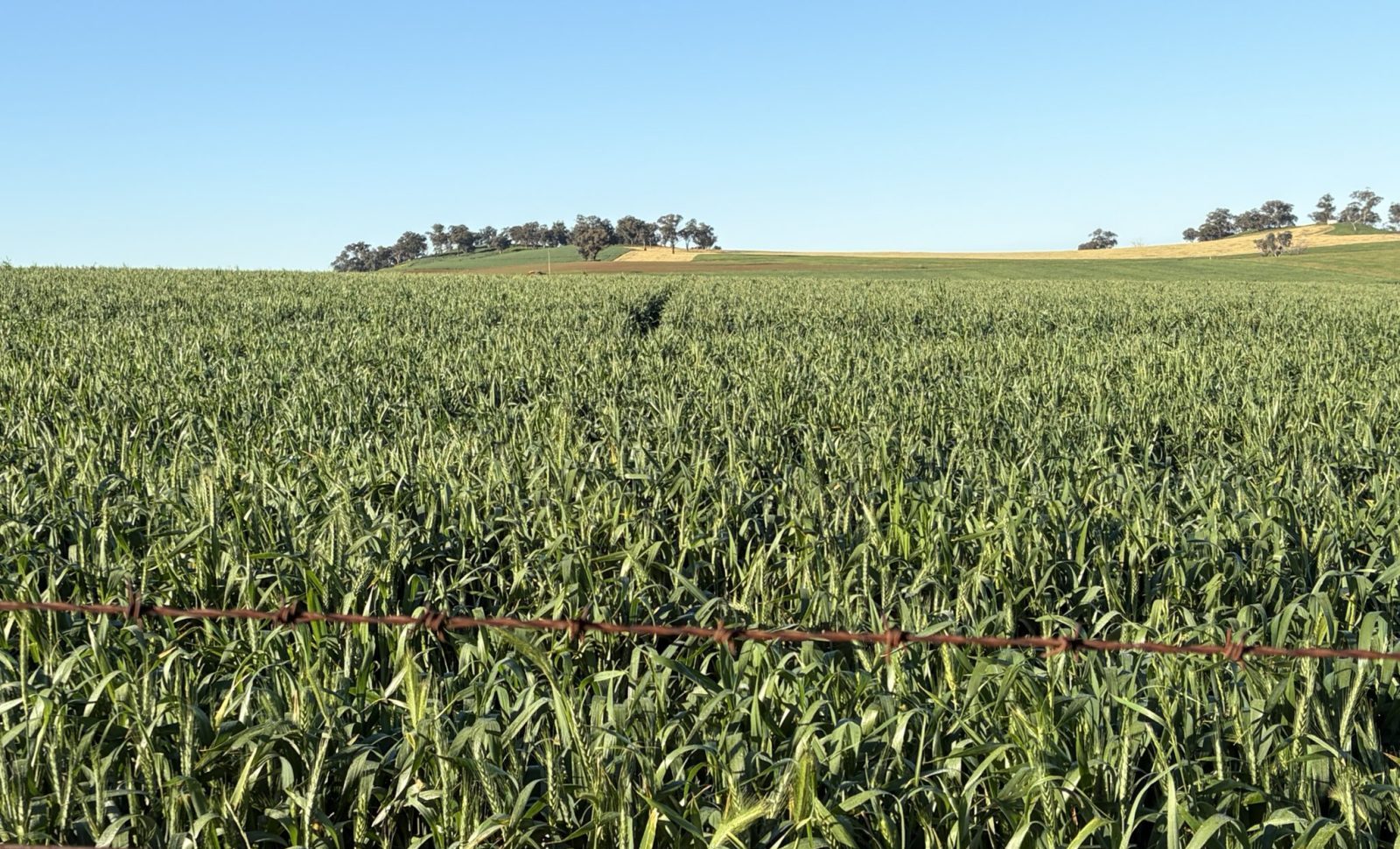
A crop of Illabo wheat coming into head this week on a mixed farm at Toogong, east of Parkes in central NSW. Photo: Lawrence Balcomb
FIGURES released this week by Digital Agriculture Services show Australia’s wheat area is down 16.6 percent on last year’s figure, while barley area has increased 14.4pc year on year.
DAS’ figures amplify ABARES’ revised numbers released September 1 in its quarterly Australian Crop Report, which show an 11pc drop in national wheat area against a 6pc rise for barley.
DAS analysis indicates Western Australia has posted a 17pc drop in wheat plantings from last year, but its barley area is up 24pc.
ABARES figures for WA show the same trend as DAS’, but a more modest move, with wheat area estimated to be down 12.4pc from last year, and barley up 10.5pc.
Margins considered at planting
In commentary released with its latest figures, DAS said wheat this season accounts for 37.9pc of WA’s cropped area, down from 45.4pc last year, amid a total WA winter crop area down only 0.6pc from 2025.
In Queensland, a lack of planting rain was the limiting factor for its winter crop, and is largely behind its 38.6pc fall in its wheat area.
DAS analysis shows New South Wales wheat area as being down 24.5pc this year, against a 21pc rise in barley plantings, with patchy and relatively late planting rain impacting area in the state’s north.
Across southern Australia, the expense and sometimes scarcity of inputs influenced planting decisions made on many farms.
“Australian growers entered the 2026 planting season facing sharply higher fuel and fertiliser costs following the outbreak of war in Iran and disruption through the Strait of Hormuz,” the DAS report said.
“DAS flagged at the time that growers were likely to substitute between crops, with wheat gross margins lower than most other crops.
“Since those planting decisions were made, global wheat markets have shifted sharply.
“Wheat prices have climbed more than 50pc since the start of the year and recently reached their highest level in more than three years, as weather disruptions and geopolitical instability put further pressure on global grain supply.
Using satellite imagery, AI, and geospatial analytics, DAS estimates crop type, area and yield over more than 1 million paddocks across Australia.
DAS head of data science Sam Atkinson said the latest satellite observations confirmed what has been planted, and what was happening on the ground.
“We can now, via our methods, capture the full extent of the predicted swing to barley and canola,” Mr Atkinson said.
Split season evident
DAS said its latest report shows a stark divide in the 2026 winter-cropping season, with South Australia and Victoria well ahead of normal establishment, while Qld continues to lag.
DAS said its records show SA’s 2026 crop-establishment trajectory to be unprecedented in its database, with three-quarters of SA’s final established area in place by mid-June, around four weeks ahead of the 2020-25 norm.
This was even more pronounced in parts of SA’s Murray Mallee and western Eyre Peninsula, where crops established 4-5 weeks earlier than usual.
Vic has experienced a similarly early season, with half of its final established area in place by June 8, around three weeks ahead of the usual pace, and parts of the Mallee and Wimmera 3-4 weeks earlier than normal.
DAS’ analysis of Qld shows its total winter-crop area as being down almost 40pc from 2025, part of a broad contraction in planting rather than a shift between crops.
Just 60pc of Qld’s potential crop area had reached establishment by August 21, 36 percentage points below the 2020-25 average, and by far the largest shortfall of any state this season.
“Time is running out for these late crops.
“Some cereal paddocks in southern Queensland still have so little biomass that they are too small for our methods to separate from fallow, yet they are only six weeks from the typical start of harvest,” Mr Atkinson said.
In SA and Vic, where the season got off to a strong and early start, DAS estimates indicate wheat areas this year are down only 1.7pc and 4.1pc respectively from 2025.
Source: DAS
HAVE YOUR SAY