
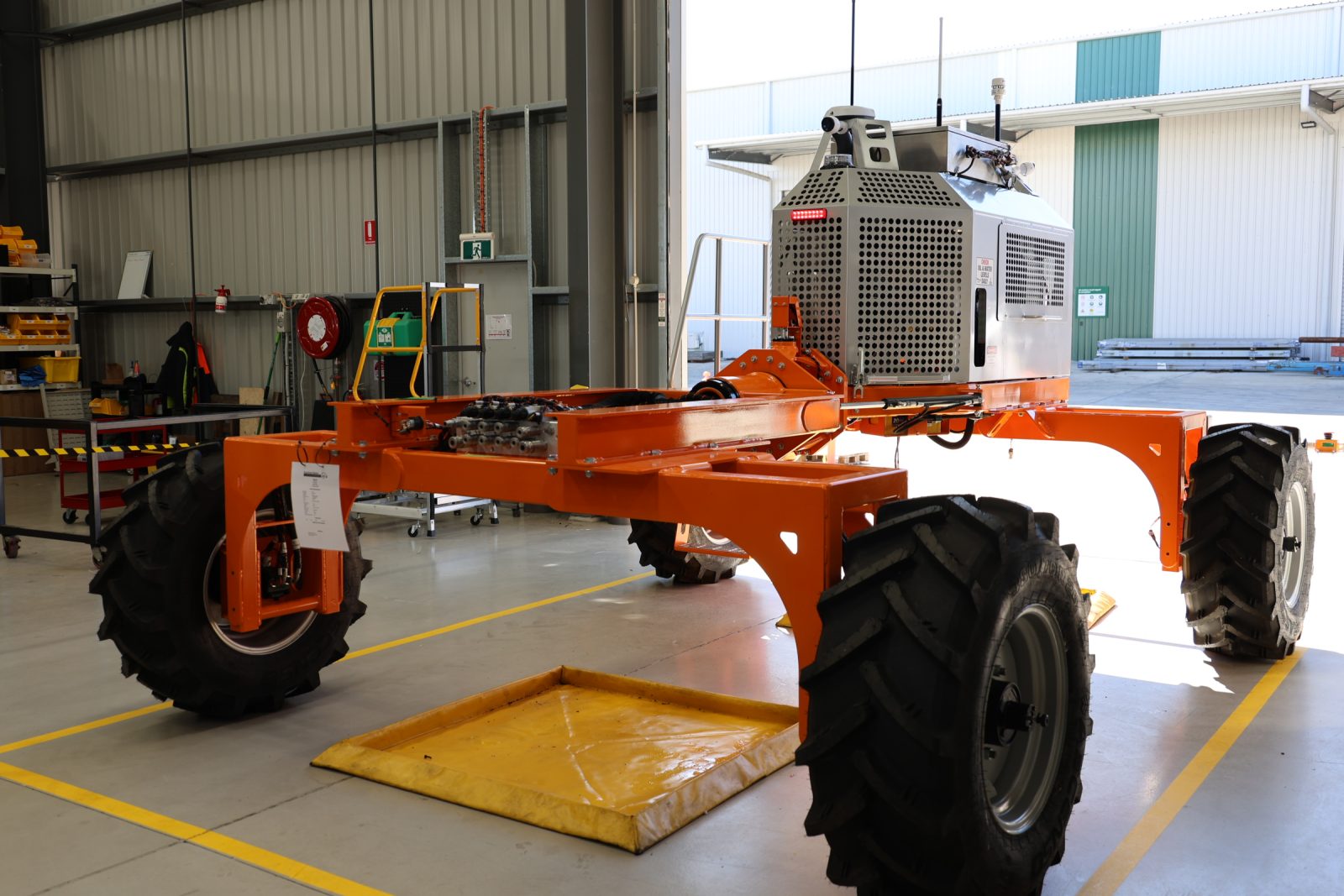
SwarmFarm can build a robot in around 10 days at its Wellcamp facility, and was one of four stops on the 2025 Cotton Collective’s Innovation Bus Tour on Tuesday.
SWARMFARM’S Andrew Bate says the ag sector could benefit from returning to smaller machinery as advances in automation and connectivity enable a shift away from large-scale equipment.
Founded in 2012 by Andrew and his wife Jocelyn Bate on their farm in Central Queensland, SwarmFarm makes machinery to autonomously handle farm tasks including spraying, mowing, and slashing.
Mr Bate is SwarmFarm’s chief executive officer, and gave an update on the future of robotics and SwarmFarm at Cotton Australia’s Cotton Collective held at the Toowoomba Showgrounds this week.
Technology brings opportunity
Mr Bate said emerging technology was challenging the long-held belief that “bigger is better”, as smaller, smarter machines prove their value in modern farming systems.
“If you look at the last 50 years of farming, it’s all about getting bigger, buying up the neighbours, buying more land, leasing more country, buying bigger tractors, bigger planters,” Mr Bates said.
“As a family farm, we did exactly the same thing, we tripled our size in a 10-year period, we bought the biggest tractors we could, we bought the biggest planters we could, the biggest air seeders we could.
“We were on that bandwagon ourselves and it did make us highly successful.
“We bought more land; we scaled really well and efficiently but we weren’t as good a farmers as we used to be.”
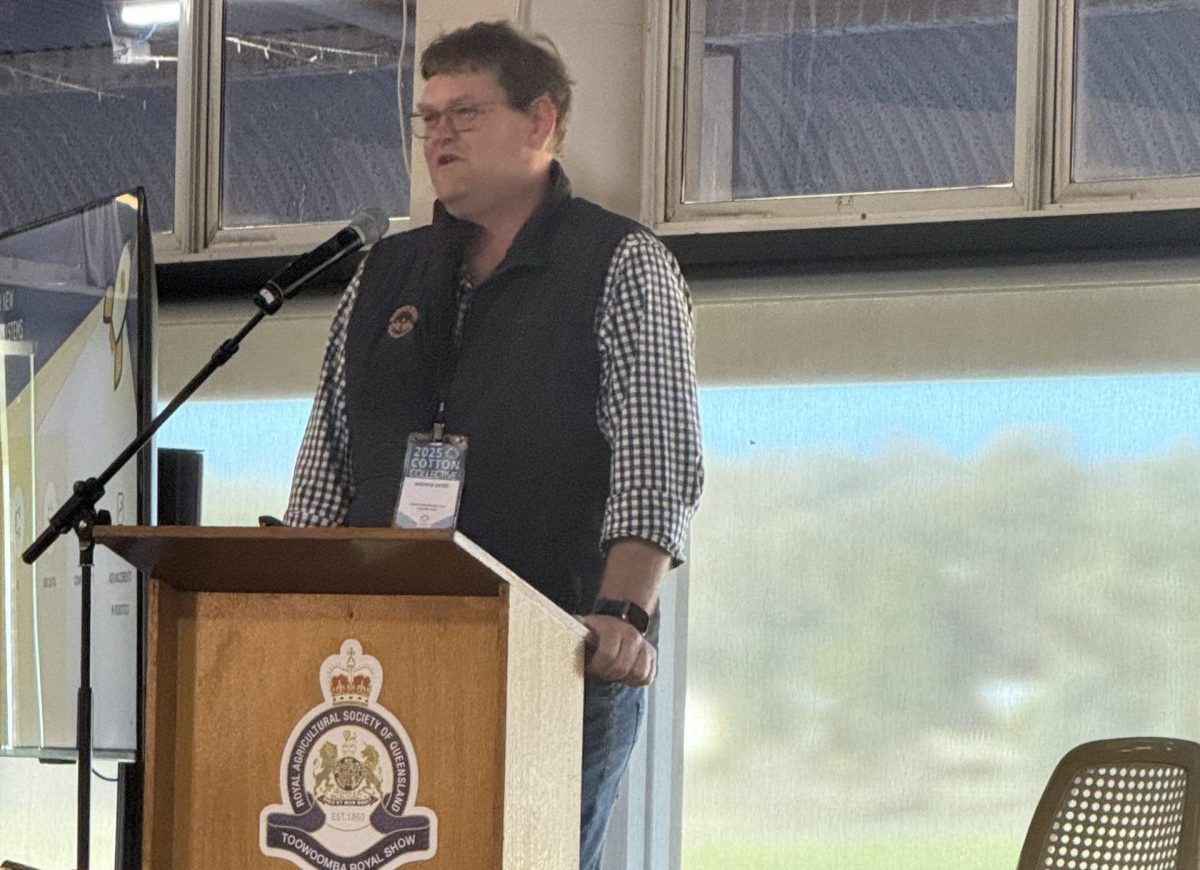
Andrew Bate addresses the 2025 Cotton Collective held at the Toowoomba Showgrounds.
Mr Bate said inefficiencies crept into the operation, from small increases in chemical use, more soil compaction and erosion, and gaps in weed spraying.
“We made the decision to go back to smaller machines because we believed we farmed better when we had smaller, more lightweight equipment.
“You can have smaller machines that are lighter, cheaper, loaded with more technology but manageable, and we can be better farmers.”
Beyond the big three
Mr Bate said the advances in computer vision, artificial intelligence, connectivity via Starlink and other satellite internet providers and robotics were making the switch to a new farming system possible.
“These things weren’t true three years ago.
“It’s really enabling robotics, new farming systems and the revolution that we want to see.”
He said to make use of these innovations, the ag sector and growers had to find a way to look beyond the three major farming machinery manufacturers: John Deere, CHN, and AGCO.
“Ultimately, we have three companies that are defining the way we farm.
“If it doesn’t fit in that little tunnel that we’re looking through, that lens at which we farm…it’s not considered practical, and we don’t do it.”
“My agronomist makes recommendations around that, I do my farm planning around that, my crop rotations work around that and the way I do my crop protection works around that.”
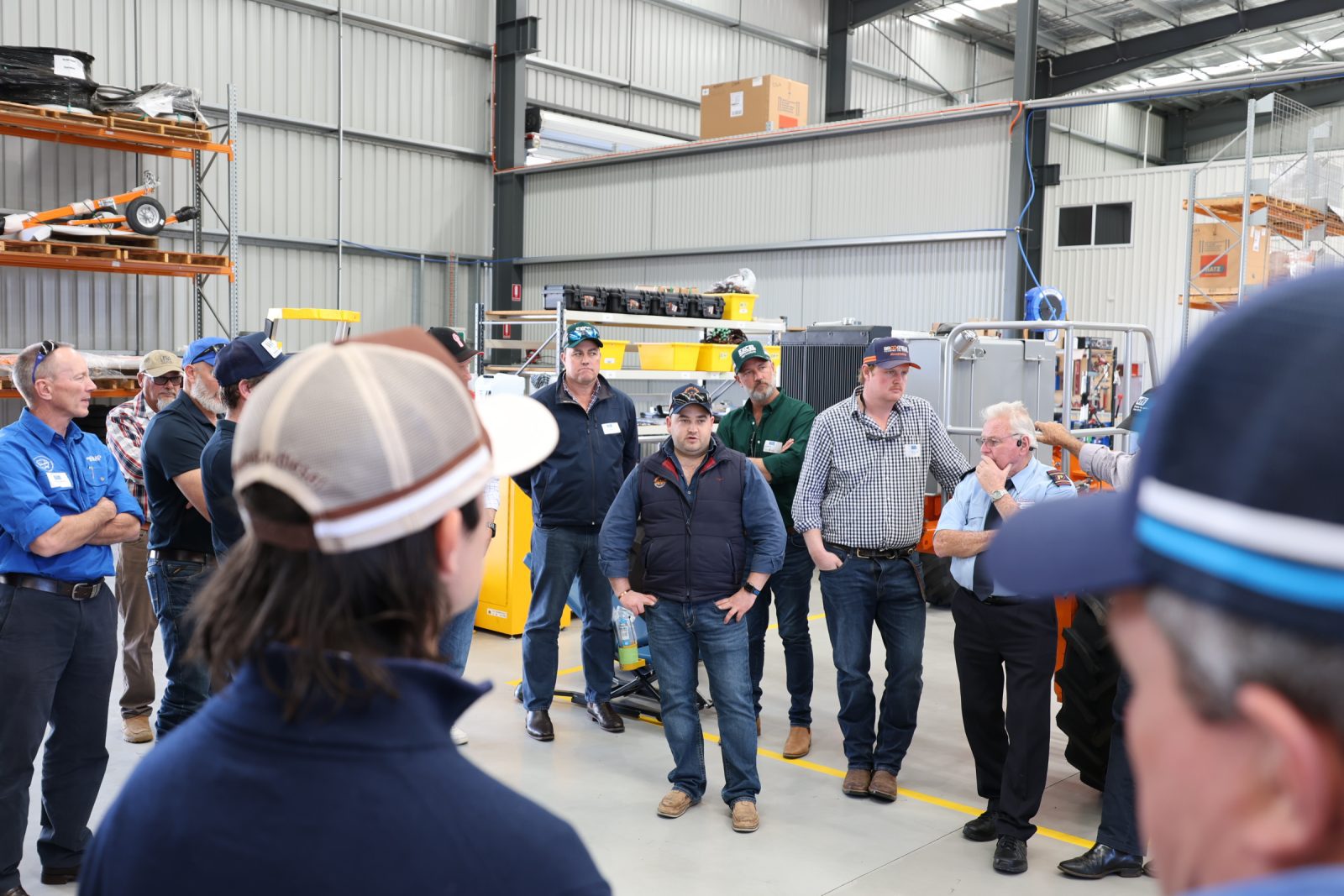
SwarmFarm sales representative Sam Finlayson fields questions during the Cotton Collective visit to SwarmFarm’s Wellcamp site on Tuesday.
He said to move forward as an industry “we truly need new thinking, new farming practices, new ways to produce our crops”.
“For these new field practices and the revolution in farming and farming practices is to be true, it can’t be done by the thinking of just three companies.
“We literally need not hundreds but thousands of innovators around the world thinking about their soil types, their climate, their crops, their production systems and then developing the next generation of farming tools.”
Autofill ready to trial
Mr Bate said the company currently has 250 machines in the field, with spot-spraying their most common use.
“Australia is the biggest adopter of spot-sprayer technology in the world.
“There’s now more Weed-It technology going out on board our robots than the entire tractor and sprayer market put together.”
He said the next major step forward the company was working on was implementing autofill technology into the robots which would enable them to “dock and refill themselves”.
“Autofill is a big one because it’s the last piece of the puzzle for us.
“If we’re going to have big productivity with small robots that are lightweight, low cost, low impact, and loaded with technology, they have to be able to refill themselves so you can get that productivity.”
Mr Bate said three farmers were about to trial the autofill technology.
He said while the smaller tank size meant the robots took longer to complete a job than traditional machinery, in one trial he was able to leave the farm, complete another task, and return to find the fertiliser application finished.
“It was a revolution for me.
“It changed my thinking on how we’re getting productivity on farm.”
Grain Central: Get our free news straight to your inbox – Click here
HAVE YOUR SAY