
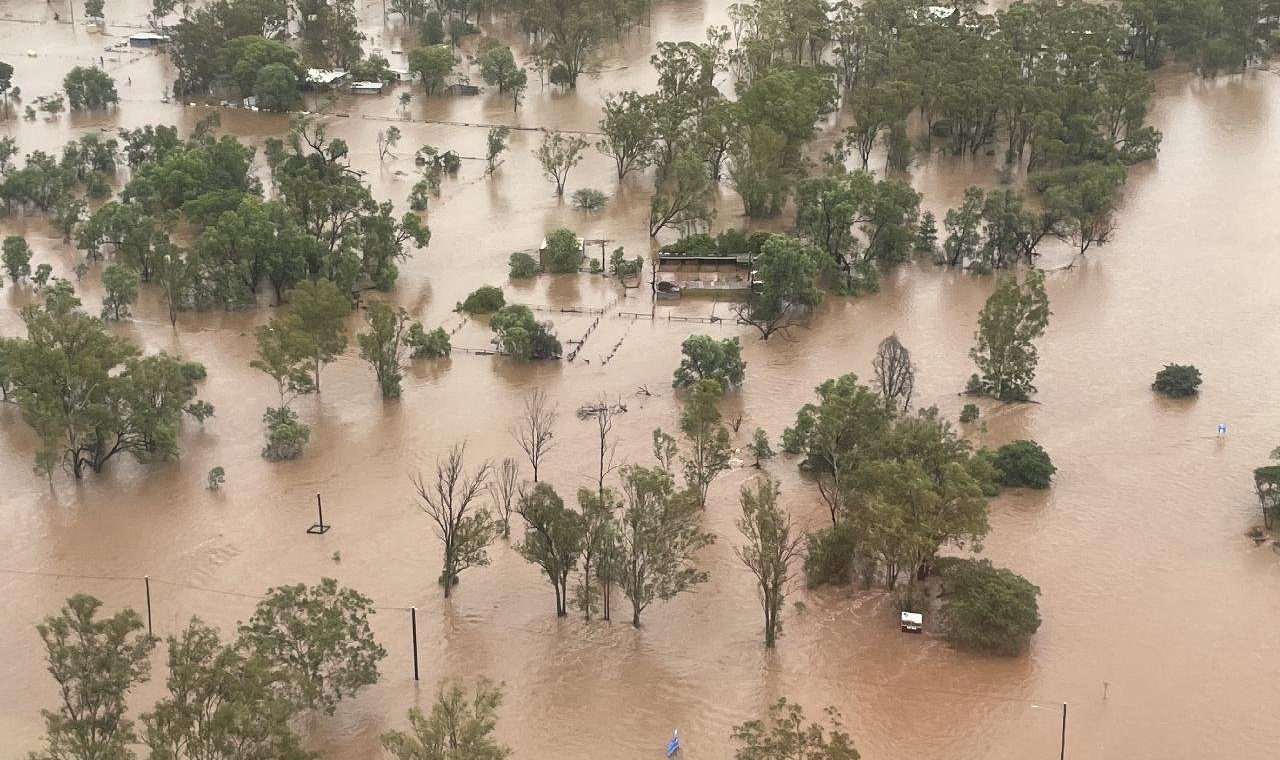
The Clermont region experienced widespread flooding last week. Photo: Qld Fires
RAIN from ex-Tropical Cyclone Koji has revived Central Queensland’s summer-crop prospects, prompting some growers to prepare to plant sorghum or mungbeans and boosting existing cotton crops.
Although patchy, most CQ cropping regions received some rain early last week, with the Bureau of Meteorology’s Clermont gauge topping its list with 260mm in the week to January 18.
Other regions such as Emerald and Springsure received 134mm and 107mm respectively; further south, Biloela recorded 32mm, while Theodore got 31mm.
The rain caused significant damage on some cattle, cropping and residential properties in CQ and other parts of tropical Qld, with large numbers of livestock lost, flooding in towns including Clermont, and damaged roads.
However, with only a few weeks left in the summer-cropping window, the rain’s timing was ideal for growers still able to plant sorghum or mungbeans.
The rain has also brought hope to CQ cotton growers, who received no new irrigation allocation this season, and were relying on carryover water or follow-up rain to sustain the crops.
Clermont grain grower Ross Faint said his family property received more than 300mm from ex-TC Koji after harvesting a big winter crop.
“We needed probably 100mm-plus to…think about planting,” Mr Faint said.
“The first 100mm was great.”
He said now that the rain has mostly stopped, they are waiting for paddocks to dry out.
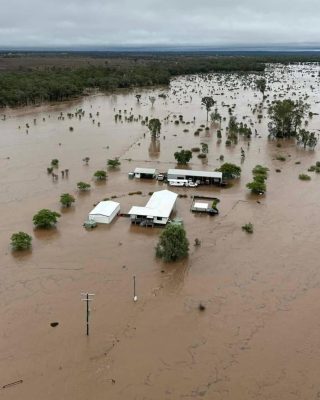
The Qld Government signed off on a disaster declaration for Clermont last week. Photo: Dan Purdie MP
“We’re waiting for it to dry up and then we’ll start doing some spraying.
“We’ll plant sorghum; we’ve got country ready.
“We plant sorghum right through until the beginning of February, so we still have plenty of time to plant.”
North of Clermont, Kilcummin grower Brad Mifsud said he had recorded about 400mm for January to date, around double the monthly average.
He said there “wasn’t anything much planted” before the rain event, which was “perfectly timed” for summer crops.
“There was a bit of area planted but it was very small,” Mr Mifsud said.
“You would say the vast majority would be going now after this rain.”
Mr Mifsud said planting would be delayed by five to seven days due to wet paddocks, but growers would be keen to get under way once the ground dried out.
Potential irrigation allocation
While the sorghum planting window remains open, the one for cotton has long closed.
With little rain falling in the catchment over the year, Central Highlands growers had zero water allocation for cotton grown over this summer.
According to Cotton Australia’s October report, 14,000ha of irrigated cotton was still expected due to carry-over water from the previous season with the hope of follow-up rain.
CA said there was also about 4000ha of dryland cotton expected.
Cotton Grower Services Emerald branch manager Maritz Du Plessis said even with carry-over water, growers were planting what was called “walkaway cotton”.
He said that was defined as cotton with one or two irrigations on it and if it “turned into something, they would harvest it” or it would be ploughed in.
“There was some carry-over water that basically determined how much walkaway cotton was planted,” Mr Du Plessis said.
In a region known for innovative grow-on cotton, Mr Du Plessis said there had been no prospect of it this season before the rain, which had lifted growers’ hopes for a harvestable or grow-on crop.
It has also given those unable to plant cotton the chance to plant sorghum or mungbeans.
He said before the rain, there was no water to grow the cotton on, and only those few growers with on-farm storage had enough water to have a full crop.
“If you looked a week or 10 days ago, there was no indication that there was going to be any water available…so it’s definitely a big positive.”
He said the area around Fairbairn Dam did not receive as much rain as further north, so it would be premature to estimate the benefit of the rains from an irrigation-allocation perspective.
“There’s flow running through the dam at the moment.
“It’s not big flow; most of the big water fell on the north side of town.”
This will end up in the Fitzroy River catchment, which includes Rockhampton.
“There is water coming into the dam, but everyone is just waiting with anticipation to quantify how much it is.
“This will determine how much allocation the irrigators will get and that will determine if they finish off their cotton, or if they keep on growing it, or if they go back to a cash crop.”
While the rain was not enough to spill Fairbairn Dam, Mr Du Plessis said it has given growers options beyond the current season.
“There’ll be some mungbeans and sorghum going in now that will get a cashflow for the guys which will be good and gives them hope for next spring.
“If we are lucky and we get another late-season [rain], they might put some chickpeas in again in the winter.”
Optimal rain for Biloela
In the southern parts of CQ, growers received optimal rainfall to kick-start the majority of summer-crop planting.
Elders rural Biloela agronomist Gavin Lotz said the region had falls of 30-80mm over the past week.
“It’s been good rain; the right rain for the right time,” Mr Lotz said.
He said small areas of sorghum had gone in previously, but most people will start planting after the topsoil dries out.
“There are guys that have a bit of stuff in the ground who will benefit.
“There has been a bit go in, not big acres.”
“This will really kick off our main planting window.”
Grain Central: Get our free news straight to your inbox – Click here
HAVE YOUR SAY