
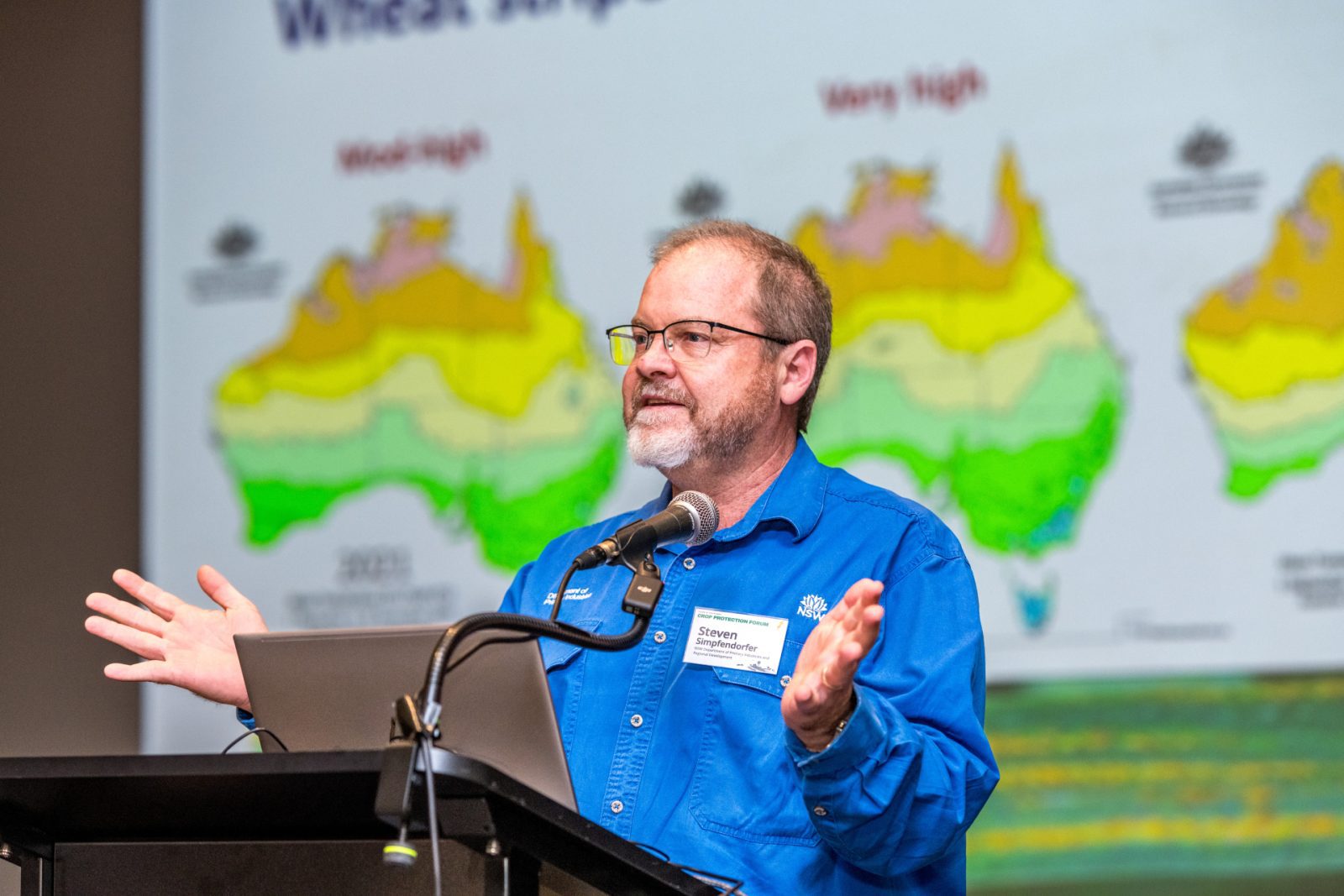
Steven Simpfendorfer
SCIENTISTS from the NSW Government’s Department of Primary Industries and Regional Development (DPIRD) are taking the lead on multi-million-dollar research projects focussing on tackling soil-borne diseases that are costing Australian crop farmers more than a billion dollars a year.
The projects are part of the Grains Research and Development Corporation (GRDC) Soilborne Disease Initiative, a coordinated $34.6 million, five-year, Australia-wide research program.
GRDC estimates soil-borne diseases cause $1.71 billion in lost grain production annually nationwide, including $1.23 billion in wheat alone.
The research projects are part of the NSW Government’s record $1B biosecurity investment to protect and boost the economic growth of the state’s $25B primary industries sector.
Integrated disease management
The research, which is focused on fusarium crown rot in grains and cereals and Sclerotinia stem rot in broadleaf crops will provide growers with integrated disease management strategies to minimise yield loss and economic impacts.
Integrated disease management strategies could include a combination of crop rotation, stubble management, varietal disease tolerance, strategic fungicide use and novel strategies such as application of biological control agents.
Integrated disease management strategies could include a combination of crop rotation, stubble management, varietal disease tolerance, strategic fungicide use and novel strategies such as application of biological control agents
Minister for Agriculture Tara Moriarty said the partnership between the NSW Government and GRDC was “vital to provide growers with the knowledge and tools to tackle soil-borne diseases on their farms”.
“This initiative will provide crop producers with the scientifically proven disease management strategies so they can remain productive as part of the state’s annual primary industries output worth $25.5 billion,” Ms Moriarty said.
“These projects will bring wider benefits to the economic growth of NSW and maintain regional biosecurity expertise to respond to endemic and exotic crop disease issues.”
GRDC chair Sharon Starick said soil-borne diseases accounted for more than 50 percent of total losses from disease in grain crops.
“As part of the program, which builds on past research, we aim to equip Australian grain growers with practical, economic and innovative soil-borne disease management strategies that reduce the financial impact of these diseases on their farming businesses,” Ms Starick said.
Fusarium crown rot mainly affects winter cereal crops including wheat, barley, durum wheat and triticale and is a major issue in dryland farming systems across Australia, including NSW.
It is estimated to cost growers in NSW and Queensland around $112M annually.
Sclerotinia stem rot, often called “white mould”, is a major fungal disease that affects a range of broadleaf crops, particularly in higher rainfall or irrigated systems, including canola, chickpea, lupin, and faba bean.
It is estimated to cost NSW southern region growers around $70M annually.
The projects will also have a strong focus on skills transfer of research methodologies and capacity building to support the management of future soil-borne disease issues.
NSW DPIRD plant pathologist Dr Steven Simpfendorfer, a national expert on Fusarium crown rot, is leading the state’s contribution to that disease theme and DPIRD broadleaf crop pathologist Dr Kurt Lindbeck is leading the national theme on Sclerotinia stem rot.
GRDC managing director Nigel Hart said “bringing current and new research together in a highly effective multi-disciplinary way” was one way to demonstrate to growers and advisors that the organisation was aware of the critical nature of these diseases.
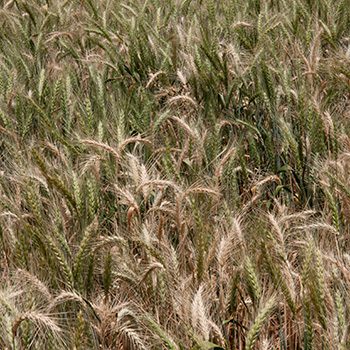
Fusarium crown rot is one disease being studies as part of the initiative
“By bringing together Australia’s leading researchers and communication and extension specialists, we’re ensuring growers and advisers have the information, support and confidence they need to adopt and implement new and improved disease management strategies,” Mr Hart said.
Regional design
“To help address the specific needs of the northern cropping regions, nodes will be developed in partnership with NSW DPIRD, University of Queensland, and the University of Southern Queensland.”
NSW DPIRD director cropping systems Guy McMullen said it was imperative that NSW growers had strategies designed for their regions.
“NSW growers need regionally proven integrated disease management strategies so that soil-borne diseases do not become an economic barrier to continuing and further adoption of environmentally beneficial farming practices,” Mr McMullen said.
“Without such intervention, growers may have to resort to more aggressive stubble management practices such as burning and cultivation, which have associated negative impacts on the environment from soil erosion, air pollution through increased frequency of dust storms, and greenhouse gas emissions.
“The capacity building part of these projects is critical to ensuring the availability of expertise to respond to sporadic issues with endemic diseases and regional biosecurity capacity in the event of exotic incursions.”
The importance of managing soil-borne diseases has increased as growers adopt conservation cropping practices, in particular stubble retention, which has associated environmental benefits of reduced soil erosion, reduced air pollution and greenhouse gas emissions, increased water use efficiency, and improved drought resilience.
Soil-borne diseases also reduce nitrogen use efficiency, which not only increases the economic impact to farmers but also elevates greenhouse gas emissions through the need to apply more artificial fertiliser to compensate.
Recent crop vulnerability studies have highlighted that the impact of soil-borne diseases will increase further under future climate scenarios making this is a priority area for future sustainable land use and nature positive research.
Source: NSW Government
HAVE YOUR SAY