
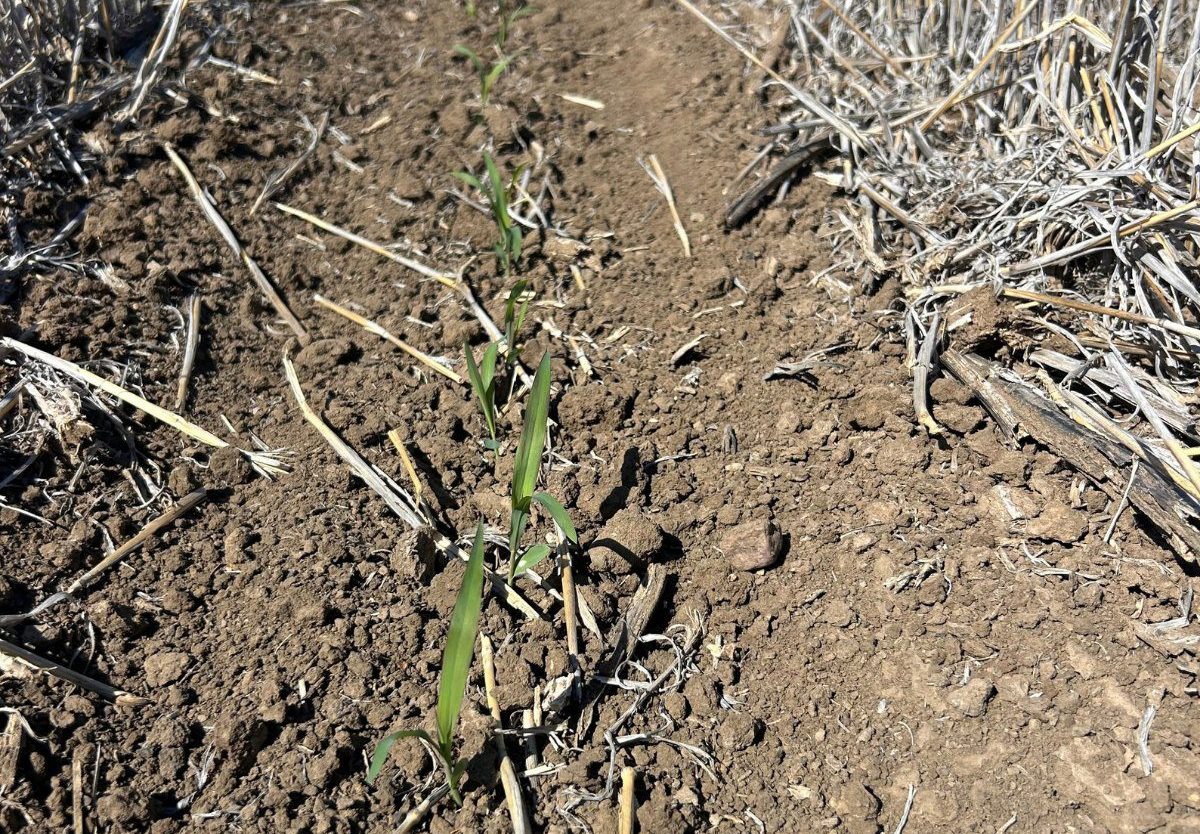
Sorghum planted in early September, Goondiwindi region. Photo: Pioneer Seeds
RECENT rain has largely failed to deliver the soil moisture needed to kickstart sorghum and dryland cotton planting in southern Queensland.
Northern New South Wales has fared better, with more consistent falls boosting early-planted sorghum and dryland cotton planting expected to gather pace.
Despite consistent cloud cover, rainfall across the Darling Downs has been patchy, with falls in the week to 9am today including: Dalby 28mm, Felton 18mm, Macalister 21mm and Jondaryan 12mm.
Further west, totals were higher across the Maranoa, where Mitchell recorded 114mm, Surat 68mm and Roma 63mm.
In northern NSW, falls were more consistent, with rain in the week to 9am today including: Wee Waa 66mm, Narrabri 38mm, Moree 30mm, and Mungindi 25mm.
NSW had the benefit of earlier August rain, while southern Qld had received little to no rain ahead of summer-crop planting.
Qld falls patchy
Dalby-based Elders agronomist Millie Bach today said the region’s falls had been variable, with “pockets that’s have had better rain but, for the most part, it’s gone nowhere”.
“It sort of makes it look wet, but the second the sun comes out, there’s a crust on it,” Ms Bach said.
“The moisture that was there in our fallows has probably just disappeared down the profile because we haven’t had the rainfall coming through.
“Instead of it being five or six inches from the top like we would normally see coming out of winter with some winter rainfall, it’s probably maybe gone sort of 30cm from the top.”
Ms Bach said most of the Downs needed more rain before summer-crop planting could start.
“I would say 80 percent of people still can’t plant unless we get more rain because it just hasn’t been enough rainfall.”
Ms Bach said growers were “still fairly pessimistic” about the summer-cropping season.
“It’s all low opportunity for now until we get this change come through.
“They’re talking storms now for Thursday, Friday and over the weekend.
“If we get under a few lines of storms and manage to get 25mm or something like that…I think we’ll have a crack after that.
“If we don’t get anything out of this next bit that’s coming through, we’ll still be pretty limited on our planting opportunity.”
Ms Bach said dryland cotton planting had been “limited”, with a small amount of irrigated cotton planted.
“It’s probably suffering a little bit with the cooler conditions in the last week or so, but once it’s out of the ground, it’s generally pretty fine.”
She said reduced water availability will see a reduction in irrigated as well as dryland area.
“Hectares are cut back fairly well this season compared to last; we just don’t have the water.”
September and October are generally seen as the ideal months for planting sorghum on the Downs in order to avoid flowering when summer heat is at its most intense in January-February.
Even with limited rainfall, paddocks will not be dry enough to allow machinery access before November rolls around.
Early crops in Goondiwindi
August rain triggered a burst of summer-crop planting in the Goondiwindi and Border Rivers regions that was not possible on the Darling Downs.
Goondiwindi-based Macintyre Independent Agronomists principal Dave Kelly said some crops were planted in late August and early September following rain, or into existing soil moisture.
“We’ve got a couple of clients that got reasonable areas in then, mainly on lighter soils that would plant…with the minimal rainfall,” Mr Kelly said.
“Anything that went in then came out beautifully and it’s looking great.”
Mr Kelly said over the past 10 days, 30-50mm has fallen, and consistently overcast conditions have stopped the ground from drying.
“It’s been a lot of 5-10mm per day sort of things, so it’s good weed-growing weather.”
Mr Kelly said some cotton had been planted before the latest rain, but most growers intended to plant in the coming weeks.
He said most growers were looking for more rain in the coming week to give them enough soil moisture to plant sorghum or dryland cotton.
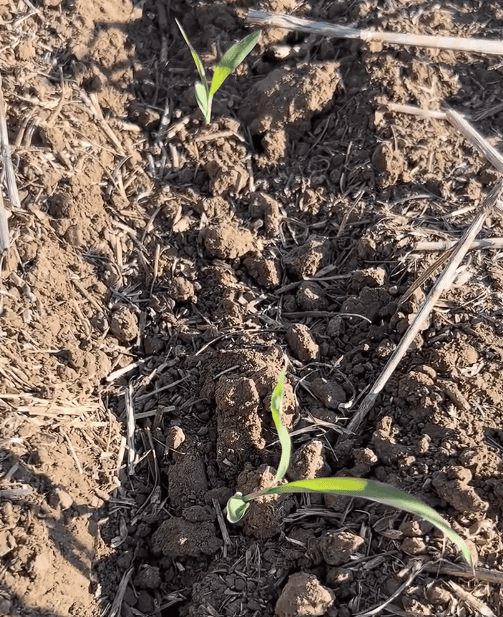
A sorghum crop emerging in North Star, NSW last month. Photo: Pioneer Seeds
“A lot of the country that hadn’t gone to summer crop yet that possibly could probably needs a little bit more than that because a lot of those paddocks, particularly west of town, were ones that didn’t go to winter crop because they were too dry.”
NSW sorghum flourishing
Rain in early August in northern NSW kicked off sorghum planted later that month and into September, and those crops are benefiting from the current falls.
Nutrien Moree agronomist Garry Onus said growers “hit the button and went” as soon as the temperatures were right for planting.
“Our sorghum is all pretty well planted and out of the ground,” Mr Onus said.
He said the Moree district has had on average roughly 70mm for the month.
Also at Moree, B&W Rural Peter Birch said he predicted a larger-than-average sorghum crop in the region as dryland cotton growers “put at least a couple of paddocks” in on August rain.
“The crop’s all looking fantastic and obviously getting very wet,” Mr Birch said.
AMPS Moree-based agronomist Tony Lockrey said he had some concerns with early-planted sorghum due to insect pressures and establishment issues.
“Our sorghum’s looking a lot better than it has been,” Mr Lockrey said.
“It was in early, cool, and a bit steady with the establishment, and a few insects attacked it.
“We’ve got a low stand, but it’s now tillering and growing well.”
Mr Lockrey said wireworm was unusually active in the soil and was responsible for “chewing through a bit of seed treatment and a few seeds”.
“We didn’t actually have to replant anything, but we had a higher mortality than normal to wireworm.”
Cotton progressing
Mr Lockrey said all intended irrigated cotton area was in the ground, but dryland was yet to be planted.
“We tend to hold off and plant that in November.
“It’ll go in on this moisture probably, but it’ll clash with trying to harvest.
“Pretty well in a week’s time, every commodity will be ready to come off at once when it dries out.
“That’ll be the trick, managing barley, wheat, chickpeas, and planting dryland cotton all at the same time.”
Mr Birch said the rain forecast for coming days will increase the optimism of dryland growers.
“All the dryland cotton growers, and there’s a heap of fallow country around, will probably plant at least something on the back of this and they probably won’t be able to help themselves; they’ll probably just keep sowing.”
The ABARES quarterly Australian Crop Report released in September forecast NSW sorghum production at 600,000 tonnes, a drop of 29pc on last season but 5pc above the 10-year average to 2025-26.
The report pegged the state’s cotton crop at 389,000t, or 1.7 million bales, a 40pc reduction on 2025-26.
Qld’s cotton production is predicted to fall by 27pc to 254,000t, or 1.19M bales, from an estimated 108,000ha, down 25pc from 2025-26.
Qld’s sorghum crop is estimated at 1.3 million tonnes, 25pc down on last season due to an expected drop in planted area and yields.
HAVE YOUR SAY