
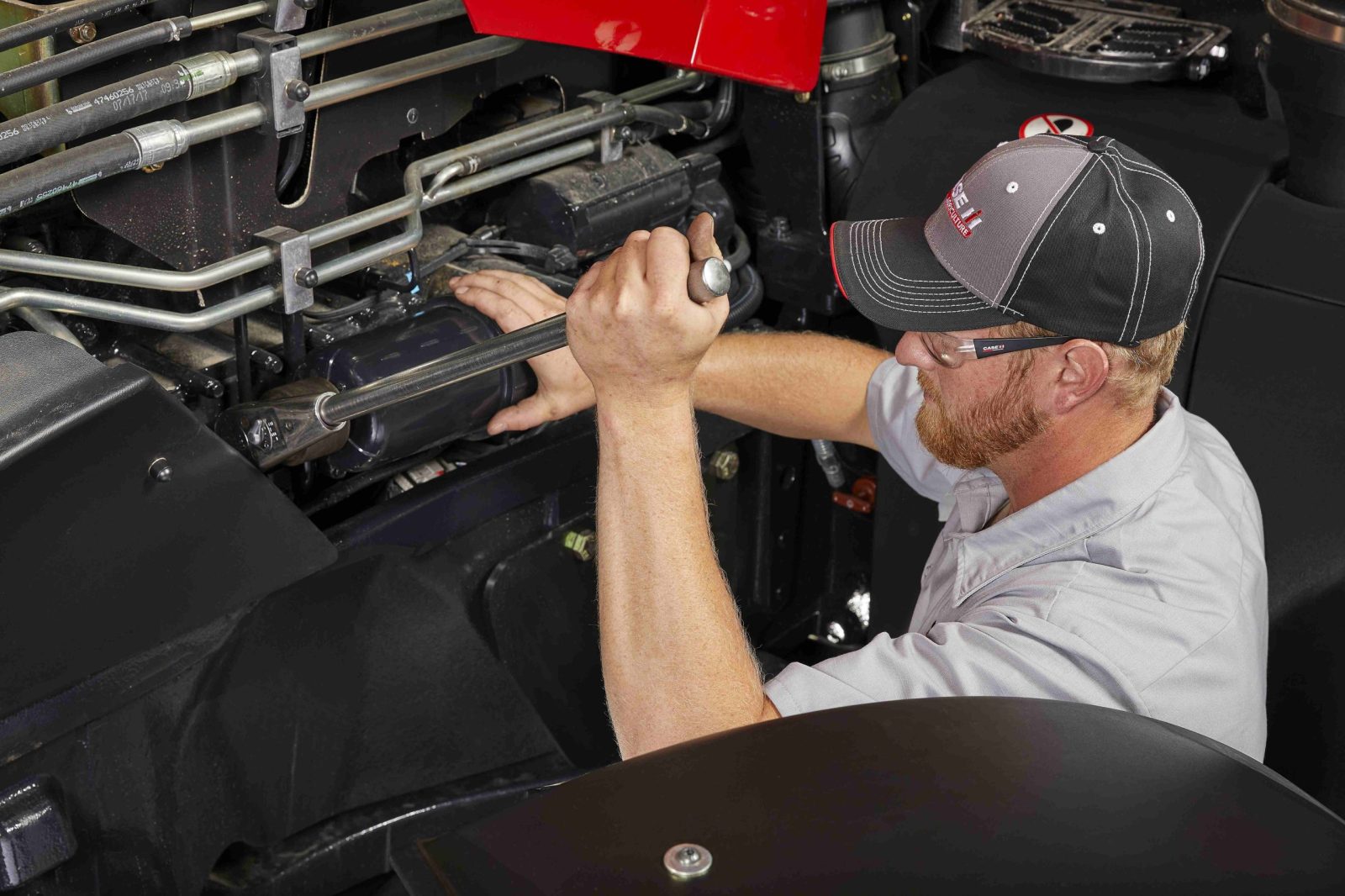
CNH is one of three agricultural machinery companies to belong to the Remanufacturing Industries Council, the initiator of Reman Day. Photo: Case IH
APRIL 23 is Reman Day, when global manufacturers of equipment including agricultural machinery raise the profile of remanufactured parts as a means of saving money, improving efficiency, and helping the environment.
The first annual Reman Day was held in 2018, and is an initiative of the Remanufacturing Industries Council.
Based in the US at Rochester in upstate New York, its members include John Deere, Fendt and Massey Ferguson parent AGCO, and CNH Industrial.
 Reman Day aims to highlight the value of restoring used components to perform like new, in order to extend product life, and reducing waste and reliance on new raw materials.
According to CNH Australia and New Zealand head of parts and service Heath Joiner, this approach is becoming increasingly relevant for farm machinery maintenance as rural and regional industries face ongoing pressure from fuel, freight and input costs.
“Farmers continue to face increasing external financial pressures, and when farm machinery parts require replacement, this can cost them further in time, money and productivity,” Mr Joiner said.
“Remanufacturing is a smart way to help lower costs for farmers, avoid complicated and often expensive rebuilds, and importantly maintain machinery uptime.
“It not only supports farmers’ bottom lines, but for our industry, it also plays a critical role in reducing waste and conserving natural resources.”
CNH globally is targeting 90pc recyclability across new products by 2030.
In 2024 alone, CNH Reman globally reduced raw material consumption by approximately 5200 tonnes by refurbishing used components.
Up to 85pc of a CNH engine can be salvaged and remanufactured multiple times, significantly extending its lifecycle value.
Environmental benefits are also substantial, because remanufactured parts can require up to 85pc less energy to produce compared to new components.
As well as being a more affordable option for Case IH and New Holland farm machinery owners, remanufactured parts are OEM-backed and come with a two-year warranty.
CNH Reman offers farmers access to thousands of available parts, across more than 20,000 applications.
This includes transmissions, drivelines, engines, electrical components, harvest parts, and hydraulics.
“Our local dealers support remanufacturing Case IH, New Holland and CASE Construction machinery parts because they too know that it is a smarter way to keep farms moving with less costs, less downtime and more value from every machine.”
“Reman Day is a good reminder to keep valuable materials in use for longer and reduce the need for new raw resources.”
John Deere is also promoting the benefits of Reman, and has more than 2300 Reman parts available across its agricultural, professional turf, construction and forestry equipment range.
John Deere Australia and New Zealand director of aftermarket and customer support Steph Gersekowski said remanufacturing was a key pillar of the company’s commitment to helping customers get the most out of their equipment.
“In the current macro-economic environment, businesses across the board are trying to find efficiencies and optimise their operations, and we understand that having the power of choice when it comes to what parts you use to maintain and repair your equipment is more important than ever,” Ms Gersekowski said.
“Our John Deere Reman portfolio offers a cost-effective alternative to genuine original equipment manufacturer parts; Reman parts on average cost 20 to 30pc less than brand new OEM parts.
“Despite this lower price point, there are no compromises on quality or performance, with Reman products fully inspected, rigorously tested and built to the latest specifications.”
All John Deere Reman parts are protected by a warranty with up to two years of coverage, including labour costs, if installed by an authorised John Deere dealer.
At Ingham, Honeycombes Sales & Services auto electrician and diesel fitter Dom Succio uses Reman part on equipment including sugarcane harvesters, 9RX 640 Four-Track Tractors, and 6 and 7 Series tractors.
“We use Reman parts as much as we can to support the product, and we find customers are fairly open to repairing their equipment with these parts due to the really good warranty and the fact that John Deere stands by the quality of the parts,” Mr Succio said.
“Using a Reman part also reduces equipment downtime – we have most of the parts in stock, and if we don’t have it here, it’s available at one of our other branches or we can easily get it from the Regional Parts Distribution Centre in Melbourne.”
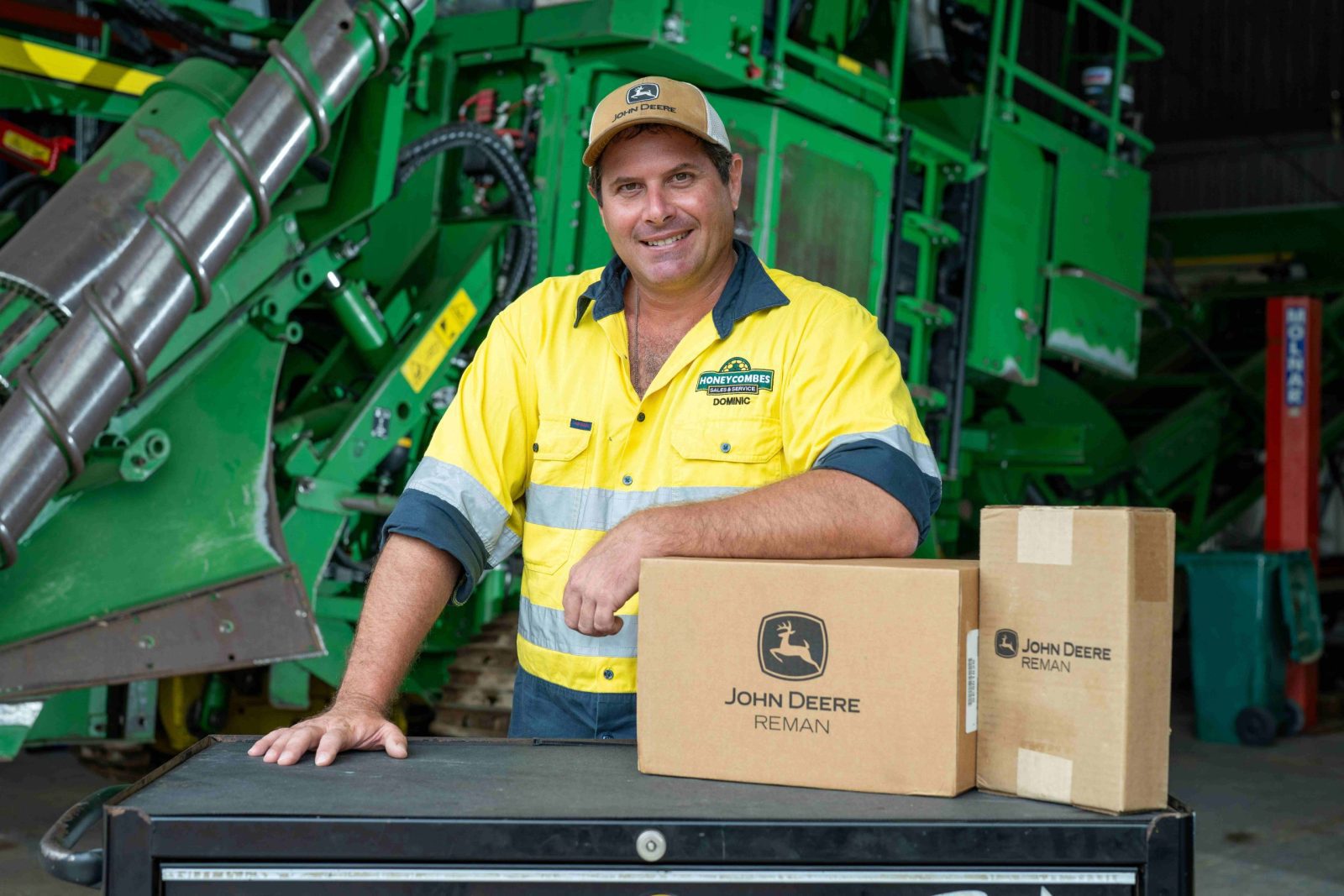
John Deere auto electrician and diesel fitter Dom Succio uses Reman parts to repair machinery at Honeycombes Sales & Service at Ingham, Qld, Photo: John Deere
In addition to being cheaper than new genuine parts, the “plug and play” nature of Reman parts adds to their cost-effectiveness.
“Reman parts are easy to work with and you know you’ve got a product that’s going to bolt straight in and doesn’t require modifications like third-party parts do,” Mr Succio said.
“It’s genuinely cheaper to go with Reman parts; they’re made for the job and they stand up to the harsh conditions these machines are operating in.”
The refund received from John Deere’s core return option also adds to the attractiveness of Reman products.
“The core return is a selling point of the Reman parts, because we can say to customers: ‘This is how much the Reman part is to repair your equipment, and this is how much we’ll give you for your old part.’
Encouraging customers to return the old parts is key to the success of the circular economy created by remanufacturing and the first step in the John Deere Reman process.
After receiving a damaged part, a John Deere dealer will send the “core” of that part to the core return centre, where it is completely disassembled and thoroughly cleaned by either a bake or chemical cleaning process.
All parts are dimensionally verified against the latest John Deere parts specifications, and any part not meeting original factory specifications is either recycled or brought back to specification.
All wear-type parts such as pistons, liners, bushing, bearings, gaskets and O-rings are replaced 100pc of the time with new John Deere parts.
The product is assembled by technicians to exact John Deere criteria, and must pass a thorough inspection and testing process to ensure it meets or exceeds John Deere specifications, meaning it can be offered with a full warranty.
Source: Remanufacturing Industries Council, Case IH, John Deere
HAVE YOUR SAY