
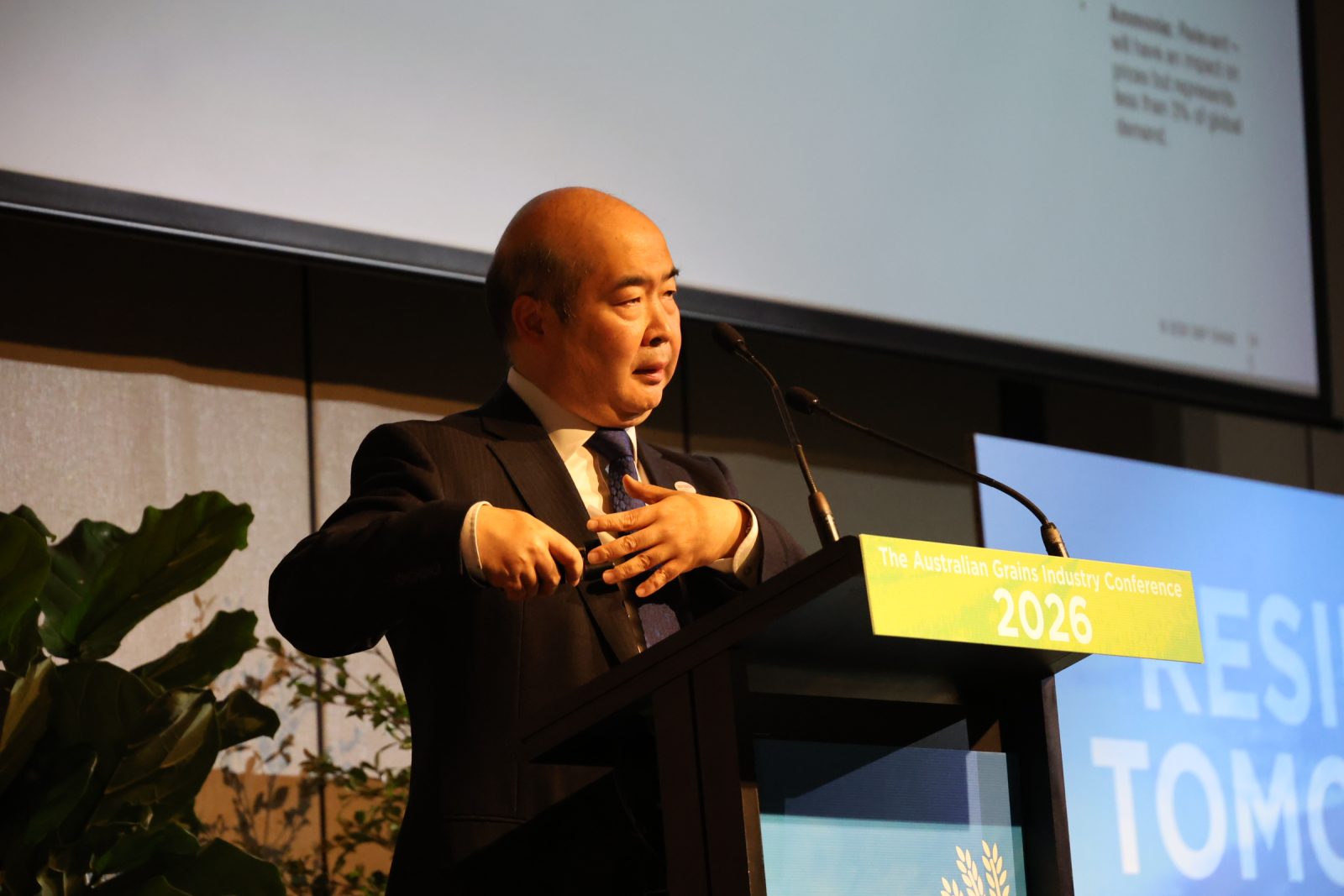
S&P Global’s Isaac Zhao presents at AGIC 2026.
AUSTRALIA’S place in the global cropping cycle saw it cop a broadside from the urea price hike caused by the US-Iran War, but prices have now settled at close to pre-war levels, and can be expected to stay there.
The insight came from S&P Global principal fertiliser analyst Isaac Zhao, speaking at last week’s Australian Grain Industry Conference in Melbourne, where he outlined the potential impact of the inflated global sulphur market on phosphates.
It included some advice for the domestic market, where mono-ammonium phosphate and diammonium phospate — MAP and DAP — are favoured planting fertilisers, and in recent years have come from China, Saudi Arabia, and Morocco.
“For countries like Australia, you need to think about the alternative way to get your phosphate,” Mr Zhao said.
Sulphur at record highs
Entitled Fertiliser: Global perspective and Australian impact, Mr Zhao’s presentation stepped through the markets for the four key products coming from Persian Gulf: sulphur, ammonia, urea, and phosphates.
Sulphur is a byproduct of the petrochemical industry, and Mr Zhao said its supply has taken a sustained hit from the US-Iran War.
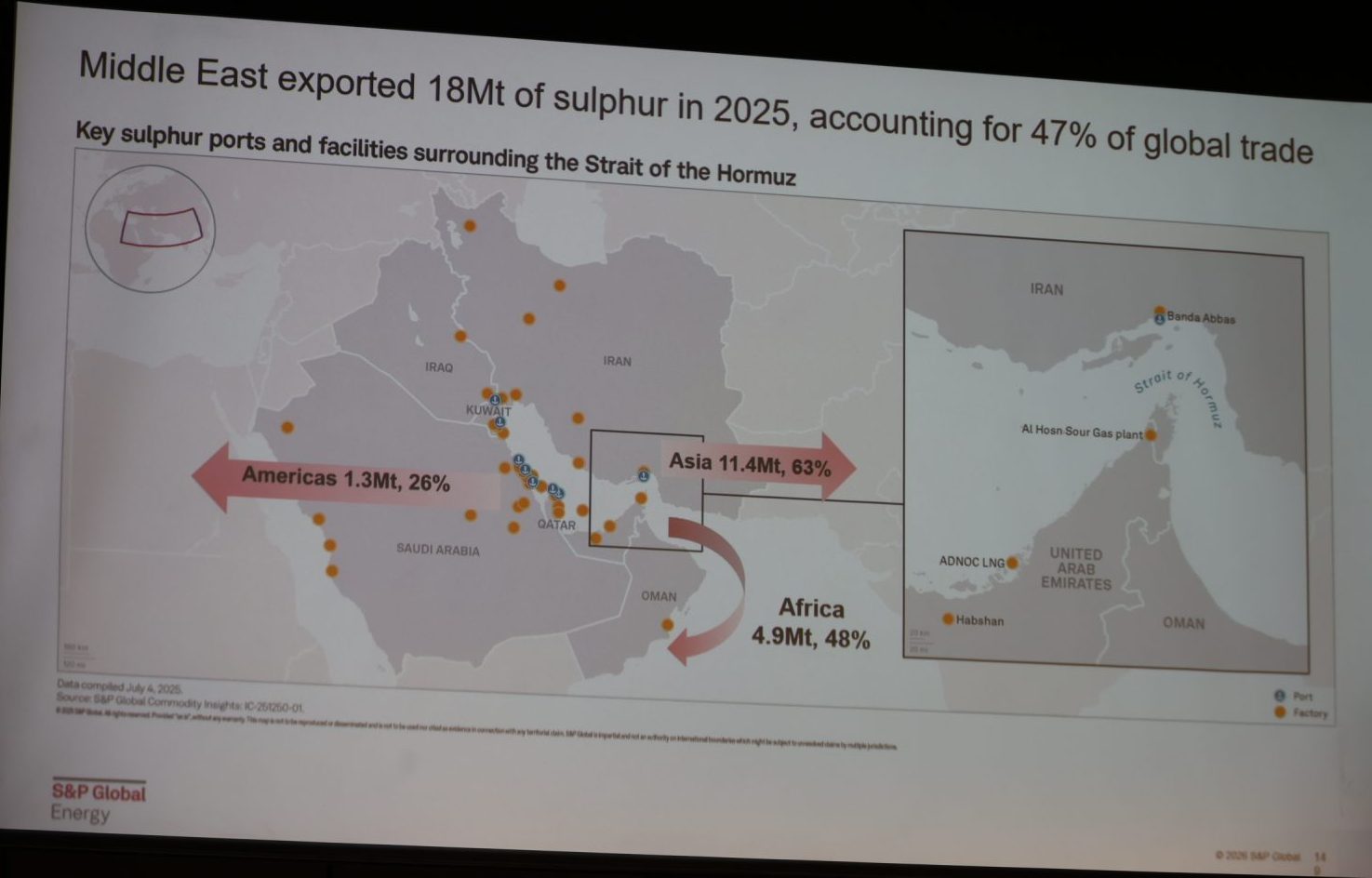
This has impacted the mining sector, where sulphuric acid is used by metals producers in the leaching process, and the fertiliser sector, including phosphate manufacturers.
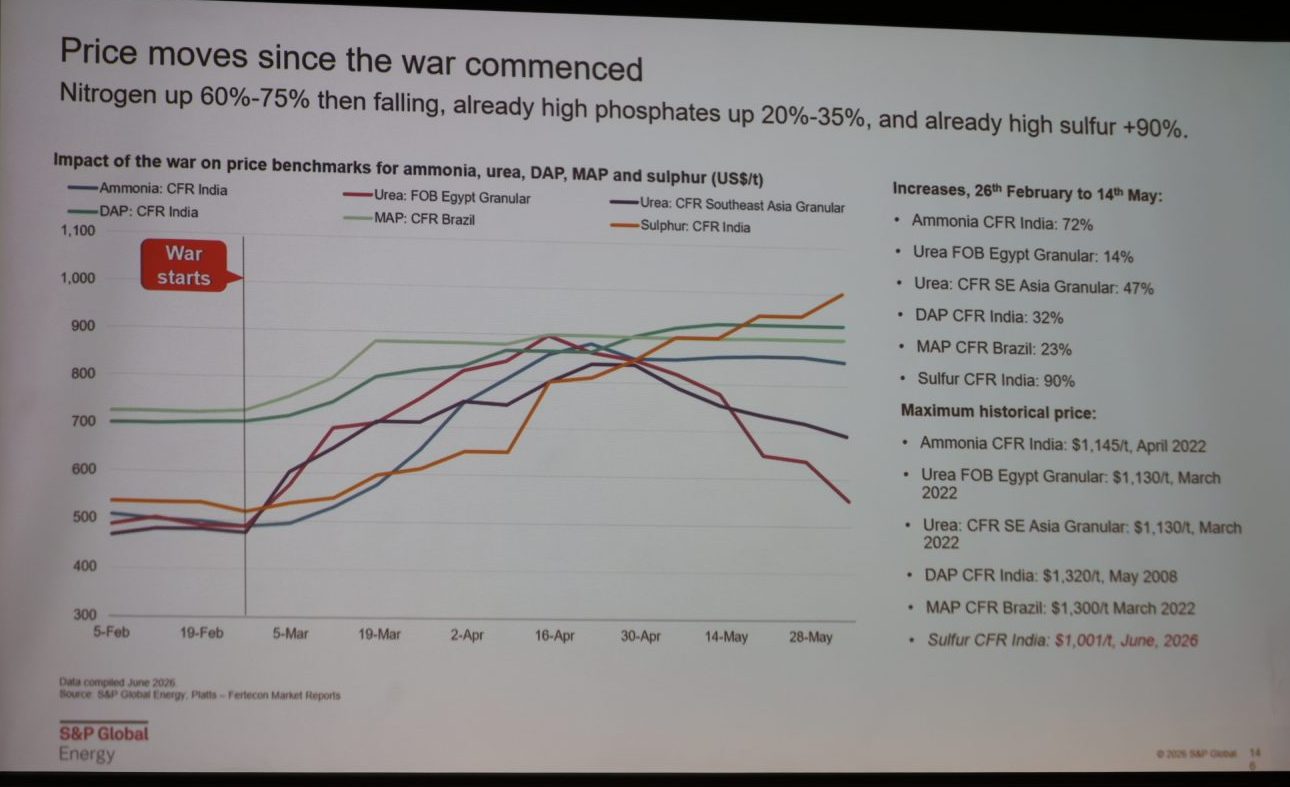
Downstream demand for sulphur from the Middle East is centred in Africa and Asia, where customers have gone from paying in the low $500s per tonne delivered before the outbreak of the US-Iran War to an historical high of $1050-$1200/t.
“In history, the high price has never lasted for so long a time.”
Cautious exports from China
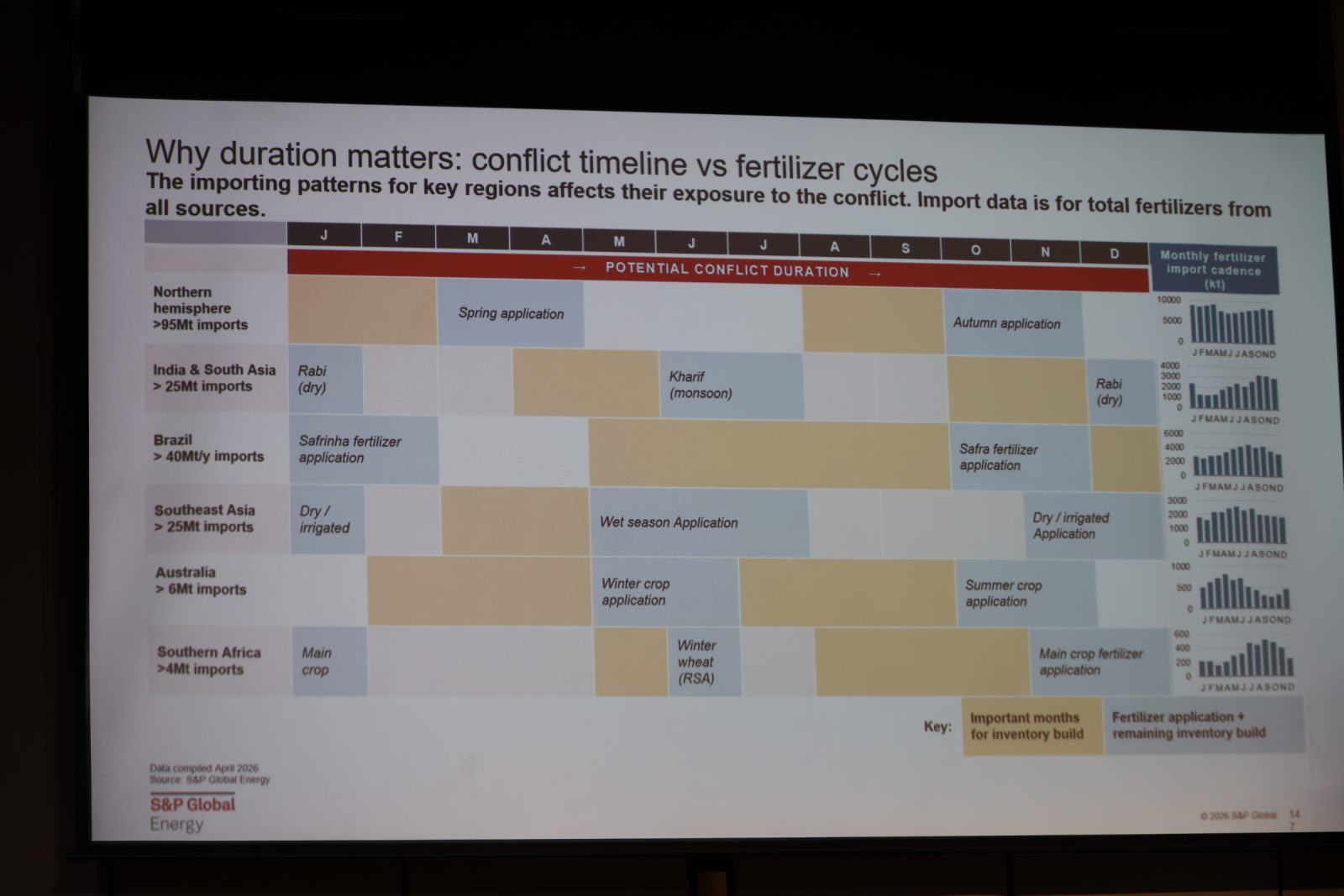
Mr Zhao said Australia imports around 1.5 million tonnes (Mt) per annum of MAP, plus smaller amounts of DAP and SSP, and this has in recent years come from Morocco, Saudi Arabia and China.
Before 2021, he said China accounted for half of the volume into Australia prior to Morocco becoming the major supplier after China restricted exports.
Morocco is still exporting, but because of the US-Iran War and its impact on shipping, the supply situation from Saudi Arabia looks far from stable.
As Saudi’s main MAP and DAP producer, Maaden has not been able to load MAP and DAP cargoes in the Persian Gulf, and more than $130/t has been paid to truck Saudi fertiliser overland for shipping via the Red Sea.
Mr Zhao said this switch to road freight was a “remarkable” achievement, but it does not augur well for reliable volume supply.
To bolster its own food security, China during the first half of this year banned exports of phosphate products, namely DAP, MAP, and single and double superphosphate.
“This was strengthened since this May because the Chinese Government [aims] to compensate the loss of fossil producers on sulphur.
“They arranged three large domestic oil companies to sell their sulphur at a very, very low price…below $300.
“That’s like about $500 below the market level to phosphate producers in China, so that’s a problem.
“Phosphate producers…got the subsidy [so] how could they ask for export permission?
“China is quick.”
Urea loses ‘major concern’ status
Australian urea prices have not yet sunk back to their pre-war levels, but they do appear to have stablised at rates well below their peak seen in April.
Australia imports around 3-4Mt of urea per year, and the Middle East has traditionally supplied 60-65pc.
“This year, because of the reduction of supply from Middle East, Australia relied more on Indonesia, Malaysia, and other countries.”
Australia got no urea ex Persian Gulf until June, and the local market paid the price, which Mr Zhao said rose from US$500/t to $900/t within a month, and has since eased considerably.
“Our expectation for Australia is the price will fluctuate in a narrow range.”
“The duration of the Middle East conflict is still uncertain to us and all people in the world.
“Urea seems no longer to be a major concern.”
This has been helped by China’s return as an exporter.
“China indicated that it would allow export of urea in 2026, but by the time war broke out, China didn’t say when and by what means…it would release product.”
China clarified its intention to start exporting urea in April, when natural gas prices had stabilised, and first shipments loaded in May.
This coincided roughly with India’s announcement of a government tender to purchase urea.
“India kept sufficient patience until its first tender.
“Of course, India gets rewarded.”
“The price of urea just dropped back sharply, and everything seems returned to normal.”
Agronomists across southern Australia say demand for ammonium sulphate was unusually high this year, mostly because it was affordable and available, and because canola benefits from sulphur in its starter nutrition.
Mr Zhao said this remained an option for Australian growers.
Although it does not deliver the same amount of nitrogen as urea, it should be in plentiful supply.
“China exports up to 20Mt of ammonia sulphate every year.”
Grain Central: Get our free news straight to your inbox – Click here
HAVE YOUR SAY