
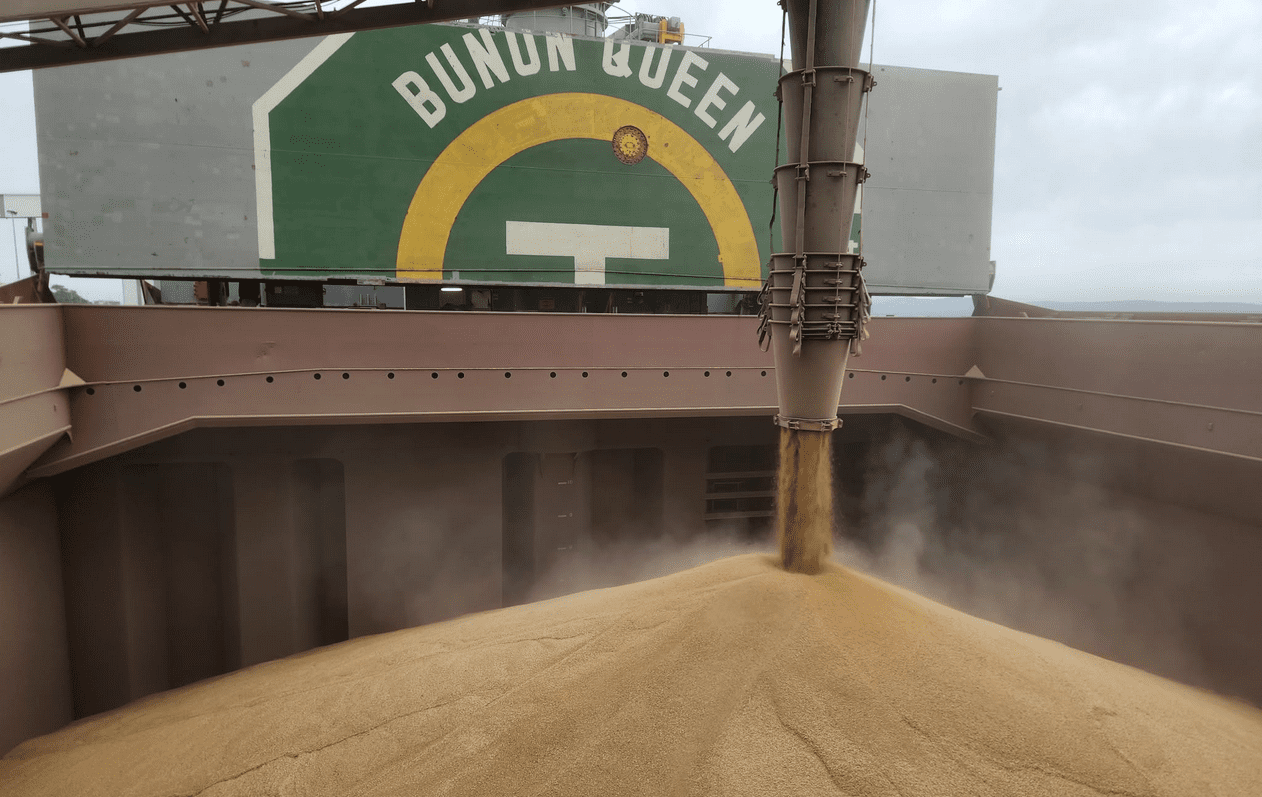
A cargo of Western Australian wheat bound for South Korea loads loads earlier this month. Photo: Commodity Ag
MANY buyers stepped to the sidelines last week on thoughts prices for some grains may continue to decline as parts of Australia’s cropping regions receive rain and the Northern Hemisphere harvest approaches.
There was, however, a lift in oilseed and some minor-crop markets, which saw growers achieving price targets in canola, oats, lupins, and chickpeas as examples with those crops making up 60 percent of all grain traded (on CGX) last week.
International futures exchanges for cereal crops have pushed lower, with CBOT wheat now trading at US100 cents per bushel, or US$37 per tonne, lower than the highs reached in mid May, or down A$52/t.
Argus report prices of physical milling wheat into South-east Asia are down around US$15/t or A$21/t from the highs.
The international grain market is trying to determine whether the sell-off in CBOT wheat futures is overdone and somewhat disconnecting from physical markets, or a leading indicator for physical markets.
Buyers globally have responded by taking a cautious approach to price and stepping aside from buying grain if they can to see if sellers may adjust their prices lower.
There was a similar stance taken in Australian markets, with some beneficial rains adding to the sentiment that prices may decline.
On the other side of the market, growers haven’t been willing to sell into the lower prices here in Australia and in some parts of the world, so the market is in a bit of a stand-off in many cases, with price ideas from buyers and sellers some way apart.
Factors pressuring international wheat prices currently are:
- Northern Hemisphere harvest supply about to be available to the market;
- A large Russian crop to potentially be the international price setter;
- Fund managers (speculators) selling CBOT wheat lower; and,
- Importers and buyers standing aside from buying if they can.
Factors supporting international wheat prices currently:
- Reports of smaller crops in some major world suppliers such as US, Argentina, Australia, and parts of the EU;
- Expectations of less US corn plantings as acres swing to soybeans;
- An underlying lift in demand for biofuel; and,
- Growers standing aside from selling into lower prices if they can.
The reality is grain will trade.
Buyers can’t stand aside from the market for long because they are consuming grain and will be drawing down their stock on hand.
So the question becomes: what price will grain trade?
Growers have a say in this.
Growers have the opportunity to think about prices they would sell for and offer grain for sale at those prices, rather than speculating and watching market price moves each day.
By doing this, growers help make those prices more achievable, because all buyers can see what price levels volume is offered at, rather than speculating themselves that prices may move lower.
Growers can be active participants in grain markets by simply offering grain for sale in a safe, secure way, rather than watching and reacting.
HAVE YOUR SAY