
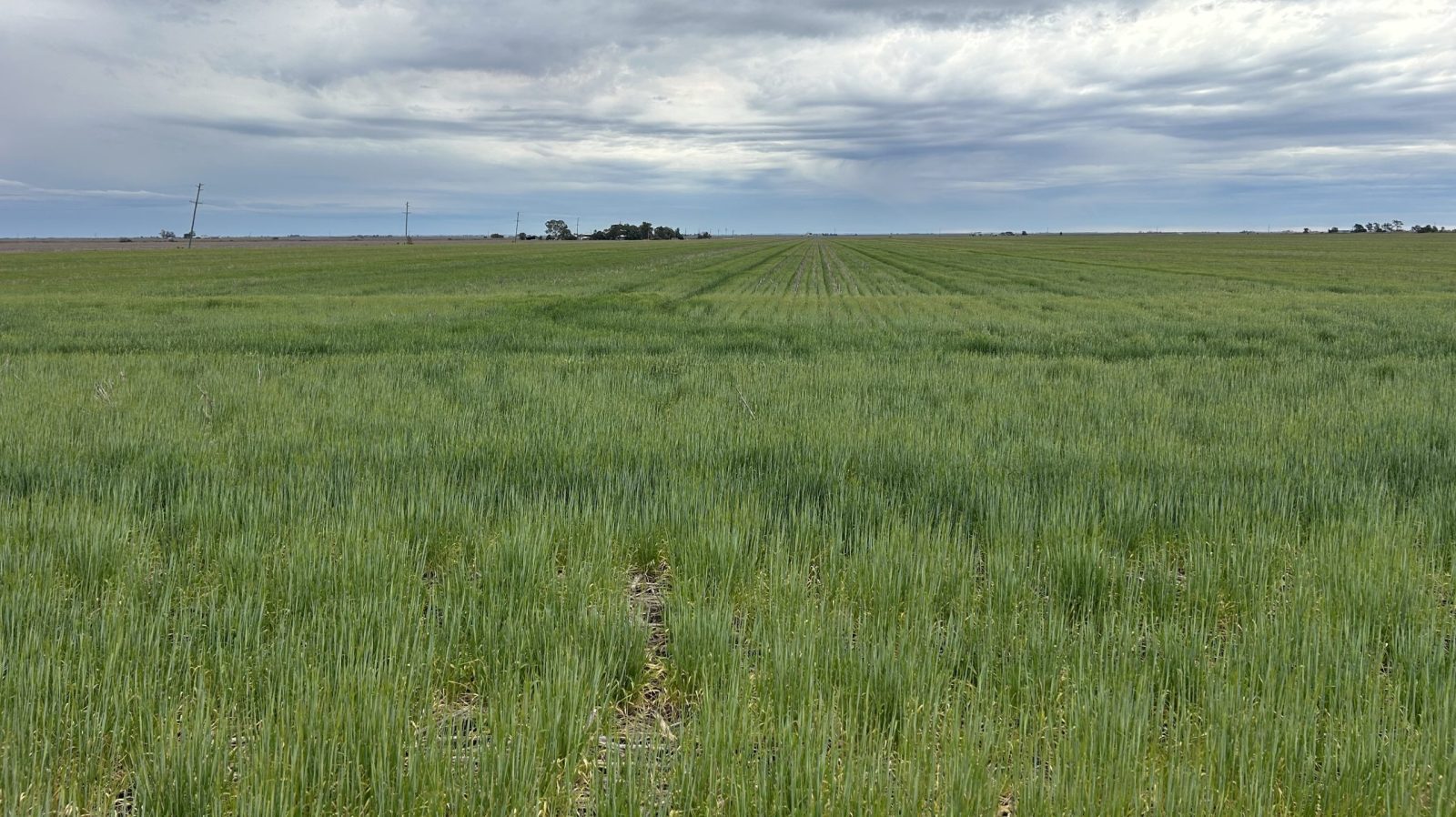
This barley double-cropped after sorghum at Bongeen on the Darling Downs is running to head and will be cut for hay next week. Photo: Marty Cuzens, Internode Agronomy
WHEAT and barley values have firmed in the northern market as production prospects in the region diminish.
The drop has come from below-average yield outlooks and reduced area, with some growers set to cut challenged crops for hay and silage in coming weeks.
In the south, general rain has set up many crops for a strong finish, and growers are selling modest amounts of current-crop cereals stored on farm, but concentrating new-crop sales on canola.
In the north, the revitalised chickpea market is pulling tonnes out of grower storage, and modest amounts of cereals are continuing to sell direct to consumer ahead of harvest, which will start in Central Queensland before the month is out.
| Aug 6 | Today | |
| Downs barley | $418 | $420 |
| Downs SFW | $420 | $425 |
| Downs sorghum | $367 | $370 |
| Mel barley | $335 | $330 |
| Mel ASW | $370 | $375 |
Indicative prices in Australian dollars per tonne.
Time called on some northern crops
Precious little rain has fallen on Qld’s cropping regions in recent days, with Felton on the Darling Downs with 8mm about the best of it for registrations in the week to 9am today.
Northern New South Wales fared slightly better, with registrations including: Coonamble and Gunnedah 12mm; Moree 8mm; Narrabri 11mm, and Walgett 10mm.
One trader said growers are not expecting a seasonal turnaround for the winter crop.
“Sellers are there but it’s hard to buy,” he said.
“It’s going to be dry and it’s going to be tough, and some guys are going to start baling wheat and barley next week.”
Most growers in the northern region are expecting average yields at best, and time has been called on some crops prematurely running to head because of a lack of both in-crop rain and subsoil moisture.
Chickpeas delivered Brisbane are trading at $780/t, up $155/t on their season low in March, and remain the preferred sell for growers watching the weather and weighing up options for cereals stored on farm, and struggling crops.
Pursehouse Rural Pittsworth branch manager Robert Wiemers said Downs growers looking to bale hay now are eyeing demand from cattle and horse customers ahead of the main haymaking window in spring.
“There’s a bit of a failed crop getting around because of the lack of rain, and the demand for hay is pretty high at the moment,” Mr Wiemers said.
The future of the crop demand partly on whether growers have their own baling gear, as most larger operations do.
Bongeen grower Peter Bach regularly plants barley to sell into the local feedlot market, and holds little hope his crop will see the header this spring.
It was planted in early May, ahead of the normal planting time, and at depth to chase subsoil moisture.
“Between frost and drought, it’s not going to make it,” Mr Bach said.
He plans to start cutting the crop for hay next week, and may bale the lot, and not for the first time, ahead of the sorghum planting window.
“We’ll start, and if we get a fall of rain, we’ll stop and let it go on.”
Internode Agronomy principal Nik Fritz said the development and condition of crops varied widely across the Downs, with those double-cropped after sorghum, mungbeans, or cotton struggling the most.
“In cotton, those crops are there for cover and they’ll be sprayed out.”
“Others will make it through, or hay might be a better option.”
In districts including Dulacca and Surat, some crops that were struggling prior to being frosted will be cut for silage for on-farm use, or for sale to feedlots.
While hay offers better returns, silage is a faster and lower-risk alternative.
“It’s probably going to be a hot dry finish, and that’s their best option.”
Mr Fritz said many winter crops were “one rainfall away” from being harvestable.
However, the forecast holds little promise for substantial rain on Qld and far northern NSW crops this month.
A large area of fallow across the region, and the early termination of some winter crops through baling, cutting for silage, grazing, or spraying out, opens the door to a large sorghum plant, provided planting rain arrives on schedule from next month.
The Downs’ new-crop sorghum market is currently trading at around $380/t delivered March-April.
Forecast delivers in south
The forecast lived up to its promise for South Australian, Victorian and southern NSW growing areas in recent days, and has topped up soil-moisture profiles for many crops ahead of spring’s arrival next month.
In Vic, Mallee registrations for the week to today include: Birchip 45mm; Murrayville 22mm; Ouyen 40mm, and Sea Lake 54mm.
In the Wimmera, registrations include: Dimboola 20mm; Warracknabeal 29mm; Horsham 22, and Rupanyup 32mm.
Most SA cropping regions got 15-50mm, and higher registrations included Wirrula on Eyre Peninsula with 64mm, and Clare in the Mid North with 68mm.
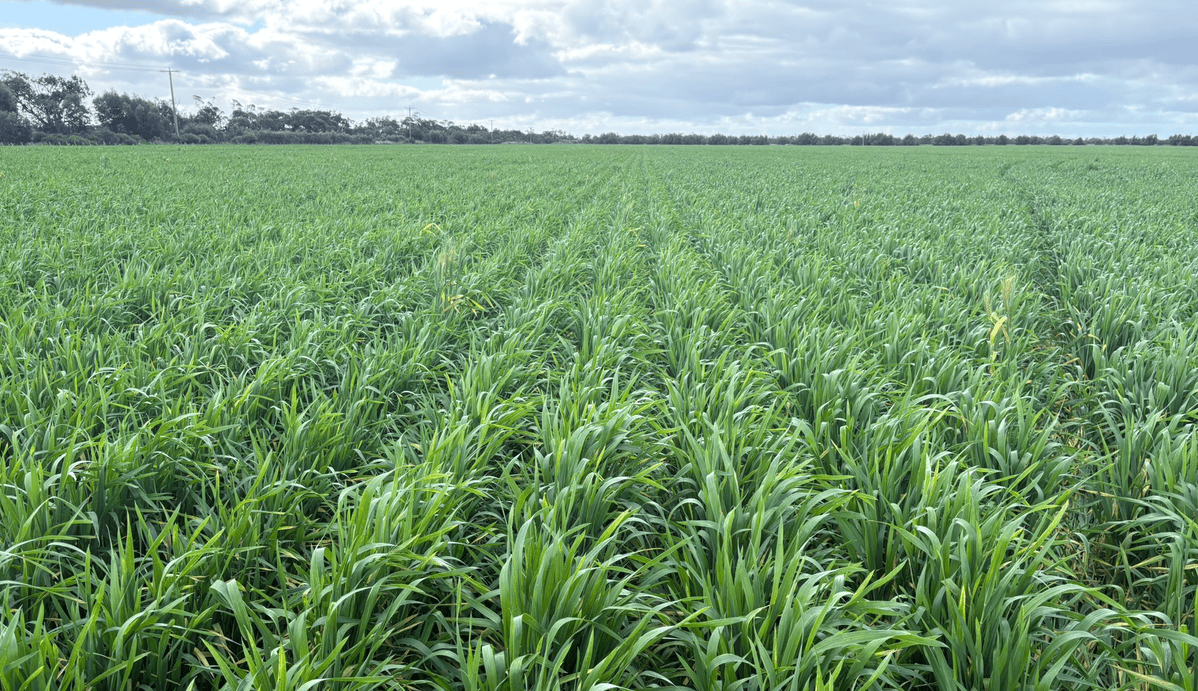
Mowhawk wheat in Victoria’s northern Mallee is expected to push the upper limits of its yield potential this season. Photo: Matt Witney, Dodgshun Medlin
Patchier rain extended into the southern half of NSW, and registrations include: Condobolin 26mm; Mulwala 40mm; Temora 44mm, and Young 48mm.
“That rain was really important for the Riverina,” Pinion Advisory broker Brad Knight said.
“It’s the gate that decides whether grain will go from north to south or south to north.”
With most Riverina crops now looking sure of producing at least average yields, the southern market is juggling strength on the export front against prospects for a big local crop.
“Wheat’s strong from an export perspective, and that market’s more liquid.”
Mr Knight said consumers are confident there is plenty of grain around to fill their needs up to harvest, and the trade appears likely to be a willing seller over October-November easing into the Vic harvest slot.
“With growers, what they’re selling is tidy-up jobs as they get ready for harvest.”
Mr Knight said growers are chipping away on new-crop canola sales, and forward sold estimates of the Vic and southern NSW crop is around 15pc presently.
Growers are active on canola; those that do forward sell are 15-30 percent sold, but there’s a lot of farmers that won’t forward sell at all.”
Grain Central: Get our free news straight to your inbox – Click here
HAVE YOUR SAY