
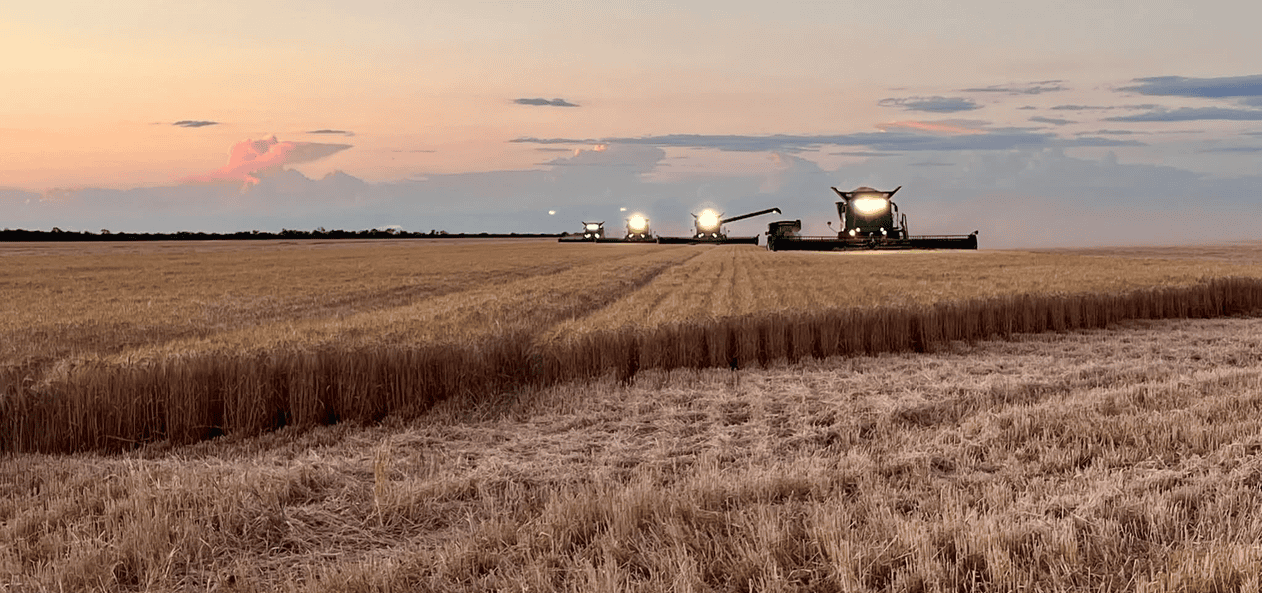
Harvest has started in far northern NSW in the past week, with barley yields on this farm in the North Star district looking like 3.8-4t/ha and test weight around 70kg per hectolitre. Photo: Emma Ostwald, Ost Farming
PATCHY rain across the eastern Australian grainbelt has slowed harvest in parts of the north, and further consolidated yield prospects in the south.
With more than 15mm on the forecast into next week for all Queensland and South Australian growing areas, the New South Wales slopes, and much of Victoria, logistics are factoring into the short-term market.
Some concerns exist about accessing grain in the next week or two if rain limits access and out-turn, and short covering is buffering the feed market against larger falls as yield potential maxes out for some southern crops.
| Oct 1 prompt | Today prompt | Oct 1 for Jan | Today for Jan | |
| Downs barley | $410 | $400 | $412 | $410 |
| Downs SFW | $430 | $425 | $430 | $435 |
| Downs sorghum | $380 | $380 | $380 | $380 |
| Mel barley | $302 | $310 | $308 | $300 |
| Mel ASW | $375 | $385 | $365 | $360 |
Table 1: Indicative prices in Australian dollars per tonne for prompt and January 2027 delivery.
Harvest moves south in north
Rain in recent days has caused minor interruptions to the cereal and chickpea harvest now gathering pace in Queensland.
In the week to 9am today, Central Qld Bureau of Meteorology registrations include Clermont 7mm, Emerald 6mm, Springsure 17mm, and Taroom 23mm, while in southern Qld, the biggest grainbelt fall was Macalister with 14mm.
As with other states, higher registrations were recorded in private gauges, and localised hail has damaged some crops.
With the rain and cloudy weather has come an increase in humidity.
One trade source said barley on the Western Downs at 14 percent moisture is too damp to harvest, and well above the 12.5pc maximum allowable under Grain Trade Australia standards.
The CQ harvest is close to winding up, and more growers in southern Qld and border regions of northern NSW are firing up the headers.
Being the start of harvest, growers have no drier grain to blend it with, so considerable nervousness exists about when harvest will crank up.
While plenty of old-crop wheat remains available in the north, barley supply is tight.
Feedlots growing some of their own barley are storing it on site and buying in what they can off the header from growers in the district so they can use their own grain if deliveries are interrupted by rain.
“Most feedlots are covered to the end of October,” one trader said.
“The supply of wheat is fine, but if October-November is wet and we get good summer, we’re going to be buying barley in.”
The high price of diesel means road freight costs around 50 percent more than it did this time last year, and that has shortened the drawing arc for cheaper southern barley and wheat.
It means the Central West of NSW is about as far south as northern feedlot demand is reaching, although volume from northern NSW is expected once its harvest gets going at pace.
Patchy rain has fallen in northern NSW in the past week, with BOM registrations including 9mm at Gunnedah and 15mm at Narrabri.
On the forecast is 25-30mm of rain spread over coming days, which has sparked prospects for the upcoming sorghum crop.
However, most growers will be looking for at least 50mm to get the sorghum crop established given their limited subsoil moisture.
Parts of south get late soak
In central and southern NSW, double-digit falls for the week included: Condobolin 11mm; Forbes 16mm; Grenfell 26mm; Young 35mm, and West Wyalong 12mm.
In Vic, the week brought soaking rains to some locations, including: Dimboola 54mm; Horsham 71mm; Nhill 43mm; Sea Lake 48mm; Ultima 30mm; Walpeup 46mm, and Warracknabeal 69mm.
Despite expensive fuel, Peters Commodities Wagga Wagga-based trader Peter Gerhardy said barley, corn and lupins have been travelling north into Qld to fill its feed deficit as parts of the south get a soaking.
“Around Horsham, some places had 100mm plus,” Mr Gerhardy said.
He harked back to the adage that a good year for crop yields was often a bad one for hay quality, and vice versa.
“There are crops standing in water, and there’s a lot of hay floating around.”
Wheat crops that have received late-season rain will be lucky to crack the minimum Australian Premium White protein of 10.5pc, and Mr Gerhardy said protein wheat is likely to be in demand.
Given the expense of urea at planting, and the El Niño forecast against the surprisingly kind season for the south, Mr Gerhardy said wheat has not been fed to produce protein,
“They all put urea out early, which promoted growth and not protein.”
While the export outlook for wheat is solid, based largely on the difficulties of the Middle East, sub-Saharan Africa and Asia accessing Black Sea wheat, barley pricing is in the doldrums.
Mr Gerhardy said value-adding barley and also faba beans through livestock remains an option, as does a hold for when the season turns dry.
“If lambs are worth feeding when barley’s at $300/t, they will certainly be worth feeding if it gets to $250.”
Grain Central: Get our free news straight to your inbox – Click here
HAVE YOUR SAY