
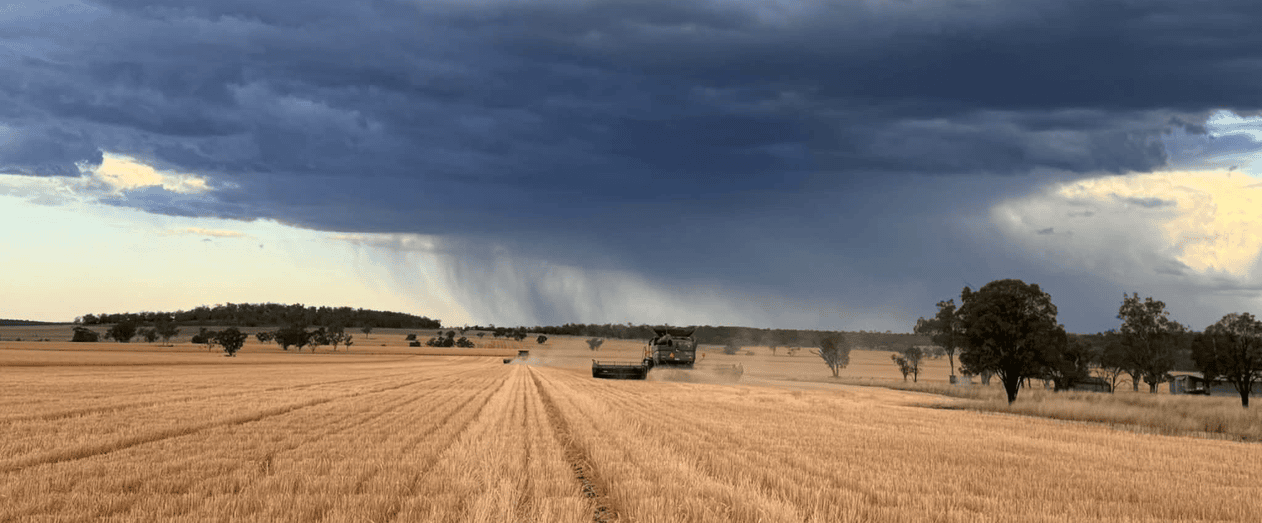
Harvesting organic wheat at Mitchell, Qld, ahead of the rain this week. Photo: Ross Contract Harvesting, Gunnedah
CEREAL crops in southern Queensland and northern New South Wales are losing weight and quality every day as rain settles in over the region.
With rain forecast into next week, headers are parked up across the wider region, but the rain’s throttling of deliveries has failed to ignite the market.
In the south, concerns about rain at harvest have dampened grower interest in forward selling, even though the prompt wheat market appears to have rallied in response to the rain delay in the northern wheat harvest.
Prompt barley values remain flat, indicating that consumers have adequate coverage well into November.
| Oct 15 prompt | Today prompt | Oct 8 for Jan | Today for Jan | |
| Downs barley | $408 | $405 | $408 | $415 |
| Downs SFW | $433 | $435 | $433 | $435 |
| Downs sorghum | $380 | $380 | $380 | $380 |
| Mel barley | $300 | $300 | $300 | $309 |
| Mel ASW | $360 | $380 | $360 | $353 |
Table 1: Indicative prices in Australian dollars per tonne for prompt and January 2027 delivery.
Rain thwarts northern harvest
In the week to 9am today, totals in harvesting areas of southern Qld include: Dalby 44; Hannaford 154mm; Macalister 42mm; Miles 43mm; Mitchell 141mm, and Roma 73mm.
In northern NSW, totals include: Lightning Ridge 46mm; Moree 70mm; Mungindi 32mm; Narrabri 61mm; Pallamallawa 52mm, and Walgett 48mm.
AgForce grains president and Warra farmer Brendan Taylor said even for farms like his that until yesterday had had limited rain from this latest event, harvest was on hold.
“There’s a bit of bad news out there already, as in crop damage and losses,” Mr Taylor said.
“The timing of this rain is not good in relation to harvest.”
“It’s not the ground that’s the problem, it’s the crop that won’t dry out.
“You can’t thresh it, and looking at the next 4-5 days, it’s not going to fine up.”
Mr Taylor harvested all his barley and around 30 percent of his chickpeas ahead of the rain, and has no wheat to harvest.
“Most of the early barley around us is off, but we’d be struggling to be 50pc harvested across all the crops in southern Qld.”
Damp conditions mean growers have been harvesting wheat and barley at up to 17-percent moisture, well above the 12.5pc maximum for bulk-handler deliveries, and are drying it where they can in aerated silos, or in driers normally used for sorghum.
Any unharvested barley and wheat in southern Qld and northern NSW is looking at downgrades.
“There’ll be sprouted grain, there’ll be mouldy grain, and there’ll be grain lost,” Mr Taylor said, with Bureau of Meteorology warnings pointing to some localised storm damage.
Like most growers who can summer and winter crop, Mr Taylor is circumspect on the wet harvest.
“It’s hard to be upset with the rain because its barely rained for four months.”
At Mungindi on the Qld-NSW border, B&W Rural Mungindi agronomist Nellie Lawson said only around 40pc of the district’s intended winter-crop area got planted this season due to limited rain having fallen ahead of the ideal window.
“For those that were able to plant, it was a case of just getting one extra shower,” Ms Lawson said
“Chickpeas were able to get to moisture at depth, and they’ve been the real success story.”
Many of Mungindi’s wheat, barley, and chickpea crops, as well as faba beans, were on the point of harvest before the rain set in.
“We were into the faba beans before the rain, and now everyone’s been pulled up.”
Ms Lawson said most farms have had 50-110mm over past week, including falls last night, which has opened the door to summer cropping.
“We’re building a heap of questions now about all those options; it could be dryland cotton for some dedicated long fallow, there’s some interest in mungbeans and sorghum, and there’s always a small amount of forage sorghum after rain.”
Trade covered for now
After the widespread rain, considerable concern exists around Australia’s ability to fill its export commitments for chickpeas ex Brisbane over coming months.
Outside of Central Qld, where harvest is just about over, very little Qld wheat export business has been written, and high-protein wheat selling to Brisbane flour mills rather than into export.
Very little feed wheat and barley business is being done in the domestic market.
At Narrabri, AgVantage Commodities broker Brendon Warnock said this is the region’s first wet harvest since 2022.
“In the past seven days, the market has been very quiet with people anticipating the rain,” Mr Warnock said.
“We’re seeing a bit of evidence on wheat of the consumer being a bit short, and people looking for an all-weather opportunity [to out-turn].”
Mr Warnock said the domestic market for feed wheat appears to be “running on fumes”.
He said growers who were ready to harvest wheat have already cleared out silos, and those holding grain largely do not have grain to harvest, so are in no hurry to sell.
“The expectation was that wheat would have started to flow by now.”
Mr Warnock said wheat prices may rally as the market seeks loads that can be trucked in the next week or so, whatever the weather
The failure of the delivered Downs barley market to kick by more than a few dollars indicates feedlots were ready for the rain, and have built stocks on site to tide them over until barley from central and southern NSW and Victoria hits the bins in volume.
South full of promise
Scattered storms and showers are dropping patchy rain on isolated pockets of south-eastern Australia amid mostly warm and dry conditions.
However, the forecast points to more than 25mm of rain over the weekend for most growing regions in South Australia, Victoria and southern and central NSW.
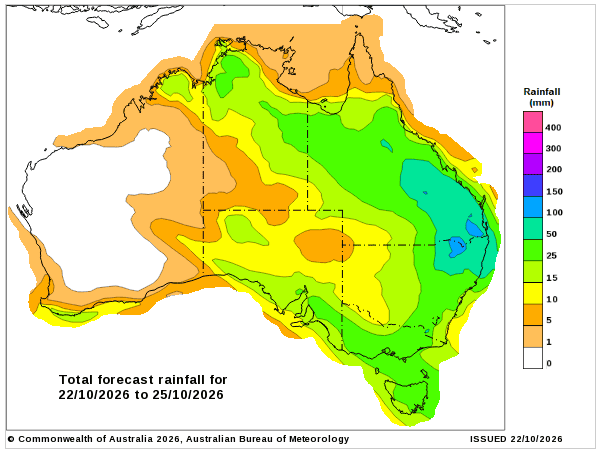
Some crops are still green enough to benefit from the forecast rain, but those on the outer slopes and plains are mostly less than two weeks away from harvest.
Rain on the nearby forecast means grain quality is an unknown, and growers are therefore reluctant to forward sell.
Big news from the south is the Grain Industry Association of Victoria estimates out of its crop tour last week, which put the state’s barley crop at a record 6.4 million tonnes (Mt).
ABARES puts the national crop at 16.4Mt, and both ABARES and the Grain Industry Association of Western Australia put the WA barley crop at 6.8Mt, not far in front of GIAV’s Vic estimate which shows all the promise of a record barley area planted in Vic this season, and the kindest of growing seasons.
Grain Central: Get our free news straight to your inbox – Click here
HAVE YOUR SAY