
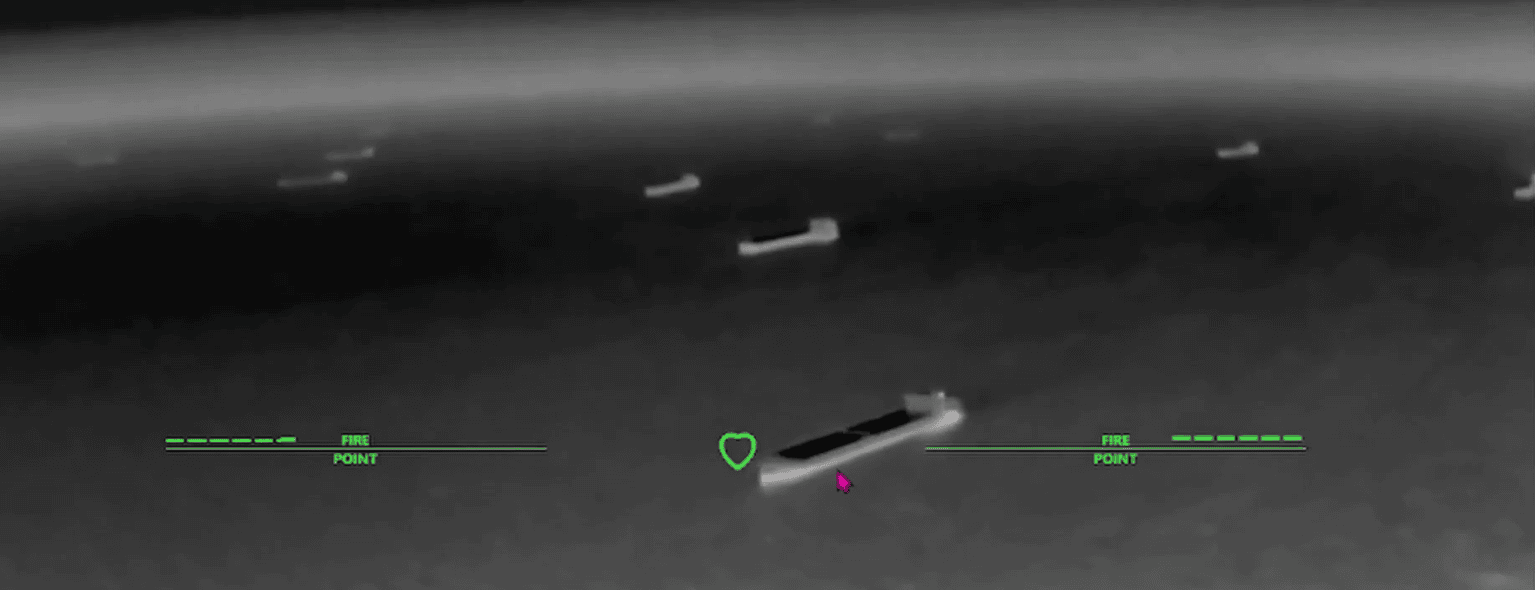
The Ukrainian military’s Unmanned Force Systems home in on shipping in the Sea of Azov earlier this month. Image: Defense of Ukraine
UKRAINE has intensified its drone attacks on Russian vessels transiting the Sea of Azov and the Black Sea, resulting in a significant decline in Moscow’s shadow fleet shipping activity in the respective sea zones, and then, early last week, a full suspension of shipping activity in the Sea of Azov.
Operation “MoLoChKa” is a large-scale maritime drone campaign launched by Ukraine’s Unmanned Systems Forces in July 2026 to target the Russian shadow fleet with a primary goal of restricting Moscow’s ability to bypass sanctions on energy shipments through the region. The name is an acronym for the Ukrainian phrase meaning “Moscow will fall through Crimea”.
Led by Commander Robert “Madyar” Brovdi, the operation focuses on crippling Russia’s fuel, oil, and cargo logistics. Rather than fully sinking the ships and causing massive oil spills, the drones target vessels used to bypass sanctions in the Sea of Azov and Black Sea, leaving them blind, deaf, and unable to transport cargo. The offensive also serves to intercept ships ferrying fuel to occupied Crimea, as well as the region’s energy infrastructure and radar complexes.
The sustained deployment of unmanned systems continues to strengthen Ukraine’s control over the region’s sea routes, with government authorities claiming that operation MoLoChKa had successfully struck 172 ships of the Russian shadow fleet from July 6 to July 18, 118 in the Sea of Azov and 54 in the Black Sea.
The Sea of Azov is a shallow but critical waterway linking many parts of Russia with the Black Sea and, via the Bosphorus Strait, to international customers. Its economic and military importance is huge, facilitating the shipment of oil, grain and many other products to global markets.
Primary corridor closures block exports
Transit permits to pass through the Kerch Strait, which connects the Sea of Azov with the Black Sea, are no longer being approved. Shipping along the Volga-Don Canal, which links the Russian river network and the Caspian Sea to the Sea of Azov, has also been suspended. The blockade has halted the movement of grain stolen from the occupied parts of southern Ukraine and shipped via the ports of Berdyansk and Mariupol.
Russia is the world’s top wheat exporter, accounting for more than 20 percent of international trade each season. Around 25pc of the nation’s wheat exports are shipped via the Sea of Azov, with the waterway the primary export corridor for grain produced in the Rostov oblast, Russia’s largest grain-producing region. At its peak, monthly exports via the Sea of Azov can account for over 1.5 million tonnes (Mt), similar to monthly grain volumes loaded out of Russia’s largest Black Sea port, Novorossiysk.
With the new-crop harvest ramping up across southern Russia, Ukraine’s attacks have been timed to coincide with the seasonal grain export peak, which runs from August to December. Moscow says it is working to reroute grain exports from the Sea of Azov to alternative shipping routes.
However, with another big wheat crop almost guaranteed, viable export terminal options will already be fully booked, making it impossible to reroute such volume. Road logistics, an already heavily utilised rail network, and port-storage infrastructure would also struggle to cope with the additional volumes, especially as the new-crop harvest ramps up.
Huge ramifications
Black Sea grain market analyst and commentator Andrey Sizov, said there were currently no signs of a de-escalation, and the longer the shipping disruptions last, the bigger the problem would become. Sizov believed that should this drag on, the worst-case scenario could see 5-10Mt wiped off Russian wheat exports in the 2026-27 marketing year.
Such an outcome would have huge ramifications for global wheat markets, given that Russia typically outcompetes alternative export origins into many destinations as the new-crop harvest hits the market early in its marketing year, which starts this month. Tighter export capacity and strained logistics are likely to reduce that competitiveness, as long as the Sea of Azov remains closed to shipping.
Vladimir Putin has not taken the escalated aggression on the chin, launching a series of retaliatory strikes across Ukraine. Logistics infrastructure and Black Sea terminals have been severely affected, as well as commercial vessels in the vicinity of Ukraine’s Black Sea ports.
Russia has repeatedly attacked Ukraine’s maritime export arteries since the war began in February 2022, but the strikes have intensified in recent weeks and focused on deepwater Black Sea ports that handle much of the country’s grain and other export cargo, income from which is vital to the nation’s wartime economy.
Export facilities in Odesa, which has three grain terminals accounting for more than 90pc of the nation’s grain and vegetable-oil exports, have been hit hard. Shipments out of the three facilities had already dropped to around two-thirds of peak capacity due to earlier damage.
Shipping risk, market reaction
Last week’s strikes have reportedly led to a partial halt in grain exports and an almost-total suspension of grain purchases into port terminals. Shipowners are refusing to price new shipments via Ukraine’s ports and are attempting to avoid previously agreed fixtures. With export pace already constrained, grain stocks across the country, particularly wheat, have surged, reducing storage capacity for the current harvest.
Global markets have reacted to the renewed geopolitical tensions across the Black Sea and Middle East, as well as the mounting production issues in the European Union. MATIF milling wheat futures have rallied 16.5pc since June 30 to close last week at €234.75, or close to A$384.65, per tonne.
Over the same period, Soft Red Winter wheat futures on Chicago have rallied 15.9pc to close at US$250.86/t, or A$359.40/t, last Friday, while US Hard Red Winter wheat futures ended the week at US$269.06/t, or A$384.90/t, up 17.1pc since the beginning of the month.
HAVE YOUR SAY