
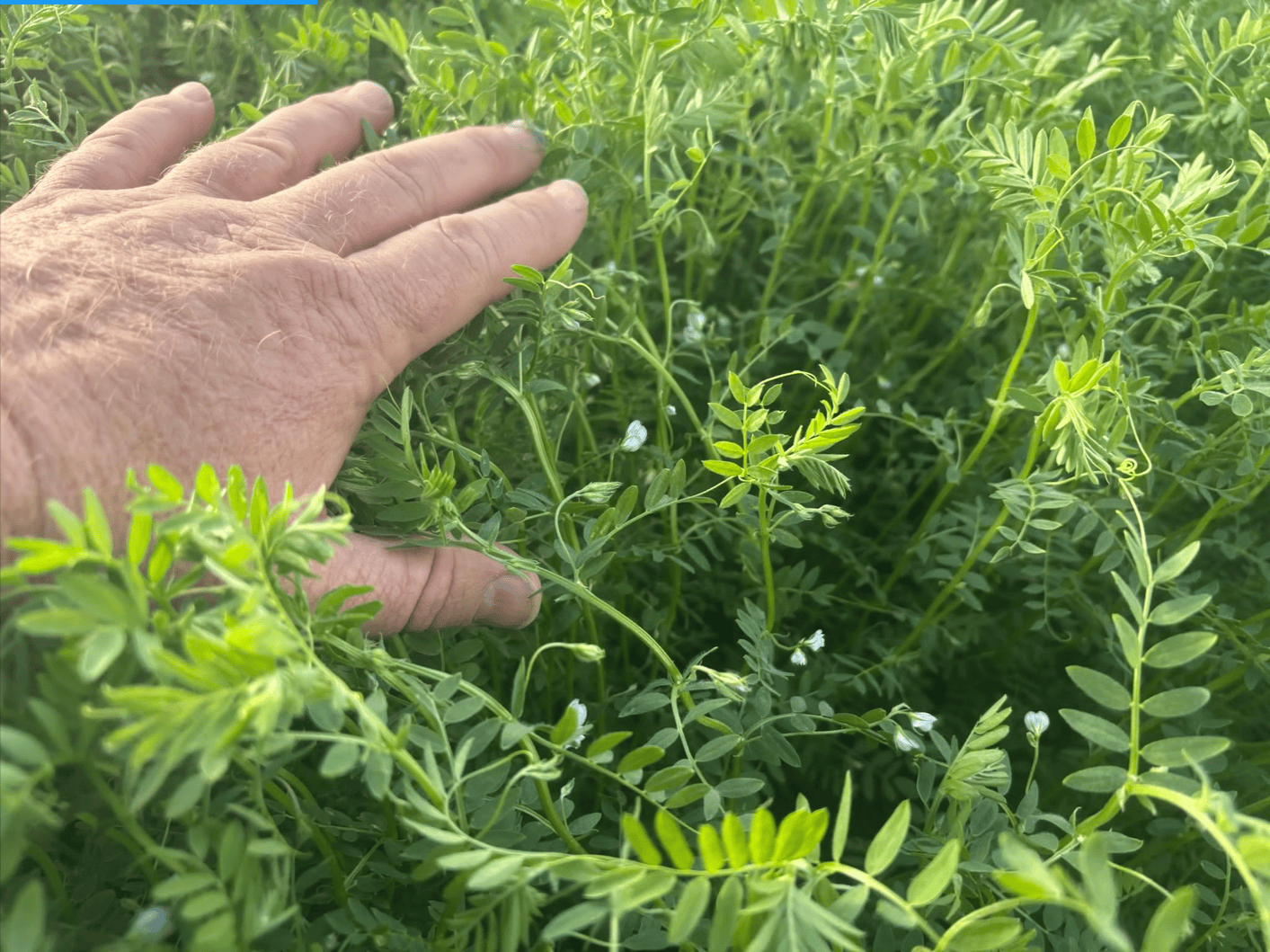
A lentil crop in flower in the Strathalbyn district south-east of Adelaide. Photo: James Stacey
SOUTH Australia’s total estimated grain production for 2026-27 season has been increased to 9.79 million tonnes (Mt), according to the Department of Primary Industries and Regions SA report released last week.
The estimate in PIRSA’s Crop and Pasture Report: 2026–27 Crop Emergence is based on information current as of July 14, and is 779,000t above the department’s initial figure released in May in PIRSA’s Seeding Intentions report.
PIRSA’s latest figure is 11 percent above the five-year average and 929,000t higher than last year’s estimated production of 8.79Mt, and has the potential to be its third-biggest crop on record after 2016-17 on 10.7Mt and 2022-23 on 12.6Mt.
The report said SA had “enjoyed one of the strongest starts to a cropping season in recent years” thanks to above-average rainfall which had supported “excellent crop establishment and strong early growth”.
“There are high subsoil moisture reserves across most regions,” the report said.
“Some areas have experienced waterlogging and delays with spraying operations, but seasonal conditions have generally been highly favourable.”
PIRSA said this had resulted in crops developing earlier than normal.
“Crop development is running well ahead of normal, with canola flowering earlier than usual, cereals progressing rapidly through vegetative growth stages and some lentils at canopy closure.”
The report increased the forecast lentil production by more than 91,000t to 937,610t, extending the record set last year.
This is due to an increase in yield estimates due the favourable weather conditions.
The report said final yields for all crops would depend on rainfall later in the season.
“While there is cautious optimism about yield prospects given seasonal progress to date, achieving potential is still reliant on late winter and spring rainfall, and an absence of adverse weather events during flowering and grain fill.”
Higher pest, disease concerns
Favourable growing conditions have also resulted in higher pest and disease pressures for the season.
“Reports of green peach aphid together with turnip yellows virus in canola have been prevalent this season.
“In addition, fungal diseases in barley (leaf rust and net blotch) have been common across different regions.
“However, most pest and disease issues are being managed effectively through timely monitoring and control measures.
“Strong pre-sowing weed-control opportunities and good pre-emergent herbicide performance have resulted in cleaner crops than in recent seasons.
“Concerns around mice have eased considerably following effective baiting programs, with little reported impact on crops.”
Exceptional pasture growth
The positive crop conditions have also extended to strong pasture growth, according to the PIRSA report.
“Good growing conditions have also supported exceptional pasture growth and abundant feed supplies across the state, resulting in excellent livestock condition, reduced reliance on supplementary feeding and strong lambing and calving performance.
“Livestock-producer confidence is generally high, supported by strong livestock prices and some of the best grazing conditions seen in recent years.”
The report said the pasture growth has “significantly reduced the need for supplementary feeding across most regions, with livestock able to rely on ample green feed and strong biomass production to meet their nutritional requirements”.
“As a result, containment feeding has been limited, with producers benefiting from well above-average feed and excellent grazing conditions.
“This has reduced nutritional pressures, allowing producers to focus on routine management activities rather than feed shortages.”
El Niño caution
PIRSA has noted that drier conditions may be on the way with an El Niño on the charts in the coming months.
“The Bureau of Meteorology outlook indicates an increased likelihood of drier conditions through late winter and spring due to El Niño influences.
“This is coupled with warmer temperatures.
“Caution is also warranted as this season’s earlier crop development and maturity creates greater vulnerability to possible frost events.
“Given these factors, yield estimates remain conservative.”
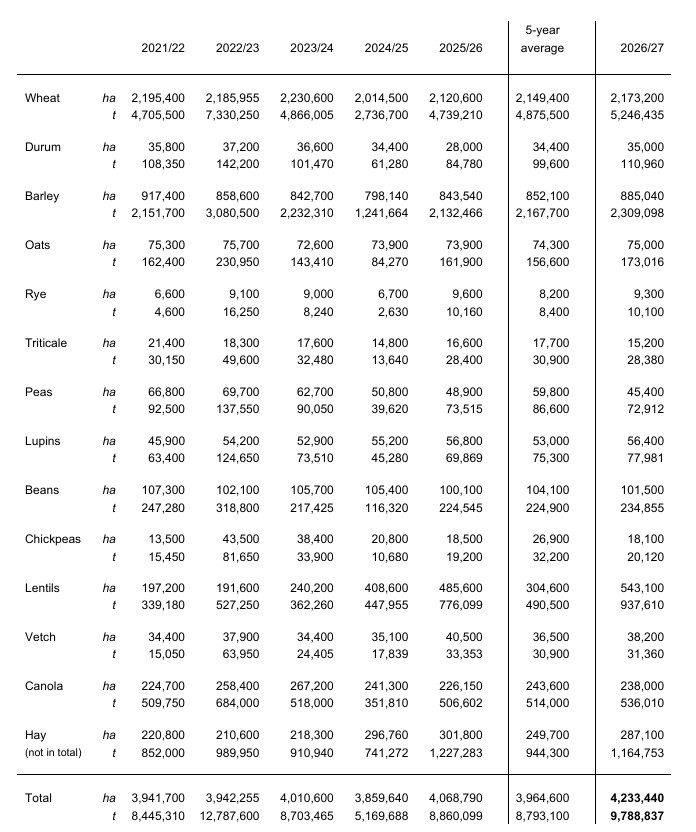
Table 1: Crop estimates against five-year average. Source: PIRSA
Source: PIRSA
HAVE YOUR SAY