
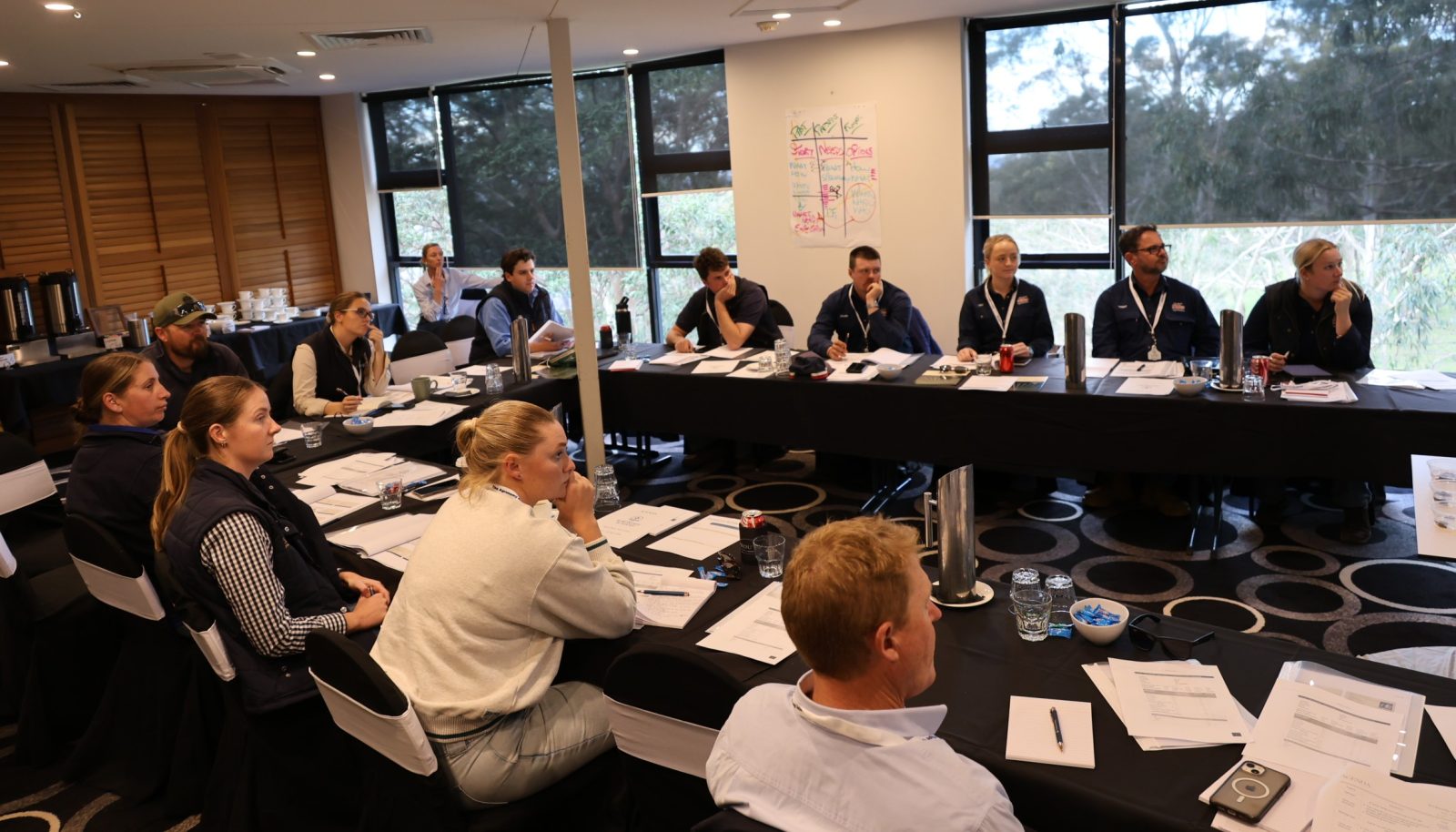
The Agronomy Academy’s Agronomy Accelerator participants take in Professor Oliver Knox’s presentation at Picnic Point in Toowoomba last week.
THE professional-development landscape for Australian agronomists has broadened this year with the arrival of the Agronomy Academy.
Founded by husband and wife Elle and Will Storrier, it offers module-based learning from experts in their field through three Agronomy Accelerator events held across the year.
The second for 2026 was held in Toowoomba last week, and saw 18 young professionals working in consultancy and farm management gather over four days to learn, and to build connections that can be hard to make in today’s world of modern agriculture.
Mrs Storrier said what the Agronomy Accelerator aims to give its graduates is simple: “We’re trying to put the right people on their bus.”
Filling the gap
As agronomists and mixed farmers at Hillston in south-central NSW, the Storriers know a thing or two about fluctuating markets, seasonal variability, and decision-making when it comes to crop and farm management.
They have built a network of peers and experts to help them keep abreast of developments in agronomy and the human aspects around it, and started the Agronomy Academy with the idea that others could benefit from something similar.
Their first Agronomy Accelerator, which started with a four-day event in Whitton in March, and will finish with one in Tamworth, shows there is indeed an appetite for networking coupled with immersive learning.
In Toowoomba, the program involved Goanna Ag’s Tom Dowling on water management, The Right Mind’s Jill Rigney on the human edge, Professor Oliver Knox on soils, and Swiften’s Scott McDouall on sales and marketing.
The Whitton event saw modules presented by former Wallaby and NRL player Beau Robinson, spray expert Craig Day, Rebecca Addison and Dr Paul Horne on integrated pest management, and water management and policy specialist Tom Rooney.
September’s Tamworth event will include a day each for plant pathology, crop physiology, agribusiness and farm financial management, and digital agriculture and technology.
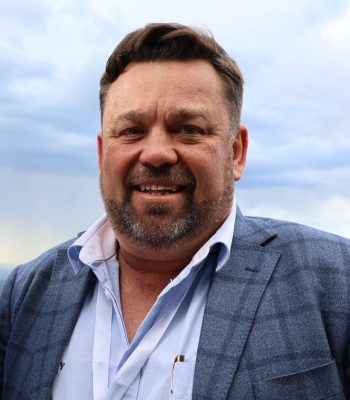
Independent agronomist Andrew McFadyen.
Along with the Storriers, program facilitator Andrew McFadyen is a constant in this year’s events.
Now working as an independent consultant based on the family farm at Lake Cargelligo, and chair of Grain Orana Alliance, Mr McFadyen has worked as an agronomist for a reseller and a corporate, and has also served on GRDC’s Northern Region Panel.
Mr McFadyen graduated in the 1990s into a profession rich with public-sector agronomists like Gerry Hennessy at Mudgee and Bob Freebairn at Coonabarabran, who he said were a source of both advice and support.
“Over time, those people have retired and they have not been replaced, so when junior agronomists go out into the regions, support isn’t necessarily there for them,” Mr McFadyen said.
“The Agronomy Academy has identified that gap, and is trying to raise professionalism at the local level, which flows through to growers.
“We also don’t want to lose these people to other professions.
“The academy is not just about hard science; it’s about how we turn up for our clients and communities, and how we look after ourselves.”
Years in the field
Mrs Storrier grew up in Goondiwindi, and is the daughter of northern agronomy veteran Iain Macpherson.
His agronomy jobs included roles with the Coulton family at Alcheringa, a seed business, and a reseller, and he rounded out his career as an independent agronomist and contractor.
“He was there when cotton came to town, and when farming changed from conventional to no-till,” Mrs Storrier said.
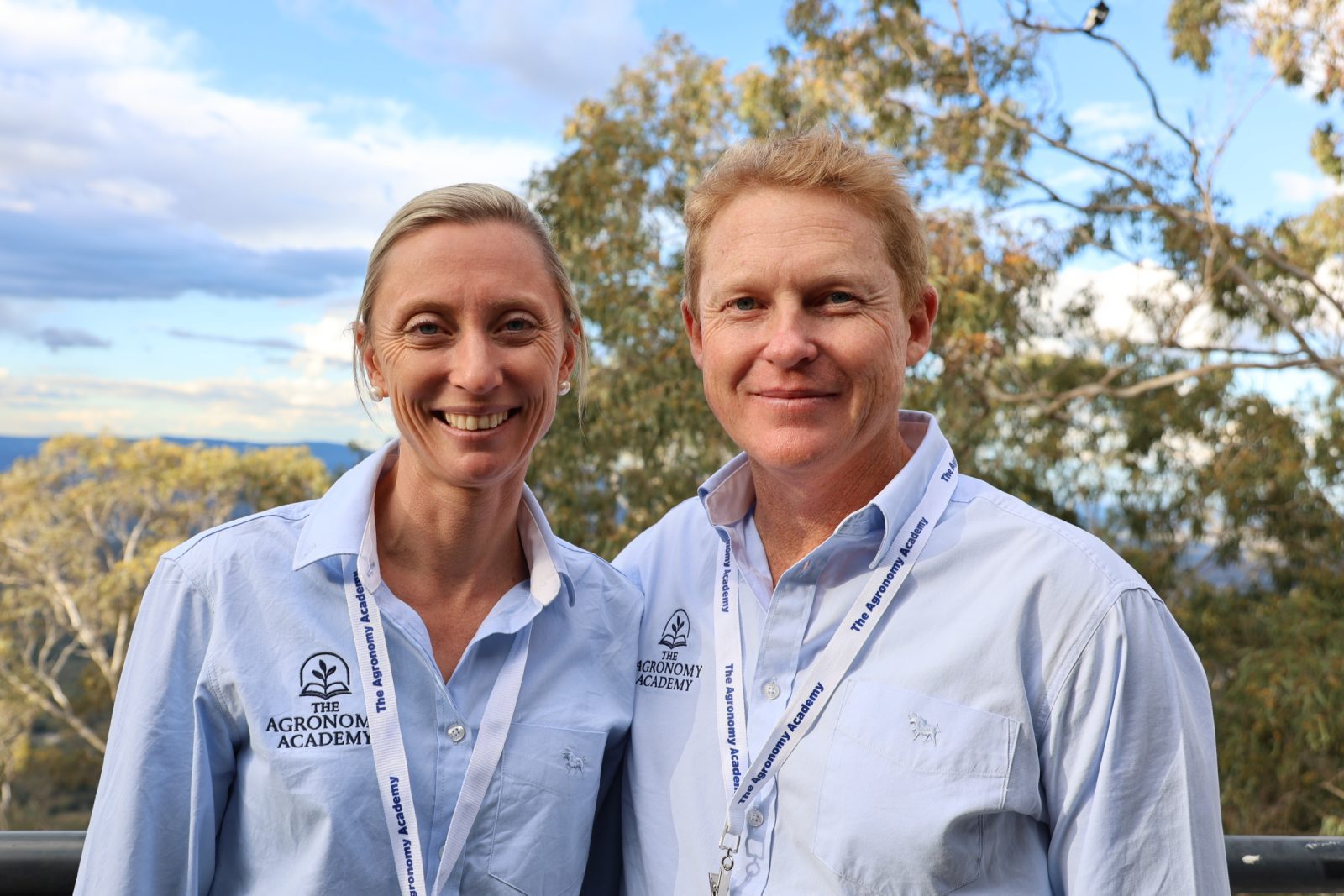
Agronomy Academy principals Elle and Will Storrier.
Not surprisingly, the young Elle’s in-the-field employment started in her school holidays as a bug checker and, inspired by what her father and his peers were doing, she completed a Bachelor of Agriculture at UNE, with Mr Storrier also a graduate.
“We’re farmers down at Hillston; we grow dryland crops, and irrigated cotton and grain, and we also have an on-farm feedlot and beef cattle.”
It means the Agronomy Accelerator programs have been designed with irrigated as well as dryland production in mind across a range of regions and farming systems.
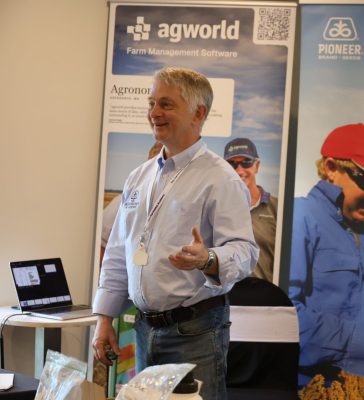
Professor Oliver Knox presents at the Agronomy Academy’s Agronomy Accelerator last week.
The 2026 Agronomy Accelerator has participants from Bourke, Casino, Darlington Point, Goondiwindi, Grafton, Moree, and Tenterfield.
“Who we’re getting is mostly young people, anywhere from three to eight years into their career.”
Mrs Storrier is a member of Crop Consultants Australia, and said the Agronomy Academy holds no aspirations to become a competing organisation.
“I’m a huge advocate of CCA and what they do, and we’re doing two quite different things.”
CCA is a professional organisation, and the official channel for crop consultants to communicate with other industry groups.
CCA offers its own upskilling through its Early Career Agriculturists project, as supported by both the Grains and Cotton RDCs, and through cropping solutions seminars and networking events.
“The Agronomy Academy is not so much about extension; we’re really looking to bridge that gap between those that have come from a technical background and are moving into an applied paddock-ready agronomist role, or farm management.”
Both careers can throw up left-field problems on top of day-to-day tasks, and Mrs Storrier said Agronomy Accelerator has been designed to “round out” information already on board.
“We slow down a little bit; we’re not bulk manufacturing a lot of information; we’re saying ‘here’s a person who we consider can be your contact for 12 months’.
“A lot of agronomists are out there in this state of overwhelm; we’re trying to be that conduit to take away the noise.
“If we can connect you, and you can learn and think, the rest of it will follow.”
The Agronomy Academy’s Tamworth event is being held September 7-10.
Grain Central: Get our free news straight to your inbox – Click here
Impressive educational content and lineup of experts to access! Great to see the gap in the industry addressed, well done Agronomy Academy!