
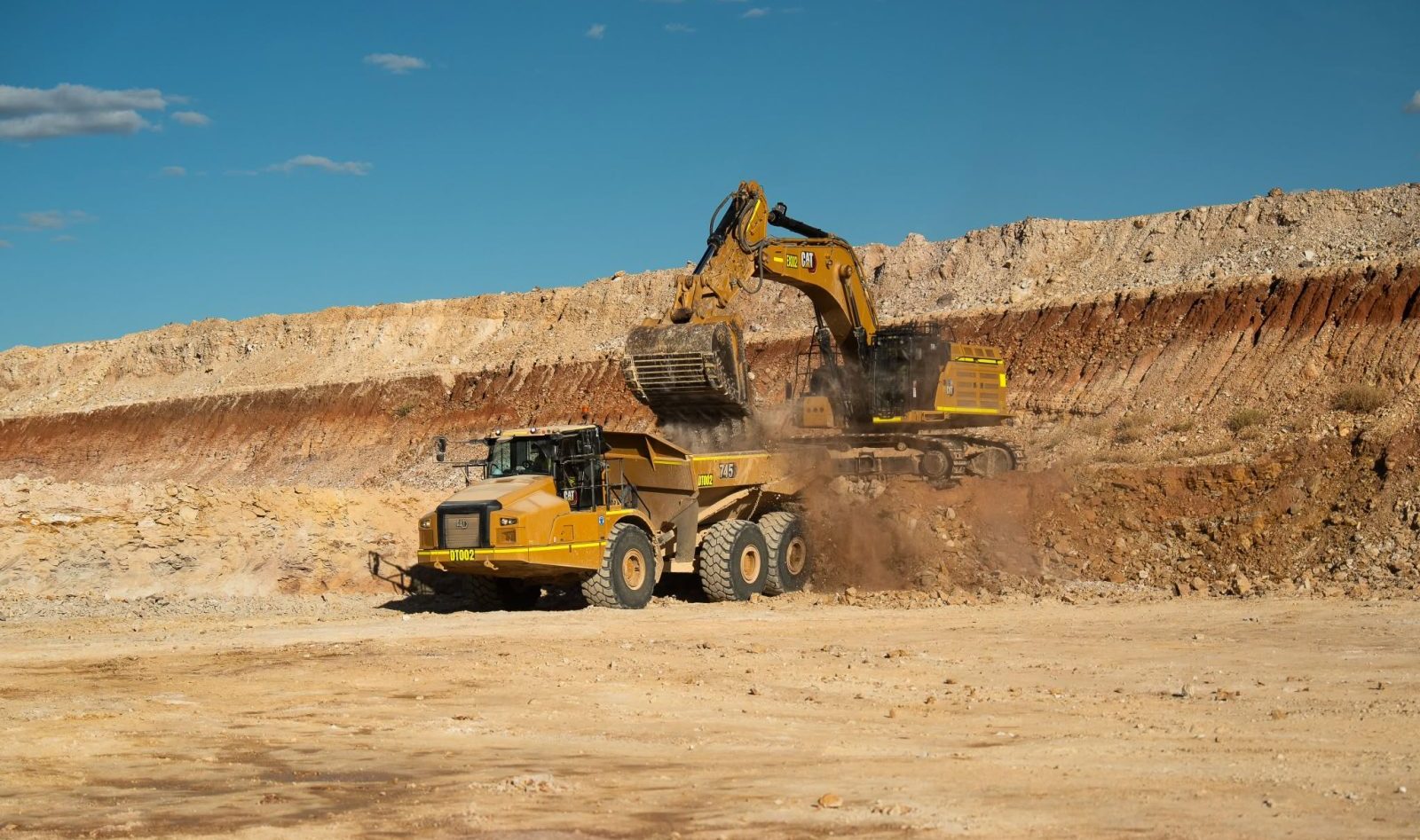
Ardmore Phosphate Mine operating under new ownership. Photo: PRL Global
PRL GLOBAL Limited has announced its Ardmore Phosphate Mine will transition to a bulk logistics model, replacing the former container-based system.
The move forms part of a broader investment and ramp-up of operations at the site, 120km south of Mount Isa in north-west Queensland.
The news coincides with Australian Fertiliser Company cautioning growers about a potential challenge in securing granular phosphate for the 2027 cropping season amid widening conflict in the Middle East.
New owner, new model
PRL Global has operations on Christmas Island, and this year moved its headquarters to Perth.
It took over the Ardmore phosphate operation, which had run into financial problems, from Centrex in September last year.
Ardmore produced commercial quantities of phosphate concentrate before entering voluntary administration in March.
Since acquiring the operation, PRL Global has been working to expand production and restore the business to commercial viability.
In a statement lodged with the ASX, PRL Global said it had completed principal agreements with rail and port partners required to move to a bulk-logistics model.
“The agreements incorporate the full logistics chain including road and rail haulage of Ardmore Rock Phosphate from the mine site to the Port of Townsville, via Mount Isa,” the statement said.
“The transition to bulk logistics is a key component of PRL’s strategy for Ardmore and is expected to improve the economics of transporting phosphate product from mine to port compared with the container-based model previously utilised.
“The first shipment under the bulk logistics model is scheduled to load at the Port of Townsville in August 2026 with increased throughput to enable a more regular flow of shipments thereafter.”
PRL Global chairman David Somerville said the execution of the contracts was an important step forward for the operation.
“The execution of these agreements completes a key commercial milestone for Ardmore that we identified at acquisition,” Mr Somerville said.
“The contractual framework for the bulk logistics model is now in place, the site is operational, and our team has already demonstrated its ability to produce and deliver product to customers.”
The company may ship some rock phosphate, and New Zealand could be a key market base.
PRL Global announced on April 30 via social media that it had shipped 30,159 tonnes of phosphate via containers to Christchurch-based co-operative Ravensdown, which it described as a “foundation customer”.
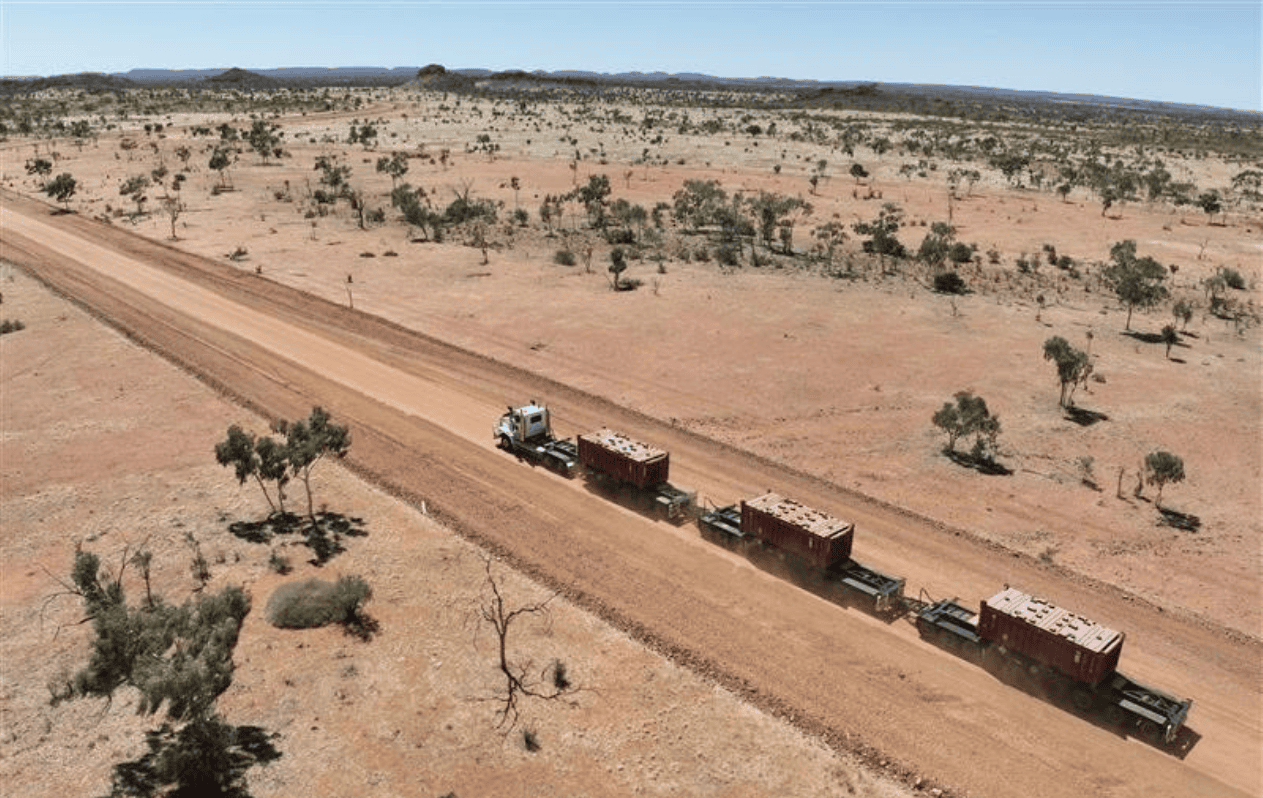
Containerised phosphate from the Ardmore mine makes its way to Townsville for shipment to NZ. Photo: PRL Global
Production increase, trading venture
The company said in a statement it had “re-mobilised the mine and increased production” since acquiring the Ardmore operation.
These achievements included:
- completing three shipments totalling more than 90,000t of rock phosphate under the container-based model;
- establishing a core workforce and investing in the mine camp based in the township of Dajarra; and
- deploying planned investments across mining, processing and associated infrastructure including establishing dry storage for the product in multiple locations.
In a release to the market last month, PRL Global gave an update on fertiliser trading through Liven Nutrients.
Established in 2022, Liven Nutrients is PRL Global’s joint venture with Singapore-based fertiliser trader Liven Agrichem.
This year the group established an Australian entity, Liven Nutrients Australia, and secured warehouse capacity in Geelong to provide domestic customers with supply of fertiliser products.
“During the current financial year, Liven Nutrients has supplied 295,905t of urea into the Australian market, including 33,123t through the new Geelong warehouse supporting the farming community’s critical supply chain,” the PRL Global update said.
“Liven Nutrients has furthermore supplied more than 2 million tonnes of fertiliser products globally this financial year.”
Phosphate, sulphur supply concerns
These updates come as Australian Fertiliser Corporation (AFC) has warned that securing supplies of granular phosphate products – including diammonium phosphate (DAP), mono-ammonium phosphate (MAP) and single superphosphate (SSP) – for the 2027 season could be a challenge for growers.
The concerns arise from the Iran-backed Houthi forces in Yemen announcing a maritime embargo on Saudi Arabia on July 20 in retaliation for restrictions affecting Houthi-controlled ports and airports in north-western Yemen.
AFC CEO Stein Haugan said the situation had created concerns around Saudi Arabian phosphate exports, especially if any ongoing action affected shipping through the Bab al-Mandab Strait.
“With vessels already unable to move through the Strait of Hormuz, Saudi Arabia is diverting phosphate fertiliser shipments through the Red Sea,” Mr Haugan said.
“Any direct action affecting the Bab al-Mandab Strait would therefore have serious consequences for global fertiliser supply.
“India and Australia are particularly exposed, with Saudi Arabia supplying significant volumes of DAP and MAP to both markets.
“Shipment times from Saudi Arabia to India could increase by as much as one month, and potentially even longer for Australia, if both the Strait of Hormuz and the Bab al Mandab Strait were disrupted.”
Mr Haugan said China, traditionally an important supplier of granular phosphate products to Australia, was also operating at less than 50 percent capacity because of exceptionally high sulphur prices.
“Sulphur is a critical raw material in the production of granular phosphate fertilisers.
“The principal alternative would be to source additional product from Morocco.
“However, Morocco is itself a major importer of sulphur, while freight costs from Morocco to Australia are also a significant consideration.”
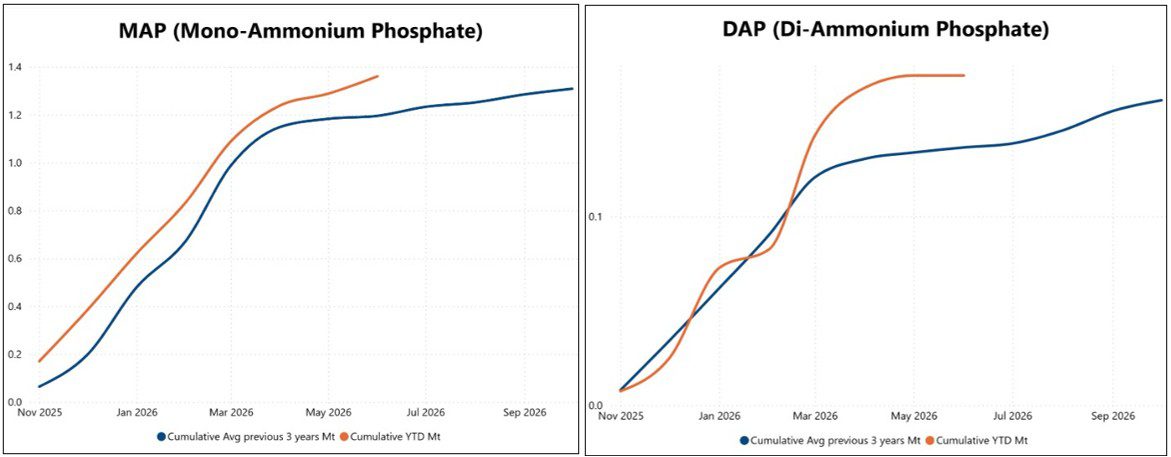
According to the Department of Agriculture, Fisheries and Forestry’s fertiliser dashboard Australia has imported almost 1.4 million tonnes of MAP, almost 500,000t of superphosphates (single, double and triple) and under 200,000t of DAP year to date at June.
All of these import volumes appear to be tracking above the ‘average level’, measured against the cumulative average for the previous three years.
Grain Central: Get our free news straight to your inbox – Click here
HAVE YOUR SAY