

Food Frontiers’ Megan Redmond and Hannah Anderson discussed the state of Australia’s plant-protein industry with Integra director Tom Reddecliffe during a recent webinar.
INTEGRA Foods, one of the few commercial-scale plant-protein manufacturers in Australia, says greater investment is needed to drive demand for locally grown pulses over imports.
The South Australian-based company is a subsidiary of Australian Grain Export (AGE) and uses the dry fractionation process to transform faba beans into protein isolates and starches or flour.
Product is then on-sold to manufacturers and used in a range of foods, such as bread and baked goods, protein powders, vegan yoghurts, snacks, and as a thickening agent.
Integra director Tom Reddecliffe discussed the opportunities for value-adding Australian pulses as well as the challenges during a recent webinar hosted by industry organisation Food Frontier.
The webinar coincided with the release of the Unlocking Australia’s potential: The case for a national plant protein ingredient industry report written by Food Frontier.
Mr Reddecliffe said Australia had a “competitive advantage” when it came to producing pulses needed to supply plant-protein manufacturers but there were gaps in translating that volume into value-added ingredients.
He said Integra Foods specialised in processing faba beans, with Australia the world’s largest exporter of the crop, and SA typically accounting for around half of total shipments.
He said about 80,000 tonnes of faba beans goes through the AGE facility every year.
“We do a great job on the supply side because we work heavily with growers – we buy from 8000 growers around the country – we are very familiar with GRDC and the work they do in investing in crop improvements,” Mr Reddecliffe said.
“We need government to step in on the demand-side…that is, helping collaborative trials between Australian food manufactures and Australian ingredient producers to unlock that pathway.”
Alternative to imports
According to the Food Frontier report, in 2023 Australian imported an estimated 118,000t of primary plant-protein ingredients and flours and starches.
This was dominated by soy and pea-protein ingredients, largely imported from China and the United States.
Mr Reddecliffe said this represented a “huge opportunity” as these products could be replaced by “suitable alternatives” grown in Australia.
“If we can grow our crop, move it to the other side of the planet and it makes money, imagine if we sold that crop here in Australia, what that would create for growers.”
He said more work was needed to displace these imports, with rival products often produced more cheaply or backed by greater research and development.
“You can’t rock up with a product and drop it on the doorstep of a food manufacturer and say, ‘here you go; sort it out’.
“You need to derisk it for them…so the food manufacturer can look at your ingredient as like-for-like with perhaps their existing imported alternates, be it soy, faba from offshore, pea.”
Currently, Australia exports around 80 percent of its faba bean crop to Egypt, and with no premium attached.
Mr Reddecliffe said there was also another opportunity to push the higher-protein crops to markets willing to pay for this quality.
“It’s a fantastic case of scrape out the protein and hit high-value markets, whether that’s in North America, Asia and even into Europe where freight allows us to do so.”
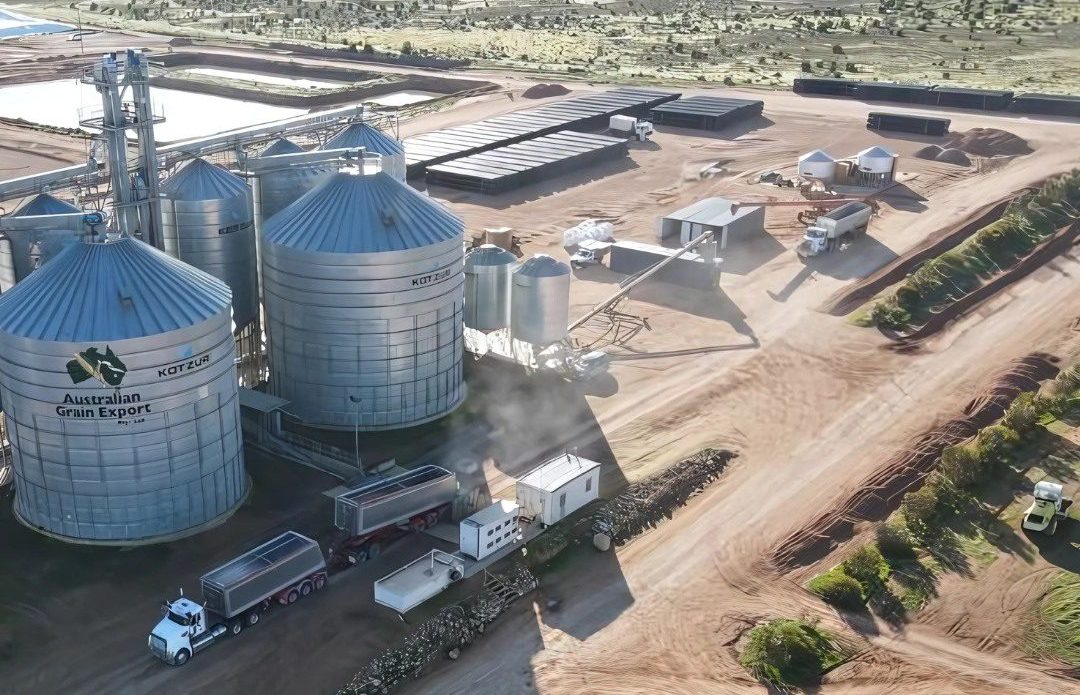
Integra Foods fractionation plant is co-located with AGE’s bulk-handling site at Dublin, north of Adelaide.
Investment in R&D
Alongside its dry fractionation facility at Dublin, Integra Foods with investment from the SA Government has built a state-of-the-art R&D laboratory focused on processing improvement.
Mr Reddecliffe said the laboratory was built because of the need to understand the specific processing requirements for SA faba beans.
“When we started our journey building the dry fractionation facility, there was a plethora of information from European dry fractionators over there doing the same thing with faba beans.
“But faba beans in Europe are very different to…faba beans in South Australia, which has a particularly dry climate.
“So early in our piece we had a lot of learnings around to effectively dehull a South Australian faba bean using European equipment, and that was our decision point where we realised that we need to invest heavily in operational improvement.
“We’re learning a lot about how different varieties in South Australia perform through our equipment.”
National strategy required
The Food Frontier report identified five strategic priorities for government to support the growth of a domestic plant-protein industry.
These included: establishing a national taskforce; investing in shared R&D platforms; promoting demand through targeted marketing, data and incentives; strategic investment to scale manufacturing; and building workforce and supply chains through training and grower engagement.
A key focal point of these recommendations was the call to develop a national taskforce to set a national strategy, coordinate efforts and align cross-jurisdictional policy, infrastructure, and investment.
Food Frontier director – government and strategic engagement Megan Redmond said a national body would give all members of the supply chain and other stakeholders the opportunity to have their voice heard.
“A dedicated national taskforce, we believe, should be established as a first priority convening government, industry growers, researchers, investors and regional representatives to co-design and deliver a fit-for-purpose strategy to scale the industry,” Ms Redmond said.
“The taskforce would coordinate efforts across all other priority action areas.”
She said a single strategy and focus was key to unlocking the benefits of a domestic value-added industry.
“With co-ordinated leadership, strategic investment and whole of government planning in close partnership with the full ecosystem, Australia can transform its protein-rich crops into high-value ingredients, drive resilient regional growth and secure a differentiated position in a rapidly growing global market.
“The foundations are in place and the case is clear what is required now is leadership, coordination and national activation.”
Grain Central: Get our free news straight to your inbox – Click here
HAVE YOUR SAY