
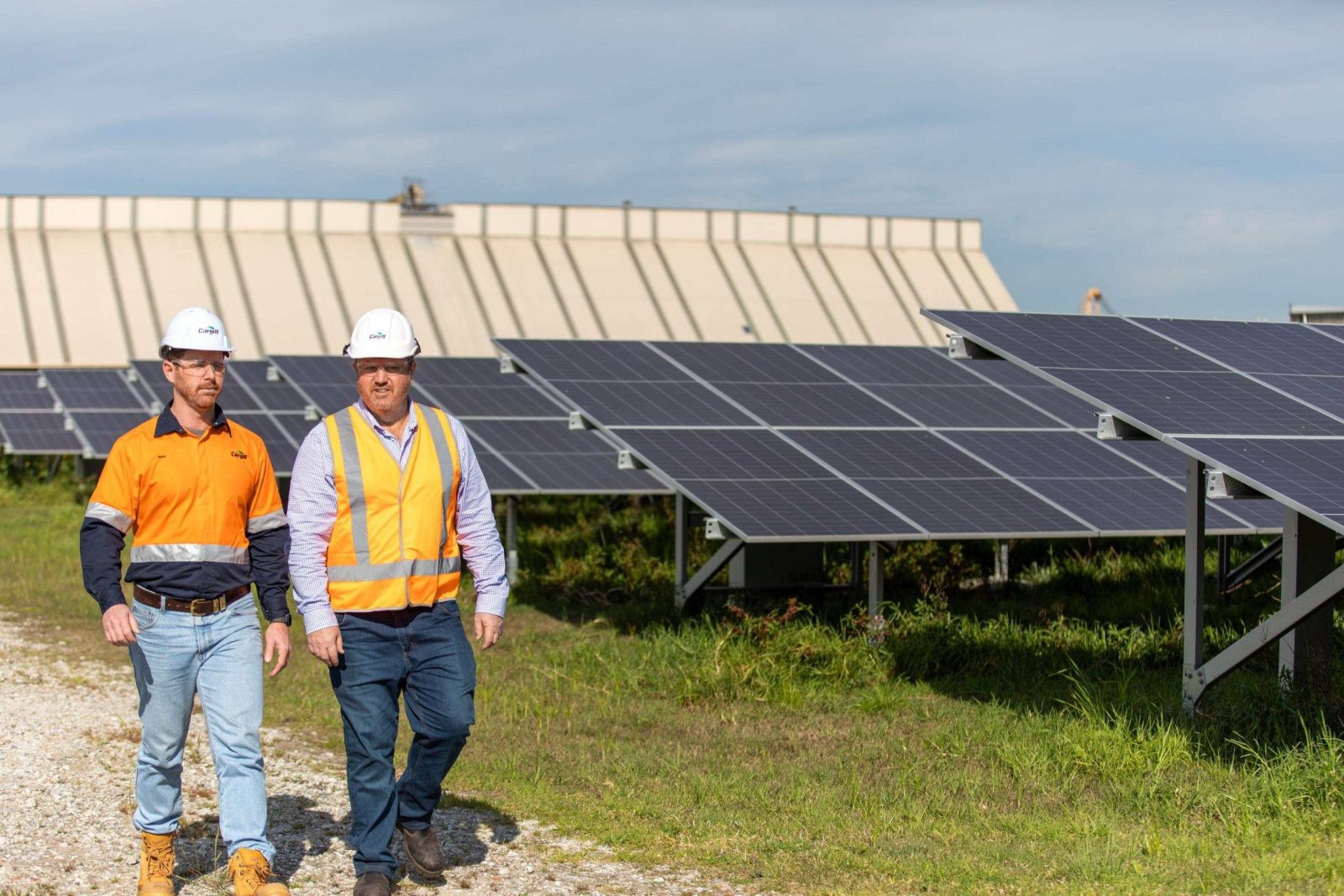
Build Project Management director Nathaniel Steman and Cargill senior director regional operations SSEA-Australia Nick Ebrill at the solar array adjacent to Cargill’s Newcastle crush plant. Photo: Cargill
CARGILL’S Newcastle oilseed-crushing plant is using solar to supplement its energy needs following the completion of an on-site array.
It represents the company’s first large-scale renewable energy project in Australia, and is the only fully built and owned renewable energy asset currently operated by a bulk handler and oilseed processor in Australia.
The plant annually crushes more than 100,000 tonnes of cottonseed meats and canola in total, and the solar array is expected to provide less than half its total energy requirements.
The 2.58-megawatt project is forecast to generate more than 4200MW hours of renewable electricity each year, and reduce Scope 2 greenhouse gas emissions by approximately 2700 tonnes of CO2.
“It consists of over 4000 solar panels which combined generate and match the demand of our facility at peak times,” Build Project Management director Nathaniel Steman said.
“Annually, the array will reduce our energy costs by $600,000; it keeps our manufacturing operation more competitive, and this results in a more resilient operation.”
The plant is a major supplier of canola and cottonseed oil and meal to domestic and export markets.
Globally, Cargill aims to reduce its absolute Scope 1 and 2 emissions by 25 percent from their 2020 baseline, and the Newcastle solar array is part of that.
It will also contribute to the Australian Government’s goal to reduce emissions to 62-70 percent of 2005 levels by 2035.
“This initiative is about taking real, practical steps toward sustainability and innovation,” Cargill senior director regional operations SSEA-Australia Nick Ebrill said.
“By integrating renewable energy directly into our manufacturing infrastructure, we reduce emissions, enhance resilience and create lasting value.”
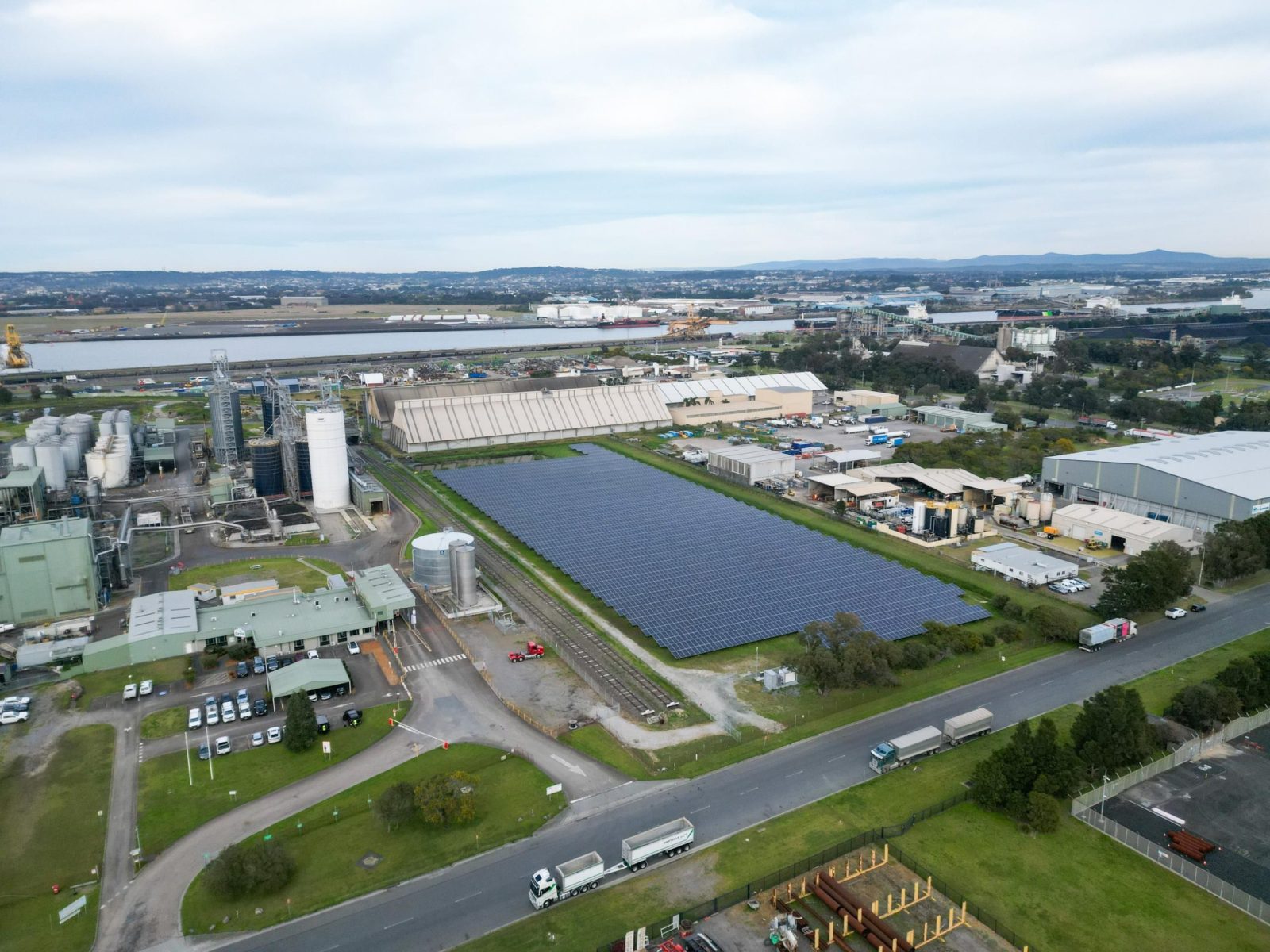
The solar array consists of more than 4000 solar panels and will be used to supply less than half the energy needed to power Cargill’s Newcastle crush plant. Photo: Cargill
Cargill owns the solar array and will keep all renewable energy certificates generated onsite.
As battery technology and costs improve, storage of solar-generated electricity may become part of the project.
In addition to helping cut emissions, having the solar array on site is expected to strengthen supply chain resilience in the face of increasingly volatile energy markets.
The project is a part of Cargill’s broader investment in Australia’s oilseed processing network.
In 2023, Cargill announced a $100-million investment to upgrade and expand its Newcastle, Narrabri and Footscray facilities to help meet growing demand for food, feed and renewable fuels.
Alongside this expansion, Cargill Australia has been implementing a series of initiatives to reduce the environmental footprint of its operations, including sustainability programs like SustainConnect.
Cargill recently submitted plans for a new canola-crushing plant in Western Australia’s City of Rockingham in the Crux joint venture with WA’s CBH Group.
HAVE YOUR SAY