
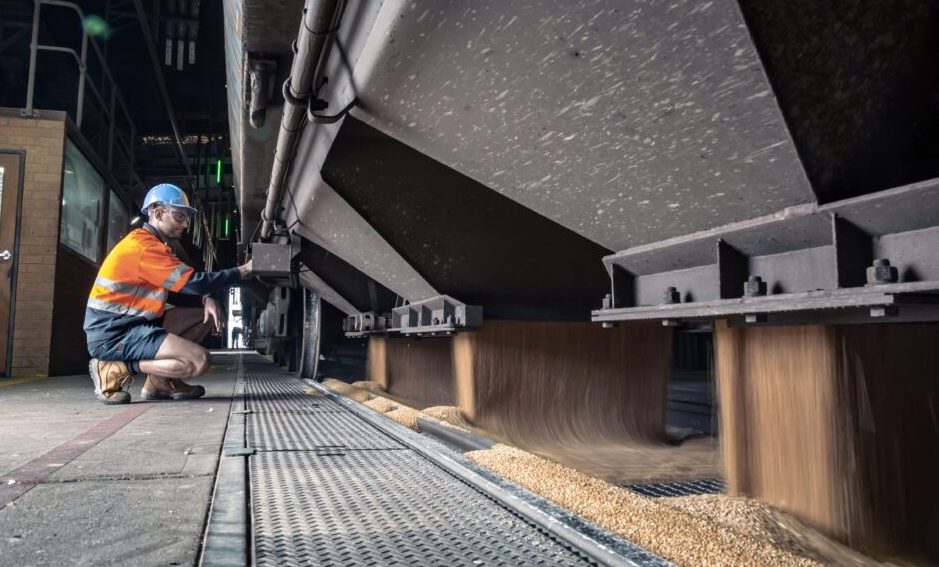
Grain unloading at GrainCorp’s Geelong port, Victoria. Photo: GrainCorp
THE Federal Government has kicked off the development of a National Food Security Strategy, with public submissions to close at the end of next month.
While Australia is a net exporter of food, a discussion paper highlighted that the country cannot become complacent with a series of challenges – including climate change, economic shocks, biosecurity threats, geopolitical factors, and supply chain disruptions.
Agriculture Minister Julie Collins said Australia is a food-secure nation, serving domestic needs and international trade partners, with about 70 percent of all agricultural production exported.
“Our food system is a national asset, but we can’t afford to be complacent, which is why the Albanese Labor Government is ensuring we protect and strengthen Australia’s food security,” Ms Collins said.
“We have listened to farmers and the community who have called for government to work with industry to set out a vision for Australia’s food system, because we understand the importance of addressing underlying challenges facing our food security.
“Ensuring we get the priorities of Feeding Australia right is incredibly important, which is why I encourage our farmers, producers, regional communities and other stakeholders in the food supply chain to provide their input into this discussion paper.
“When our food and supply chains are secure, it can help reduce financial strain on households, ensures our farmers benefit from domestic and international trade, and that Australia is well positioned to support countries that rely on our world-class products.”
Boost resilience: GrainGrowers
GrainGrowers chief executive officer Shona Gawel said the establishment of the National Food Security Strategy will boost the resilience of food production systems and is a welcome step forward by the Australian Government.
“The decision to move ahead with the development of the strategy reinforces the industry position that resilient and diversified supply chains are essential for feeding the nation and our neighbouring regions as well as dealing with global shocks,” Ms Gawel said.
“While Australia is a large net exporter of grain, the heavy reliance on imported farm inputs such as diesel and urea exposes the fragile nature of maintaining our national food security.”
Ms Gawel said the approach would enable a detailed consideration of ways to tackle weaknesses in the supply chains, including the production of low-carbon liquid fuels to build domestic fuel resilience.
Ms Gawel said GrainGrowers noted the establishment of the National Food Council, comprising industry and community experts, to advise on the development and implementation of the strategy.
“As an industry representative body, we are committed to working with the government to deliver a strategy that is in the best interests of growers and the wider Australian community.”
NFF welcomes food security strategy
National Farmers’ Federation president David Jochinke said it was pleasing the see work begin on one of the NFF’s key election priorities.
“It’s imperative we put the microscope over our entire supply chain system to identify vulnerabilities and find ways to safeguard our system,” Mr Jochinke said.
“The risks are real and rising, from global tensions and protectionist agendas to climate change and workforce shortages, plus domestic pressure on land, water and infrastructure.”
Mr Jochinke said while the NFF recognised the government will want to take a wide view of food security, imperative key drivers such as the stability of critical inputs, farm productivity, and efficient supply chains remain at the heart of the strategy.
“The strategy must also address one of the farm sector’s greatest vulnerabilities – its reliance on imported inputs.
“Australian farmers rely heavily on imported fuel, fertiliser and chemicals.
“If the tap is turned off, it will seriously cripple our ability to grow food and fibre.
The government has outlined a timeline for the strategy’s development, including establishing a National Food Council and a consultation phase.
“Australian agriculture has the potential to be a $100-billion industry by 2030, but we need secure supply chains and strategic investment to get there.
“The NFF will carefully evaluate the discussion paper and provide detailed input to ensure this strategy addresses the real risks facing farmers and agriculture.”
Source: Federal Government, GrainGrowers, NFF
HAVE YOUR SAY